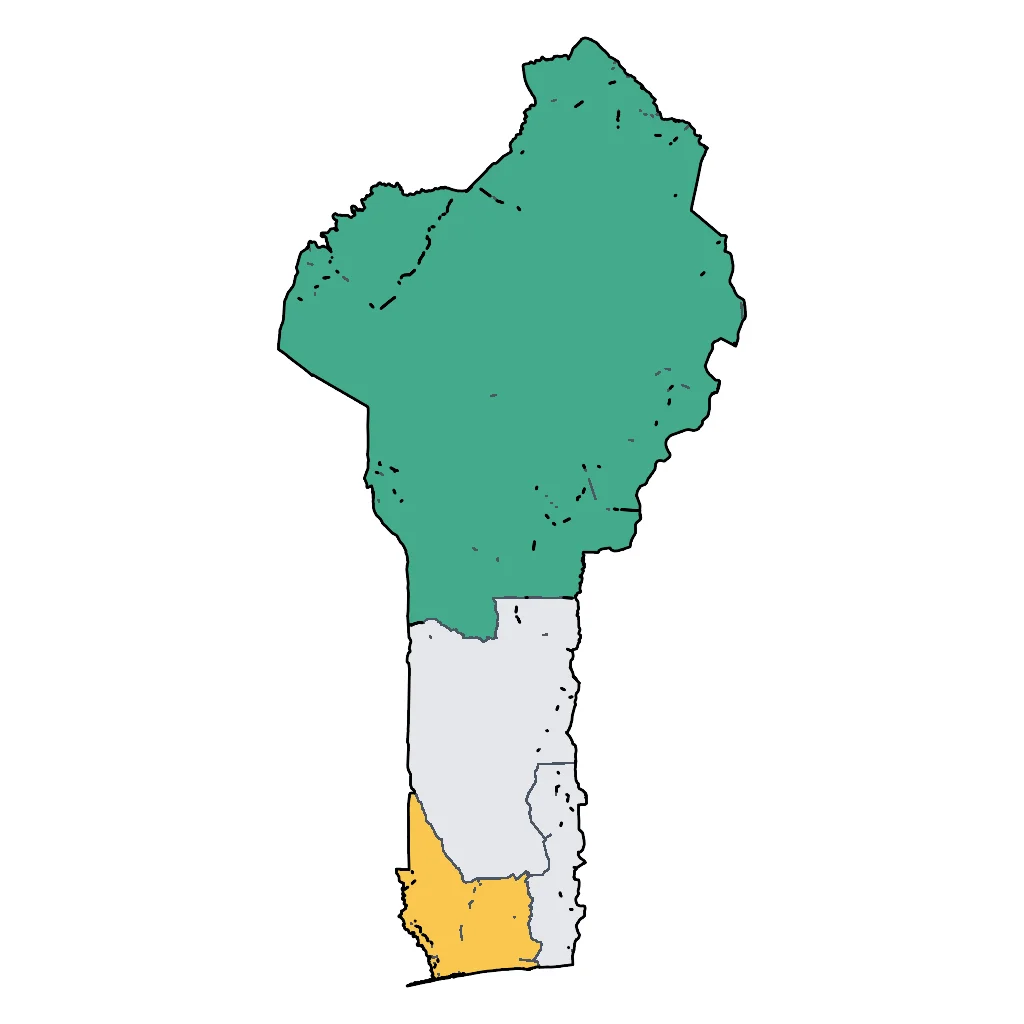
Pendjari NP & North
Rugged mountains and West Africa's wild savannah 🦁
⚠️ SAFETY WARNING: Due to the active presence of terrorist groups and a high risk of kidnapping, government agencies (including the UK, USA, and Canada) advise travelers to avoid all travel to this region. The area borders Burkina Faso and Niger, where security is volatile. Families are strongly urged to consult their own government's official travel advisory before considering a trip, as circumstances and risk assessments vary.
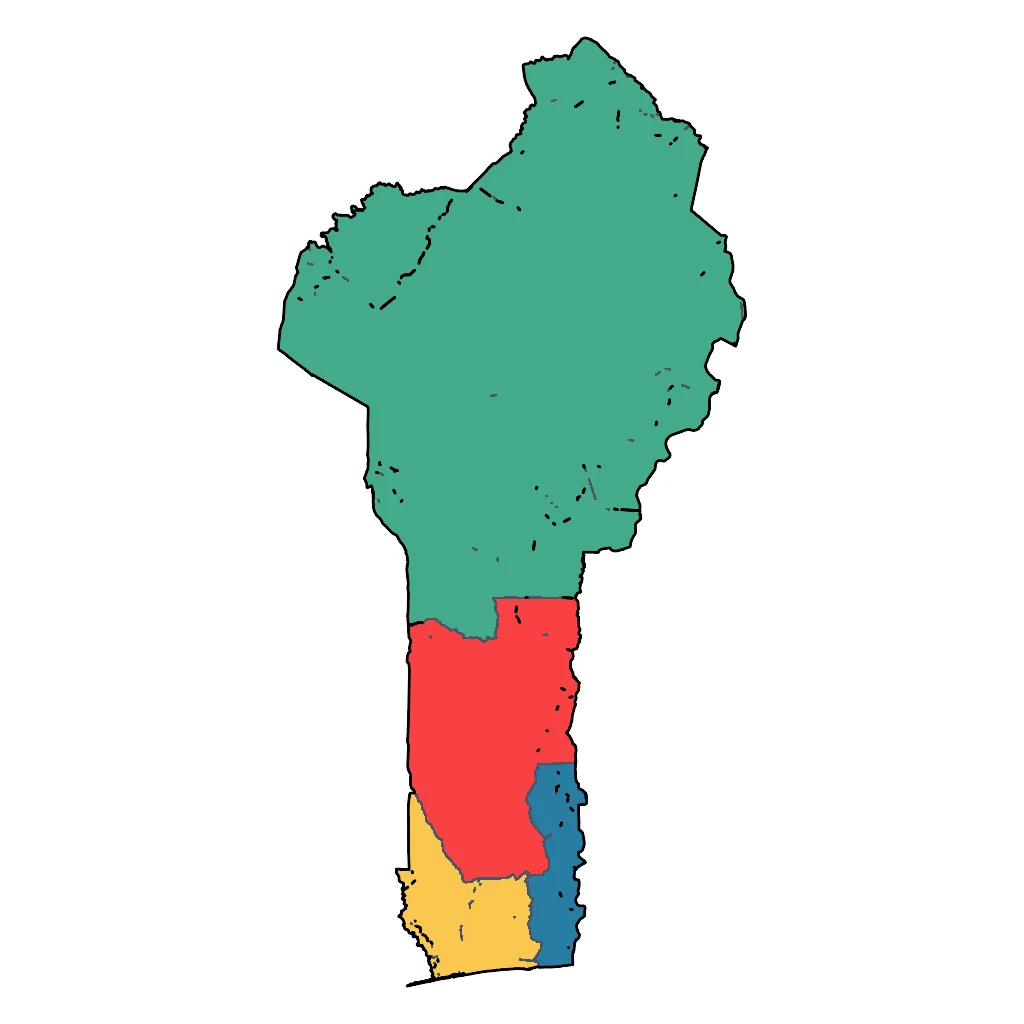
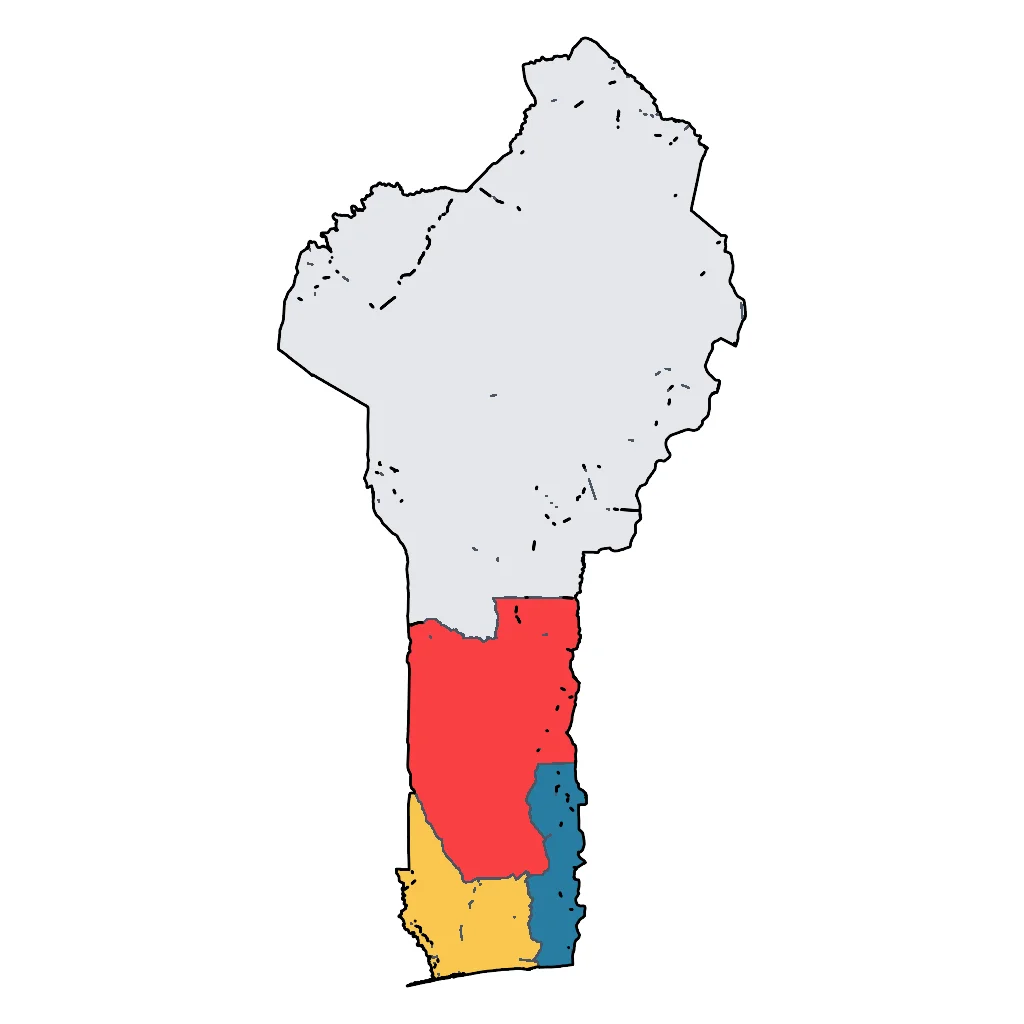
The Pendjari NP & North region represents the wildest and most geographically distinct part of Benin. Far removed from the coastal lagoons, this area is defined by the dry savannah and the rugged Atacora mountain chain. It is the heart of West African wildlife conservation. Under normal safety conditions, the dry season (December to May) is the prime time for viewing animals as they congregate around water points, offering a safari experience comparable to East Africa but with fewer crowds.
Pendjari National Park is the crown jewel of the region's natural heritage. It is one of the last strongholds for the West African lion and home to significant populations of elephants, buffaloes, antelopes, and hippos. The park's landscape is a mix of gallery forests, cliffs, and grassy plains. Viewing platforms and designated tracks allow for close encounters with nature. The nearby W National Park, which spans the borders of Benin, Niger, and Burkina Faso, extends this massive protected ecosystem, though it is currently largely inaccessible due to the security context mentioned above.
Culturally, the north is famous for the Tata Somba people and their architecture. Located primarily around Natitingou and Boukoumbé, their traditional homes are built like small earthen fortresses. These two-story structures were designed for defense and housing livestock on the ground floor while the family lived on the roof terrace. Exploring these "castles of clay" is a fascinating architectural lesson for children. The region also features the refreshing Kota Waterfalls, a natural oasis where water cascades into a pool suitable for cooling off after a hot drive.
Travel to the north requires significant planning. It is a long drive (10+ hours) or a domestic flight from Cotonou. The infrastructure is less developed than in the south, with Natitingou serving as the main base for hotels and supplies. The climate is hotter and drier than the coast, with temperatures often soaring in the afternoons.
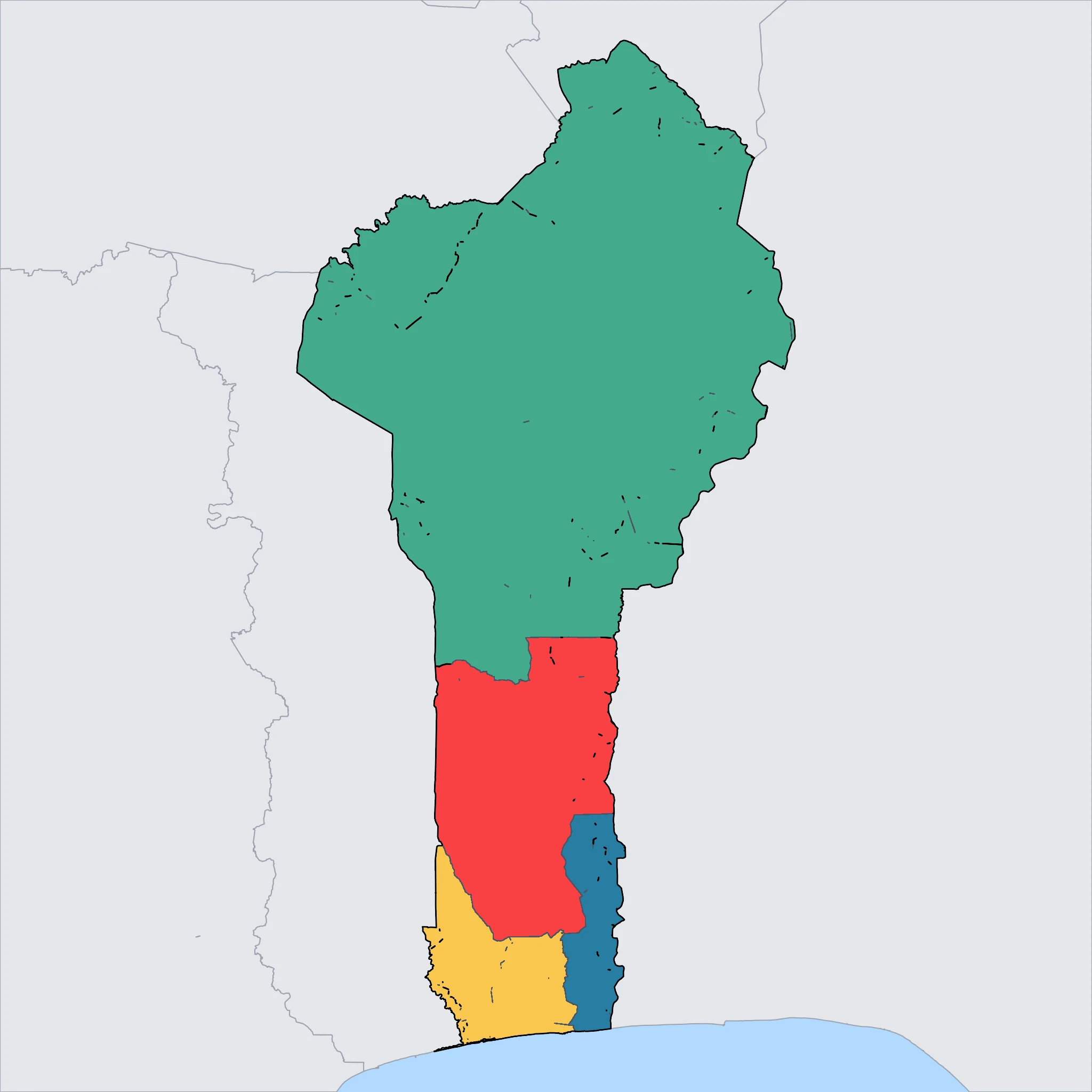
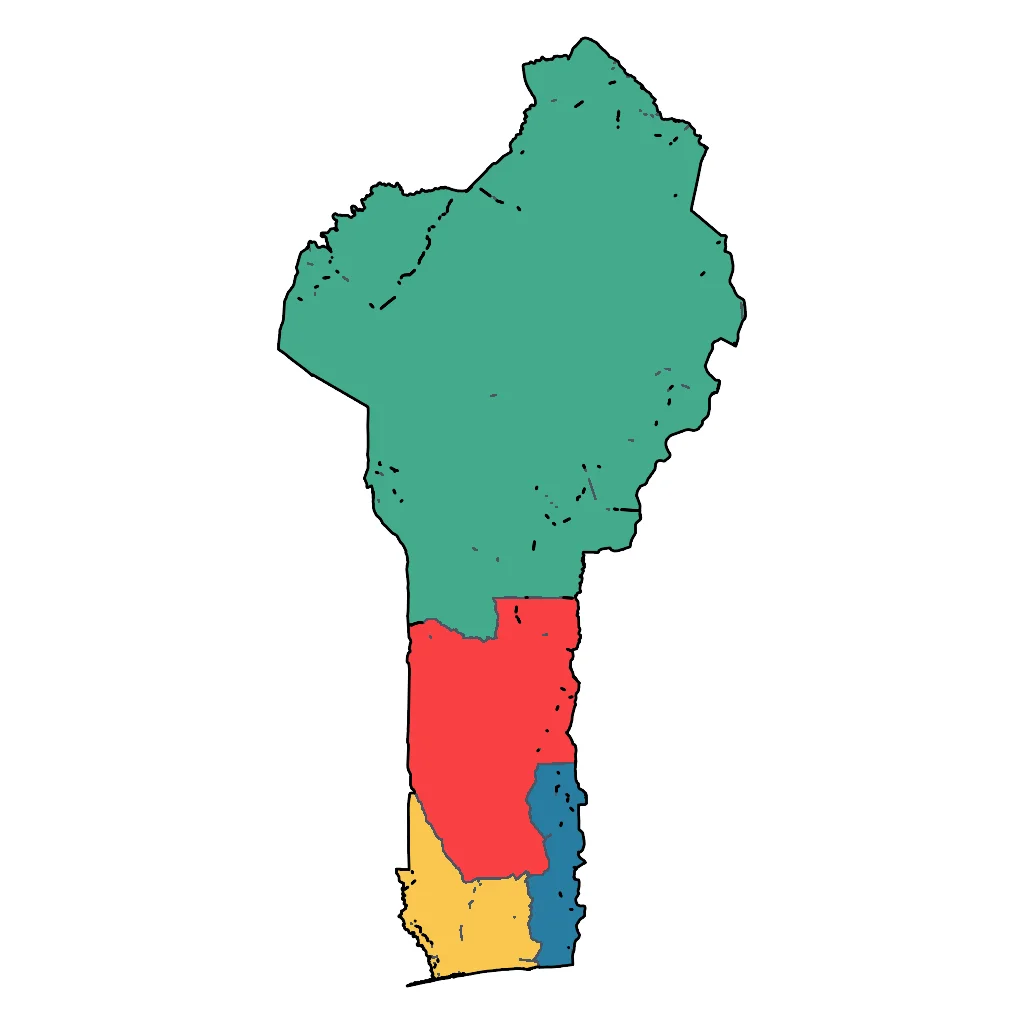
Click a region to explore

Activities & Best Times
Hiking, wildlife, outdoor exploration, ecotourism
Pendjari is West Africa’s premier safari destination, offering authentic sightings of lions and elephants in a rugged, non-commercialized wilderness. Peak months align with the dry season when wildlife gathers at waterholes; the summer monsoon (Jun-Sep) makes park tracks impassable and extreme heat in April/May exceeds 39°C.

Urban tourism, museums, historical sites, architecture
The region features the UNESCO-listed Koutammakou landscape, home to the Batammariba people and their unique 'Tata Somba' mud-tower houses. These architectural marvels offer a world-class cultural experience for sophisticated travelers, best explored in the cooler dry season before the extreme heat of April and the heavy rains of July-September.

Learning experiences, scientific sites, historical education
Offers significant anthropological and ecological learning opportunities regarding traditional West African building techniques and biodiversity conservation. Dry months facilitate access to remote villages and expert-led tours, while the rainy season restricts movement to specialized educational sites.
Scenic drives, countryside tours, route-based travel
The scenic drive through the Atakora Mountains provides dramatic vistas and access to remote tribal lands, ideal for experienced travelers using 4x4 vehicles. Travel is highly seasonal; peak months offer dry, navigable roads and clear visibility, whereas the rainy season (Jun-Sep) creates dangerous conditions and road washouts.