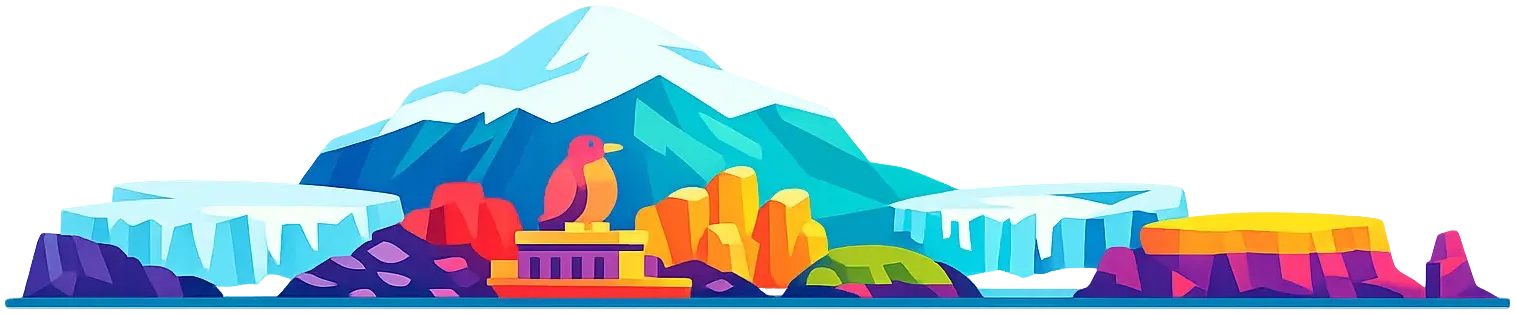

Bouvet Island (Bouvetøya) holds the title of the most remote island in the world, located in the South Atlantic Ocean roughly 1,600 kilometres from Antarctica and 2,500 kilometres from South Africa. For families who love maps and extreme geography, this small volcanic island represents the final frontier of exploration. It is a dependency of Norway and strictly designated as a nature reserve, meaning human interference is kept to an absolute minimum to protect its fragile ecosystem.
The island's geography is dramatic and inhospitable. Approximately 93% of the land is covered by a thick glacier, while the coast is defined by steep, black lava cliffs that make landing by boat nearly impossible. The highest point, Olavtoppen, is an inactive volcano rising out of the ice. The climate is consistently cold, damp, and windy, dominated by the relentless "Westerlies" of the Southern Ocean. Families learning about weather patterns will find Bouvet a perfect example of sub-Antarctic conditions.
While humans do not live here, the wildlife is spectacular. The island is an important breeding ground for seabirds and marine mammals. Macaroni penguins and chinstrap penguins nest in the rocky areas, while Antarctic fur seals and southern elephant seals crowd the narrow beaches of Nyrøysa-a platform created by a landslide in the 1950s. The surrounding waters are rich in krill, attracting whales during the summer months. For young nature enthusiasts, Bouvet Island illustrates how life thrives even in the harshest environments.
Practical Reality for Travelers: It is important to note that Bouvet Island is not a typical tourist destination. There are no hotels, restaurants, shops, or family amenities. Access is extremely restricted and difficult; usually, only scientific expeditions or specialized ice-strengthened cruise ships venture near here. Even then, landings are rare due to dangerous surf and lack of a harbour. Most "visits" are limited to viewing the jagged cliffs and glaciers from the deck of a ship or a helicopter. For most families, Bouvet Island is best explored through documentaries, maps, and stories of the few explorers who have dared to set foot on this lonely rock at the bottom of the world.
History buffs in the family might enjoy the island's mysterious past. Discovered in 1739 by French explorer Jean-Baptiste Charles Bouvet de Lozier, it was lost for many years due to mapping errors before being rediscovered. In 1964, a lifeboat was found abandoned on the island with supplies but no sign of passengers-a maritime mystery that remains unsolved to this day.
Map

Activities & Best Times
Adventure & Nature
MarginalHiking, wildlife, outdoor exploration, ecotourism
Bouvet Island has zero tourism infrastructure, no trails, no guides, no camps, and is one of the most inaccessible places on Earth. Landing is dangerous and rarely accomplished. No editorial attractions support this rating. When internationally calibrated against actual adventure destinations (Patagonia, Nepal, Iceland), 'very_good' is wildly inflated. 'marginal' reflects that raw wilderness exists but is effectively inaccessible to travelers.

Educational & Exploratory
MarginalLearning experiences, scientific sites, historical education
A profound site for learning about extreme isolation, sub-Antarctic ecosystems, and glaciology, though it lacks any formal educational infrastructure or visitor facilities. Exploration is restricted to the austral summer when weather conditions and precipitation allow for scientific observation.
Airports & Flight Routes
Toggle options to view domestic routes and international airports. Click an airport for details.
Climate & Weather
Climate Overview
| Month | Temp (°C) | Rain (mm) | Humidity | Wind (m/s) |
|---|
Travel Advisory
The destination is uninhabited and has no reported security or political risks; safety concerns are purely environmental.
Safety Topics
Traveller Advice (1 groups)
This destination is suitable only for highly experienced explorers with specialized polar gear. Complete self-sufficiency in food, water, fuel, and shelter is mandatory, as no local support or facilities are available.