

⚠️ SAFETY WARNING: Due to severe political instability, armed conflict, terrorism, and high rates of violent crime (including kidnapping), government agencies (including CA, USA, UK, AU, IE, and NZ) advise travelers to avoid all travel to the Central African Republic. The security environment is extremely volatile and the government has limited capacity to assist foreign nationals. Families are strongly urged to consult their own government's official travel advisory before considering a trip, as circumstances and risk assessments vary.
The Central African Republic (CAR) is a nation of dramatic natural contrasts, acting as a bridge between the dry Sahel in the north and the lush equatorial rainforests of the south. Despite its isolation, the country holds some of the most significant biodiversity in Africa. The crown jewel of its natural landscape is the Dzanga-Sangha Special Reserve in the southwest. This protected area is part of the UNESCO World Heritage Sangha Trinational and is one of the few places on earth where travelers can theoretically observe western lowland gorillas and forest elephants in their natural habitat.
At the center of the reserve lies Dzanga Bai, often called the "Village of Elephants." This large, mineral-rich clearing attracts herds of forest elephants, bongos, and forest buffalo, offering a unique window into the wildlife of the Congo Basin. The region is also home to the Ba’Aka people, indigenous hunter-gatherers known for their deep knowledge of the forest and their complex, polyphonic singing, which has been recognized by UNESCO as an intangible cultural heritage.
The capital city, Bangui, sits on the banks of the massive Ubangi River, a major tributary of the Congo River. The river serves as the lifeblood of the city and a natural border with the Democratic Republic of the Congo. Life here moves to the rhythm of the river, with fishermen in wooden pirogues navigating the waters. However, infrastructure throughout the country is severely limited. Paved roads are rare outside the capital, and travel during the rainy season (typically May to October) is often impossible due to flooding and mud.
While the Central African Republic possesses the raw ingredients for world-class eco-tourism, including the Manovo-Gounda St Floris National Park, current conditions make it inaccessible for standard family holidays. It remains a destination for the future, preserving a wild frontier that awaits a time of greater stability.

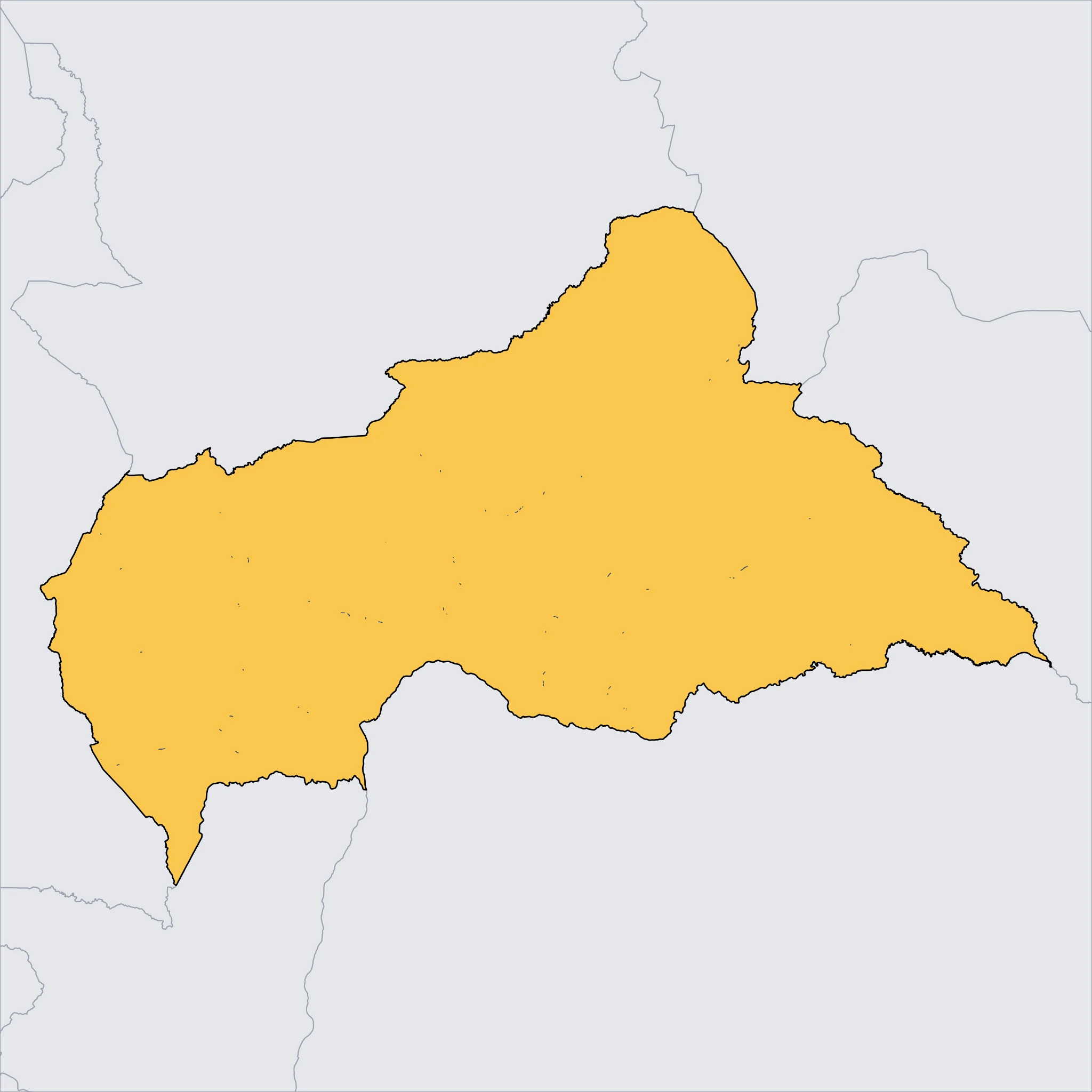
Map

Activities & Best Times

Adventure & Nature
Very GoodHiking, wildlife, outdoor exploration, ecotourism
While Dzanga-Sangha is world-class for gorilla/elephant tracking, the overall adventure tourism infrastructure is extremely limited. Manovo-Gounda St Floris is largely inaccessible due to security concerns and has been UNESCO 'in danger' since 1997. Compared to globally 'excellent' adventure destinations (Costa Rica, Kenya, Borneo), CAR's severe access constraints, security situation, and minimal tourism operators prevent an 'excellent' calibration.

Educational & Exploratory
GoodLearning experiences, scientific sites, historical education
Offers profound learning opportunities regarding tropical ecology and primatology through active research sites in one of Earth's most significant ecosystems. Travel is best during the dry season (Nov-Feb) when scientific facilities are most accessible; the extreme rainfall of the monsoon season hinders field exploration.

City & Cultural
MarginalUrban tourism, museums, historical sites, architecture
Bangui offers authentic riverside atmosphere and local markets, though it lacks the infrastructure and historical preservation of major global cultural hubs. The dry season provides the most comfortable conditions for exploring the capital's limited urban attractions.

Relaxation & Wellness
MarginalSpa retreats, wellness centers, peaceful getaways
Exclusive eco-lodges provide an ultra-remote 'digital detox' and wellness through total immersion in pristine nature. This experience is only viable during the driest months (Dec-Feb) when humidity is at its lowest (40-44%); the rest of the year is characterized by extreme heat and high precipitation unsuitable for relaxation.

Airports & Flight Routes
Toggle options to view domestic routes and international airports. Click an airport for details.

Climate & Weather
Climate Overview
| Month | Temp (°C) | Rain (mm) | Humidity | Wind (m/s) |
|---|

Travel Advisory
Extreme safety risks are present nationwide; all travel should be avoided and those in-country should consider departing.
Safety Topics
Traveller Advice (3 groups)

Individuals using passports with an 'X' gender identifier may experience significant difficulties or be denied entry, as local systems may not recognize these documents.

Avoid all travel due to life-threatening security conditions and the inability of foreign governments to provide emergency assistance.

Humanitarian staff are at a high risk of being targeted by armed groups for kidnapping or violent robbery.