

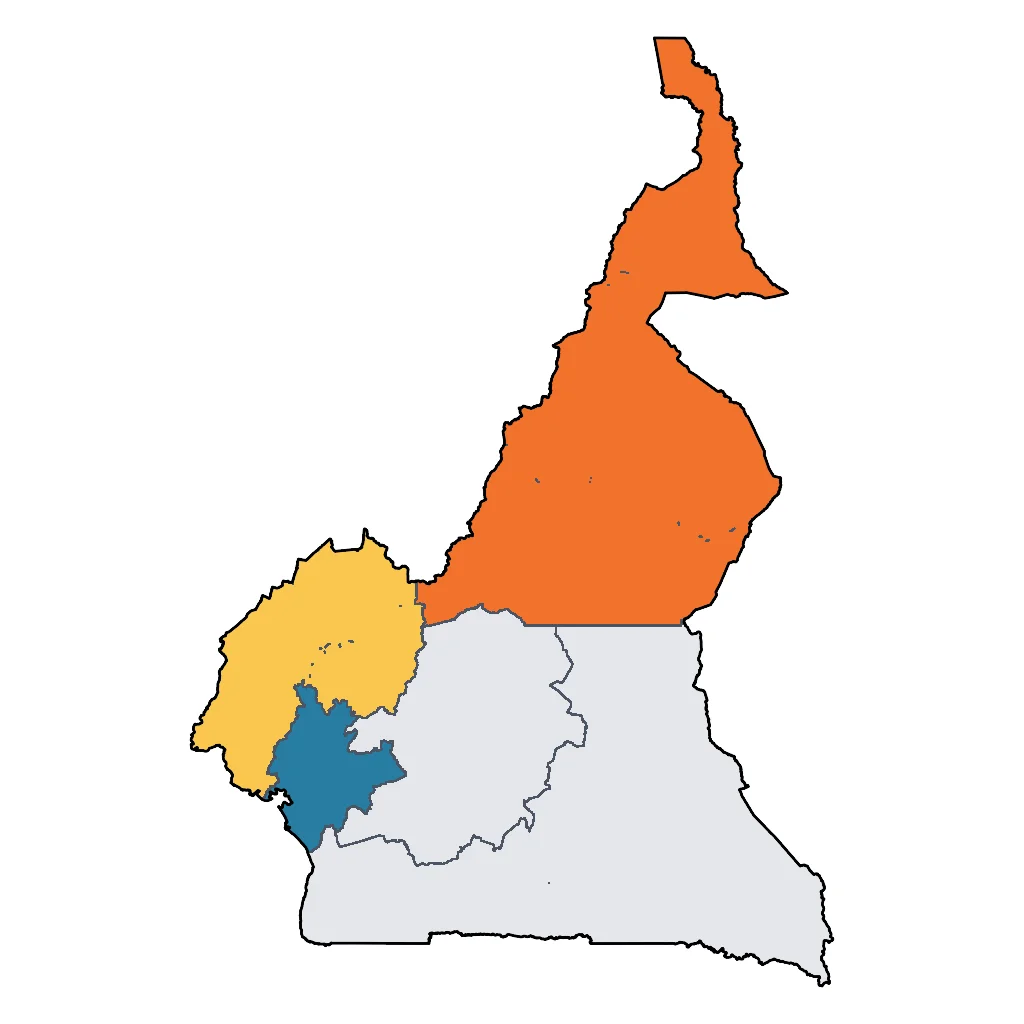
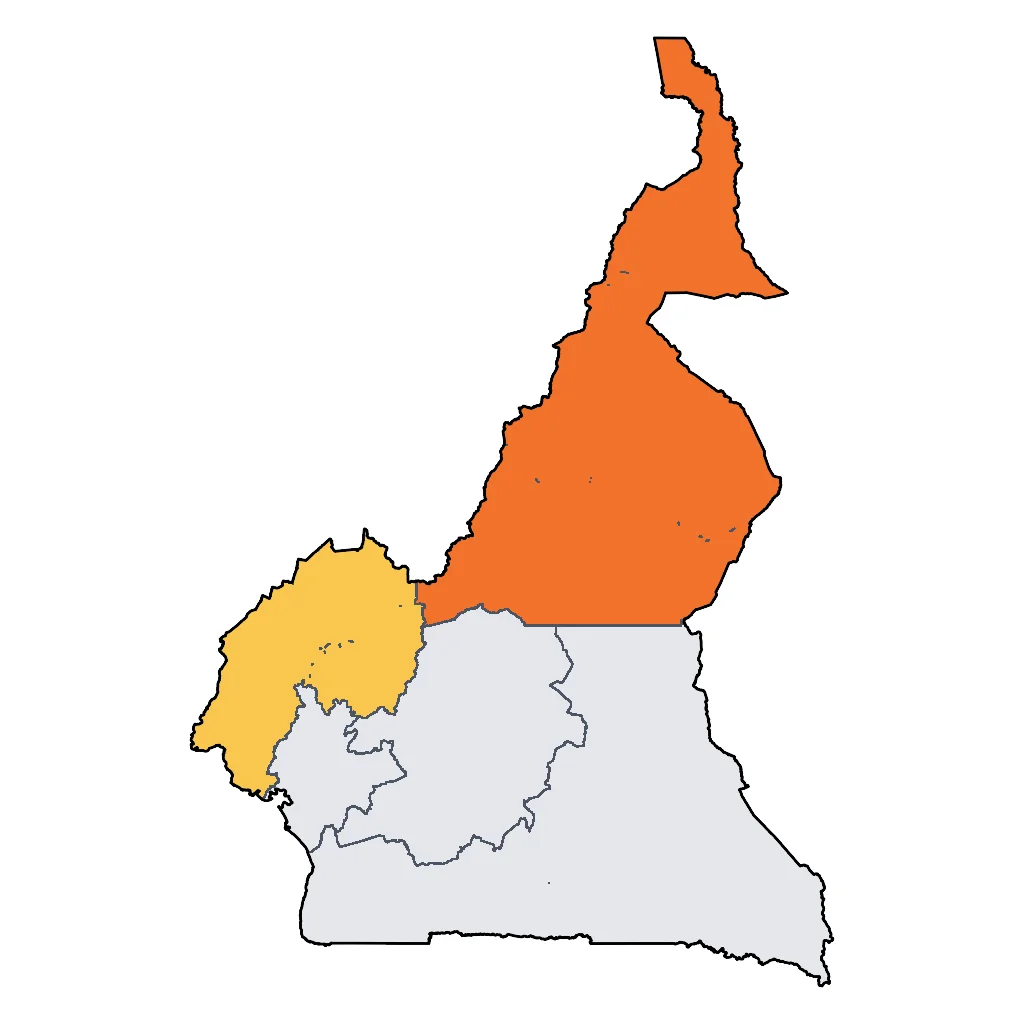
⚠️ SAFETY WARNING: Significant travel advisories are currently in effect for Cameroon. Most Western governments advise against all travel to the Far North, North-West, and South-West regions due to armed conflict, kidnapping risks, and terrorism. Families should restrict travel to the major cities of Yaoundé and Douala, and the coastal areas of the South (such as Kribi). Always consult your local embassy's latest guidance before booking.
For families with significant travel experience, Cameroon justifies its nickname as "Africa in Miniature." Located at the hinge of the continent, it contains examples of almost every major African climate and terrain. While the northern savannas are currently inaccessible to tourists due to security concerns, the southern rainforests and coastline offer vivid encounters with nature. The capital, Yaoundé, spreads over seven hills and provides a relatively safe base for exploring the country's interior.
The highlight for animal-loving children is the Mefou National Park, located approximately 45 minutes from Yaoundé. Run by Ape Action Africa, this sanctuary protects rescued gorillas, chimpanzees, and mandrills in a natural rainforest setting. Unlike a standard zoo, this is a conservation center where families walk forest trails and learn directly from keepers about the threats facing primates. It provides a powerful, educational experience about wildlife protection that is hard to match elsewhere.
For relaxation, the coastal town of Kribi serves as the country's primary beach destination within the safe zone. The beaches here feature soft, yellow sand and warm Atlantic waters suitable for swimming. A short boat ride in a traditional pirogue takes visitors to the Lobé Waterfalls, a rare geological phenomenon where a river cascades directly into the ocean. Families can eat fresh grilled fish and fried plantains at simple beachside restaurants while watching fishermen haul in their daily catch.
Culturally, Cameroon is a complex tapestry of over 250 ethnic groups. In Yaoundé, the National Museum-housed in the grand former presidential palace-displays traditional masks, statues, and royal artifacts that narrate the country's history. While French and English are both official languages, French is the dominant language in the safer southern regions; knowing basic phrases is essential for daily interactions and ordering food.
Practical Considerations: Cameroon is not a beginner destination. Infrastructure can be challenging, road conditions vary significantly, and the cash economy dominates. Malaria prophylaxis and Yellow Fever vaccinations are mandatory for entry. Families should consider hiring a reputable local guide and driver to navigate checkpoints and logistics smoothly. The dry season from December to February offers the most comfortable weather conditions for travel.
Explore Regions
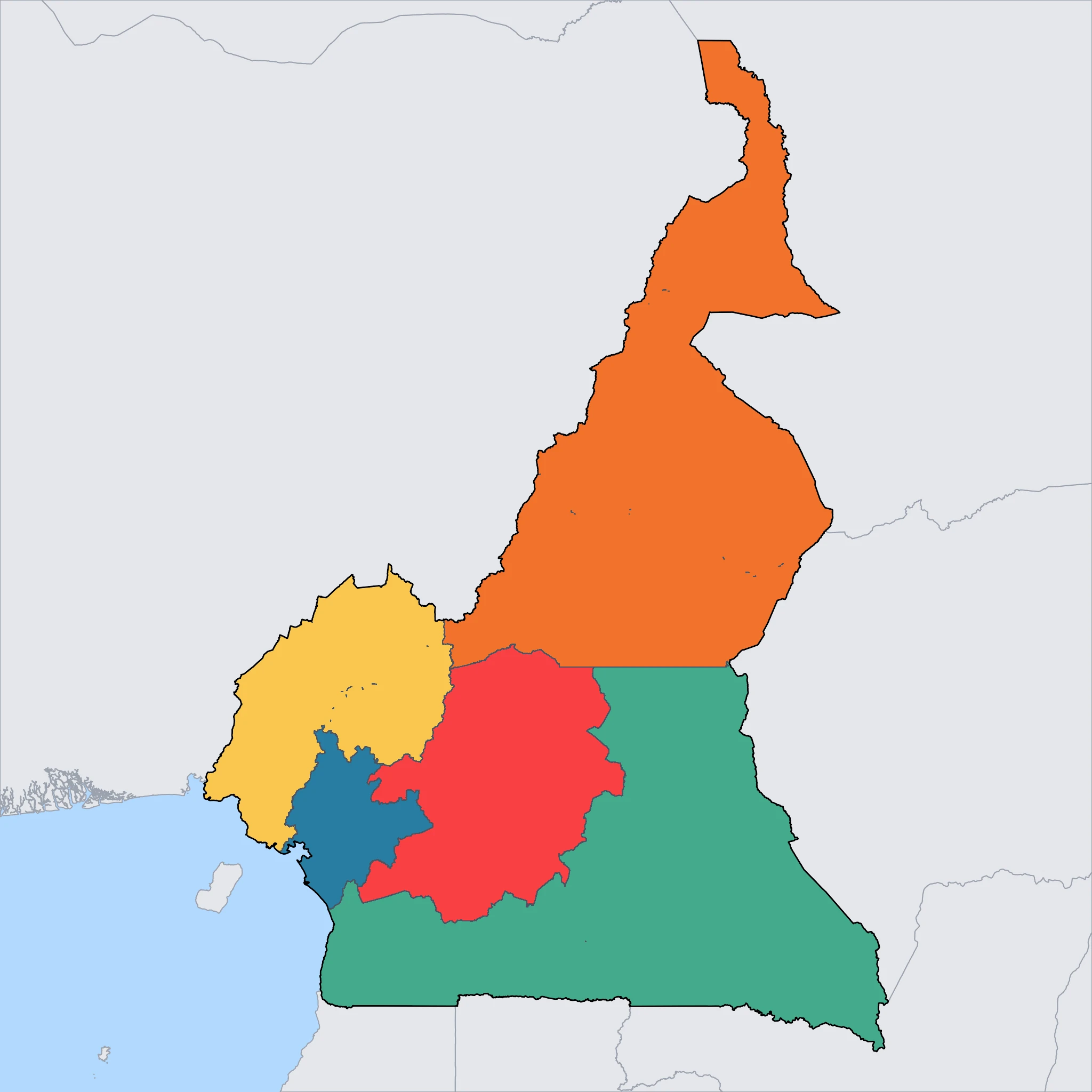
5 Regions
Douala & Littoral
A bustling river gateway to crater lakes and waterfalls 🌊
Northern Cameroon
Stark Sahelian beauty and dramatic volcanic peaks 🏜️
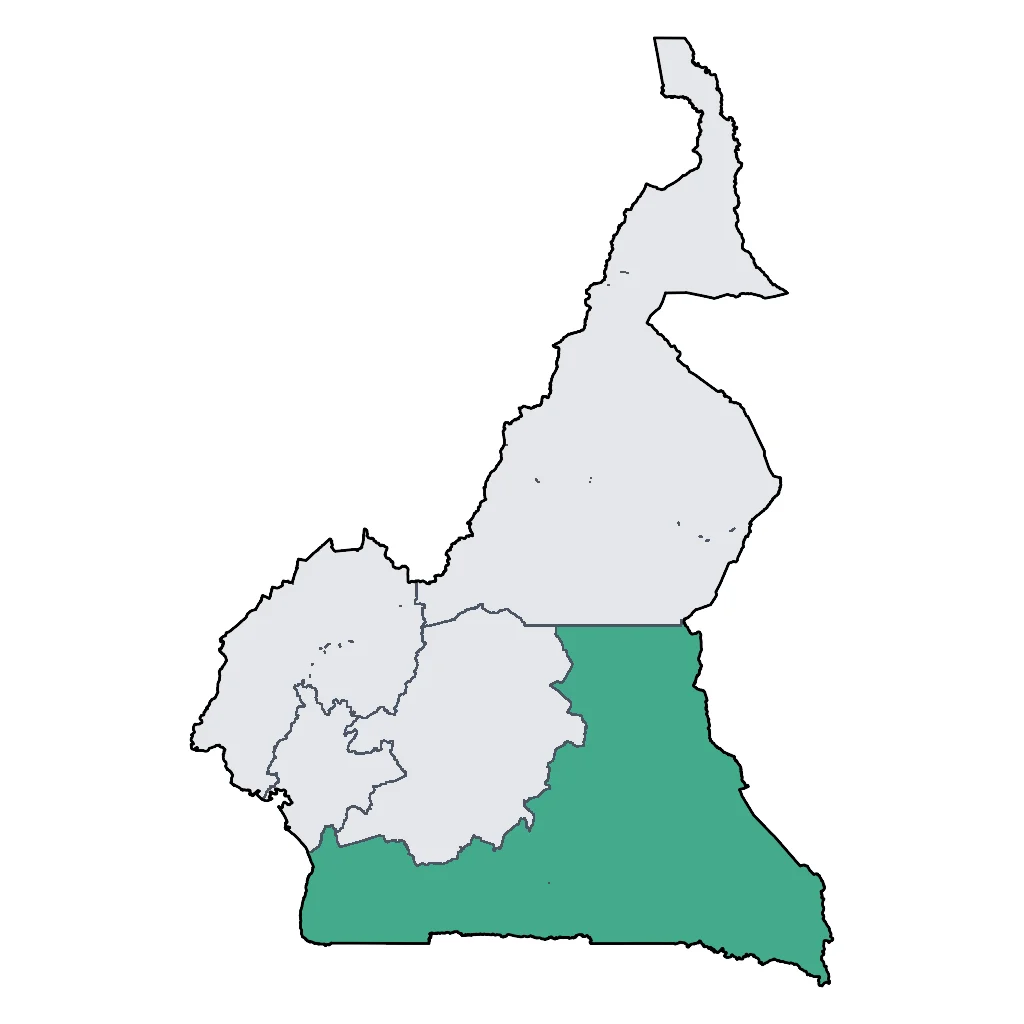
Southern Rainforests
Where the rainforest meets the Atlantic Ocean 🏖️
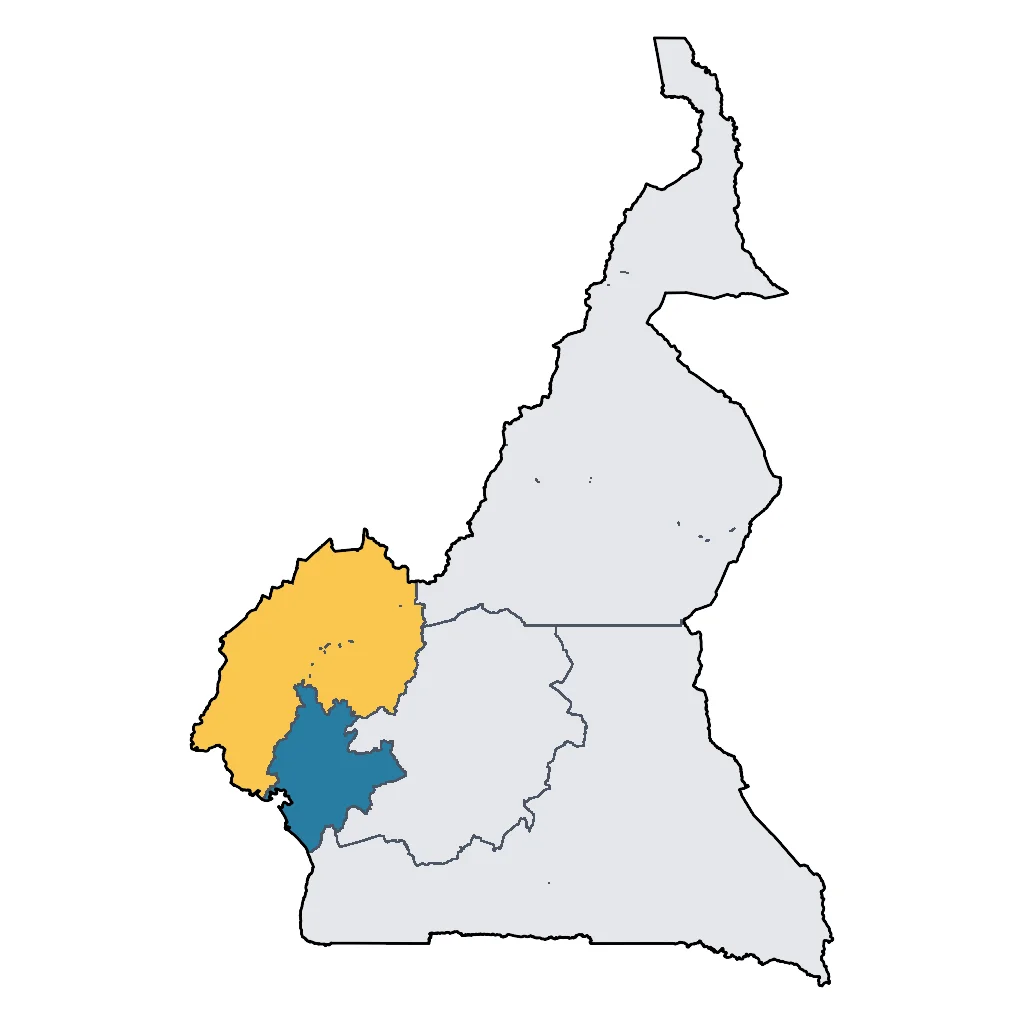
Western Highlands
Misty hills and ancient royal traditions 👑
Yaoundé & Centre
The capital of seven hills and primate sanctuaries 🦍
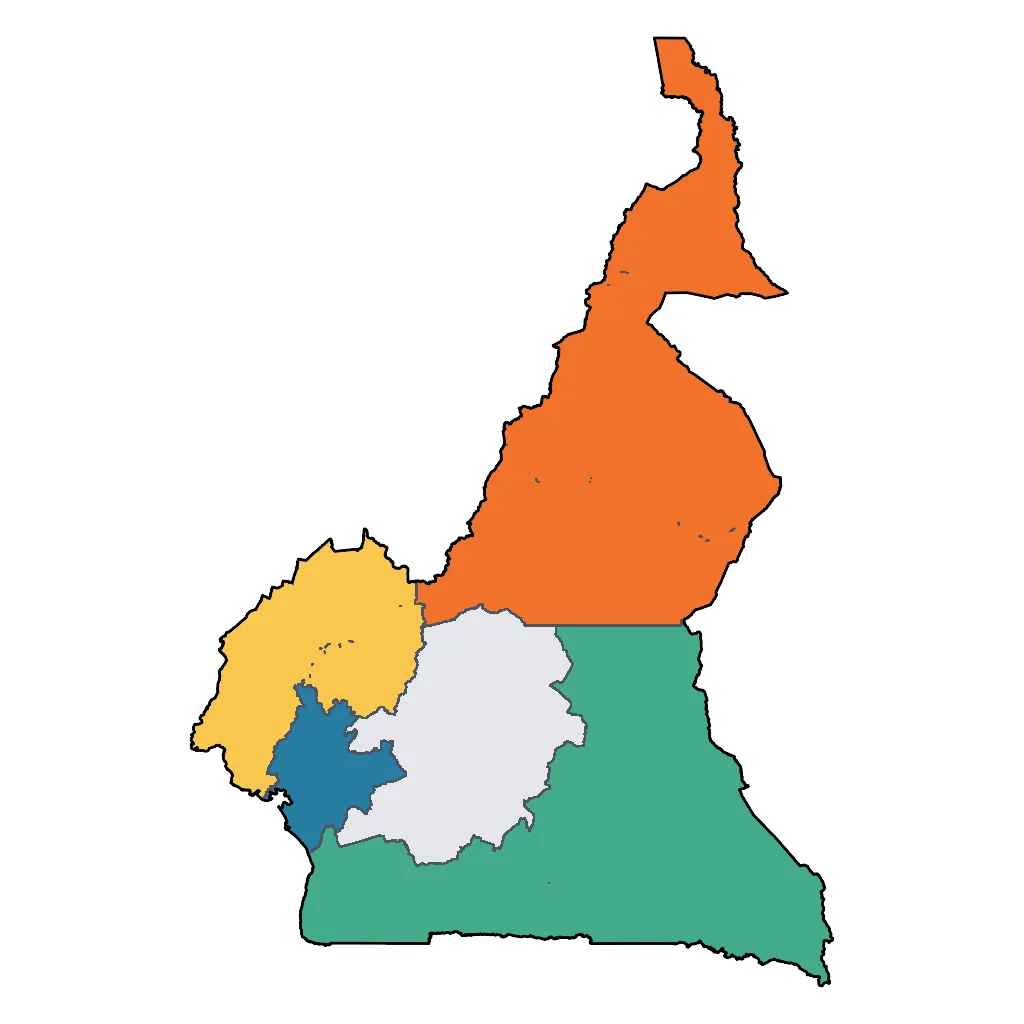
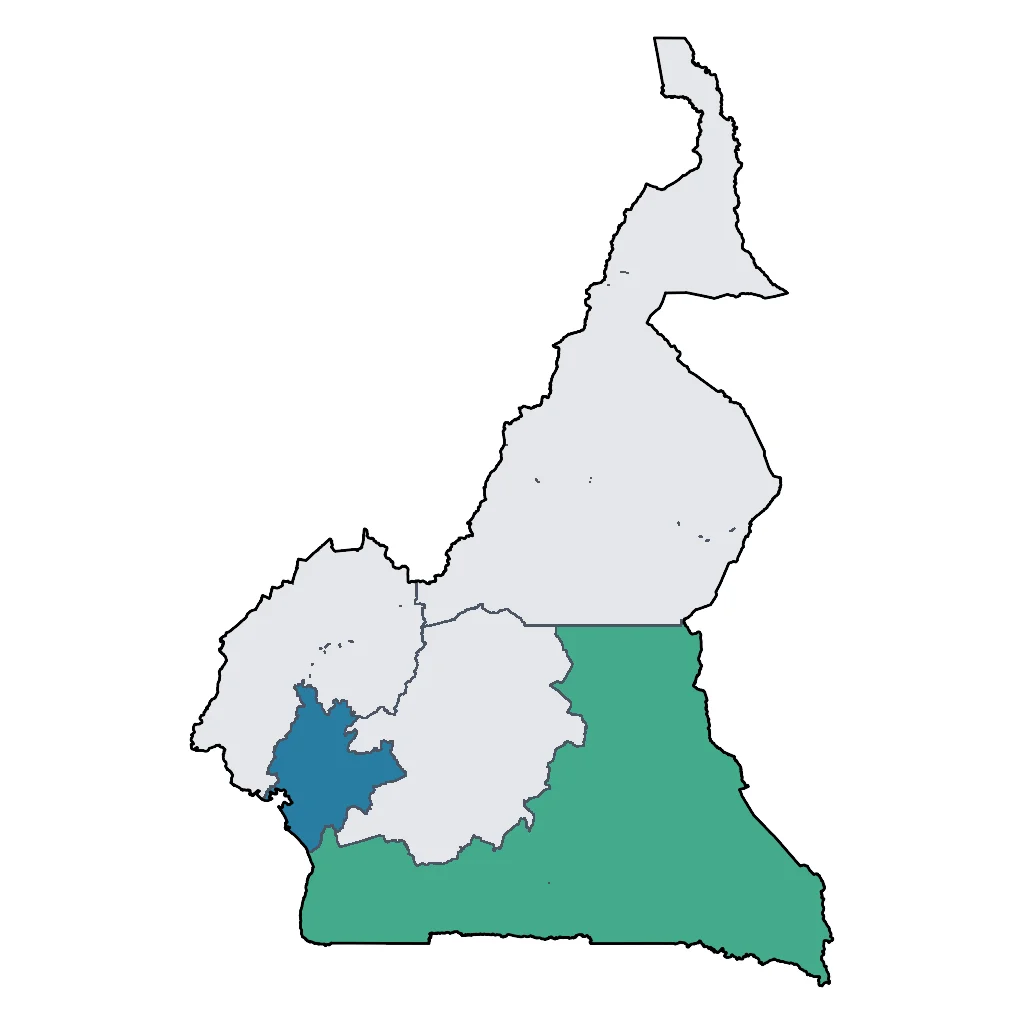
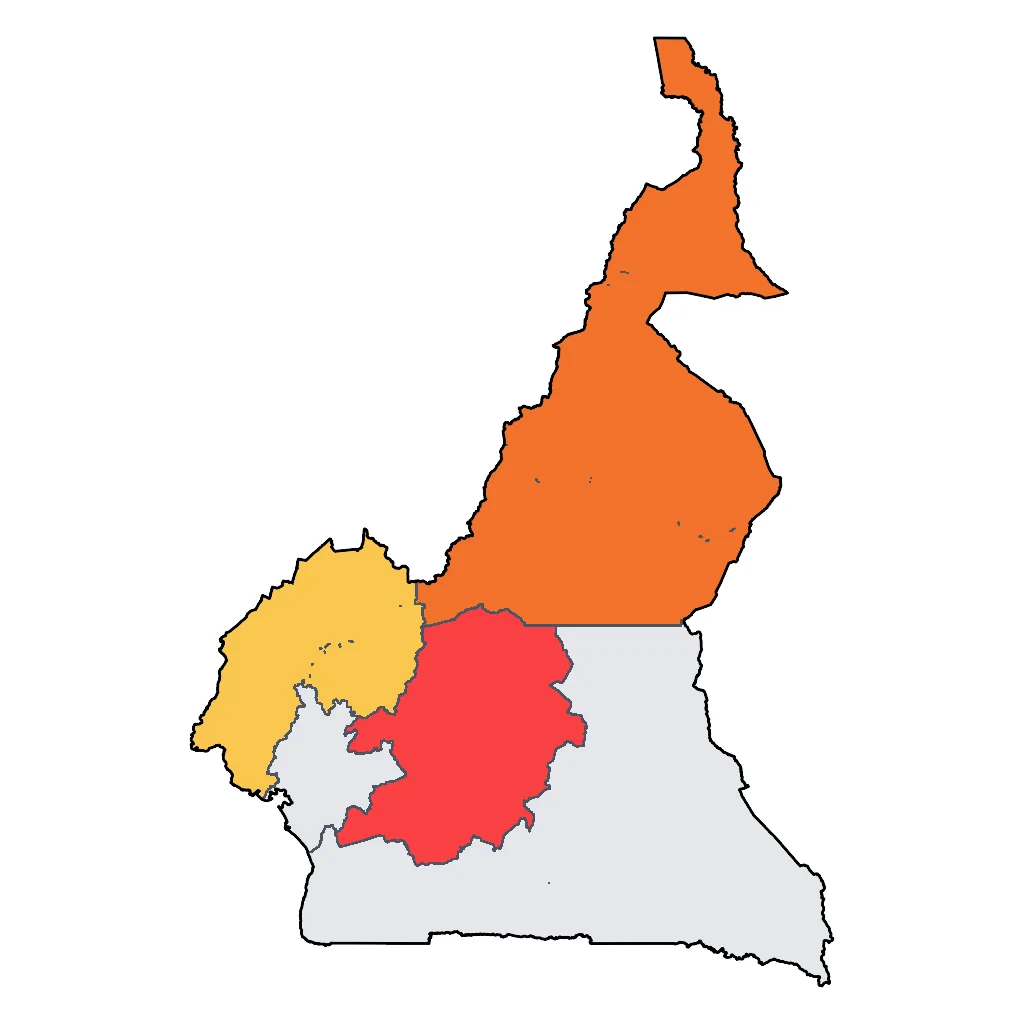
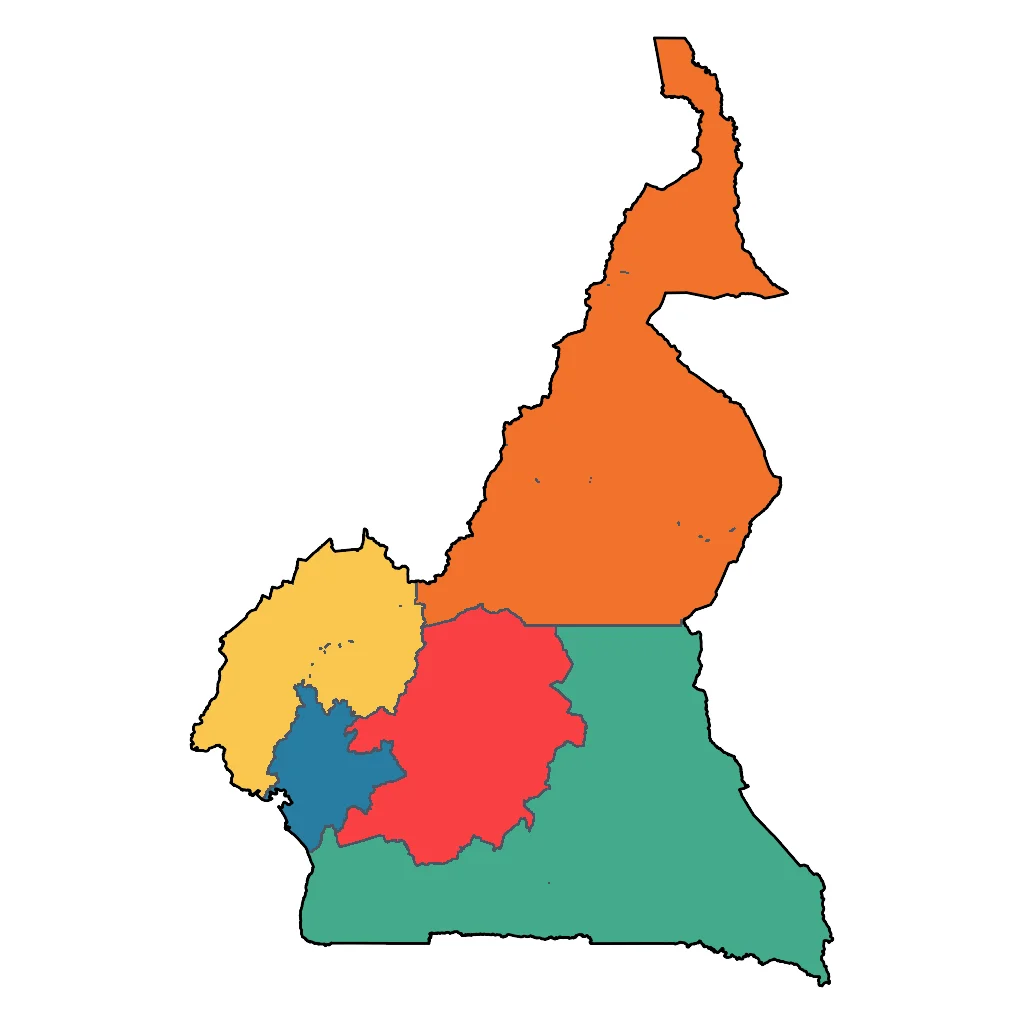
Click on a region marker to explore details. Use the dropdown to color regions by activity suitability.

Activities & Best Times

Adventure & Nature
Very GoodHiking, wildlife, outdoor exploration, ecotourism
Mount Cameroon offers a world-class trekking challenge, while the Edea Reserve and Lobé Falls provide unique equatorial biodiversity and rare geological features. The dry season (Dec-Feb) is essential for safe hiking and wildlife spotting; heavy rains from April to October make forest trails impassable.
The region offers unique volcanic crater lakes and the mist-covered peaks of Mount Oku, providing a rare high-altitude tropical ecosystem. Peak dry months (Nov-Feb) are essential for trail safety and clear views, as the extreme rainfall in the middle of the year (exceeding 400mm) makes trekking dangerous and inaccessible.
Home to the UNESCO-listed Dja Faunal Reserve, this region offers rare encounters with lowland gorillas and forest elephants within the world's second-largest rainforest. The dry months of December to February are essential for navigating forest trails with children, as heavy rains from April to October create deep mud and limit wildlife visibility.
Beach & Sea
GoodBeach resorts, marine activities: diving, snorkelling, kite surfing, wind surfing, sailing
Features unique black-sand volcanic beaches in Limbe and the palm-fringed Kribi coastline, home to the rare Lobé Falls which cascades directly into the ocean. Peak months offer the dry, sunny conditions required for coastal leisure, while the intense monsoon season (Jun-Oct) results in rough seas and poor visibility.
Kribi beaches are locally popular but lack international-caliber infrastructure, water sports facilities, or resort development. The Lobé Falls is a unique natural feature but does not elevate the overall beach experience to 'very_good' by global standards (Caribbean, Mediterranean, SE Asia benchmarks). Also, Kribi appears to be claimed by both this region and Douala & Littoral, creating a double-counting issue.

City & Cultural
GoodUrban tourism, museums, historical sites, architecture
While the Bamileke and Bamoun kingdoms represent extraordinary cultural heritage, tourist accessibility and infrastructure are limited. No attraction evidence exists in the database for this region. By international standards, 'good' reflects a nationally significant but not globally outstanding cultural destination.
A sophisticated diplomatic hub featuring the National Museum and the Reunification Monument, set against a dramatic backdrop of seven lush hills. Peak conditions occur in the dry winter months (Dec-Feb) with lower humidity; torrential rains during the peak wet seasons (Apr-May and Sep-Oct) significantly impact urban mobility.
The Lamidats and Kapsiki cultural areas are authentic and deeply interesting, but these are remote traditional settlements with minimal tourist infrastructure, not cultural cities. By international calibration (compared to Fez, Marrakech, Addis Ababa, Timbuktu), 'good' is more appropriate for nationally significant but not internationally outstanding cultural destinations.

Educational & Exploratory
GoodLearning experiences, scientific sites, historical education
The Limbe Wildlife Centre provides a high-quality primate conservation experience, complemented by the historical significance of the Bimbia slave trade site and Douala's Maritime Museum. Access to outdoor historical sites is best during the dry season; heavy tropical downpours in the off-season significantly hinder site tours and mobility.
Rich opportunities for learning about pre-colonial African political structures and volcanic geology at sites like the Foumban Royal Palace. Peak periods coincide with the dry season when guided educational tours are fully operational and infrastructure is reliable.
Provides high-quality primatology and Central African historical education through specialized conservation centers and well-curated national museums. Dry seasons (Dec-Feb) are best for outdoor conservation tours, whereas the heavy rainfall in Oct and May often limits access to field-based learning sites.

Festivals & Seasonal
GoodEvents, celebrations, seasonal attractions
The Ngondo Festival in December is a profound, authentic cultural event of the Sawa people, featuring world-class traditional ceremonies on the Wouri River. December is the optimal time for cultural immersion; the rest of the year lacks major internationally significant traditional events.
The biennial Nguon festival and Bamileke celebrations are culturally rich but lack international recognition and tourist infrastructure. No attraction evidence exists in the database for this region. By international calibration, 'good' is more appropriate.
Fantasia horse displays are spectacular regional events but lack the international profile and tourist infrastructure of major global festival destinations. Morocco's larger Fantasia events, West African masquerade festivals (Egungun), or Ethiopian Timkat draw far more international visitors. 'good' is appropriate for authentic but regionally significant events.

Relaxation & Wellness
GoodSpa retreats, wellness centers, peaceful getaways
The region offers a peaceful, slow-paced atmosphere with fresh Atlantic seafood and well-developed resorts that cater to international standards for comfort. The peak dry season provides the most comfortable humidity levels, while the extreme humidity and heavy downpours of the off-season limit the appeal of outdoor relaxation.
Kribi serves as a regional retreat for tranquil seaside relaxation, though it lacks the world-class, integrated spa facilities of global wellness destinations. The dry season provides the necessary calm environment for outdoor relaxation, whereas the extreme humidity and rain of the monsoon are counterproductive to wellness.
The cool 'eternal spring' climate and peaceful mountain scenery provide a natural setting for relaxation away from the heat of the plains. While the environment is world-class, the lack of high-end international spa infrastructure limits this to a marginal rating for discerning travelers.
Road Trips & Scenic
GoodScenic drives, countryside tours, route-based travel
The scenic 'Ring Road' offers spectacular mountain vistas and waterfall views that appeal to adventurous, experienced travelers. However, travel is strictly recommended in the peak dry months (Dec-Feb) because heavy rains render unpaved mountain roads nearly impassable for international standards.
The drive through the Mandara Mountains offers world-class scenic beauty with its lunar-like landscapes and traditional hillside villages. Dry months (Nov-Feb) ensure the best road stability and visibility, while the heavy rains (Jun-Sep) often make unpaved regional routes impassable.
The drive from Douala to the Kribi coast offers scenic tropical vistas, though road quality can be inconsistent for discerning travelers. The driest months (Dec-Jan) provide the best visibility and road safety; the region's massive rainfall levels in other months make long-distance driving unpredictable.

Sports & Active
GoodSport tourism, fitness activities, active recreation
The region supports high-intensity activities like climbing Mount Cameroon and coastal water sports, though facilities are more rugged than elite global hubs. Peak months align with the dry season for optimal terrain conditions, whereas the extreme precipitation of the rainy season (up to 492mm/month) creates dangerous conditions for active recreation.
Mount Cameroon provides a rigorous challenge for active families, complemented by lower-altitude hiking in the Grassfields. Peak conditions occur during the cool, dry months which are ideal for high-exertion activities; the extreme humidity and rainfall of the monsoon months make outdoor sports uncomfortable and hazardous.
Airports & Flight Routes
Toggle options to view domestic routes and international airports. Click an airport for details.
Climate & Weather
Douala & Littoral
Show Details
| Month | Temp °C | Rain | Humidity |
|---|
Northern Cameroon
Show Details
| Month | Temp °C | Rain | Humidity |
|---|
Southern Rainforests
Show Details
| Month | Temp °C | Rain | Humidity |
|---|
Western Highlands
Show Details
| Month | Temp °C | Rain | Humidity |
|---|
Yaoundé & Centre
Show Details
| Month | Temp °C | Rain | Humidity |
|---|

Travel Advisory
While the overall country-wide advisory level suggests increased vigilance, significant portions of the country are under extreme risk warnings due to armed conflict and terrorism.
Safety Topics
Traveller Advice (3 groups)

Female travellers should avoid walking alone after sunset, particularly in isolated areas or large cities, due to risks of harassment and assault. Conservative dress is often recommended to respect local cultural norms.

Always carry physical copies of identity documents, as police checkpoints are frequent. Avoid displaying outward signs of wealth, such as expensive jewelry or electronics, to reduce the risk of being targeted for theft.

Sexual acts between people of the same gender are criminalized in the country. Individuals may face police harassment, arrest, and imprisonment if their sexual orientation or gender identity is made public.