

⚠️ SAFETY WARNING: Western Sahara is a disputed territory with significant security risks. Most governments advise against all travel to areas east of the defensive sand wall (the Berm) due to landmines and potential military conflict. Coastal areas under Moroccan administration, such as Dakhla and Laayoune, are generally accessible but require vigilance. Families should stick strictly to paved roads, avoid off-road driving without local guides due to unmapped mines, and check their government's latest travel advice before booking.
For families with a spirit of adventure and older children, Western Sahara offers one of the most starkly beautiful landscapes on Earth. This vast stretch of coastline connects the scorching Sahara Desert directly with the cooling winds of the Atlantic Ocean. It is not a destination for resort-style relaxation, but rather for exploring a frontier where nature rules. The climate is dominated by trade winds, keeping the coastal areas moderate compared to the searing interior, though sun protection is essential year-round.
The primary hub for visitors is Dakhla, located on a long spit of land enclosing a calm turquoise lagoon. This area is world-renowned for kitesurfing, but it also offers gentler activities for kids. Families can take boat trips to Dragon Island to spot bottlenose dolphins and migratory birds, including large flocks of flamingos that paint the wetlands pink. Just outside the town, the Ostrich Farm allows children to see these giant birds up close, while the natural thermal spring at Asmaa offers a chance to experience hot sulfur waters pumped straight from the ground.
A highlight for many is the Dune Blanche (White Dune), a massive sand formation rising directly out of the lagoon. At low tide, adventurous families can climb to the top for panoramic views of the desert meeting the water. 4x4 excursions are the standard way to explore, often including visits to Imlili, where small desert pools contain unique fish that nibble at your feet-a natural spa treatment that children often find hilarious.
Culturally, the region is distinct from northern Morocco. The local Sahrawi population is known for deep-rooted hospitality. Families may be invited to share Atay, the ceremonial tea served in three rounds-each with a different flavor profile representing life, love, and death. Men often wear the loose blue daraa robes, while women wear colorful melfh wraps. The cuisine relies heavily on fresh seafood from the Atlantic and camel meat, though international options are available in hotels. While infrastructure is improving, travel here requires patience; distances are vast, and amenities can be basic, making it best suited for teens who appreciate the wild isolation.

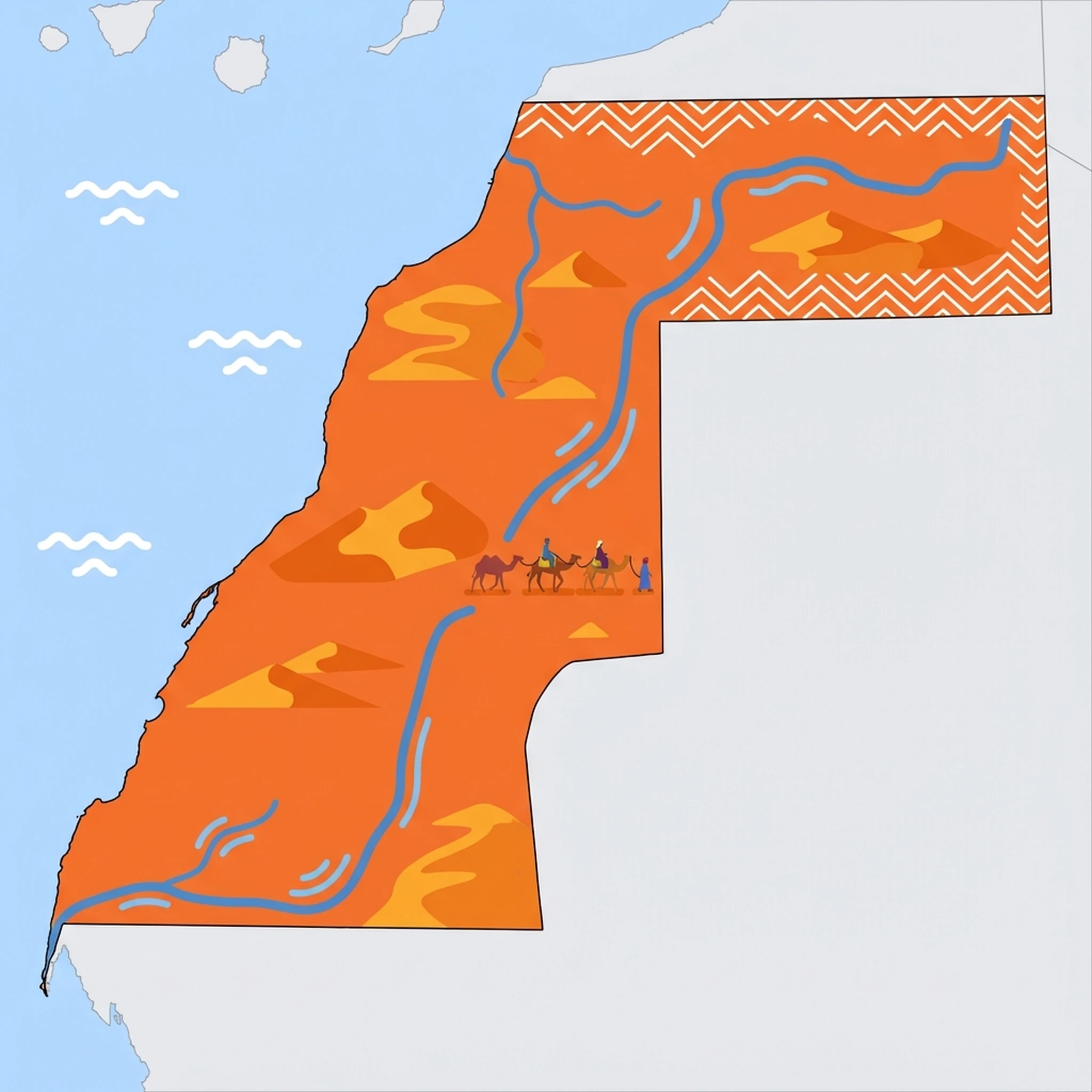
Map

Activities & Best Times

Sports & Active
ExcellentSport tourism, fitness activities, active recreation
Dakhla Lagoon is a globally renowned destination for world-class kitesurfing and windsurfing, offering consistent trade winds and a unique desert-lagoon setting. Peak months align with the strongest, most reliable winds and warm air temperatures; winter months see a significant drop in wind consistency and water/air warmth.

Adventure & Nature
GoodHiking, wildlife, outdoor exploration, ecotourism
Western Sahara lacks the adventure tourism infrastructure, wildlife diversity, and organized expedition offerings of genuine 'very_good' adventure destinations. The raw desert landscape is compelling but accessible adventure activities are limited. No editorial attraction evidence supports this rating.

Beach & Sea
GoodBeach resorts, marine activities: diving, snorkelling, kite surfing, wind surfing, sailing
While beaches are pristine and the lagoon is beautiful, cold Atlantic currents, minimal beach amenities, and lack of conventional beach holiday infrastructure place this below internationally calibrated 'very_good' beach destinations. The beaches primarily serve as a backdrop for kitesurfing rather than as a standalone beach holiday offering.

City & Cultural
GoodUrban tourism, museums, historical sites, architecture
A highly authentic destination for experiencing Sahrawi nomadic hospitality and the unique cultural heritage of the desert. The cooler months are optimal for navigating local markets and engaging with the community; extreme summer heat significantly limits the appeal of urban exploration.

Educational & Exploratory
GoodLearning experiences, scientific sites, historical education
Offers unique insights into nomadic traditions, desert ecology, and the complex geopolitical history of the region. Peak educational travel occurs when the climate allows for visiting remote archaeological sites and rock art without the risk of heat exhaustion.

Road Trips & Scenic
GoodScenic drives, countryside tours, route-based travel
A single main highway (N1) through flat desert with sparse infrastructure does not constitute a 'very_good' road trip destination by international standards. Limited route variety, few stopping points, and minimal services. Dramatic moments exist at the desert-ocean boundary but overall driving experience lacks the diversity and infrastructure of top road trip regions.

Attractions
25 attractions to explore. Click markers for details.

Airports & Flight Routes
Toggle options to view domestic routes and international airports. Click an airport for details.

Climate & Weather
Climate Overview
| Month | Temp (°C) | Rain (mm) | Humidity | Wind (m/s) |
|---|

Travel Advisory
While travel is possible to major cities, heightened vigilance is required due to terrorism threats and the risk of civil unrest. Large portions of the territory near the militarized boundary are high-risk zones.
Safety Topics
Traveller Advice (3 groups)

Reporting on the political status of the territory is highly sensitive and closely monitored; professional accreditation is essential.

Female travelers should dress conservatively to respect local customs and may face harassment if traveling solo or at night.

Same-sex relationships are illegal and socially taboo; absolute discretion is required to avoid legal issues or hostility.