

For families seeking a Caribbean escape with the convenience of domestic travel, the United States Virgin Islands (USVI) offers a unique blend of tropical adventure and American familiarity. Because the islands are a U.S. territory, American citizens can arrive without passports, bypassing long immigration lines with tired children. The archipelago consists of three main islands-St. Thomas, St. John, and St. Croix-each possessing a distinct personality suitable for different family travel styles.
St. Thomas serves as the bustling gateway and is often the most accessible island for families. It is home to Magens Bay, which features a deep horseshoe shape that keeps the waters exceptionally calm, allowing toddlers to wade safely without heavy surf. Families can visit Coral World Ocean Park to handle sea stars and view Caribbean marine life, or take the Skyride to Paradise Point for an aerial view of the harbor. The island is hilly, and the steep, winding roads lead to viewpoints that overlook the cruise ships docking in Charlotte Amalie.
A short ferry ride away lies St. John, the smallest and most preserved of the three. Two-thirds of the island is protected as the Virgin Islands National Park. Here, families can hike the Reef Bay Trail to see historic sugar mill ruins or swim at Trunk Bay, famous for its marked underwater snorkeling trail. This self-guided path includes plaques on the seafloor, making it an engaging introduction to snorkeling for children who can swim. Wild donkeys often roam the roads here, a sight that frequently captures the attention of younger visitors.
St. Croix, the largest island, sits further south and offers a slower pace rich in history. Children can explore the yellow-bricked Fort Christiansvaern in Christiansted to learn about the island's Danish colonial past. A highlight for adventurous families is a boat trip to Buck Island Reef National Monument, where the coral reef creates a protected lagoon perfect for spotting sea turtles and colorful parrotfish in clear water.
Practical Considerations: While English is the official language and the U.S. dollar is the currency, the USVI has one significant quirk: motorists drive on the left side of the road. Renting a car gives families the freedom to beach-hop, but drivers must remain alert, especially since most local rental cars still have the steering wheel on the left side. Sun protection is essential, and visitors should use mineral-based, reef-safe sunscreen to protect the fragile coral ecosystems. Dining options range from familiar American staples to local treats like "pates" (filled pastries), which make for easy, portable lunches for beach days.

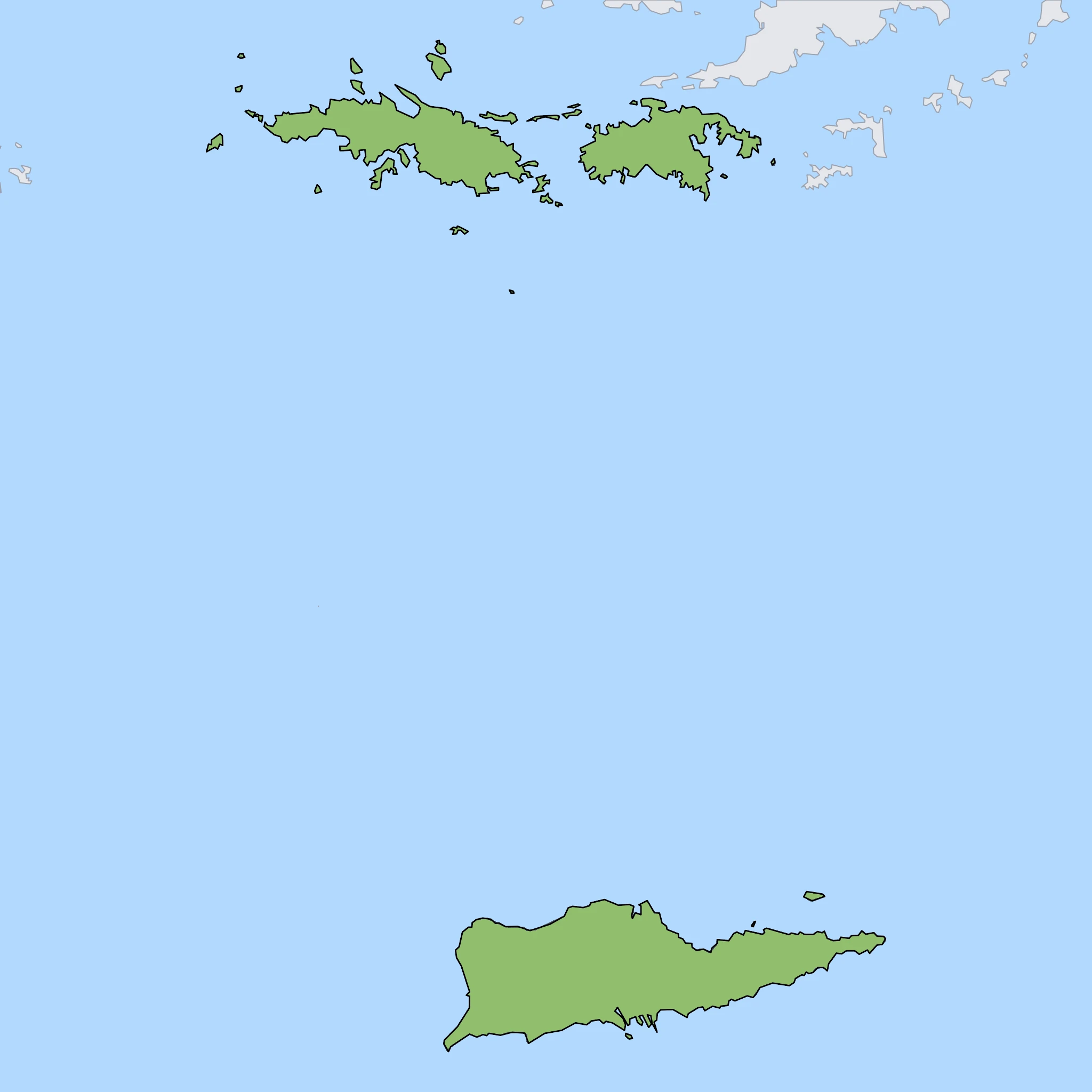
Map

Activities & Best Times

Beach & Sea
ExcellentBeach resorts, marine activities: diving, snorkelling, kite surfing, wind surfing, sailing
Renowned for world-class beaches like Trunk Bay and as a premier global sailing hub with crystal-clear turquoise waters. Peak months (Feb-Mar) offer the lowest rainfall (<50mm) and optimal sea conditions, while the autumn months (Sep-Nov) are avoided due to high tropical storm risk and heavy precipitation.

Adventure & Nature
Very GoodHiking, wildlife, outdoor exploration, ecotourism
The Virgin Islands National Park covers most of St. John, offering pristine tropical forests and protected coral reefs for sophisticated eco-exploration. Peak hiking conditions occur during the drier months when trails are firm; the wet autumn season (Sep-Nov) makes outdoor navigation difficult and humid.

Sports & Active
Very GoodSport tourism, fitness activities, active recreation
A world-class destination for yachting, deep-sea fishing, and scuba diving with high-end infrastructure and visibility. The first quarter of the year provides the best balance of low rainfall and comfortable air temperatures, whereas the late hurricane season brings unpredictable swells and heavy rain.

City & Cultural
GoodUrban tourism, museums, historical sites, architecture
Charlotte Amalie features some of the best-preserved Danish colonial architecture in the Western Hemisphere alongside historic forts and cobblestone streets. Dry months with rainfall under 80mm are ideal for heritage walking tours, while the peak rainy season disrupts the experience with frequent tropical downpours.

Educational & Exploratory
GoodLearning experiences, scientific sites, historical education
Rich opportunities for families to explore colonial history and marine biology through National Park programs and historic sites. Education-focused travel is best in the dry season when outdoor archaeological sites and coral research centers are most accessible.

Festivals & Seasonal
GoodEvents, celebrations, seasonal attractions
Host to vibrant, authentic Caribbean celebrations including the St. Thomas Carnival (April) and the Crucian Christmas Festival (Dec/Jan). These peak periods offer high-quality cultural immersion, while the stormy months of Sep-Nov see a significant reduction in major outdoor events.

Relaxation & Wellness
GoodSpa retreats, wellness centers, peaceful getaways
While luxury resorts with spa facilities exist, there are zero dedicated wellness/spa attractions in the database. The classification appears to assume hotel amenities rather than standalone tourist attractions. Downgrading to 'good' until spa/wellness attractions are added, or keeping 'very_good' if major spa resorts can be verified as tourist attractions in their own right.

Road Trips & Scenic
MarginalScenic drives, countryside tours, route-based travel
St. Croix's Heritage Trail offers a scenic exploration of sugar mills and diverse coastal landscapes, though the limited scale may underwhelm seasoned road-trippers. Clear, dry weather in Feb and March provides the best driving visibility and road conditions.

Attractions
45 attractions to explore. Click markers for details.

Airports & Flight Routes
Toggle options to view domestic routes and international airports. Click an airport for details.
Climate & Weather
Climate Overview
| Month | Temp (°C) | Rain (mm) | Humidity | Wind (m/s) |
|---|

Travel Advisory
The destination is generally safe for travelers. Follow standard personal security practices and be aware of local conditions.
Safety Topics
Traveller Advice (3 groups)

Most foreign nationals require an ESTA or a visa to enter, similar to the continental United States. Registration with national travel advisory services is recommended.

Solo female travelers may experience verbal harassment. There have been reports of sexual assault; travelers are advised to stay in well-secured accommodations and avoid walking alone at night.

While generally legally protected under U.S. federal law, social attitudes may be more conservative in some rural areas. Standard safety precautions for the U.S. apply.