

⚠️ SAFETY WARNING: Due to political volatility, the persistent threat of terrorism, and the risk of kidnapping, government agencies (including CA, USA, UK, AU, IE, NZ) advise travelers to avoid all travel to Afghanistan (L3/L4). The security situation is extremely unpredictable, and consular support is severely limited or non-existent. Families are strongly urged to consult their own government's official travel advisory before considering a trip, as circumstances and risk assessments vary.
Overview
Afghanistan is a country of dramatic contrasts, where the snow-capped peaks of the Hindu Kush give way to bustling ancient bazaars and verdant valleys. For the intrepid family traveler, it represents one of the world's final frontiers of tourism-a place where history is not just preserved in museums but lived daily in the streets. The landscape is dominated by the Bamyan and the Central Highlands, offering some of the most spectacular natural scenery in Central Asia, including deep blue lakes that seem to defy the arid surroundings. The culture is deeply rooted in hospitality, or Pashtunwali, where guests are treated with immense honor, although visitors must navigate complex local customs and strict regulations.
While the logistics of travel here are challenging, the rewards for those who visit include exploring the architectural masterpieces of Herat and the Western Borderlands and witnessing the resilience of a people who have weathered centuries of change. The capital, situated in Kabul and the Panjshir Valley, serves as the entry point for most, revealing a city that is rebuilding and remembering its storied past. This is not a destination for a casual holiday; it is an educational expedition into the heart of Asia's history.
Key Attractions
In the capital, the National Museum of Afghanistan is an essential stop, housing thousands of artifacts that narrate the region's Buddhist, Hellenistic, and Islamic history. Just a short drive away, families can find a moment of peace at Babur's Gardens (Bagh-e Babur), the final resting place of the first Mughal emperor. These terraced gardens, restored to their former glory, offer a safe and beautiful space for children to run and for parents to appreciate Mughal landscape architecture. For a look at local wildlife, the Kabul Zoo remains a popular spot for local families.
Venturing west to Herat, the Herat Citadel (Qala Iktyaruddin) stands as a magnificent example of defensive architecture, dating back to Alexander the Great. Nearby, the Friday Mosque of Herat dazzles with its intricate blue tile work, showcasing the artistic zenith of the Timurid empire. In the central highlands, the Band-e-Amir National Park is arguably the country's most stunning natural wonder. Its series of six deep blue lakes, separated by natural travertine dams, offers boating and hiking in a landscape that feels otherworldly. Just north of here lies the Bamyan Valley Cultural Landscape, home to the empty Buddhas of Bamyan Niches, which remain a powerful testament to the region's Buddhist heritage.
Practical Advice
Best time to visit: Spring (April to June) and Autumn (September to October) offer the most pleasant weather. Summers can be intensely hot, and winters bitterly cold with snow blocking mountain passes. Logistics: Afghanistan is a cash-only economy; credit cards are useless. Bring pristine US Dollars to exchange. Dress code: Modesty is non-negotiable. Women and girls must wear a headscarf and loose, non-revealing clothing (such as an abaya or long coat) at all times in public. Men should wear long trousers and preferably a perahan tunban (local tunic) to blend in.
Food & Drink
Typical meal times: Lunch is typically served from 12:00 pm to 2:00 pm, and dinner from 7:00 pm to 9:00 pm.
Typical meal costs: 200–400 AFN (approx. $2.75–5.50 USD / €2.50–5.00 EUR) for a standard local meal; 600–1,000 AFN (approx. $8–13.50 USD / €7.50–12.50 EUR) for a mid-range restaurant dinner.
Dietary requirements: Afghan cuisine is meat-heavy, with lamb and chicken featuring prominently. Vegetarians may rely on dishes like Ashak (leek dumplings) or aubergine stews, but options can be limited. Nut allergies (pine nuts, walnuts, pistachios) should be communicated clearly as they are common garnishes.
Family-friendly dining: Afghan culture loves children, and restaurants are generally welcoming to families. However, highchairs are rare. Meals are often eaten communally on the floor (on a dastarkhan), which many children find fun and engaging.
Signature dishes:
- Kabuli Pulao – The national dish featuring steamed rice mixed with raisins, carrots, and large chunks of lamb, offering a sweet and savory flavor kids often love.
- Mantu – Steamed dumplings filled with spiced minced meat and onions, topped with a yogurt and tomato sauce.
- Bolani – A crispy, stuffed flatbread filled with potatoes, leeks, or pumpkin, perfect as a snack or light lunch.
- Sheer Yakh – Traditional Afghan ice cream made with rose water, cardamom, and pistachios, a perfect treat for hot days.
Safety
Travelers must maintain a low profile and avoid all political gatherings or protests. Do not take photographs of government buildings, military personnel, or checkpoints. Always travel with a trusted local guide or driver who knows the language and the current security landscape. Avoid traveling at night. Be aware that landmines remain a risk in off-road areas; stick to well-marked paths and paved roads. Comprehensive kidnapping and medical evacuation insurance is essential, though standard policies likely exclude this region.

While local goods are inexpensive, the cost of security and private transport raises the budget significantly. A simple local meal costs around 200–350 AFN (approx. $2.75–4.75 USD / €2.50–4.40 EUR). Budget guesthouses range from 1,500–2,500 AFN (approx. $20–35 USD / €19–32 EUR) per night, while secure hotels charge upwards of $80–120 USD.
Age Suitability





Explore Regions
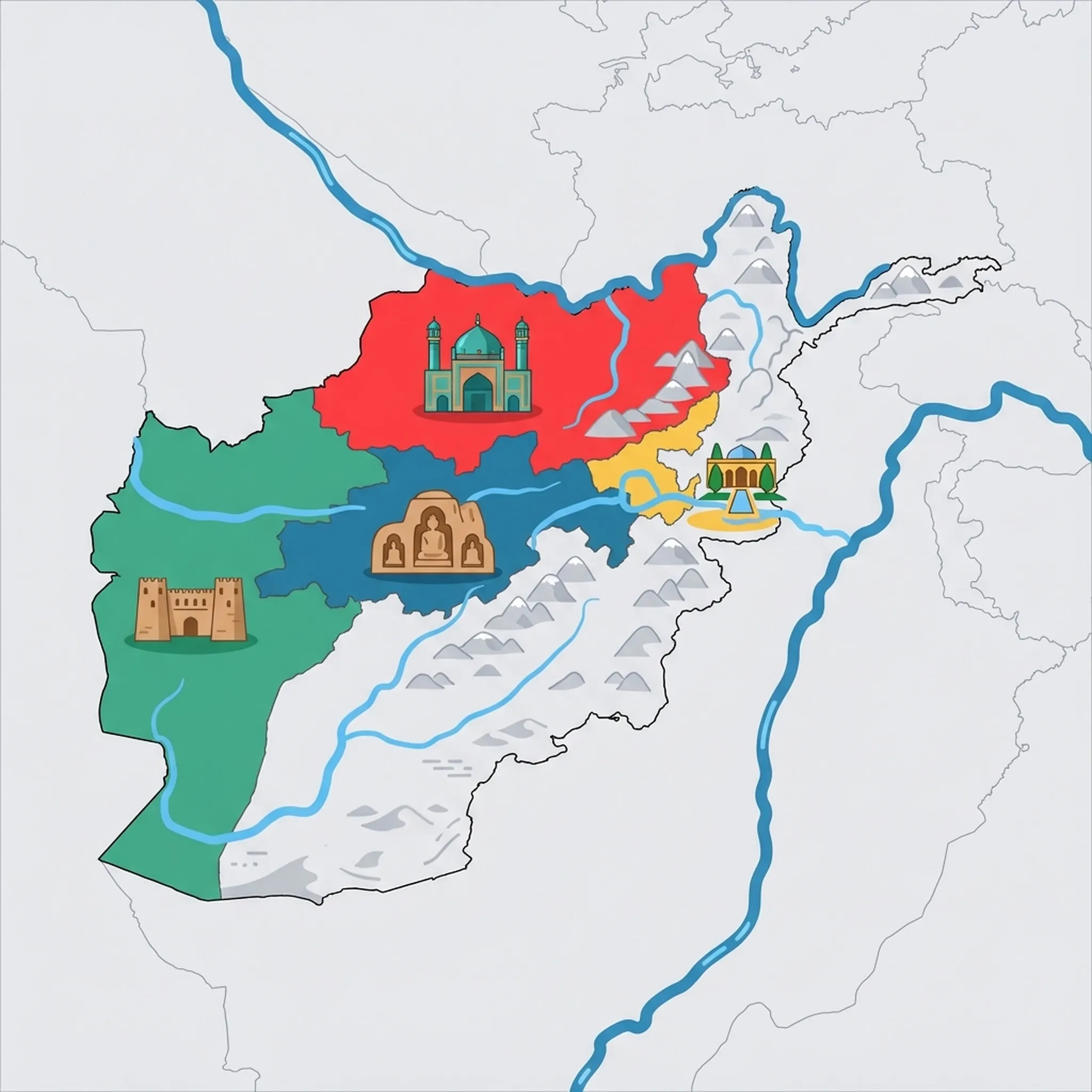
4 Regions
Bamyan and the Central Highlands
Ancient history carved into the heart of the Hindu Kush 🏔️
Herat and the Western Borderlands
A turquoise jewel of Timurid architecture and history 🕌
Kabul and the Panjshir Valley
The bustling heart of the nation surrounded by peaks 🦅
Mazar-i-Sharif and the Northern Plains
The Noble Shrine and the Mother of Cities 🕌
Click on a region marker to explore details. Use the dropdown to color regions by activity suitability.

Getting There & Around
Getting There
- By Air – Kabul International Airport (KBL) is the primary gateway. FlyDubai and Kam Air operate regular flights from Dubai, while other regional carriers connect from Istanbul and Islamabad.
- By Land – Border crossings, such as the Khyber Pass (Pakistan) or Shir Khan Bandar (Tajikistan), are subject to unpredictable closures and security risks. Air travel is strongly preferred.
- Entry Requirements – All visitors require a visa. Tourist visas are currently difficult to obtain and rules change frequently. Check your government website for the latest visa requirements, or use the IATA Travel Centre entry-requirements checker.
Getting Around
- Private Driver – The only safe way for families to navigate. Hiring a car with a local driver/guide is essential for passing checkpoints and navigating erratic traffic.
- Domestic Flights – Kam Air and Ariana Afghan Airlines connect Kabul to major regional hubs like Herat and Mazar-i-Sharif, bypassing dangerous roads.
- City Transport – Taxis are available in cities like Kabul; fares should be negotiated in advance (approx. 100–300 AFN for short trips). Public buses are not recommended for tourists.
Official Links

Packing List
Essential for women and girls to adhere to strict local dress codes immediately upon arrival.
ATMs don't accept foreign cards. Bring pristine, post-2013 bills for exchange.
Electricity cuts are frequent and daily, even in hotels.
Tap water is unsafe and bottled water isn't always available in remote areas.
Internet is unreliable and checkpoints may demand physical copies of permits.
Dust is ubiquitous and running water for handwashing can be scarce.

Activities & Best Times

Adventure & Nature
Very GoodHiking, wildlife, outdoor exploration, ecotourism
The Panjshir Valley and Hindu Kush foothills offer exceptional, authentic mountain wilderness and trekking opportunities such as the Anjuman Pass. Peak conditions occur from May to September when high-altitude trails are accessible and temperatures are optimal for exploration.
Features the spectacular Band-e-Amir National Park and the rugged Hindu Kush, offering world-class trekking and immersion in untouched wilderness. Peak summer provides dry, clear conditions for high-altitude exploration, while winter brings extreme sub-zero temperatures and snow-blocked trails.
Features rugged landscapes like the Marmul Gorge, providing authentic wilderness exploration for self-sufficient travelers. Visitation is limited to spring when the desert blooms and temperatures are moderate; summer heat makes trekking in the exposed northern terrain hazardous.

City & Cultural
Very GoodUrban tourism, museums, historical sites, architecture
Home to the magnificent Shrine of Hazrat Ali (Blue Mosque) and the 2,500-year-old ruins of Balkh, the region offers profound Silk Road heritage. Peak conditions occur during spring and autumn; summer heat in the northern plains is extreme, while winters are bitingly cold and damp.
Kabul boasts significant cultural heritage including the National Museum and Babur's Gardens, offering deep historical immersion. Spring and autumn provide the most pleasant weather for walking tours, while winter temperatures are too severe for comfortable city exploration.
Home to the UNESCO-listed Bamyan Buddhas and the remote Minaret of Jam, this region offers deep historical immersion in ancient Silk Road heritage. Optimal visitation is during the mild, dry months of late spring through early autumn; winter is prohibitively harsh for exploring outdoor archaeological sites.

Road Trips & Scenic
GoodScenic drives, countryside tours, route-based travel
The Salang Pass is one of the world's most dramatic and challenging mountain transits, connecting the north to Kabul. Best traversed during spring or autumn to avoid the dangerous winter snows of the Hindu Kush and the oppressive summer dust and heat of the Amu Darya plains.
Iconic routes like the Salang Pass and the drive through the Panjshir Valley offer world-class mountain scenery and dramatic landscapes. Travel is best from late spring to autumn to ensure the passes are free of snow and driving conditions are safe.
The scenic drive from Bamyan to Band-e-Amir offers dramatic geological formations, though road quality and security remain significant considerations for international families. Summer provides the most stable road conditions and best visibility, while winter snows often render high passes like Shibar impassable.

Relaxation & Wellness
GoodSpa retreats, wellness centers, peaceful getaways
The region hosts several natural hot springs like Paymuri, providing a rustic and authentic wellness experience in a dramatic mountain setting. These outdoor thermal baths are best enjoyed in the warm summer months, as remote locations become difficult to reach during the snowy winter season.
Traditional historic hammams offer a unique and authentic window into local wellness culture, especially during the cold Afghan winter. While culturally significant, they represent a traditional local experience rather than the luxury spa facilities expected at the international level.
The Obeh Hot Springs offer an authentic, albeit rustic, thermal experience that has been a regional draw for centuries. These are best visited when ambient air temperatures are cooler in spring and autumn, as the summer heat makes thermal bathing unpleasant.

Sports & Active
GoodSport tourism, fitness activities, active recreation
Rugged mountain terrain and established trekking routes in the Panjshir Valley provide substantial opportunities for active exploration and hiking. These activities are best suited for the warmer, drier months when the challenging alpine infrastructure is most navigable.
High-altitude trekking peaks like Shah Foladi and dedicated cycling routes offer physically demanding activities for active families in a unique landscape. The summer window is essential for these sports to avoid high-altitude snow and the heavy rains of early spring.

Festivals & Seasonal
MarginalEvents, celebrations, seasonal attractions

Theme Park & Entertainment
MarginalAmusement parks, family entertainment venues
Kabul hosts several regional-scale amusement and water parks such as Habibullah Zazai Park, though they lack international-tier scale. They are primarily seasonal, with peak attendance occurring during the hot summer months when water-based activities are most appealing.
Mellat Park provides a localized amusement experience that may serve as a brief diversion for families but does not meet international theme park standards. Operation and comfort are highly weather-dependent, with peak suitability during the mildest transitional months.

Public Holidays & Calendar Next 12 months
Public holidays, festivals, cultural celebrations, and seasonal natural phenomena coming up in Afghanistan over the next 12 months.
Loading holidays and events...

Climate & Weather
Bamyan and the Central Highlands
Show Details
| Month | Temp °C | Rain | Humidity |
|---|
Herat and the Western Borderlands
Show Details
| Month | Temp °C | Rain | Humidity |
|---|
Kabul and the Panjshir Valley
Show Details
| Month | Temp °C | Rain | Humidity |
|---|
Mazar-i-Sharif and the Northern Plains
Show Details
| Month | Temp °C | Rain | Humidity |
|---|

Travel Advisory
All major international agencies agree that travel to Afghanistan is extremely dangerous due to terrorism, civil conflict, and the risk of arbitrary detention. Consular assistance is virtually non-existent.
Safety Topics
Traveller Advice (4 groups)

Sexual and gender minorities face severe legal and physical risks, as same-sex relationships are criminalized under the current legal framework.

Female visitors face extreme restrictions on movement, including the requirement of a male chaperone and strict adherence to specific dress codes. Violence against women remains a widespread concern with no legal recourse.

Individuals working for aid or faith-based organizations are specifically targeted for surveillance and arbitrary arrest. Their movements are closely monitored by local security services.

Media professionals are often viewed with suspicion of espionage. Reporters face high risks of detention and should expect their activities to be scrutinised by the de facto authorities.
Agency Summaries
Refrain from visiting due to the extremely unstable safety environment, frequent terror incidents, ongoing civil conflict, and significant threats of being kidnapped or detained by authorities. Human rights are broadly suppressed and embassy services are suspended.
Do not travel for any reason. Foreign nationals face extreme risks of terrorism, arbitrary detention, and violent crime. Consular services are not available within the country and local authorities actively monitor foreign visitors.
A high risk of terrorism and general instability makes travel to any part of the country extremely dangerous. Irish citizens are advised to avoid all travel.
No part of the country is considered safe. Australians are at critical risk of terror attacks, kidnapping, and indefinite detention. Border regions are especially dangerous due to military conflict with neighboring countries.
The security landscape is hostile and volatile. Foreigners are primary targets for kidnapping and terrorist groups. New Zealanders currently present should leave immediately.
Travel is discouraged under all circumstances. The security climate is unpredictable, with a high risk of detention for foreign citizens. Tensions at the borders, particularly with Pakistan, have led to violent clashes.
Information is provided for general guidance only and does not constitute travel, safety, medical, or legal advice. Conditions may change. Users are responsible for independently verifying information before travel.