
Mazar-i-Sharif and the Northern Plains
The Noble Shrine and the Mother of Cities 🕌
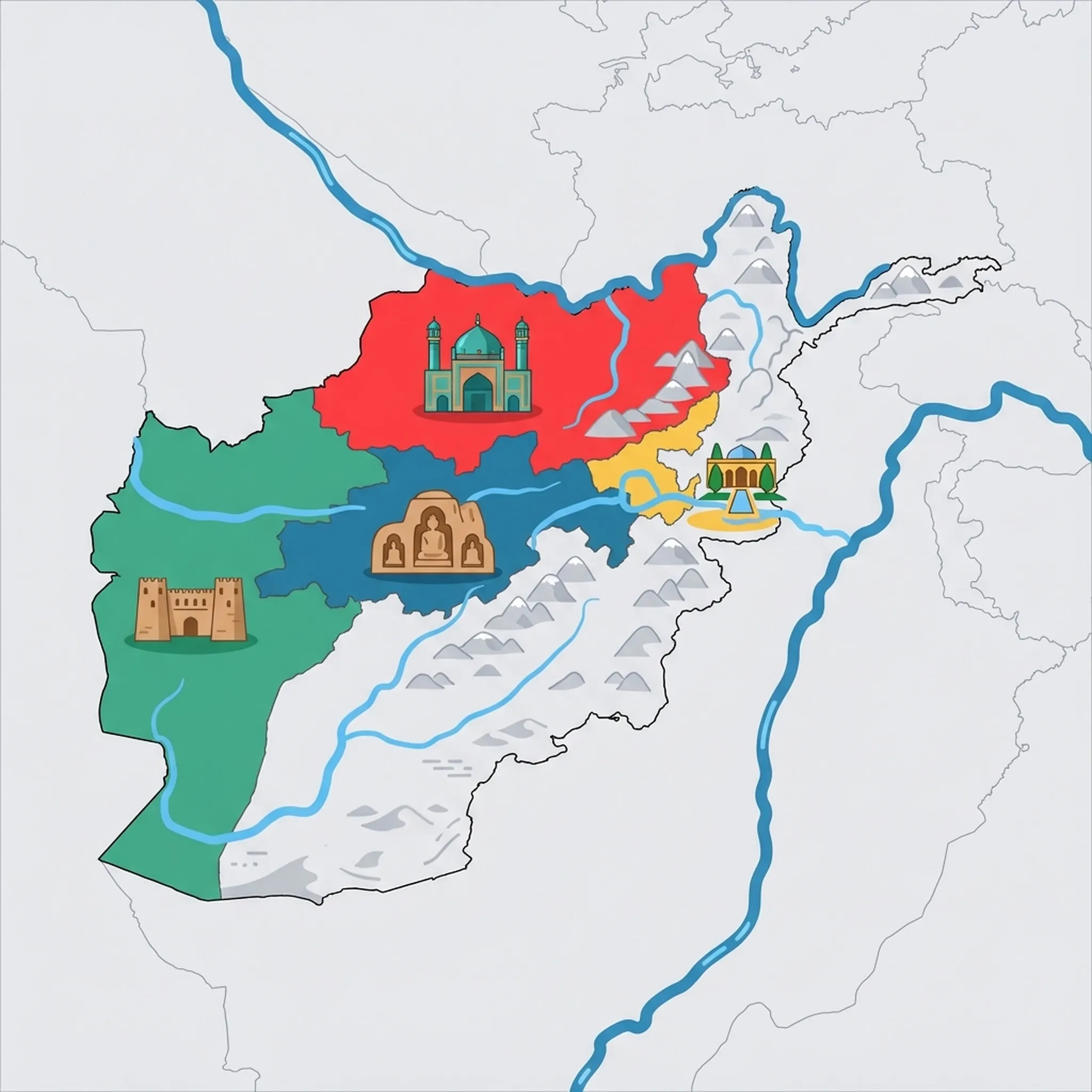
Click a region to explore
⚠️ SAFETY WARNING: Due to the threat of terrorism and risk of kidnapping, government agencies (including CA, USA, UK, AU, IE, and NZ) advise travelers to avoid all travel to Mazar-i-Sharif and the Northern Plains. The region remains volatile, and foreigners are high-value targets. Families are strongly urged to consult their own government's official travel advisory before considering a trip.
Overview
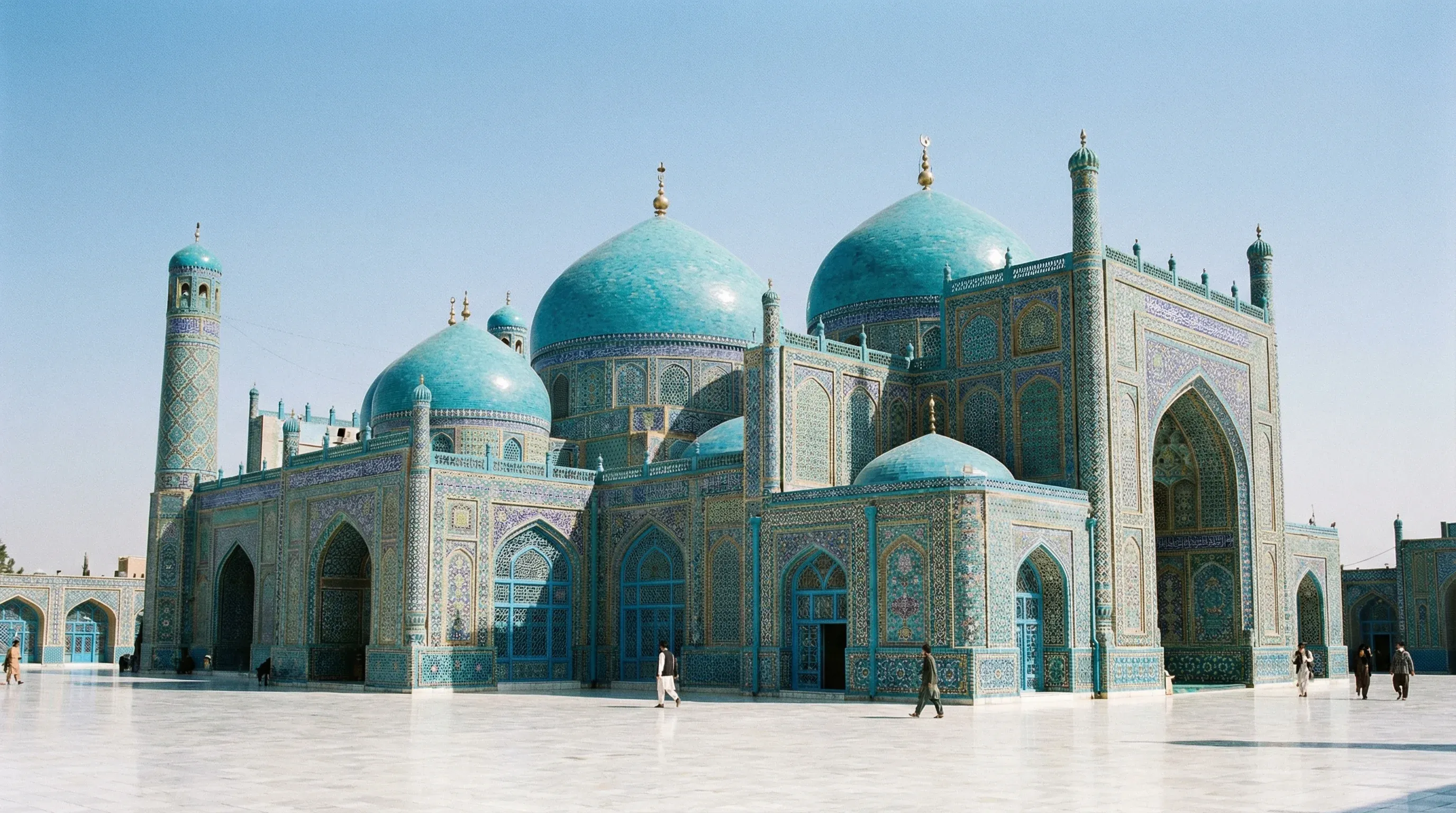
Mazar-i-Sharif is the commercial and spiritual hub of Northern Afghanistan. The city is dominated by the Shrine of Ali (The Blue Mosque), a masterpiece of Islamic architecture covered in thousands of intricate turquoise tiles. Unlike the enclosed mountains of Kabul, Mazar sits on the flat plains that stretch toward the Amu Darya river and the Uzbekistan border. This gives the city a more open, spacious feel, though summers here can be blisteringly hot.
A short drive west lies the ancient town of Balkh, one of the oldest cities in the world and the birthplace of the poet Rumi. For families who love history, the crumbling mud-brick walls and ancient stupas are a playground for the imagination. The culture here is a melting pot of Tajiks, Uzbeks, and Turkmens, reflected in the colorful clothing and distinct cuisine.
Key Attractions
The Shrine of Ali (Blue Mosque) is the city's focal point. It is not just a monument but a living public space where hundreds of white doves flock—legend says any dove that flies here turns white due to the sanctity of the place. The park surrounding the shrine is a popular spot for local families to walk and relax in the evenings.
In Balkh, the Green Mosque and the remains of the ancient city walls offer a glimpse into pre-Islamic and early Islamic history. The sheer age of the site, once a rival to Babylon, is palpable. The nearby Noh Gombad (Nine Domes) Mosque is one of the earliest Islamic buildings in the country, featuring exquisite stucco carving that has survived for over a millennium.
Practical Advice
The heat in Mazar can be intense. The best time to visit is during the Nowruz (Persian New Year) festival in March, when the weather is mild and the red tulips bloom across the plains, though this is also the busiest time.
Food & Drink
Typical meal times: Lunch is served 12:00 pm to 2:00 pm. Dinner is late, typically 8:00 pm to 10:00 pm, as families wait for the day's heat to subside.
Typical meal costs: Dining is very affordable. A family feast costs around 1,500–2,500 AFN (approx. $21–35 USD / €19–32 EUR).
Dietary requirements: The cuisine is influenced by Uzbekistan. Mutton and lamb are dominant. Vegetarians can enjoy fresh melons (some of the best in the world) and fresh bread, but main courses are almost exclusively meat-based.
Signature dishes:
- Mazar Kebab – Grilled meat that is often fattier and more succulent than southern varieties, served with mounds of fresh onion and naan.
- Uzbek Pulao – A northern variation of the rice dish, typically made with short-grain rice, plenty of carrots, garlic, and sometimes quail eggs.
- Sheer Pera – A sweet, milky fudge-like dessert flavored with cardamom and pistachios, a favorite treat for children.
Why this score?
Traveling through the Northern Plains involves traversing the Salang Pass, one of the highest and most challenging mountain roads in the world. The vast, windswept steppes and the ancient, semi-excavated ruins of Balkh offer a rugged experience far removed from developed tourism. The environment is physically demanding and requires a high level of independence and resilience from travelers.
Why this score?
Mazar-i-Sharif possesses regional hospital facilities that can handle basic medical needs and minor emergencies for the local population. However, for foreign travelers, the lack of modern diagnostic technology and English-speaking practitioners makes it a high-risk environment for medical issues. Serious cases generally require transport to Kabul or an international medical evacuation.
Why this score?
The Blue Mosque and the ruins of ancient Balkh are major cultural magnets, but they attract a very limited number of foreign visitors compared to global hubs. Most international presence is restricted to journalists, aid workers, or specialized cultural tourists. The region remains an extremely off-the-beaten-path destination with very little traditional tourism infrastructure for families.

Mazar is economically accessible. A good hotel costs 2,000–3,500 AFN (approx. $28–49 USD / €26–45 EUR). Seasonal fruit, especially melons and grapes, is incredibly cheap, often less than 70 AFN (approx. $1 USD / €0.90 EUR) per kg. As with other regions, the primary cost for any Western visitor would be security logistics.

Getting Here & Around
Getting Here
- Air – Mazar-i-Sharif International Airport (MZR) has direct flights to Kabul and occasional international connections to Turkey.
- Road – Connected to Kabul via the Salang Tunnel. The road is scenic but dangerous. The border crossing at Hairatan connects to Uzbekistan via the Friendship Bridge.
Getting Around
- Car / Taxi – Private taxis are the standard way to move around. The roads in the city are wide and generally flat.
- Shared Van – Minibuses run between Mazar and Balkh, but private hire is recommended for families for safety and comfort.
Nearby Airports (1 airport)
Mazar I Sharif
MZRMazar-I-Sharif
View full flight map for Afghanistan →

Packing List
Footwear must be removed frequently when visiting shrines and mosques.
The northern plains near the river have more insects than the high mountains.
Summer temperatures frequently exceed 40°C (104°F); breathable fabric is vital.
Street lighting is minimal and power cuts are frequent in the evenings.
Essential for women and girls to adhere to strict local dress codes immediately upon arrival.
ATMs don't accept foreign cards. Bring pristine, post-2013 bills for exchange.
Electricity cuts are frequent and daily, even in hotels.
Tap water is unsafe and bottled water isn't always available in remote areas.
Internet is unreliable and checkpoints may demand physical copies of permits.
Dust is ubiquitous and running water for handwashing can be scarce.

Activities & Best Times

Urban tourism, museums, historical sites, architecture
Home to the magnificent Shrine of Hazrat Ali (Blue Mosque) and the 2,500-year-old ruins of Balkh, the region offers profound Silk Road heritage. Peak conditions occur during spring and autumn; summer heat in the northern plains is extreme, while winters are bitingly cold and damp.

Scenic drives, countryside tours, route-based travel
The Salang Pass is one of the world's most dramatic and challenging mountain transits, connecting the north to Kabul. Best traversed during spring or autumn to avoid the dangerous winter snows of the Hindu Kush and the oppressive summer dust and heat of the Amu Darya plains.

Hiking, wildlife, outdoor exploration, ecotourism
Features rugged landscapes like the Marmul Gorge, providing authentic wilderness exploration for self-sufficient travelers. Visitation is limited to spring when the desert blooms and temperatures are moderate; summer heat makes trekking in the exposed northern terrain hazardous.

Events, celebrations, seasonal attractions
The city is the national epicenter for Nowruz (Persian New Year) and the Gul-i-Surkh festival, where the raising of the Janda attracts pilgrims from across Central Asia. This is a strictly seasonal event centered around the spring equinox in March, with residual floral blooms in April.




Public Holidays & Calendar Next 12 months
Public holidays, festivals, cultural celebrations, and seasonal natural phenomena coming up in Mazar-i-Sharif and the Northern Plains over the next 12 months.
Loading holidays and events...

Travel Advisory
All major international agencies agree that travel to Afghanistan is extremely dangerous due to terrorism, civil conflict, and the risk of arbitrary detention. Consular assistance is virtually non-existent.
Safety Topics
Traveller Advice (4 groups)

Sexual and gender minorities face severe legal and physical risks, as same-sex relationships are criminalized under the current legal framework.

Female visitors face extreme restrictions on movement, including the requirement of a male chaperone and strict adherence to specific dress codes. Violence against women remains a widespread concern with no legal recourse.
Individuals working for aid or faith-based organizations are specifically targeted for surveillance and arbitrary arrest. Their movements are closely monitored by local security services.

Media professionals are often viewed with suspicion of espionage. Reporters face high risks of detention and should expect their activities to be scrutinised by the de facto authorities.
Agency Summaries
Refrain from visiting due to the extremely unstable safety environment, frequent terror incidents, ongoing civil conflict, and significant threats of being kidnapped or detained by authorities. Human rights are broadly suppressed and embassy services are suspended.
Do not travel for any reason. Foreign nationals face extreme risks of terrorism, arbitrary detention, and violent crime. Consular services are not available within the country and local authorities actively monitor foreign visitors.
A high risk of terrorism and general instability makes travel to any part of the country extremely dangerous. Irish citizens are advised to avoid all travel.
No part of the country is considered safe. Australians are at critical risk of terror attacks, kidnapping, and indefinite detention. Border regions are especially dangerous due to military conflict with neighboring countries.
The security landscape is hostile and volatile. Foreigners are primary targets for kidnapping and terrorist groups. New Zealanders currently present should leave immediately.
Travel is discouraged under all circumstances. The security climate is unpredictable, with a high risk of detention for foreign citizens. Tensions at the borders, particularly with Pakistan, have led to violent clashes.
Information is provided for general guidance only and does not constitute travel, safety, medical, or legal advice. Conditions may change. Users are responsible for independently verifying information before travel.