
Tirana & Central Coast
A colorful capital and the gateway to the Adriatic 🌈🚠
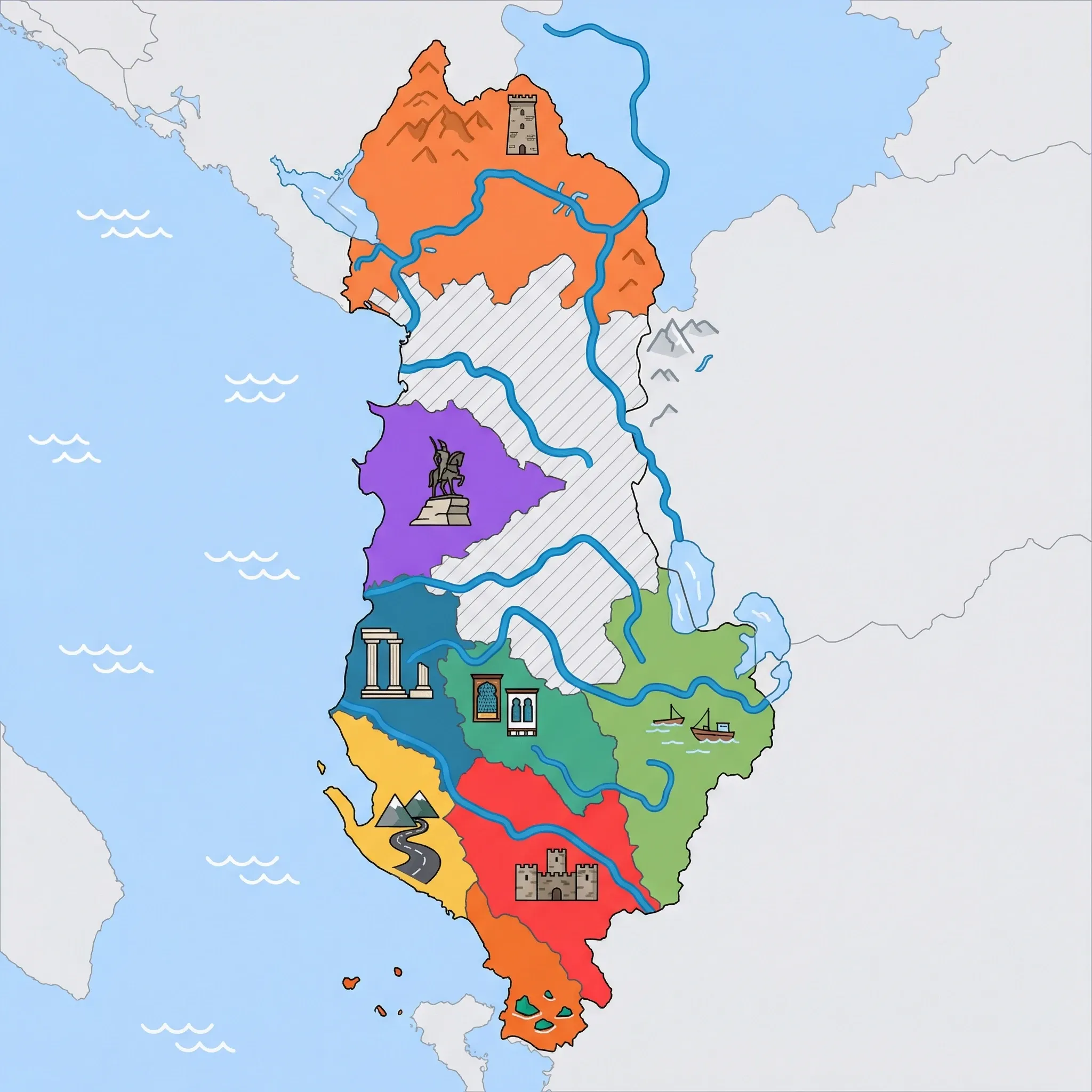
Click a region to explore
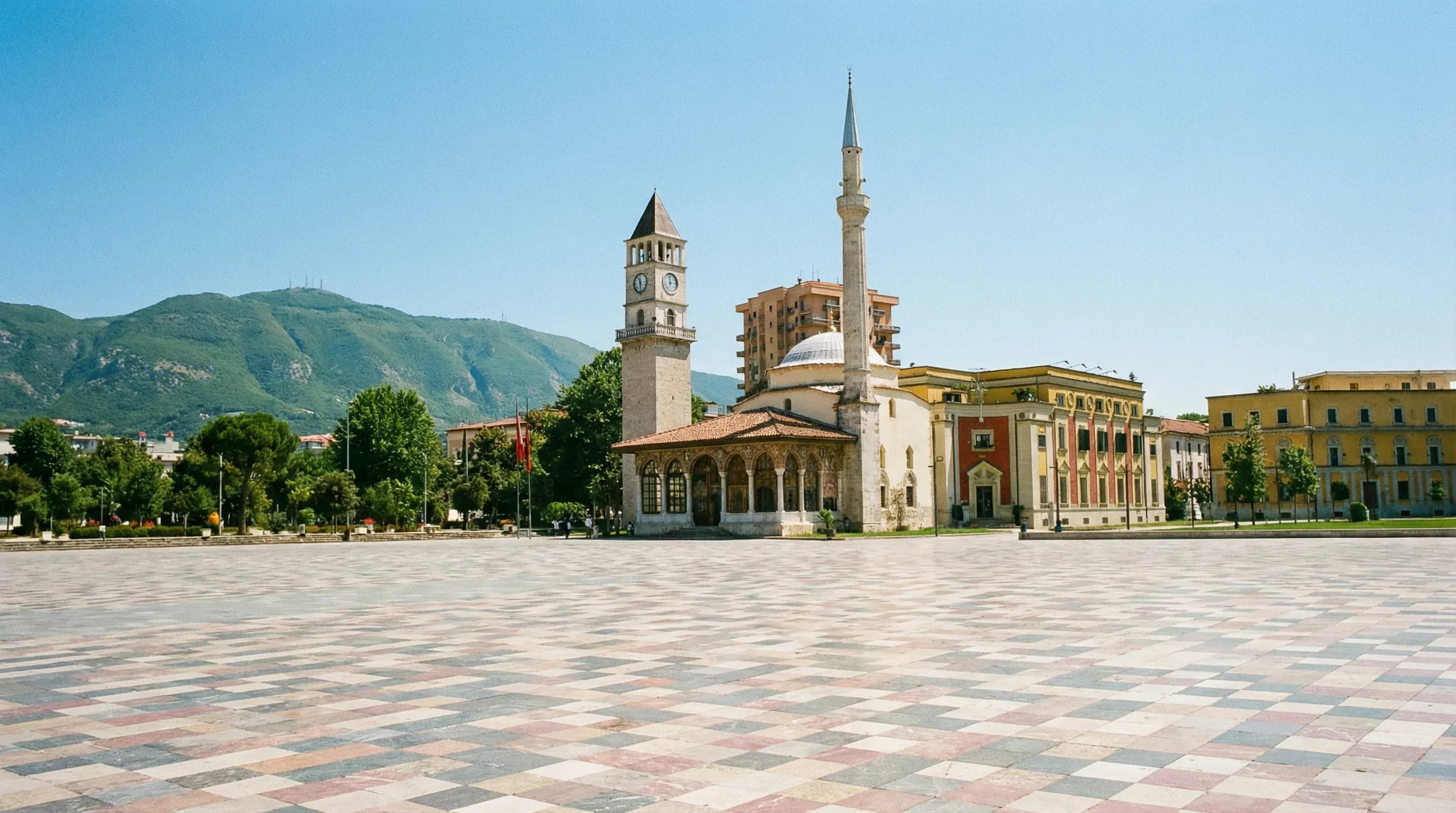
Tirana is the beating heart of Albania. It is a city that has transformed from gray communism to a vibrant, painted metropolis. For families, it is surprisingly fun—the center is largely pedestrianized around Skanderbeg Square, where kids can ride merry-go-rounds and run freely. The city is home to unique history, such as the Bunk'Art museums (massive anti-nuclear bunkers turned into art/history spaces), which are spooky and fascinating for older children. The food scene is the best in the country, and the coffee culture is legendary (parents will appreciate this). Just 30 minutes west lies Durrës, the ancient port city with a long, shallow sandy beach that serves as Tirana's seaside. While Durrës beach is built-up and busy, it offers easy, warm swimming for toddlers.
The region is defined by the contrast between the urban energy of Tirana and the nature of Mount Dajti. You can be sipping espresso in the trendy Blloku district and 20 minutes later be on a cable car soaring over forests. It is the most cosmopolitan part of Albania, meaning English is spoken everywhere, medical facilities are good, and modern malls provide air-conditioned breaks from the summer heat.
Key Attractions
The Dajti Mountain Park is the top family excursion. The "Dajti Ekspres" cable car ride takes 15 minutes and offers stunning views. At the top, there is a plateau with minigolf, adventure parks, and rotating bars. Back in the city, Bunk'Art 1 (on the outskirts) is a massive underground bunker complex that tells the story of the dictatorship. It’s huge, echoing, and immersive—like walking into a Cold War movie. Bunk'Art 2 is in the center but is more claustrophobic and focused on police history (maybe too scary for young kids).
In Durrës, the Durrës Amphitheatre is a Roman wonder hidden among modern apartment blocks. You can walk into the tunnels where gladiators once waited. Zoo Park Tirana has been recently renovated and is a gentle spot for younger children located near the artificial lake park.
Practical Advice
Tirana traffic is chaotic; avoid driving in the city center if possible. Taxis are cheap. Summer in Tirana is stiflingly hot (concrete effect); escape to Dajti or the coast. Durrës beach is very crowded in summer and water quality varies—go further north (Cape of Rodon) or south (Golem) for better spots.
Food & Drink
Typical meal times: Lunch 12:30 pm to 2:30 pm. Dinner 7:30 pm to 10:00 pm. Tirana never really sleeps.
Typical meal costs: Diverse. You can eat a byrek for 50 ALL ($0.50) or have a fine dining meal for 4,000 ALL ($42). Average family meal: 3,000 ALL (approx. $32 USD / €30 EUR).
Dietary requirements: Tirana is the most accommodating place for allergies, vegans, and gluten-free needs. International cuisine (sushi, Italian, Mexican) is widely available.
Signature dishes:
- Fërgesë Tirane – A rich dish of peppers, tomatoes, and cottage cheese, served hot with bread.
- Byrek – Found everywhere, but Tirana has the best variety. Spinach, cheese, or meat pies.
- Trileçe – "Three milk cake." A sponge cake soaked in evaporated milk, condensed milk, and heavy cream, topped with caramel.
Why this score?
The region is the most developed and urbanized in Albania, with adventure largely limited to the Dajti Ekspres cable car and the managed hiking trails on Mount Dajti. Outside of the occasional coastal hike at Cape of Rodon, the experience is primarily focused on urban culture, dining, and beach resorts.
Why this score?
Tirana is the only region in Albania offering high-standard private medical care, such as the American Hospital and Hygeia, which feature modern equipment and English-speaking specialists. It is the national hub for all complex medical procedures and the most reliable location for travelers with international health insurance.
Why this score?
As the primary entry point via Rinas Airport and the major port of Durrës, this region handles the highest volume of foreign arrivals in the country. Tirana has evolved into a vibrant 'city break' destination known for its history, nightlife, and accessible Mount Dajti, while Durrës remains the most visited beach area for regional travelers.

Tirana has prices for everyone. Hostels are cheap, while 5-star hotels charge international rates (approx. $150+ USD). Coffee is consistently cheap (70–100 ALL). Durrës beach hotels are good value in June/September but price up in August.
Family Travel Notice
Minors traveling with only one parent or alone must carry notarized parental consent. Note that children born to Albanian parents may be regarded as local citizens, regardless of their place of birth.

Getting Here & Around
Getting Here
- Airport – Tirana International Airport (TIA) is the main hub, 20 minutes from the center.
- Bus – The new bus terminals (North/South and East) are on the outskirts; you'll need a taxi or city bus to get to the center.
- Ferry – Ferries from Bari/Ancona (Italy) arrive in Durrës, a 35-minute drive from Tirana.
Getting Around
- Walking – Tirana's center is compact and walkable.
- Taxi – The best way to move around Tirana. Apps like MerrTaxi or Speed Taxi work well.
- Bus – Cheap but crowded and confusing for tourists.
- Cable Car – The only way to reach the top of Mount Dajti comfortably.
Nearby Airports (1 airport)
Tirana International Airport Nënë Tereza
TIATirana
View full flight map for Albania →
Official Links

Packing List
Traffic fumes and dust in Tirana can be heavy during rush hour or dry spells.
Tirana is a noisy city; central hotels often suffer from street noise late into the night.
Tap water is generally not potable, but many hotels provide large dispensers to refill.
Essential for the Albanian Riviera (Ksamil, Himarë) where many beautiful beaches are pebbly or rocky.
Cobblestone streets in historic towns like Gjirokastër and Berat make strollers nearly impossible to use.
Credit cards are rarely accepted outside luxury hotels and supermarkets; you will need cash for almost everything.
Roads like the Llogara Pass and routes to the Alps are incredibly winding and can affect sensitive travelers.
Occasional power cuts can occur, and street lighting in smaller coastal villages can be sparse.
Mosquitoes can be aggressive in coastal areas and near lagoons like Karavasta during summer evenings.

Activities & Best Times

Hiking, wildlife, outdoor exploration, ecotourism
Excellent proximity between the capital and rugged terrain like Mount Dajti and Lake Bovilla allows for high-quality hiking and cave exploration. Spring and autumn offer the best visibility and comfortable temperatures for trekking.

Urban tourism, museums, historical sites, architecture
Tirana offers a unique, authentic post-communist atmosphere with world-class museums like Bunk'Art, while Durrës provides significant Roman history. Best visited in transitional months to avoid intense summer heat and high winter rainfall.

Beach resorts, marine activities: diving, snorkelling, kite surfing, wind surfing, sailing
Features accessible family resorts in Golem and the more secluded, scenic Cape of Rodon. Peak season reflects the window for optimal Adriatic water temperatures and settled weather, while winter is too cold for seaside activity.

Scenic drives, countryside tours, route-based travel
Scenic drives like the SH16 to Mount Dajti and the route to Cape of Rodon offer dramatic coastal and highland vistas. Peak timing ensures dry roads and the clear visibility necessary to appreciate the diverse landscape.

Sport tourism, fitness activities, active recreation
Solid infrastructure for adventure sports is present, including the Dajti Adventure Park and major ziplines. These activities are most enjoyable during the dryer months when outdoor equipment is safest and most accessible.

Learning experiences, scientific sites, historical education
The Museum of Natural Sciences offers specialized scientific interest but is not a standalone destination-level motivator. Best visited when city infrastructure is most active during the spring and autumn school terms.

Amusement parks, family entertainment venues
Contains several regional-scale water and amusement parks that serve family travelers during the height of summer. These facilities lack global-tier recognition and operate only during the warmest months.

Attractions (11 total)



Public Holidays & Calendar Next 12 months
Public holidays, festivals, cultural celebrations, and seasonal natural phenomena coming up in Tirana & Central Coast over the next 12 months.
Loading holidays and events...

Travel Advisory
While Albania is widely accessible for tourism, multiple international agencies advise increased vigilance due to crime and occasional civil unrest. Risk assessments are evenly split between normal and elevated caution, resulting in a moderate advisory level overall.
Safety Topics
Traveller Advice (3 groups)
Minors traveling with only one parent or alone must carry notarized parental consent. Note that children born to Albanian parents may be regarded as local citizens, regardless of their place of birth.

Ensure your passport is valid for at least six months and that you have comprehensive medical insurance that covers emergency evacuation, as local healthcare standards vary significantly outside major cities.

When visiting rural or less developed areas, be aware that solo female travelers may experience occasional verbal harassment or unwanted attention.
Agency Summaries
General safety levels are high, with no special restrictions for Irish citizens. Visitors are encouraged to monitor local news. Consular assistance is managed by the embassy in Greece.
No major travel restrictions are in place. Travelers are advised to obtain comprehensive insurance, as medical facilities are limited outside the capital. Specific documentation like an International Driving Permit and Green Card is necessary for motorists.
Heightened vigilance is recommended due to the potential for political demonstrations in Tirana and limited healthcare infrastructure. Consular support is provided through the embassy in Italy as there is no local Australian mission.
There are more safety and security concerns than typically found in New Zealand, primarily related to crime and the potential for civil unrest. Petty theft is a risk in crowded tourist areas.
Visitors should be more vigilant due to crime levels, particularly street crime in urban centers and organized crime activity countrywide. The embassy has highlighted specific dining establishments in Tirana to avoid due to security concerns and unfair business practices.
Albania is generally considered safe for visitors, though travelers should remain aware of aggressive local driving habits and potential hazards on rural roads. Specific regulations apply to children of Albanian descent and those traveling with only one parent.
Information is provided for general guidance only and does not constitute travel, safety, medical, or legal advice. Conditions may change. Users are responsible for independently verifying information before travel.