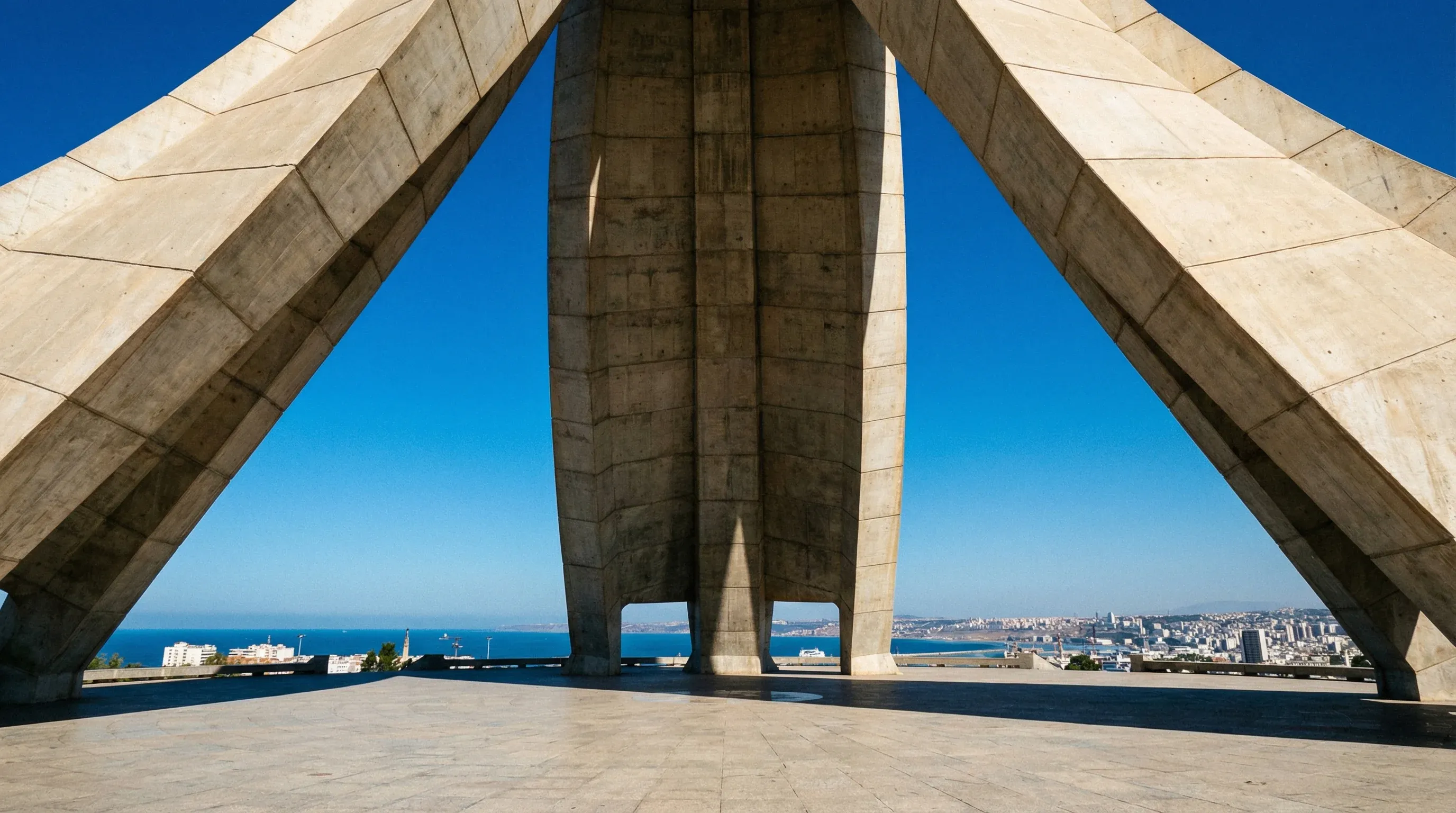

Algiers & Tell Atlas
Where the Mediterranean meets the mountains 🌊🏔️
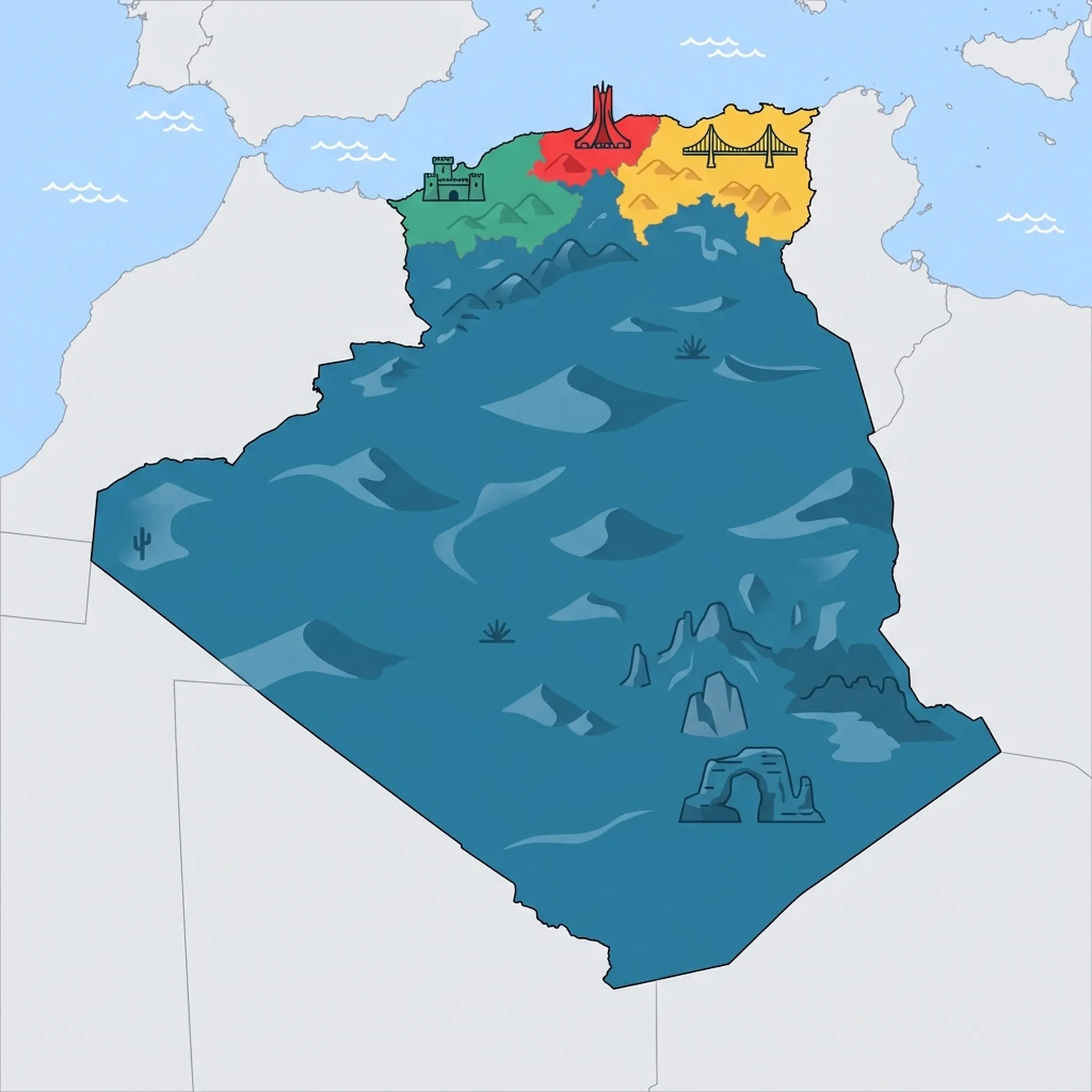
Click a region to explore
Overview
Algiers is a city of captivating contrasts that sprawls like a whitewashed amphitheater along the edge of the Mediterranean bay. For families, the region offers a unique blend of frenetic urban energy, deep historical layers, and surprising pockets of greenery. The capital, Algiers (El Djazaïr), is a sensory playground where the smell of salty sea air mixes with fresh pastries and jasmine. While the city traffic can be chaotic, the pedestrianized seafront and the historic districts provide plenty of space for exploration. The region enjoys a mild Mediterranean climate, making it a pleasant destination year-round, though spring is particularly vibrant when the Mitidja Plain is in bloom.
Beyond the city limits, the Tell Atlas region offers a quick escape into nature and antiquity. Families can travel west to the coast to find ancient Roman history sitting right on the water's edge, or head inland towards the mountains for cooler air and hiking. The culture here is warm and hospitable; Algerians adore children, and you will likely find locals going out of their way to help families navigate the streets. It is a place where history isn't just in museums—it is lived in the streets, from the Ottoman-era palaces to the French boulevards.
Key Attractions
The crown jewel of the city is the Casbah of Algiers, a UNESCO World Heritage site. This ancient walled citadel is a labyrinth of narrow, winding streets that feels like stepping back in time. For older children, it is a fascinating history lesson; for younger ones, it is a real-life maze (best explored with a local guide to avoid getting lost). Down by the water, the Palais des Rais (Bastion 23) offers a glimpse into the life of Ottoman corsairs with its beautiful tiled courtyards and cannons facing the sea.
For a change of pace, the Jardin d'Essai du Hamma is an absolute must-visit. This stunning botanical garden features massive dragon trees and banyan trees with tangled roots that look like they belong in a jungle adventure movie—it was actually a filming location for the early Tarzan films. A short drive west brings you to the Tipasa Archaeological Park, where Roman ruins tumble down into the turquoise sea. It is an evocative site where kids can scramble over ancient stones while parents enjoy the pine-scented breeze. Finally, take the cable car up to the Maqam Echahid (Martyrs' Memorial) for panoramic views over the entire bay.
Practical Advice
Spring (March to May) and Autumn (September to November) are the best times to visit to avoid the sweltering summer heat. Algiers has a modern Metro system which is clean, safe, and cheap—a great way to avoid the city's notorious traffic jams. Strollers can be difficult in the Casbah due to stairs; a carrier is recommended for toddlers.
Food & Drink
Typical meal times: Lunch is the main affair, served from 12:00 pm to 2:30 pm. Dinner is usually eaten later, from 7:30 pm to 9:30 pm.
Typical meal costs: A meal for a family of four in a mid-range restaurant costs around 4,000–6,500 DZD (approx. $30–48 USD / €28–45 EUR). Street food is very cheap.
Dietary requirements: Vegetarian options are generally easy to find (salads, vegetable stews, couscous without meat), but veganism is less understood—always ask if butter or smen (fermented butter) was used. Bread is served with everything.
Signature dishes:
- Rechta – Thin, flat noodles served with a white sauce of cinnamon, turnips, chickpeas, and chicken; an Algiers specialty.
- Sardines in Chermoula – Fresh sardines marinaded in a spicy garlic and herb sauce, often fried or grilled.
- Mhadjeb – Flaky semolina pancakes stuffed with a mixture of onions and tomatoes, perfect for a quick snack.
- Makroud – Semolina pastries filled with date paste and soaked in honey, often flavored with orange blossom water.
Why this score?
The region offers accessible outdoor activities in the Tell Atlas and Chréa National Park, but the infrastructure is relatively developed for the country. It provides a comfortable mix of urban exploration and light hiking rather than a truly rugged wilderness experience.
Why this score?
Algiers offers the best healthcare in Algeria, with several large public hospitals and modern private clinics that occasionally cater to foreigners. While still behind Western European standards, it is the only place in the country where specialized care and some English-speaking staff are consistently available.
Why this score?
As the primary gateway to the country, Algiers receives the highest volume of international arrivals, including business travelers and heritage tourists visiting the Casbah. However, compared to global standards, it remains an emerging destination with a heavy reliance on domestic visitors and the Algerian diaspora.

Algiers is very affordable for international travelers. A comfortable hotel room for a family costs between 8,000–16,000 DZD (approx. $60–120 USD / €55–110 EUR). Public transport tickets are negligible, around 50 DZD (approx. $0.37 USD / €0.35 EUR). Entry fees to museums like the <a data-attraction-id="39325">Casbah</a> museums are often under 500 DZD (approx. $3.70 USD / €3.45 EUR). Cash is king; credit cards are rarely accepted outside luxury hotels.

Getting Here & Around
Getting Here
- Airports – Houari Boumediene Airport (ALG) is the main international hub, located about 20km east of the city center. It connects to major European and Middle Eastern cities.
- Train – The central station (Gare d'Alger) offers connections to Oran, Constantine, and Annaba.
- Ferry – Ferries connect the Port of Algiers with Marseille (France) and Alicante (Spain), though crossings are long (12+ hours).
Getting Around
- Metro & Tram – Algiers boasts a modern, safe, and efficient Metro system and tramway that covers many key areas, including near the Jardin d'Essai du Hamma. It is the most stress-free way to move for families.
- Taxi – Yassir (a local ride-hailing app similar to Uber) is widely used and recommended over flagging down yellow taxis, as it provides fixed pricing and tracking.
- Walking – The city center is walkable, but be prepared for steep hills and stairs, particularly near the Casbah of Algiers.
Nearby Airports (1 airport)
Houari Boumediene Airport
ALGAlgiers
View full flight map for Algeria →
Official Links

Packing List
The Casbah and many historic sites have steep stairs where strollers are impossible to use.
Public beaches are conservative; women often swim in burkinis or shorts/tees. Bikinis are rare outside private resorts.
While Arabic is official, French is the lingua franca of tourism and menus; English is not widely spoken.
Public restrooms often lack toilet paper and soap.
International cards are rarely accepted outside 5-star hotels; you must bring cash to exchange.
Public restrooms often lack paper; traditional water hoses are the norm.
European-style 2-pin plugs are standard; hotel availability of adapters is low.

Activities & Best Times

Hiking, wildlife, outdoor exploration, ecotourism
Chréa National Park provides an authentic mountain wilderness experience with ancient cedar forests and significant biodiversity. Ideal conditions for exploration occur in late spring and early autumn; summer is often too hot for strenuous trekking, while winter brings heavy mountain snow.

Urban tourism, museums, historical sites, architecture
Home to the UNESCO-listed Casbah of Algiers and world-class museums that offer deep historical immersion without mass commercialization. Spring and autumn provide the most comfortable walking temperatures for exploring the steep, narrow streets of the old city.

Beach resorts, marine activities: diving, snorkelling, kite surfing, wind surfing, sailing
Features a unique blend of Mediterranean beaches and nearby Roman ruins at Tipaza, offering more historical depth than standard beach resorts. Peak season aligns with the warmest sea temperatures and best conditions for the Sidi Fredj marina.

Spa retreats, wellness centers, peaceful getaways
Renowned for its historic thermal stations like Hammam Righa, providing an authentic North African spa tradition rooted in antiquity. The experience is most restorative during the cooler winter months when the thermal heat is most welcome.

Scenic drives, countryside tours, route-based travel
Dramatic coastal drives along the Turquoise Coast and the scenic Gorges de la Chiffa offer spectacular Mediterranean and mountain vistas. Travel is best in transitional seasons to avoid the peak summer traffic and winter fog in the high mountain passes.

Sport tourism, fitness activities, active recreation
The region features dedicated hiking routes in the Tell Atlas and adventure centers like Tikjda for active families. Infrastructure supports organized outdoor activities best during the temperate months when heat and precipitation are manageable.

Winter sports, ski resorts, snow activities
Offers a rare North African alpine experience at Tikjda and Chréa, though infrastructure is modest compared to European standards. The season is short and highly dependent on annual snowfall, appealing mainly as a novel excursion for experienced travelers.

Amusement parks, family entertainment venues
Regional facilities like Ben Aknoun and local water parks provide family entertainment but lack the world-class innovation and scale required for a primary international draw. These are best visited during peak summer when water-based attractions are fully operational.

Attractions (19 total)



Public Holidays & Calendar Next 12 months
Public holidays, festivals, cultural celebrations, and seasonal natural phenomena coming up in Algiers & Tell Atlas over the next 12 months.
Loading holidays and events...

Travel Advisory
All major agencies recommend exercising a high degree of caution throughout Algeria. While urban centers like Algiers are accessible, there are severe, standing 'Do Not Travel' warnings for all border regions and the Sahara due to extreme risks of terrorism, kidnapping, and banditry.
Safety Topics
Traveller Advice (4 groups)

Homosexuality is illegal in Algeria and can lead to imprisonment. There is little social acceptance, and LGBTQ+ individuals should exercise extreme discretion to avoid legal or safety issues.
Overland travel through the Sahara is extremely dangerous and subject to 'Do Not Travel' advisories. Travel to southern cities should be conducted only by air with reputable tour operators.

Female travellers should dress conservatively and avoid travelling alone, particularly at night. Harassment can occur, and adhering to local customs regarding attire is recommended to minimize attention.

Avoid all political gatherings and protests, which are frequent and can become violent. Photography of sensitive government or military sites is strictly prohibited and can lead to arrest.
Agency Summaries
Travellers should remain highly vigilant throughout Algeria due to the persistent threat of terrorism and kidnapping. There are strict 'Avoid all travel' warnings for all border areas and several northern provinces due to extreme security risks from banditry and militant activity.
Maintain a high level of personal security awareness. Serious risks of terrorist attacks and kidnapping exist, particularly in the south and near international borders. Protests are common and can escalate into violence with little notice.
While general travel is possible, the FCDO maintains strict warnings against all travel to within 30km of borders with Libya, Mauritania, Mali, Niger, and parts of Tunisia. Terrorism remains a high threat, with extremist groups active in remote and mountainous regions.
Increased safety and security concerns exist due to terrorism and kidnapping risks. Avoid all travel to border zones. Protests and civil unrest are frequent; travellers should avoid all demonstrations and follow local authority directives.
Heightened vigilance is required in all areas, including coastal cities. Non-essential travel to desert and border regions is strongly discouraged due to the acute threat of terrorism and the possibility of foreign nationals being targeted.
Exercise heightened awareness across the country because of terrorism and the risk of abduction. Do not travel to areas near the eastern and southern borders or into the Sahara Desert, where the U.S. government has extremely limited ability to assist citizens.
Information is provided for general guidance only and does not constitute travel, safety, medical, or legal advice. Conditions may change. Users are responsible for independently verifying information before travel.