
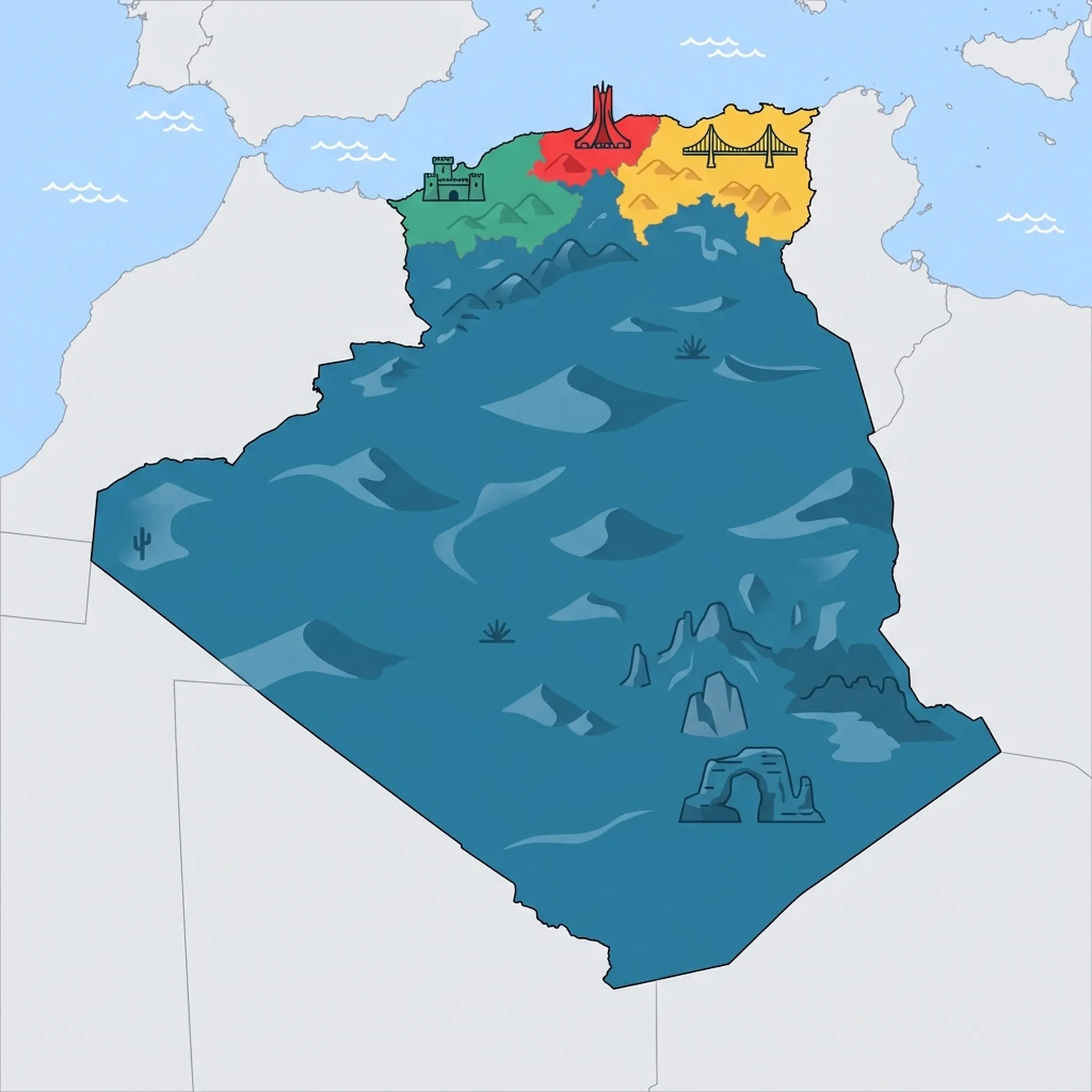
Click a region to explore
⚠️ SAFETY WARNING: Due to potential security risks in remote mountainous areas and regions near the Tunisian and Libyan borders, government agencies (including CA, USA, UK, and AU) advise travelers to exercise a high degree of caution or reconsider travel to parts of this region. Avoid areas within 30km of the borders and remote zones in the Chaambi mountains. Families are strongly urged to consult their own government's official travel advisory before considering a trip, as circumstances and risk assessments vary.
Overview
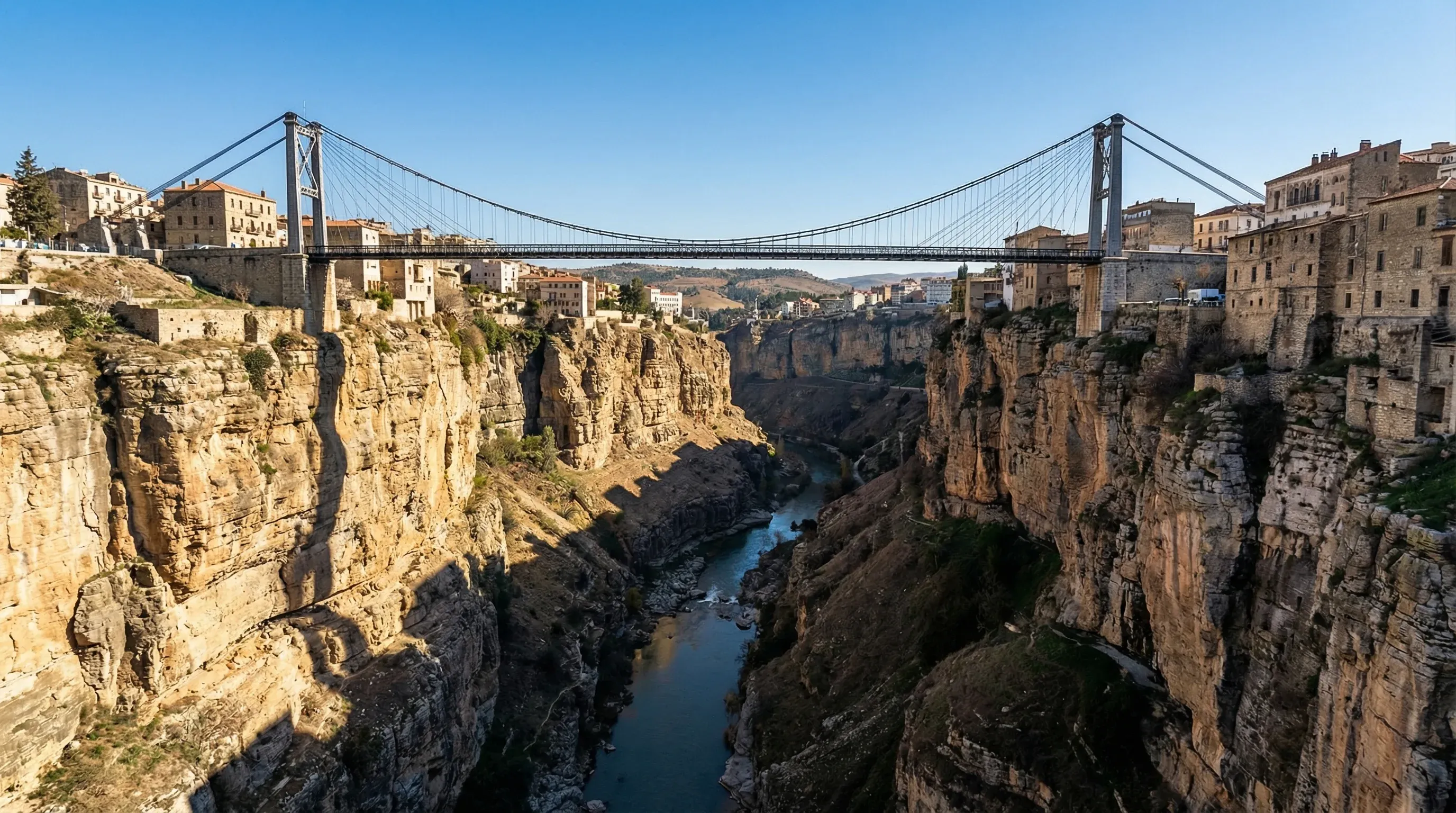
Constantine is one of the world's most dramatic cities, physically carved out of rock and suspended above the Rhumel River gorge. For families, the sheer visual spectacle of the city is the main attraction—houses teeter on cliff edges connected by a series of dizzying bridges that look like something out of a fantasy novel. The region, which extends to the Aurès Mountains and the coast, feels distinct from Algiers; it is the heartland of Berber Numidian history and offers rugged, raw beauty. The culture here is traditional and proud, with a slower pace of life that suits family travel, provided you stick to the main safe zones.
The landscape is a geography lesson come to life. In Constantine, kids will be fascinated by the sheer drops and the engineering marvels that connect the rock faces. Venturing south into the Aurès region, the scenery shifts to golden wheat fields and Roman history on a massive scale. This is not a destination for resort-style relaxation, but rather for families who enjoy exploration, history, and dramatic scenery.
Key Attractions
The Sidi M'Cid Bridge is the icon of Constantine. Walking across this suspension bridge, 175 meters above the gorge, is a thrill for older children and teens (hold hands with little ones!). The view down into the canyon is unforgettable. Nearby, the Ahmed Bey Palace offers a dazzling display of Ottoman architecture with colorful ceramic tiles, lush courtyards, and gardens that feel like a secret oasis in the city center.
A few hours south lies the Timgad Archaeological Site, a UNESCO World Heritage site often called the "Pompeii of Africa." It is incredibly well-preserved and immense. Unlike fenced-off ruins in Europe, kids can walk along the original Roman roads, sit in the amphitheater, and explore the layout of a complete ancient city without crowds. For a nature-focused day trip, the Ghoufi Canyons offer breathtaking views of tiered balconies and palm groves carved into the canyon walls—a miniature Grand Canyon with ancient Berber granaries.
Practical Advice
Summers in the interior (Constantine/Timgad) can be fiercely hot; visit in spring or late autumn. Constantine is hilly with many stairs, making it very challenging for strollers—a backpack carrier is essential. Stick to organized tours or reputable guides when traveling outside the main cities.
Food & Drink
Typical meal times: Lunch is 12:00 pm to 2:00 pm. Dinner is typically 7:00 pm to 9:00 pm. In smaller towns, options may be limited after 8:00 pm.
Typical meal costs: Dining is inexpensive. A hearty family meal costs 3,500–5,500 DZD (approx. $26–41 USD / €24–38 EUR).
Dietary requirements: The region is heavy on semolina and lamb. Gluten-free options are rare outside of simple grilled meats and salads. Nut allergies should be treated with caution due to the prevalence of almond and walnut sweets.
Signature dishes:
- Chakhchoukha – A celebratory dish of torn flatbread pieces soaked in a rich, spicy tomato sauce with chickpeas and lamb; a staple of Constantine.
- Djouzia – A famous traditional nougat from Constantine made with honey and walnuts—an incredibly sweet treat kids will love.
- Zviti – A spicy, mashed salad of peppers, tomatoes, garlic, and coriander, traditionally pounded in a wooden mortar (very spicy!).
Why this score?
The Aurès Mountains and the deep Ghoufi Canyons provide a more rugged landscape than the capital region, offering genuine adventure for hikers. The dramatic topography of Constantine itself requires significant walking through steep, narrow urban environments.
Why this score?
Major cities like Constantine and Annaba have established university hospitals and decent medical infrastructure for the region. However, these facilities are primarily designed for the local population and may present language barriers and logistical challenges for international travelers.
Why this score?
The region is home to spectacular Roman sites like Timgad and Djemila, which attract cultural tourists, but overall visitor numbers remain low. Constantine's unique bridge architecture is a significant draw, yet it lacks the international marketing and easy accessibility of the capital.

The East is generally cheaper than Algiers. A night in a decent hotel is 6,000–12,000 DZD (approx. $45–90 USD / €41–83 EUR). Entry to major UNESCO sites like <a data-attraction-id="39381">Timgad</a> is incredibly cheap, often around 100–200 DZD (approx. $0.75–1.50 USD / €0.70–1.40 EUR) for adults and free for young children. Food costs are negligible for Western budgets.

Getting Here & Around
Getting Here
- Airports – Mohamed Boudiaf International Airport (CZL) in Constantine serves the region with flights from France and domestic links to Algiers.
- Train – Trains run from Algiers to Constantine (approx. 7 hours), though they can be slow and aging. The scenery is nice, but many families prefer flying or hiring a driver.
- Driving – The East-West Highway connects Algiers to Constantine, but the drive is long (4-5 hours). Hiring a driver is recommended over self-driving due to aggressive local driving styles.
Getting Around
- Tramway – Constantine has a modern tram system that is safe and connects the airport to the city center and key sites like the Emir Abdelkader Mosque.
- Cable Car (Téléphérique) – A functional and fun way to cross the gorge. It's affordable and offers great views, acting as both transport and an attraction.
- Car Hire with Driver – Essential for visiting Timgad Archaeological Site or Djémila Archaeological Site. Self-driving is possible but navigation can be tricky.
Nearby Airports (7 airports)
Annaba
AAEAnnaba
Soummam
BJABejaia
Mostepha Ben Boulaid Airport
BLJBatna
Mohamed Boudiaf International
CZLConstantine
Jijel
GJLJijel
Ain Arnat Airport
QSFSetif
Cheikh Larbi Tebessi
TEETebessa
View full flight map for Algeria →
Official Links

Packing List
Roads in the Aurès mountains and around the gorges can be very winding.
Constantine's streets can be slippery stone, and ruins like Timgad have uneven ancient paving.
Rarely provided in public restrooms or at archaeological sites.
Great for spotting storks nesting on minarets and viewing details across the gorges.
International cards are rarely accepted outside 5-star hotels; you must bring cash to exchange.
Public restrooms often lack paper; traditional water hoses are the norm.
Family beaches can be conservative; t-shirts over swimwear are common for women/girls.
French is widely spoken and much more useful than English for taxis and menus.
European-style 2-pin plugs are standard; hotel availability of adapters is low.

Activities & Best Times

Urban tourism, museums, historical sites, architecture
Home to UNESCO World Heritage sites Djémila and Timgad, this region offers some of the best-preserved Roman ruins globally alongside Constantine's dramatic suspension bridges. Spring and autumn provide ideal walking temperatures, while the high summer heat and cold winter rains are less suitable for exploring outdoor archaeological sites.

Hiking, wildlife, outdoor exploration, ecotourism
The spectacular Ghoufi Canyons and Aurès Mountains offer world-class hiking and dramatic scenery comparable to the American Southwest. Peak conditions occur in the shoulder seasons to avoid the extreme heat of the canyons in summer and the snow-blocked trails of the high summits in winter.
Beach resorts, marine activities: diving, snorkelling, kite surfing, wind surfing, sailing
The eastern coast offers beautiful, authentic Mediterranean beaches such as Stora and Ain Achir, though tourism facilities are largely domestic-focused. The short peak season in July and August aligns with optimal water temperatures and the seasonal operation of local coastal services.

Spa retreats, wellness centers, peaceful getaways
Famous for the spectacular calcified cascades of Hammam Debagh and the authentic Roman thermal baths of Hammam Essalihine. These thermal experiences are best enjoyed during the cooler winter months when the steam and hot waters provide maximum therapeutic contrast to the air temperature.

Scenic drives, countryside tours, route-based travel
The Corniche Jijelienne (RN43) is one of North Africa's most scenic coastal drives, featuring dramatic cliffs and forest-backed beaches. Driving is most pleasant in late spring and early autumn when visibility is high and mountain passes in the Aurès are clear of winter snow.

Sport tourism, fitness activities, active recreation
Features significant infrastructure for hiking and outdoor activities in the Djebel Edough and Mont Chelia areas. The region's diverse topography suits active families seeking authentic trail experiences, though infrastructure remains more rustic than European benchmarks.

Learning experiences, scientific sites, historical education
The region provides specialized learning opportunities at the El Kala Ecomuseum and Sétif Museum, focusing on natural history and archaeology. These facilities serve as excellent educational supplements to the primary cultural and historical attractions in the region.
Amusement parks, family entertainment venues
Regional entertainment hubs like Lompi Family Park and Park Mall Sétif offer modern family diversions but lack the unique, world-class scale required to be primary motivators for international travel.

Attractions (18 total)



Public Holidays & Calendar Next 12 months
Public holidays, festivals, cultural celebrations, and seasonal natural phenomena coming up in Constantine & East over the next 12 months.
Loading holidays and events...

Travel Advisory
All major agencies recommend exercising a high degree of caution throughout Algeria. While urban centers like Algiers are accessible, there are severe, standing 'Do Not Travel' warnings for all border regions and the Sahara due to extreme risks of terrorism, kidnapping, and banditry.
Safety Topics
Traveller Advice (4 groups)

Homosexuality is illegal in Algeria and can lead to imprisonment. There is little social acceptance, and LGBTQ+ individuals should exercise extreme discretion to avoid legal or safety issues.
Overland travel through the Sahara is extremely dangerous and subject to 'Do Not Travel' advisories. Travel to southern cities should be conducted only by air with reputable tour operators.

Female travellers should dress conservatively and avoid travelling alone, particularly at night. Harassment can occur, and adhering to local customs regarding attire is recommended to minimize attention.

Avoid all political gatherings and protests, which are frequent and can become violent. Photography of sensitive government or military sites is strictly prohibited and can lead to arrest.
Agency Summaries
Travellers should remain highly vigilant throughout Algeria due to the persistent threat of terrorism and kidnapping. There are strict 'Avoid all travel' warnings for all border areas and several northern provinces due to extreme security risks from banditry and militant activity.
Maintain a high level of personal security awareness. Serious risks of terrorist attacks and kidnapping exist, particularly in the south and near international borders. Protests are common and can escalate into violence with little notice.
While general travel is possible, the FCDO maintains strict warnings against all travel to within 30km of borders with Libya, Mauritania, Mali, Niger, and parts of Tunisia. Terrorism remains a high threat, with extremist groups active in remote and mountainous regions.
Increased safety and security concerns exist due to terrorism and kidnapping risks. Avoid all travel to border zones. Protests and civil unrest are frequent; travellers should avoid all demonstrations and follow local authority directives.
Heightened vigilance is required in all areas, including coastal cities. Non-essential travel to desert and border regions is strongly discouraged due to the acute threat of terrorism and the possibility of foreign nationals being targeted.
Exercise heightened awareness across the country because of terrorism and the risk of abduction. Do not travel to areas near the eastern and southern borders or into the Sahara Desert, where the U.S. government has extremely limited ability to assist citizens.
Information is provided for general guidance only and does not constitute travel, safety, medical, or legal advice. Conditions may change. Users are responsible for independently verifying information before travel.