
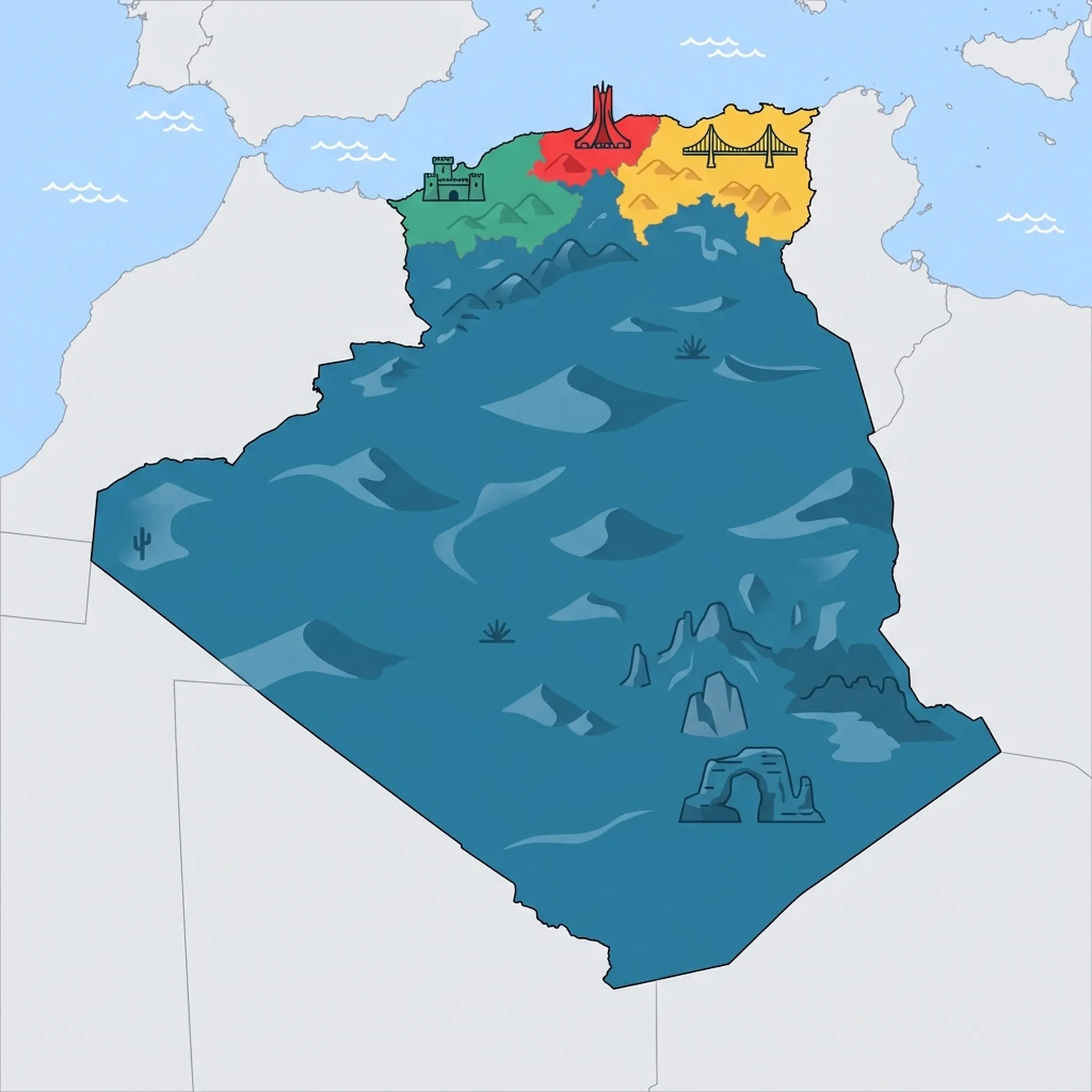
Click a region to explore
Overview
Oran (Wahran) is widely considered the most relaxed and liberal of Algeria's major cities. With a history heavily influenced by Spanish occupation, the architecture, food, and music (this is the birthplace of Raï music) have a distinct Mediterranean flair that feels closer to Valencia than Cairo. For families, Oran is primarily a destination for seaside fun and coastal culture. The city backs onto Mount Murdjadjo and faces a sweeping bay, providing a scenic backdrop for evening promenades along the Front de Mer.
Just inland lies Tlemcen, the "City of Cherries and Arts," which offers a completely different vibe. It is the capital of Andalusian art and history in Algeria, filled with intricate Islamic architecture, palaces, and waterfalls. The combination of Oran's beaches and Tlemcen's history makes the West a well-rounded destination for families who want a mix of sun, sea, and culture without the intensity of the capital. The atmosphere is generally welcoming, and the tourist infrastructure is decent, particularly in the coastal resorts.
Key Attractions
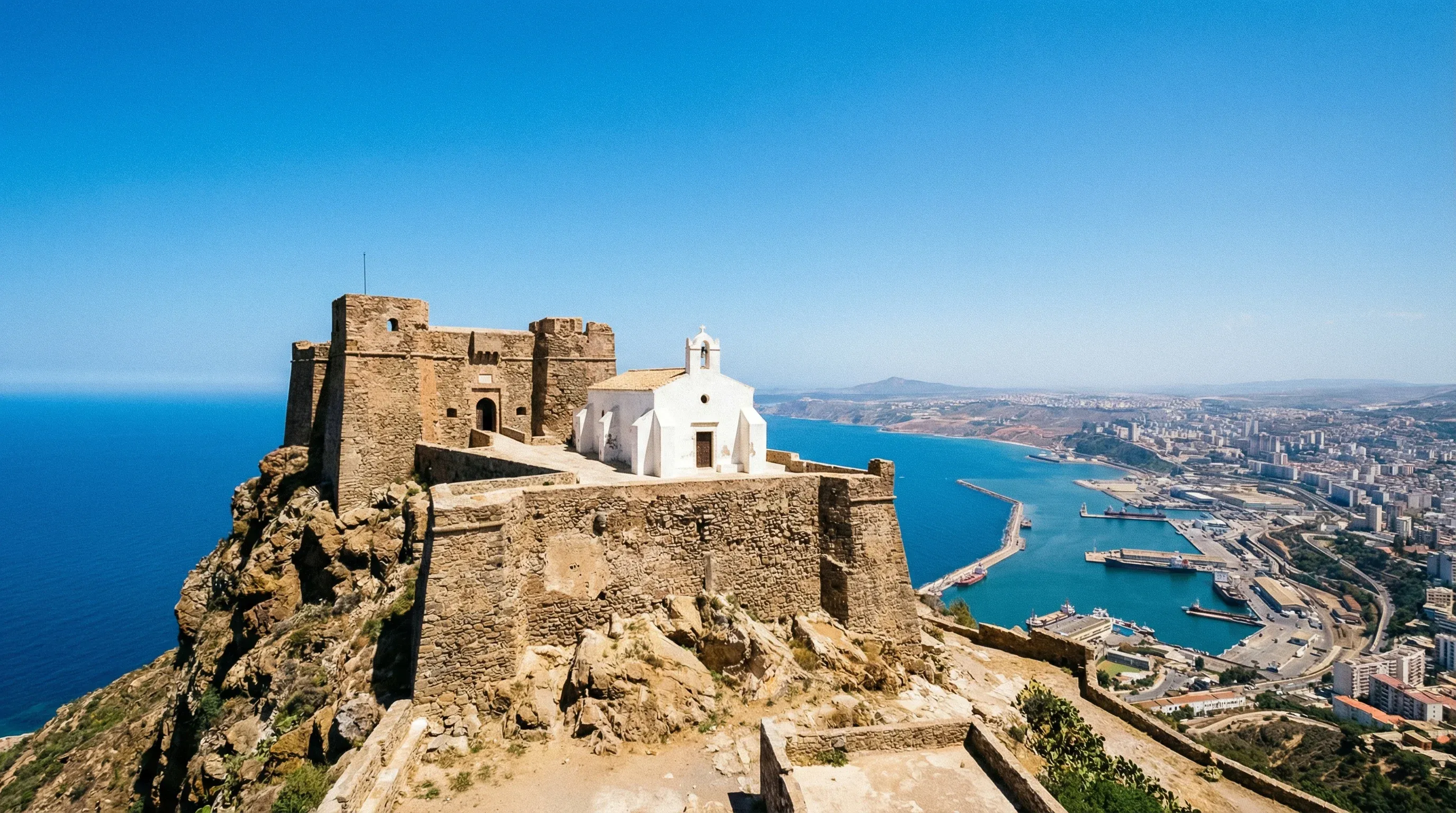
In Oran, the must-see landmark is Fort Santa Cruz. Perched high on Mount Murdjadjo, this Spanish fortress offers panoramic views of the city and bay. You can drive or take a taxi up, and there is a small chapel nearby. Below, the waterfront promenade is perfect for strolling with a stroller and grabbing ice cream. For beach days, Les Andalouses Beach is the most famous resort area, offering wide sands and calm waters suitable for children, though it gets very busy in August.
Heading inland to Tlemcen, the Beni Add Caves are a spectacular natural wonder. These deep limestone caverns feature stalactites and stalagmites that will capture children's imaginations (it is cool inside, so bring a jacket!). Nearby, Tlemcen National Park offers the beautiful El Ourit waterfalls and plenty of green space for picnics. The El Mechouar Palace allows kids to walk through a royal citadel with beautiful zellige tilework.
Practical Advice
Oran is a summer destination, but July and August can be humid and crowded. June and September are ideal for beach weather without the peak crowds. Tlemcen is higher in altitude and cooler, making it a nice break from the coastal heat.
Food & Drink
Typical meal times: Lunch 12:30 pm to 2:30 pm. Dinner is lively and eaten late, often 8:00 pm to 10:00 pm, especially in summer.
Typical meal costs: Street food is incredibly cheap. A sit-down dinner for four costs 4,500–7,000 DZD (approx. $33–52 USD / €31–48 EUR).
Dietary requirements: Seafood is abundant and excellent here. Vegetarians can rely on kessra (bread) and salads, but check for tuna in salads. Karantika is a safe, gluten-free (chickpea-based) street food option.
Signature dishes:
- Karantika – The iconic street food of Oran. A creamy, flan-like dish made from chickpea flour, water, and eggs, sold hot in baguettes with harissa and cumin.
- Paella Oranaise – A legacy of Spanish rule, this local version of paella features fresh Mediterranean seafood and chicken.
- Hrira – A rich, velvety soup made with tomato, lentils, chickpeas, and spices, traditionally served to break the fast but available year-round in the west.
Why this score?
The Tlemcen Mountains and Beni Add caves offer pleasant outdoor excursions, but the region is largely characterized by coastal development and urban centers. Most activities are leisure-oriented rather than physically demanding or remote expeditions.
Why this score?
Oran serves as a regional medical center with several functional hospitals and clinics that can handle most routine emergencies. While adequate for basic care, it lacks the advanced medical tourism infrastructure found in major global hubs.
Why this score?
Oran is a lively cultural hub with Spanish influence and a popular coastline, but its tourism is overwhelmingly domestic. International leisure travelers are relatively rare compared to the city's size and historical importance on the Mediterranean.

Oran can be slightly pricier than other regions during peak summer beach season. A family resort hotel might cost 12,000–20,000 DZD (approx. $90–150 USD / €83–138 EUR) per night. However, food remains very affordable. The famous <a data-attraction-id="24162">Fort Santa Cruz</a> entry is nominal. Taxis to beaches are the main extra expense, costing around 1,500–2,000 DZD (approx. $11–15 USD / €10–14 EUR) each way.

Getting Here & Around
Getting Here
- Airports – Ahmed Ben Bella Airport (ORN) in Oran is the second largest in the country, with direct flights from France, Spain, and domestic hubs.
- Train – A relatively modern train line connects Oran with Algiers (approx. 4 hours). It is one of the more comfortable rail journeys in the country.
- Ferry – Regular ferries connect Oran to Almería and Alicante in Spain, a popular route for those bringing their own cars.
Getting Around
- Tramway – Oran has a clean and modern tramway that runs through the city center, making it easy to hop between neighborhoods.
- Taxi/Yassir – Ride-hailing apps are the best way to reach Fort Santa Cruz or beaches like Madagh Beach which are outside the city center.
- Car Rental – Recommended if you plan to combine Oran with a trip to Tlemcen National Park (approx. 2 hours drive via highway).
Nearby Airports (4 airports)
Aboubakr Belkaid Airport
CFKChlef
Es Senia
ORNOran
Bou Chekif
TIDTiaret
Zenata
TLMTlemcen
View full flight map for Algeria →
Official Links

Packing List
Rental umbrellas at public beaches can be expensive or sold out in summer.
Even in summer, the Beni Add Caves are cool, and evenings on Mount Murdjadjo can be breezy.
Some beautiful coves near Madagh have pebbly entrances or sea urchins.
Oran is a lively city with late-night wedding convoys and music, which might disturb light sleepers.
International cards are rarely accepted outside 5-star hotels; you must bring cash to exchange.
Public restrooms often lack paper; traditional water hoses are the norm.
Family beaches can be conservative; t-shirts over swimwear are common for women/girls.
French is widely spoken and much more useful than English for taxis and menus.
European-style 2-pin plugs are standard; hotel availability of adapters is low.

Activities & Best Times

Hiking, wildlife, outdoor exploration, ecotourism
Diverse landscapes ranging from the Beni Add Caves to the Tlemcen Mountains offer genuine exploration opportunities for active families. Spring and autumn provide ideal temperatures for hiking and cave visits, avoiding the extreme summer heat and winter rains.

Urban tourism, museums, historical sites, architecture
Rich historical depth in Oran and Tlemcen, featuring Ottoman, Spanish, and French architectural influences alongside significant national museums. Pleasant walking weather in the shoulder seasons is best for soaking in the urban heritage without the intensity of the mid-summer sun.

Beach resorts, marine activities: diving, snorkelling, kite surfing, wind surfing, sailing
Features notable Mediterranean beaches like Les Andalouses and Madagh with clear waters, though resort infrastructure is developing rather than world-class. Summer months offer the most reliable conditions for swimming and coastal recreation.

Spa retreats, wellness centers, peaceful getaways
Historically significant thermal stations like Hammam Bouhadjar offer authentic spa experiences rooted in local tradition. The cooler months are preferred for thermal bathing, as the summer heat makes hot spring experiences less comfortable for international travelers.

Scenic drives, countryside tours, route-based travel
The Corniche Oranaise and the drive up Mount Murdjadjo offer spectacular coastal and mountain vistas. Clear spring and autumn days provide the best visibility and driving conditions, avoiding the peak summer traffic and winter mountain fog.

Sport tourism, fitness activities, active recreation
Solid infrastructure for hiking and mountain biking in Tlemcen National Park and the Canastel Forest. Active tourism is best pursued during the temperate spring and autumn months to ensure trail accessibility and physical comfort.

Learning experiences, scientific sites, historical education
The Oran Aquarium and Tlemcen Ecomuseum offer niche educational value, though they are secondary attractions rather than primary travel motivators. These sites are best visited during mild weather windows when local schools and groups are also active.

Amusement parks, family entertainment venues
Local entertainment parks like Mostaland and Eden Park serve regional needs but lack the scale or unique themes of global destination parks. Peak visitation occurs during the school summer holidays when evening operations are most active.

Attractions (14 total)



Public Holidays & Calendar Next 12 months
Public holidays, festivals, cultural celebrations, and seasonal natural phenomena coming up in Oran & West over the next 12 months.
Loading holidays and events...

Travel Advisory
All major agencies recommend exercising a high degree of caution throughout Algeria. While urban centers like Algiers are accessible, there are severe, standing 'Do Not Travel' warnings for all border regions and the Sahara due to extreme risks of terrorism, kidnapping, and banditry.
Safety Topics
Traveller Advice (4 groups)

Homosexuality is illegal in Algeria and can lead to imprisonment. There is little social acceptance, and LGBTQ+ individuals should exercise extreme discretion to avoid legal or safety issues.

Overland travel through the Sahara is extremely dangerous and subject to 'Do Not Travel' advisories. Travel to southern cities should be conducted only by air with reputable tour operators.

Female travellers should dress conservatively and avoid travelling alone, particularly at night. Harassment can occur, and adhering to local customs regarding attire is recommended to minimize attention.

Avoid all political gatherings and protests, which are frequent and can become violent. Photography of sensitive government or military sites is strictly prohibited and can lead to arrest.
Agency Summaries
Travellers should remain highly vigilant throughout Algeria due to the persistent threat of terrorism and kidnapping. There are strict 'Avoid all travel' warnings for all border areas and several northern provinces due to extreme security risks from banditry and militant activity.
Maintain a high level of personal security awareness. Serious risks of terrorist attacks and kidnapping exist, particularly in the south and near international borders. Protests are common and can escalate into violence with little notice.
While general travel is possible, the FCDO maintains strict warnings against all travel to within 30km of borders with Libya, Mauritania, Mali, Niger, and parts of Tunisia. Terrorism remains a high threat, with extremist groups active in remote and mountainous regions.
Increased safety and security concerns exist due to terrorism and kidnapping risks. Avoid all travel to border zones. Protests and civil unrest are frequent; travellers should avoid all demonstrations and follow local authority directives.
Heightened vigilance is required in all areas, including coastal cities. Non-essential travel to desert and border regions is strongly discouraged due to the acute threat of terrorism and the possibility of foreign nationals being targeted.
Exercise heightened awareness across the country because of terrorism and the risk of abduction. Do not travel to areas near the eastern and southern borders or into the Sahara Desert, where the U.S. government has extremely limited ability to assist citizens.
Information is provided for general guidance only and does not constitute travel, safety, medical, or legal advice. Conditions may change. Users are responsible for independently verifying information before travel.