

Overview
Angola is a land of dramatic contrasts, where modern skyscrapers rise above colonial Portuguese architecture in the capital, while vast savannahs and waterfalls dominate the interior. For families willing to explore beyond the usual tourist trail, it offers a raw and rewarding experience. The country has stabilised significantly since the end of its civil war in 2002, and while infrastructure is still developing, the warmth of the Angolan people-known as Angolanos-makes visitors feel welcome. The climate ranges from tropical in the north to arid in the south, with a dry season from May to October that is perfect for travel.
The cultural energy here is palpable, driven by a young population and the infectious rhythms of Kizomba and Semba music. Families can expect a mix of relaxing beach days on the Luanda coast and rugged adventures inland. While travel here requires more patience and planning than in more established safari destinations, the reward is seeing landscapes that few international tourists have ever witnessed. It is a place where nature is supersized, from the giant sable antelope to the immense Baobab trees that dot the horizon.
Key Attractions
Most family trips begin in Luanda, a bustling metropolis with a scenic waterfront called the Marginal. Overlooking the city is the Fortaleza de São Miguel, a 16th-century fortress that offers panoramic views and houses the Museum of the Armed Forces-a great spot for children to see old cannons and learn about the country's history. Just south of the city, the Museu Nacional da Escravatura (National Museum of Slavery) provides a sobering but essential history lesson in a small chapel where enslaved people were once baptised before being shipped to the Americas.
For nature, the absolute highlight for children is Kissama National Park. Located about 70km south of the capital, it is the only functioning safari park accessible for a day trip or overnight stay. Families can take a game drive to spot giraffes, zebras, wildebeest, and elephants in a landscape of dramatic baobab trees and grassy plains. On the way to the park, you must stop at Miradouro da Lua (Viewpoint of the Moon). These stunning tri-coloured cliffs have been eroded by wind and rain into a jagged, lunar-like landscape that is visually spectacular and perfect for family photos.
Further south, the Benguela & Coast region offers a more relaxed vibe with beautiful Art Deco architecture and quieter beaches. In the interior, the Huíla Highlands (Lubango) are famous for the spectacular Tundavala Gap and the winding Serra da Leba pass, offering breathtaking mountain scenery that adventurous older children will love.
Practical Advice
Best time to visit: The cool, dry season from June to September is ideal, with lower humidity and virtually no rain. This is also the best time for wildlife viewing in Kissama National Park.
Visa & Entry: In a major boost for tourism, Angola now allows visa-free entry for up to 30 days for tourists from many countries, including the US, UK, and EU (always check the latest rules). A Yellow Fever vaccination certificate is mandatory for entry for everyone over 9 months old.
Logistics: English is not widely spoken; learning a few phrases of Portuguese is essential. Cash is king-international credit cards often do not work, so bring pristine US dollars (printed after 2013) to exchange.
Food & Drink
Typical meal times: Lunch is the main meal, typically eaten from 12:30 pm to 2:30 pm. Dinner is served later, usually from 7:30 pm to 9:30 pm.
Typical meal costs: 30,000–60,000 AOA (approx. $30–60 USD / €28–56 EUR) for a mid-range meal for two. Street food is much cheaper, while hotel dining can be significantly more expensive.
Dietary requirements: Vegetarian options are limited in traditional restaurants but are improving in the capital. Funge (cassava porridge) is vegan, and Kizaca (cassava leaves) is often vegetarian, but ask if it contains dried fish.
Family-friendly dining: Look for "Mufete" restaurants on the Ilha do Cabo in Luanda. These casual, open-air spots serve grilled fish and beans family-style, often on the beach where kids can play in the sand.
Signature dishes:
- Muamba de Galinha – A rich, savoury chicken stew cooked with palm oil, garlic, and okra, considered the national dish.
- Mufete – A festive weekend feast of grilled fish (usually tilapia or horse mackerel) served with beans, sweet potato, and plantain.
- Funge – The staple side dish, a thick porridge made from cassava or corn flour, used to scoop up sauces.
- Kizaca – A delicious side dish of stewed cassava leaves, often flavoured with ground peanuts (check for allergies).
- Doce de Ginguba – A peanut brittle candy that makes for a sweet, crunchy treat for children.
Safety
⚠️ SAFETY WARNING: Most western governments advise exercising a high degree of caution in Angola due to crime and health risks. Petty crime, such as bag snatching and theft from vehicles, is common in Luanda, particularly after dark. Avoid walking alone at night and keep valuables out of sight. When driving, keep doors locked and windows up. Avoid the provinces of Cabinda and the diamond-mining areas of Lunda Norte/Sul, which may have higher advisory levels. Landmines remain a risk in remote, unpaved areas outside major towns-never wander off well-used tracks. Photography of government buildings, police, or military personnel is strictly prohibited and can lead to detention.

While local food and fuel are inexpensive, secure accommodation and transport suitable for families are pricey. A family of four should budget around 250,000–400,000 AOA (approx. $250–400 USD / €230–370 EUR) per day for mid-range hotels, private driver hire, and meals. Luanda is consistently ranked as one of the world's most expensive cities for expatriates, inflating prices for international-standard services.
Age Suitability





Did you know? Angola welcomes approximately 130,000 international visitors per year. Most visitors come from Europe.
Explore Regions
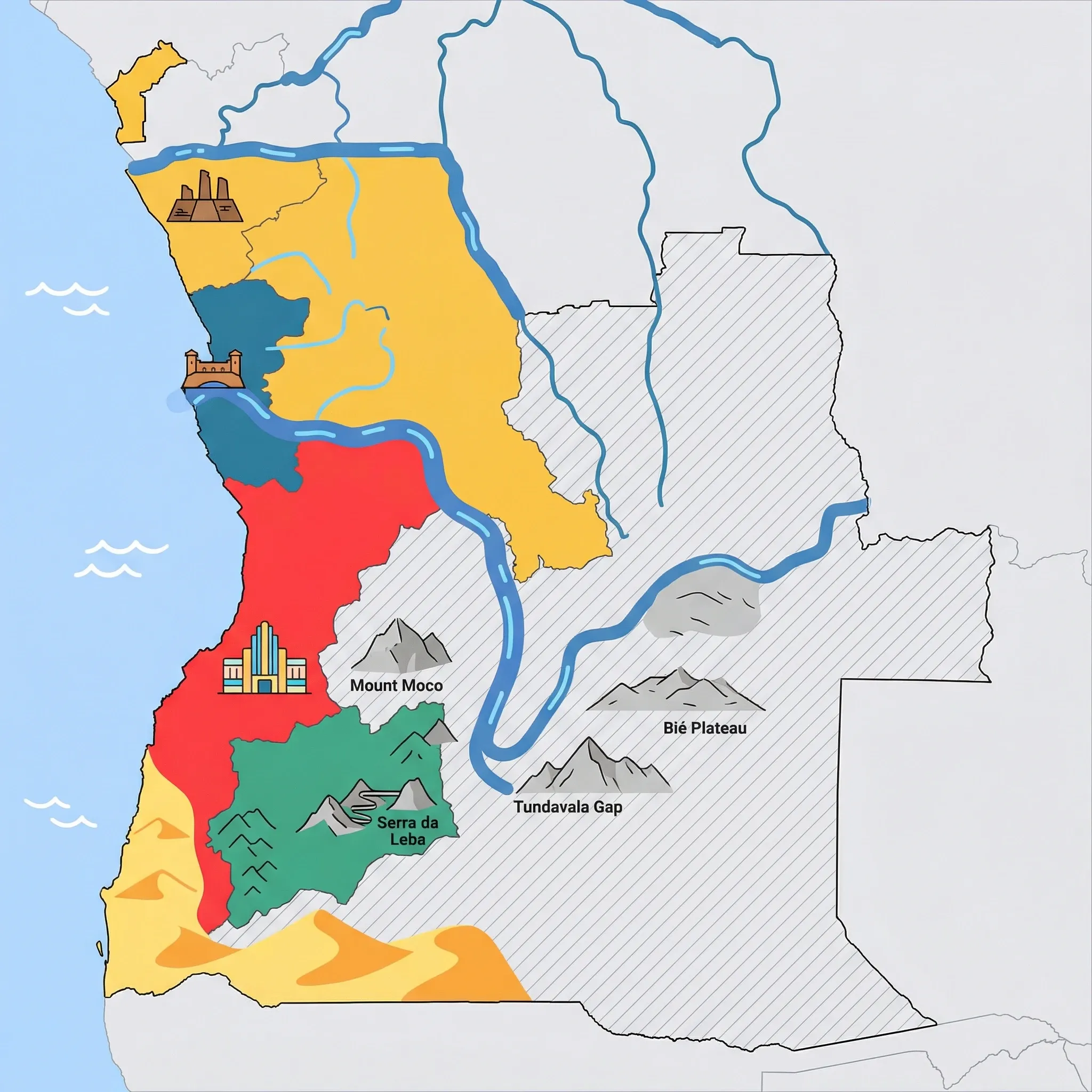
4 Regions
Benguela & Coast
Art Deco cities and golden sands 🏖️
Huíla Highlands (Lubango)
dramatic cliffs and mountain mists ⛰️
Luanda
A vibrant mix of history and modernity 🏙️
Northern Angola
Ancient kingdoms and tropical roots 🌴
Click on a region marker to explore details. Use the dropdown to color regions by activity suitability.

Getting There & Around
Getting There
- By Air – The main gateway is Quatro de Fevereiro International Airport (LAD) in Luanda. Major carriers including TAAG, TAP Air Portugal, Air France, and Emirates offer direct flights from Europe and the Middle East.
- By Land – Overland entry is possible from Namibia via the Santa Clara border post, often used by self-drive families exploring Southern Africa, though road conditions vary.
- Entry Requirements – Tourists from the US, UK, EU, and many other nations can now enter visa-free for up to 30 days. You must present a Yellow Fever vaccination certificate upon arrival. Check your government website for the latest visa requirements, or use the IATA Travel Centre entry-requirements checker.
Getting Around
- Car Hire – The safest and most practical way for families to explore is to hire a car with a local driver. Self-driving is possible but challenging due to chaotic traffic in Luanda and varying road conditions.
- Domestic Flights – TAAG Angola Airlines connects Luanda to major provincial hubs like Lubango in the Huíla Highlands (Lubango) and Catumbela for the Benguela & Coast. This is safer and faster than long-distance driving.
- Taxis – Use ride-hailing apps (like Heetch or Yango) or hotel-arranged private taxis in Luanda. Avoid the blue-and-white minibus taxis (Candongueiros) with children as they are overcrowded and driven aggressively.

Packing List
ATMs often fail with foreign cards; bills must be issued after 2013 and unblemished to be accepted.
Mandatory for entry; you will be checked at the airport health control before immigration.
English is rarely spoken outside top hotels; basic communication requires Portuguese.
Bathtubs and sinks in hotels frequently lack stoppers.
Power outages can occur; street lighting is inconsistent in some areas.

Activities & Best Times

Adventure & Nature
Very GoodHiking, wildlife, outdoor exploration, ecotourism
The dramatic Tundavala Gap and Serra da Chela mountains offer spectacular hiking and views that rival major global escarpments. Peak season coincides with the dry winter (May-Sept) when skies are clear and trails are safe, while summer rains bring heavy mist and slippery terrain.
Kissama National Park and the dramatic 'lunar' landscapes of Miradouro da Lua offer distinctive natural experiences. Nature exploration and wildlife viewing are best during the dry season when animals congregate near water sources and trails are accessible.
Home to the Mangrove National Park and the fascinating Nzau Evua caves, providing high authenticity for wilderness-seeking families. The dry season is essential for access, as heavy rains from October through April make unpaved roads to nature reserves difficult to navigate.

City & Cultural
Very GoodUrban tourism, museums, historical sites, architecture
Luanda offers a unique blend of Portuguese colonial history and vibrant African urban culture, highlighted by the Fortaleza de São Miguel and the Museum of Slavery. The peak winter months (Cacimbo) provide cooler, manageable temperatures for exploring the city's historic quarters and the iconic Marginal.
Lobito’s exceptional Art Deco architecture and Benguela’s colonial heritage offer a sophisticated urban experience. The dry 'cacimbo' season provides the most pleasant walking conditions for exploring historical museums and vibrant coastal markets.
Features the UNESCO-listed Mbanza Kongo, offering profound cultural heritage through the Museum of the Kings of Congo and cathedral ruins. The cooler, dry winter months are optimal for exploring these outdoor historic sites, while peak rainy season (Nov-Apr) brings challenging heat and humidity.

Beach & Sea
GoodBeach resorts, marine activities: diving, snorkelling, kite surfing, wind surfing, sailing
The sandbars of Mussulo Island and the beaches of Ilha do Cabo provide a genuine tropical escape with warm waters. Peak season aligns with the warmest, sunniest months, while the mid-year 'Cacimbo' season is often too overcast and cool for a premier beach experience.
Iconic destinations like Baía Azul and the Restinga Peninsula offer pristine Atlantic waters and high-quality coastal relaxation. Peak months provide the warmest temperatures and clearest skies before the heavy tropical rains and coastal mist of the winter season.
Offers undeveloped and authentic Atlantic coastal experiences at Praia do N'Zeto and Musserra, but lacks international-standard resort infrastructure. Visitation is best during the dry 'Cacimbo' months (Jun-Aug) when humidity is lower and conditions are more comfortable for coastal exploration.

Road Trips & Scenic
GoodScenic drives, countryside tours, route-based travel
The scenic drive from Luanda to Cabo Ledo via the Miradouro da Lua offers some of the country's most spectacular coastal views. The dry season ensures safer road conditions and clear visibility for these iconic vistas.
The EN100 coastal highway and the Uíge Coffee Highlands drives provide spectacular, raw landscapes for experienced travelers. Driving conditions are most reliable during the dry season; heavy tropical rainfall during the rest of the year can cause significant road washouts and safety concerns.
Celebrated coastal drives like the corridor from Lobito to Baía Farta offer dramatic Atlantic vistas and reliable paved routes. The dry season ensures the best visibility and safe driving conditions for families exploring the scenic shoreline.

Sports & Active
GoodSport tourism, fitness activities, active recreation
Cabo Ledo is internationally recognized for its world-class surfing breaks, which are most consistent during the southern hemisphere winter. Water sports around Mussulo benefit from these cooler, drier months which avoid the intense humidity and rain of summer.
Specialized hiking and cycling routes such as the Caotinha Trail provide structured infrastructure for active families. Cooler winter months are essential for high physical exertion given the region's tropical latitude and intense humidity in other seasons.
Recognized for world-class road cycling descents on the Serra da Leba and rugged mountain biking along the Tundavala rim. Optimal conditions occur during the cool, dry season; heavy summer rains make the technical descents and trails significantly more hazardous.

Educational & Exploratory
MarginalLearning experiences, scientific sites, historical education
The Luanda Science Centre and the National Museum of Natural History offer curated learning experiences focused on regional biodiversity and geology. These indoor facilities are best visited when the city climate is most conducive to travel and general exploration.
The Benguela Railway Museum serves as an internationally significant industrial heritage site in Lobito. While a niche interest, it provides authentic historical context for the region, ideally visited during the drier tourism peak.

Theme Park & Entertainment
MarginalAmusement parks, family entertainment venues
Venues like Dreamspace provide family-oriented recreation, though they serve a largely regional market rather than being international destinations. Peak interest coincides with major school holidays and the warmest weather for aquatic facilities.
Local aquatic complexes like Casas do Meio provide basic family recreation but lack the scale and polish of international theme parks. These are best visited during the warmer pre-rain months, as highland winters from May to August are often too cool for outdoor swimming.

Public Holidays & Calendar Next 12 months
Public holidays, festivals, cultural celebrations, and seasonal natural phenomena coming up in Angola over the next 12 months.
Loading holidays and events...

Climate & Weather
Benguela & Coast
Show Details
| Month | Temp °C | Rain | Humidity |
|---|
Huíla Highlands (Lubango)
Show Details
| Month | Temp °C | Rain | Humidity |
|---|
Luanda
Show Details
| Month | Temp °C | Rain | Humidity |
|---|
Northern Angola
Show Details
| Month | Temp °C | Rain | Humidity |
|---|

Travel Advisory
All major agencies recommend exercising a high degree of caution or increased vigilance due to high crime rates and regional security threats. While travel is generally permitted, specific provinces are under stricter warnings.
Safety Topics
Traveller Advice (4 groups)

Personnel working in diamond-producing regions or border zones should maintain strict security protocols due to the risk of being targeted by separatist militants or banditry.

Visitors should stay alert in urban areas, avoid walking alone after dark, and keep valuables out of sight to minimize the risk of being targeted by criminals.

Solo female travel is discouraged at night. It is recommended to dress conservatively to align with local cultural expectations.

While legal protections exist, social views are conservative; travelers should be discreet as public displays of affection may be met with hostility.
Agency Summaries
Travelers should maintain a heightened state of awareness due to widespread criminal activity and the persistent danger posed by landmines in specific regions.
While general travel is possible, visiting the Cabinda province or areas near the DRC border is discouraged due to regional insecurity and the threat of separatist groups.
Visitors are advised to practice significant safety precautions as the security environment presents higher risks than those typically found in Ireland.
Safety concerns regarding violent crime and civil unrest require travelers to be more vigilant than usual, with specific avoid-travel warnings for several provinces.
An elevated level of caution is necessary throughout the country owing to risks of violent street crime and frequent public protests.
Heightened vigilance is recommended because of common violent crimes, potential for civil disturbances, and medical infrastructure challenges.
Information is provided for general guidance only and does not constitute travel, safety, medical, or legal advice. Conditions may change. Users are responsible for independently verifying information before travel.