
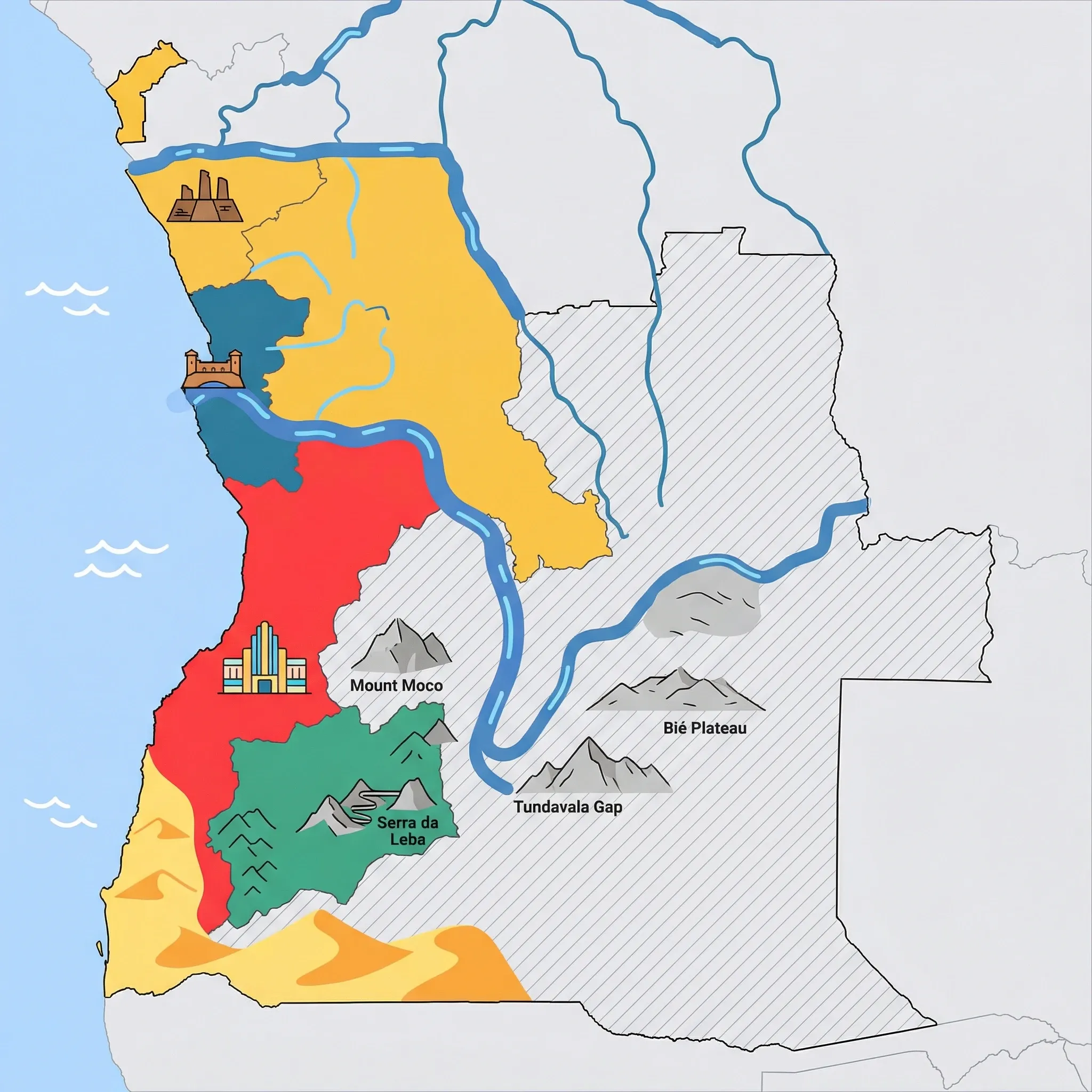
Click a region to explore
The Huíla Highlands, centered around the city of Lubango, feel like a different world compared to the rest of Angola. Sitting at an altitude of over 1,700 meters (5,500 feet), the climate here is temperate and refreshing, often requiring a jumper in the evenings—a rarity in this tropical country. For active families, this is the adventure capital of Angola. The landscape is defined by massive granite boulders, rolling green hills, and sheer escarpments that drop thousands of feet to the Namibe desert below. The city of Lubango itself is garden-like and easier to navigate than Luanda, with wide avenues and a distinct Portuguese colonial influence that feels settled and welcoming.
The region is not just about views; it is a place to learn about the diversity of Angolan culture. The area is home to several indigenous groups, including the Muila people, known for their intricate hairstyles and jewelry. Respectful cultural tours can be an eye-opening experience for older children, teaching them about traditions that have survived centuries of change. The cooler weather also means fewer mosquitoes than the coast, although malaria precautions are still advised. It is a place of wide-open spaces where children can run freely in the high-altitude air, far from the congestion of the big cities.
Key Attractions
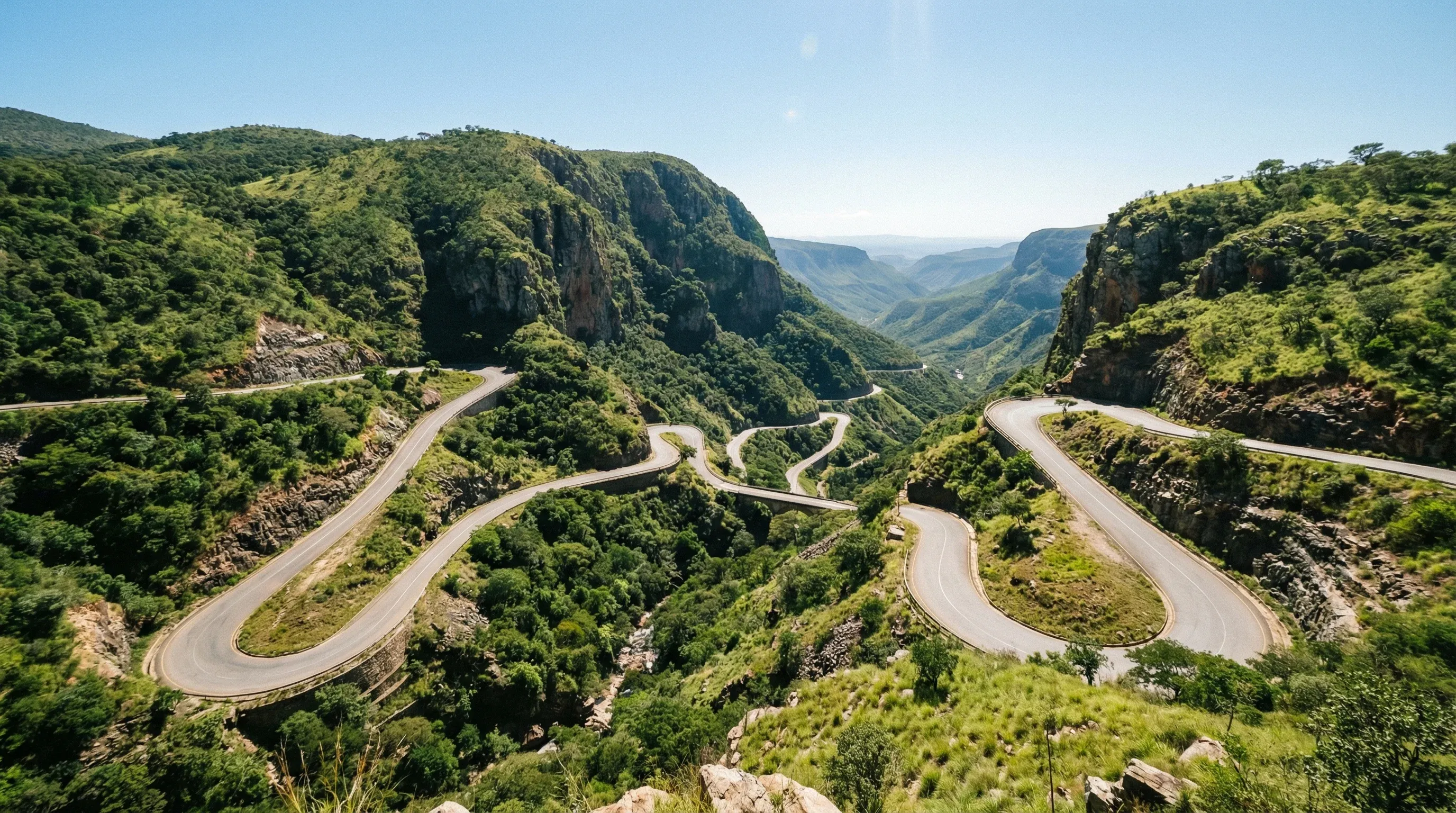
While the region lacks traditional "amusement" parks, its natural wonders are awe-inspiring. The Tundavala Gap (Fenda da Tundavala) is the absolute highlight—a spectacular volcanic fissure where the plateau ends abruptly, offering a dizzying view down to the desert floor 1,200 meters below. It is safe for families if you stay behind the barriers, and the sight of clouds rolling below your feet is magical for kids. Another must-do is the drive along the Serra da Leba pass. This zigzagging mountain road is an engineering masterpiece; stop at the viewing platform at the top to see the road coiling like a snake through the lush mountains. Overlooking Lubango stands the Christ the King (Cristo Rei) statue, a smaller version of the one in Rio de Janeiro, offering panoramic views of the city.
Practical Advice
The best time to visit is May to August. Nights can get genuinely cold (dropping to 5°C/41°F), so pack warm layers. This region is excellent for hiking, but trails are rarely marked, so hiring a local guide is essential for safety. Medical facilities are limited compared to Luanda, so bring a comprehensive first-aid kit.
Food & Drink
Typical meal times: Lunch is usually 12:00 pm to 2:30 pm. Dinner runs from 7:00 pm to 9:30 pm.
Typical meal costs: Dining is slightly cheaper here. A hearty meal costs 10,000–18,000 AOA (approx. $11–20 USD / €10–19 EUR) per person.
Dietary requirements: Huíla is cattle country, so beef is excellent and ubiquitous. Vegetarians will rely on side dishes (rice, beans, salads) and Portuguese-style soups. Fresh fruit, particularly strawberries and citrus grown in the highlands, is widely available.
Signature dishes:
- Carne da Huíla – The region is famous for its high-quality beef, often served grilled (churrasco) with piripiri sauce.
- Chouriço – Local smoked sausages that reflect the strong Portuguese heritage of the area.
- Funji with Muteta – The staple cassava porridge served with a sauce made from pumpkin seeds or peanuts.
Why this score?
The high-altitude terrain, dramatic cliffside views, and winding mountain roads offer a significant adventure for families. Navigating the Serra da Leba pass and exploring the remote edges of the Serra da Chela range requires a rugged mindset and careful planning.
Why this score?
As a major regional hub, Lubango has some of the better facilities in the interior, but they remain limited for foreign travelers. Specialized care is largely unavailable, and the distance from the capital makes emergency response for tourists difficult.
Why this score?
Lubango is famous within Southern Africa for the Serra da Leba pass and Tundavala Gap, yet it attracts a very small number of international visitors annually. It is primarily visited by overlanders and specialized photography tours rather than mainstream family tourists.

Lubango offers better value than Luanda. A good quality hotel with breakfast ranges from 60,000–110,000 AOA (approx. $65–120 USD / €60–115 EUR). Transport is your biggest expense here due to the distances between natural landmarks. Entry to natural viewpoints like Tundavala is often free or requires a nominal parking fee of roughly 500–1,000 AOA (approx. $0.50–1.10 USD / €0.50–1.00 EUR).

Getting Here & Around
Getting Here
- Airports – Lubango has an international airport, Mukanka Airport (SDD), with reliable domestic connections from Luanda on TAAG (approx. 1.5 hours).
- Driving – The drive from Luanda is long (12+ hours) and arduous. However, driving from Benguela (approx. 4–5 hours) is a popular option for those doing a southern circuit, though a 4x4 is highly recommended due to potholes.
Getting Around
- Car – You absolutely need a vehicle to see the sights here, as attractions like Tundavala are outside the city. Renting a 4x4 with a driver is the standard way to explore. Costs are around 55,000–100,000 AOA (approx. $60–110 USD / €55–100 EUR) per day.
- Taxi – Local taxis exist in Lubango town but will not take you up the mountains or to the viewpoints.
Nearby Airports (1 airport)
Lubango
SDDLubango
View full flight map for Angola →
Official Links

Packing List
High altitude means nights are surprisingly cold, unlike the rest of Angola.
Essential for the massive vistas at Tundavala and spotting birds of prey.
The famous Serra da Leba pass has extreme hairpin turns.
The highland air is much drier than the humid coast; skin cracks easily.
ATMs often fail with foreign cards; bills must be issued after 2013 and unblemished to be accepted.
Mandatory for entry; you will be checked at the airport health control before immigration.
English is rarely spoken outside top hotels; basic communication requires Portuguese.
Bathtubs and sinks in hotels frequently lack stoppers.
Power outages can occur; street lighting is inconsistent in some areas.

Activities & Best Times

Hiking, wildlife, outdoor exploration, ecotourism
The dramatic Tundavala Gap and Serra da Chela mountains offer spectacular hiking and views that rival major global escarpments. Peak season coincides with the dry winter (May-Sept) when skies are clear and trails are safe, while summer rains bring heavy mist and slippery terrain.

Urban tourism, museums, historical sites, architecture
Lubango features unique landmarks like the Cristo Rei statue and colonial-era cathedrals set against a dramatic mountain backdrop. Peak visitation occurs during the dry season to ensure clear views and pleasant walking conditions between the major religious and historical sites.

Scenic drives, countryside tours, route-based travel
The Serra da Leba pass is an internationally recognized engineering marvel with iconic hairpin turns offering a premier scenic driving experience. Dry months provide optimal visibility and road safety, whereas the rainy season brings dangerous fog and slick conditions to the steep descent.

Sport tourism, fitness activities, active recreation
Recognized for world-class road cycling descents on the Serra da Leba and rugged mountain biking along the Tundavala rim. Optimal conditions occur during the cool, dry season; heavy summer rains make the technical descents and trails significantly more hazardous.

Amusement parks, family entertainment venues
Local aquatic complexes like Casas do Meio provide basic family recreation but lack the scale and polish of international theme parks. These are best visited during the warmer pre-rain months, as highland winters from May to August are often too cool for outdoor swimming.




Public Holidays & Calendar Next 12 months
Public holidays, festivals, cultural celebrations, and seasonal natural phenomena coming up in Huíla Highlands (Lubango) over the next 12 months.
Loading holidays and events...

Travel Advisory
All major agencies recommend exercising a high degree of caution or increased vigilance due to high crime rates and regional security threats. While travel is generally permitted, specific provinces are under stricter warnings.
Safety Topics
Traveller Advice (4 groups)

Personnel working in diamond-producing regions or border zones should maintain strict security protocols due to the risk of being targeted by separatist militants or banditry.

Visitors should stay alert in urban areas, avoid walking alone after dark, and keep valuables out of sight to minimize the risk of being targeted by criminals.

Solo female travel is discouraged at night. It is recommended to dress conservatively to align with local cultural expectations.

While legal protections exist, social views are conservative; travelers should be discreet as public displays of affection may be met with hostility.
Agency Summaries
Travelers should maintain a heightened state of awareness due to widespread criminal activity and the persistent danger posed by landmines in specific regions.
While general travel is possible, visiting the Cabinda province or areas near the DRC border is discouraged due to regional insecurity and the threat of separatist groups.
Visitors are advised to practice significant safety precautions as the security environment presents higher risks than those typically found in Ireland.
Safety concerns regarding violent crime and civil unrest require travelers to be more vigilant than usual, with specific avoid-travel warnings for several provinces.
An elevated level of caution is necessary throughout the country owing to risks of violent street crime and frequent public protests.
Heightened vigilance is recommended because of common violent crimes, potential for civil disturbances, and medical infrastructure challenges.
Information is provided for general guidance only and does not constitute travel, safety, medical, or legal advice. Conditions may change. Users are responsible for independently verifying information before travel.