
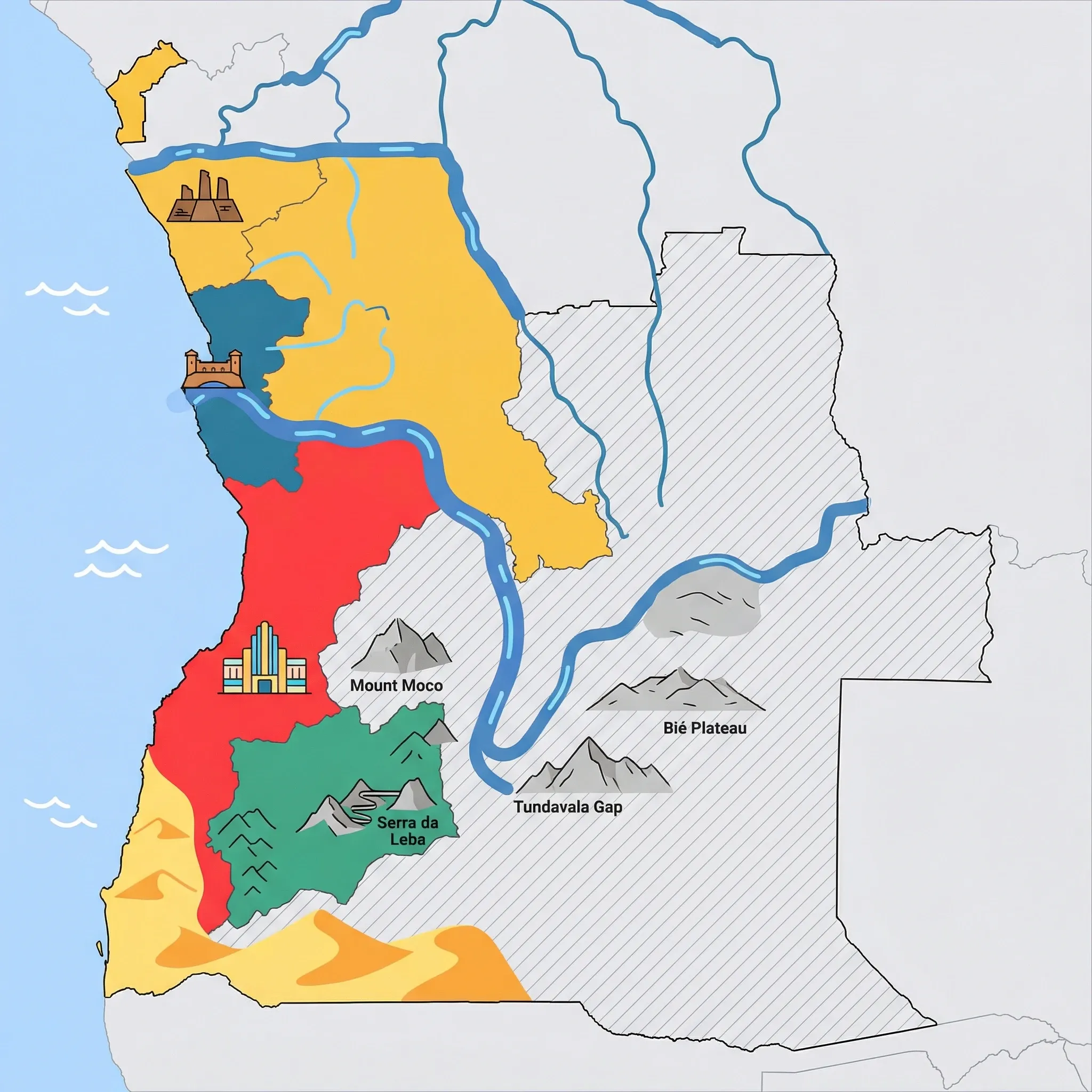
Click a region to explore
Luanda is intense, energetic, and undeniably expensive, but it is also the beating heart of the nation. For families, the city offers a mix of high-end comfort and raw adventure. The skyline is a patchwork of colonial buildings, soaring skyscrapers, and shantytowns, reflecting the country's rapid development. The center of social life is the "Marginal," a beautifully redeveloped waterfront promenade where families walk, cycle, and play in the evenings under the glow of the city lights. While the traffic can be overwhelming, the city serves as the perfect base for two of Angola's best family excursions: the beaches of Mussulo and the wildlife of Kissama.
The city sits on the coast, but the best swimming isn't in the center. Locals and expats head to the Ilha do Cabo (a spit of land packed with restaurants) or take boats to Mussulo Island for weekends. Luanda is also the place to understand the country's past. From the fortress that once guarded the harbor to the poignant history of the slave trade, there are powerful educational opportunities here. It requires patience to navigate, but Luanda rewards adventurous families with its vibrant culture, music, and food scene.
Key Attractions
To understand the city's origins, start at the Fortaleza de São Miguel. Built in 1576, this massive fortress offers cannons for kids to examine and panoramic views over the bay. It also houses the Museum of the Armed Forces. Just south of the city is the Museu Nacional da Escravatura (National Museum of Slavery), located in a historic chapel where enslaved people were baptized before transport; it is a small but deeply moving site best suited for older children.
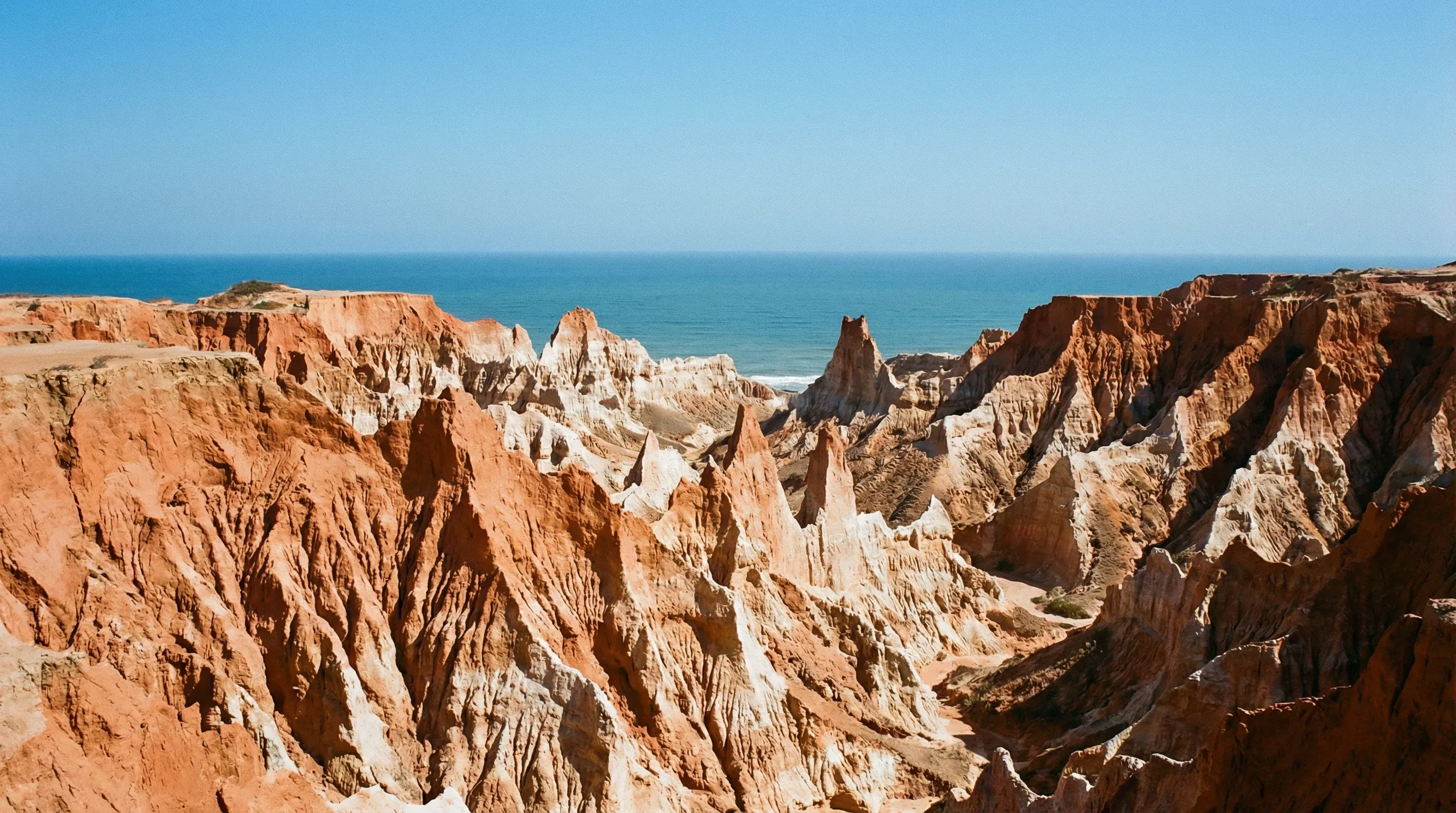
For nature, a day trip to Kissama National Park (Parque Nacional da Quiçama) is mandatory. It is the only accessible safari park near the capital where you can see giraffes, zebras, and elephants. On the way there, stop at the Miradouro da Lua (Viewpoint of the Moon), a stunning landscape of tri-colored eroded cliffs that truly looks extraterrestrial. Back in the city, the National Museum of Anthropology gives great insight into the country's tribes and masks.
Practical Advice
Traffic in Luanda is legendary; a 5km trip can take an hour. Plan one major activity per day. The best time to visit is June to September (cooler and drier). Hydration is key, and you should only drink bottled water. Luanda has modern shopping malls (like Shopping Fortaleza) if you need baby supplies, air conditioning, or familiar food.
Food & Drink
Typical meal times: Lunch 12:30 pm to 3:00 pm; Dinner 7:30 pm to 10:30 pm. Restaurants on the Ilha often stay open very late.
Typical meal costs: Luanda is pricey. A meal at a mid-range restaurant costs 25,000–45,000 AOA (approx. $27–50 USD / €25–47 EUR). High-end dining can easily double this.
Dietary requirements: International restaurants (Italian, Portuguese, Brazilian) are common and cater to all diets. Local food relies heavily on cassava and fish. Nut allergies are generally understood in better establishments.
Signature dishes:
- Moamba de Galinha – The national dish: chicken stewed in palm oil (nyemba) with okra, garlic, and pumpkin, served with funge.
- Choco Frito – Fried cuttlefish, a popular snack at beach bars on the Ilha.
- Funge – The ubiquitous cassava flour porridge; it has a sticky texture that some kids love and others struggle with!
Why this score?
Adventure here is found in navigating the chaotic urban environment and visiting nearby Kissama National Park. While mostly developed, the city’s infrastructure challenges and the proximity to wilder coastal areas provide a mild adventure for visiting families.
Why this score?
Luanda hosts the country's best private medical facilities, such as the Girassol Clinic, which can handle many emergencies and cater to the expat community. However, the system is still basic compared to international hubs and can be difficult for tourists to navigate without local assistance.
Why this score?
As the primary gateway to the country, Luanda receives the highest volume of international arrivals, though many are for business purposes. The city's Marginal and nearby Mussulo Island offer established tourism infrastructure that is the most developed in Angola.

Luanda is one of the most expensive cities in the world for travelers. A standard international hotel room costs 180,000–320,000 AOA (approx. $200–350 USD / €190–335 EUR) per night. Supermarket goods, especially imported brands, are very expensive. Budget at least 45,000 AOA (approx. $50 USD / €47 EUR) per person per day for food and transport basics.

Getting Here & Around
Getting Here
- Airports – Quatro de Fevereiro International Airport (LAD) is the main gateway to the country. It is located right in the city, though traffic can make the transfer time unpredictable.
- Bus – Long-distance buses (Macon, Huambo Express) arrive here from the provinces, but terminals can be chaotic and are not recommended for first-time family visitors.
Getting Around
- Car – Do not self-drive in Luanda; the traffic is aggressive and navigation is difficult. Hire a driver/guide. Rates are high, around 90,000–135,000 AOA (approx. $100–150 USD / €95–140 EUR) per day.
- Taxi – Apps like Heetch, Yango, and Allo Taxi are reliable and safe options for getting around the city center.
- Boat – To reach Mussulo Island, you must take a passenger boat from the embarcadouro at Kapossoca or the Ilha.
Nearby Airports (1 airport)
Luanda 4 De Fevereiro
LADLuanda
View full flight map for Angola →
Official Links

Packing List
Luanda is dusty and public washrooms may lack soap; essential for kids.
Hotel sinks/baths sometimes lack plugs; useful for washing kids' clothes.
Power cuts can occur, though hotels have generators; keep devices charged.
Data can be patchy and navigating the chaotic streets requires backup.
ATMs often fail with foreign cards; bills must be issued after 2013 and unblemished to be accepted.
Mandatory for entry; you will be checked at the airport health control before immigration.
English is rarely spoken outside top hotels; basic communication requires Portuguese.
Bathtubs and sinks in hotels frequently lack stoppers.
Power outages can occur; street lighting is inconsistent in some areas.

Activities & Best Times

Urban tourism, museums, historical sites, architecture
Luanda offers a unique blend of Portuguese colonial history and vibrant African urban culture, highlighted by the Fortaleza de São Miguel and the Museum of Slavery. The peak winter months (Cacimbo) provide cooler, manageable temperatures for exploring the city's historic quarters and the iconic Marginal.

Hiking, wildlife, outdoor exploration, ecotourism
Kissama National Park and the dramatic 'lunar' landscapes of Miradouro da Lua offer distinctive natural experiences. Nature exploration and wildlife viewing are best during the dry season when animals congregate near water sources and trails are accessible.
Beach resorts, marine activities: diving, snorkelling, kite surfing, wind surfing, sailing
The sandbars of Mussulo Island and the beaches of Ilha do Cabo provide a genuine tropical escape with warm waters. Peak season aligns with the warmest, sunniest months, while the mid-year 'Cacimbo' season is often too overcast and cool for a premier beach experience.

Scenic drives, countryside tours, route-based travel
The scenic drive from Luanda to Cabo Ledo via the Miradouro da Lua offers some of the country's most spectacular coastal views. The dry season ensures safer road conditions and clear visibility for these iconic vistas.

Sport tourism, fitness activities, active recreation
Cabo Ledo is internationally recognized for its world-class surfing breaks, which are most consistent during the southern hemisphere winter. Water sports around Mussulo benefit from these cooler, drier months which avoid the intense humidity and rain of summer.

Learning experiences, scientific sites, historical education
The Luanda Science Centre and the National Museum of Natural History offer curated learning experiences focused on regional biodiversity and geology. These indoor facilities are best visited when the city climate is most conducive to travel and general exploration.
Amusement parks, family entertainment venues
Venues like Dreamspace provide family-oriented recreation, though they serve a largely regional market rather than being international destinations. Peak interest coincides with major school holidays and the warmest weather for aquatic facilities.

Attractions (13 total)



Public Holidays & Calendar Next 12 months
Public holidays, festivals, cultural celebrations, and seasonal natural phenomena coming up in Luanda over the next 12 months.
Loading holidays and events...

Travel Advisory
All major agencies recommend exercising a high degree of caution or increased vigilance due to high crime rates and regional security threats. While travel is generally permitted, specific provinces are under stricter warnings.
Safety Topics
Traveller Advice (4 groups)

Personnel working in diamond-producing regions or border zones should maintain strict security protocols due to the risk of being targeted by separatist militants or banditry.

Visitors should stay alert in urban areas, avoid walking alone after dark, and keep valuables out of sight to minimize the risk of being targeted by criminals.

Solo female travel is discouraged at night. It is recommended to dress conservatively to align with local cultural expectations.

While legal protections exist, social views are conservative; travelers should be discreet as public displays of affection may be met with hostility.
Agency Summaries
Travelers should maintain a heightened state of awareness due to widespread criminal activity and the persistent danger posed by landmines in specific regions.
While general travel is possible, visiting the Cabinda province or areas near the DRC border is discouraged due to regional insecurity and the threat of separatist groups.
Visitors are advised to practice significant safety precautions as the security environment presents higher risks than those typically found in Ireland.
Safety concerns regarding violent crime and civil unrest require travelers to be more vigilant than usual, with specific avoid-travel warnings for several provinces.
An elevated level of caution is necessary throughout the country owing to risks of violent street crime and frequent public protests.
Heightened vigilance is recommended because of common violent crimes, potential for civil disturbances, and medical infrastructure challenges.
Information is provided for general guidance only and does not constitute travel, safety, medical, or legal advice. Conditions may change. Users are responsible for independently verifying information before travel.