
Click a region to explore
⚠️ SAFETY WARNING: Northern Angola requires increased caution due to proximity to the DRC border and the Cabinda exclave region where separatist activity has occurred. Government agencies (including the US, UK, and Canada) advise travelers to reconsider travel here and to avoid the Cabinda province entirely. Stick to main roads and towns, avoid border areas, and travel with local guidance. Families are strongly urged to consult their own government's official travel advisory before considering a trip, as circumstances and risk assessments vary.
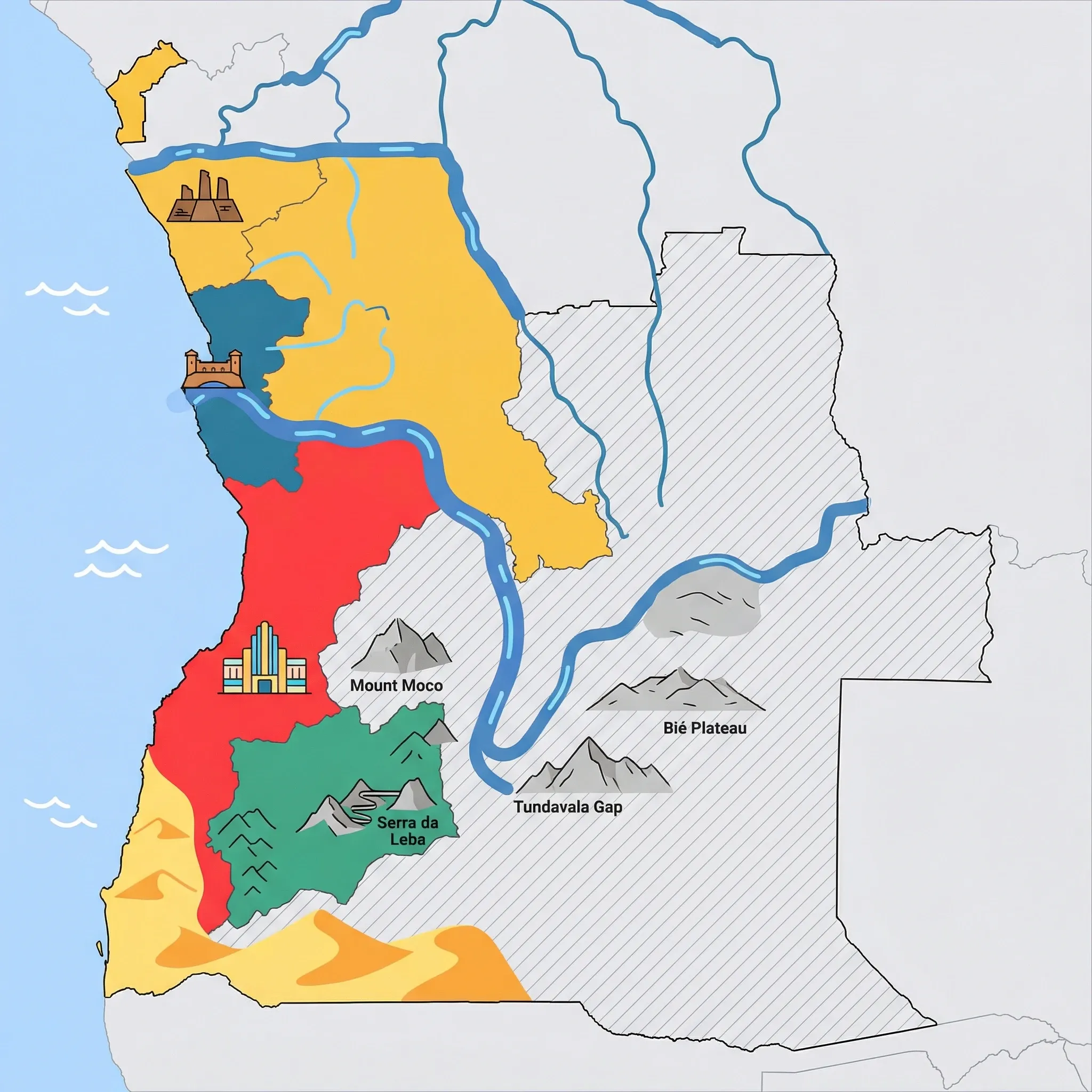
For families with a deep interest in history and anthropology, Northern Angola offers a profound connection to the past. This region was the heart of the powerful Kingdom of Kongo, which existed for centuries before colonial rule. The landscape here shifts from the savannahs of the coast to dense, humid tropical forests as you move inland. It is a raw, authentic part of Africa that sees very few tourists. The vibe is rural, traditional, and slower-paced. While infrastructure is basic, the cultural richness is immense.
The centerpiece of the region is Mbanza Kongo, a UNESCO World Heritage site. It serves as a spiritual capital for the Bakongo people. Visiting here is not about passive sightseeing; it is about listening to oral histories and standing on ground that has been a seat of power since the 1300s. The climate is tropical and humid, and the roads can be challenging, making this a destination better suited for older children and teens who can handle long car journeys and basic amenities rather than toddlers.
Key Attractions
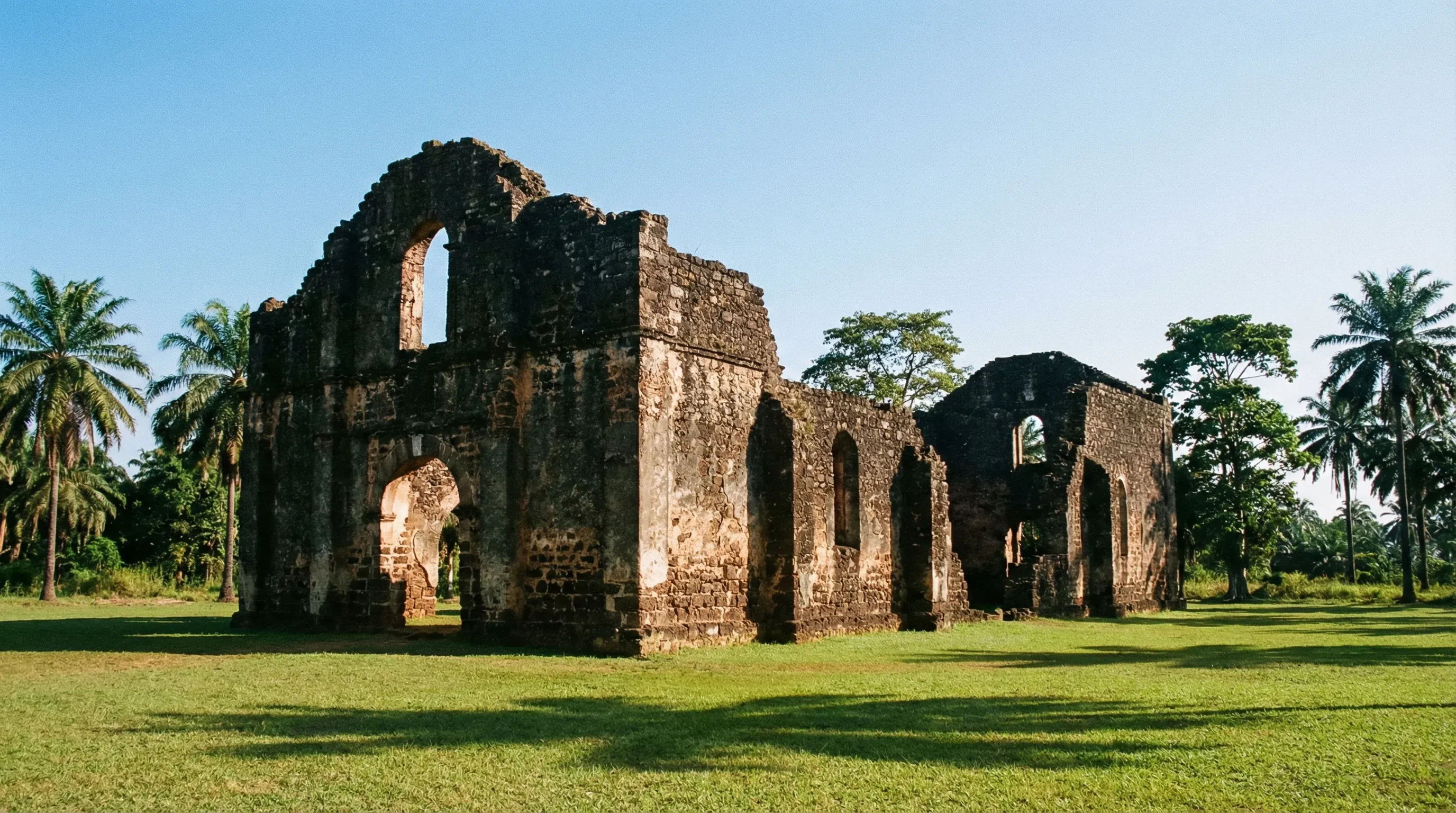
The primary reason to visit is Mbanza Kongo. Here, families can see the Kulumbimbi Cathedral, the ruins of the first sub-Saharan cathedral built in 1549. It is a striking sight, with its laterite stone walls standing open to the sky. Nearby is the Museum of the Kings of Kongo, which, although simple, houses artifacts explaining the lineage of the monarchs and the region's complex relationship with Portugal and Christianity. The Sunguilau tree is another significant spot—a massive ancient tree where traditional courts were held. Towards the coast, the Congo River mouth at Soyo offers a chance to see the mighty river meet the ocean, a geography lesson brought to life, though access requires careful planning due to oil industry security.
Practical Advice
Travel here requires a 4x4 and preferably a local guide or driver who speaks the local language (Kikongo) in addition to Portuguese. The best time to visit is the dry season (June–August) to avoid muddy roads. Malaria risk is higher here than in the south; rigorous use of nets and repellent is vital. Medical facilities are very basic outside of provincial capitals.
Food & Drink
Typical meal times: Lunch 12:00 pm to 2:00 pm; Dinner 7:00 pm to 9:00 pm.
Typical meal costs: Food is inexpensive but basic. A local meal costs 6,000–12,000 AOA (approx. $7–13 USD / €6–12 EUR).
Dietary requirements: This is a challenging region for restrictive diets. The diet is heavy on cassava (funge), beans, and river fish. Vegetarians will eat a lot of beans and greens (kisaca).
Signature dishes:
- Kisaca (Saka-Saka) – Cassava leaves cooked for hours with palm oil, onions, and spices. A nutrient-dense staple.
- Bagre Fumado – Smoked catfish from the rivers, often used in stews.
- Banana Pão – Boiled plantains served as a starch substitute for rice or funge.
Why this score?
Visiting this region is a significant undertaking involving long overland journeys through lush, remote hills and border territories. The rugged infrastructure and lack of tourist facilities make it an expedition-style destination for families seeking true off-the-beaten-path experiences.
Why this score?
Medical facilities in the northern provinces are extremely rudimentary and geared toward the local rural population. Access to English-speaking doctors or modern emergency equipment is virtually non-existent, posing a high risk for international visitors.
Why this score?
This region receives almost no international tourism outside of small groups visiting the UNESCO-listed Mbanza Kongo. The lack of hotel infrastructure and difficult road access keeps it off the radar for nearly all foreign travelers.

Costs are lower here than in Luanda or Benguela due to the lack of luxury tourism infrastructure. Accommodation is simple guesthouses rather than hotels, costing around 35,000–70,000 AOA (approx. $40–80 USD / €35–75 EUR). Cash is king; credit cards are rarely accepted outside of major petrol stations or the few large hotels in Soyo.

Getting Here & Around
Getting Here
- Airports – Domestic flights serve Soyo (SZA) and sometimes Mbanza Kongo (SSY) from Luanda via TAAG, though schedules can be irregular.
- Driving – Mbanza Kongo is approx. 480km from Luanda. The road has been improved but still takes 6–8 hours. The drive passes through varying landscapes, but ensure you have a spare tire and extra fuel.
Getting Around
- Car – A sturdy 4x4 is non-negotiable. Public transport exists (minibuses) but is often unsafe for tourists due to overcrowding and speed.
- Walking – Within Mbanza Kongo, the historical sites are relatively close together and can be explored on foot.
Nearby Airports (2 airports)
Cabinda
CABCabinda
Soyo
SZASoyo
View full flight map for Angola →
Official Links

Packing List
ATMs are scarce and often out of order; cards are rarely accepted.
GPS signal is unreliable in remote border areas.
Street lighting is minimal and power cuts are frequent in provincial towns.
Essential for walking in tall grass to avoid ticks and snake bites.
ATMs often fail with foreign cards; bills must be issued after 2013 and unblemished to be accepted.
Mandatory for entry; you will be checked at the airport health control before immigration.
English is rarely spoken outside top hotels; basic communication requires Portuguese.
Bathtubs and sinks in hotels frequently lack stoppers.
Power outages can occur; street lighting is inconsistent in some areas.

Activities & Best Times

Hiking, wildlife, outdoor exploration, ecotourism
Home to the Mangrove National Park and the fascinating Nzau Evua caves, providing high authenticity for wilderness-seeking families. The dry season is essential for access, as heavy rains from October through April make unpaved roads to nature reserves difficult to navigate.

Urban tourism, museums, historical sites, architecture
Features the UNESCO-listed Mbanza Kongo, offering profound cultural heritage through the Museum of the Kings of Congo and cathedral ruins. The cooler, dry winter months are optimal for exploring these outdoor historic sites, while peak rainy season (Nov-Apr) brings challenging heat and humidity.

Scenic drives, countryside tours, route-based travel
The EN100 coastal highway and the Uíge Coffee Highlands drives provide spectacular, raw landscapes for experienced travelers. Driving conditions are most reliable during the dry season; heavy tropical rainfall during the rest of the year can cause significant road washouts and safety concerns.

Beach resorts, marine activities: diving, snorkelling, kite surfing, wind surfing, sailing
Offers undeveloped and authentic Atlantic coastal experiences at Praia do N'Zeto and Musserra, but lacks international-standard resort infrastructure. Visitation is best during the dry 'Cacimbo' months (Jun-Aug) when humidity is lower and conditions are more comfortable for coastal exploration.

Attractions (5 total)



Public Holidays & Calendar Next 12 months
Public holidays, festivals, cultural celebrations, and seasonal natural phenomena coming up in Northern Angola over the next 12 months.
Loading holidays and events...

Travel Advisory
All major agencies recommend exercising a high degree of caution or increased vigilance due to high crime rates and regional security threats. While travel is generally permitted, specific provinces are under stricter warnings.
Safety Topics
Traveller Advice (4 groups)

Personnel working in diamond-producing regions or border zones should maintain strict security protocols due to the risk of being targeted by separatist militants or banditry.

Visitors should stay alert in urban areas, avoid walking alone after dark, and keep valuables out of sight to minimize the risk of being targeted by criminals.

Solo female travel is discouraged at night. It is recommended to dress conservatively to align with local cultural expectations.

While legal protections exist, social views are conservative; travelers should be discreet as public displays of affection may be met with hostility.
Agency Summaries
Travelers should maintain a heightened state of awareness due to widespread criminal activity and the persistent danger posed by landmines in specific regions.
While general travel is possible, visiting the Cabinda province or areas near the DRC border is discouraged due to regional insecurity and the threat of separatist groups.
Visitors are advised to practice significant safety precautions as the security environment presents higher risks than those typically found in Ireland.
Safety concerns regarding violent crime and civil unrest require travelers to be more vigilant than usual, with specific avoid-travel warnings for several provinces.
An elevated level of caution is necessary throughout the country owing to risks of violent street crime and frequent public protests.
Heightened vigilance is recommended because of common violent crimes, potential for civil disturbances, and medical infrastructure challenges.
Information is provided for general guidance only and does not constitute travel, safety, medical, or legal advice. Conditions may change. Users are responsible for independently verifying information before travel.