

Overview
Argentina offers families a travel experience of epic proportions. Stretching from the tropic of Capricorn to the tip of Antarctica, the country encompasses an incredible variety of landscapes. For adventurous families, it is a playground of extremes: the red deserts of the Northwest Argentina & Andean Highlands contrast sharply with the glacial lakes of Patagonia – Northern Lakes & Steppe. The culture is equally rich, blending European heritage with Latin passion and indigenous roots. While the distances are vast, the journey is part of the adventure, with legendary road trips and comfortable long-distance buses that feel like moving hotels.
Families will find Argentina surprisingly welcoming. Children are adored here and are a central part of social life; it is common to see kids dining with their parents late into the night. The diversity of wildlife-from whales and penguins in the south to monkeys and toucans in the north-keeps young travelers engaged, while the "Gaucho" (cowboy) culture provides a fascinating glimpse into rural traditions. Whether exploring the sophisticated streets of Buenos Aires & Río de la Plata or trekking in the Andes, the sense of space and freedom is unmatched.
Key Attractions
No family trip to Argentina is complete without visiting the awe-inspiring Iguazú Falls. Unlike many waterfalls where you just stand and watch, Iguazú immerses you in the jungle; walkways lead you right to the edge of the "Devil's Throat," and boat rides take you under the spray. Further south, the Perito Moreno Glacier in Patagonia – Southern Icefields offers a rare chance to see a living ice giant. Accessible walkways allow even toddlers to see the massive ice walls calving into the lake, while older kids can enjoy "mini-trekking" excursions on the ice itself.
For a journey into the past, the Ischigualasto Provincial Park (Valley of the Moon) is a UNESCO site teeming with Triassic dinosaur fossils and strange rock formations that spark the imagination. In the capital, the Bioparque Temaikèn provides a world-class open-air zoo experience, while the Casa Rosada offers a glimpse into the country's turbulent history. Finally, the End of the World Train in Ushuaia combines history with stunning scenery, taking families on a steam-powered ride into the remote Tierra del Fuego & Subantarctic South national park.
Practical Advice
Argentina is huge, so plan your itinerary carefully to avoid spending your whole holiday in transit. Domestic flights are often necessary to connect regions like Iguazú and Patagonia. The best time to visit depends on your destination: September to November (spring) and March to April (autumn) offer mild weather and fewer crowds nationwide. Summer (December to February) is best for Patagonia but can be hot in Buenos Aires. Health-wise, no special vaccinations are typically required for major tourist areas, but always check current advice. Pack layers, as weather can change rapidly, especially in the south.
Food & Drink
Typical meal times: Argentines eat late. Lunch is typically 1:00 pm to 3:30 pm. Dinner rarely starts before 9:00 pm, with restaurants filling up around 10:00 pm or 10:30 pm.
Typical meal costs: 15,000–35,000 ARS (approx. $15–35 USD / €14–32 EUR) for a main course in a mid-range restaurant. Inflation is high, so prices vary.
Dietary requirements: Argentina is famous for beef, but vegetarian options like pasta, pizza, and empanadas are widespread. Gluten-free awareness is surprisingly high; look for the "Sin TACC" logo on menus and products, which certifies them as gluten-free.
Family-friendly dining: Children are welcome everywhere at any hour. Most restaurants offer highchairs (sillas altas) and are happy to share portions. Menus often feature kid-friendly staples like milanesas (breaded meat cutlets) and pasta.
Signature dishes:
- Asado – The holy grail of Argentine barbecue, featuring various cuts of beef and sausages cooked slowly over wood embers.
- Empanadas – Savory pastries filled with meat, cheese, corn, or ham; perfect for a quick, kid-friendly snack on the go.
- Milanesa a la Napolitana – A breaded beef or chicken cutlet topped with tomato sauce, ham, and melted cheese, usually served with fries.
- Locro – A hearty, thick stew made from corn, beans, and meat, traditionally eaten on national holidays.
- Dulce de Leche – A sweet, caramel-like spread found in everything from cakes to ice cream (helado), which is world-class here.
Family Travel Notice
Children who are residents or have stayed in the country for a long period may require specific written parental authorization to depart the country. It is important to verify current documentation requirements for minors before travel.

While traditionally a budget destination, prices have risen. A family of four can expect to spend around 200,000–350,000 ARS (approx. $200–350 USD / €185–320 EUR) per day for mid-range accommodation, meals, and activities. Dining remains good value, but excursions like glacier trekking and domestic flights can be expensive.
Age Suitability





Did you know? Argentina welcomes approximately 6.6 million international visitors per year. Most visitors come from Americas.
Explore Regions
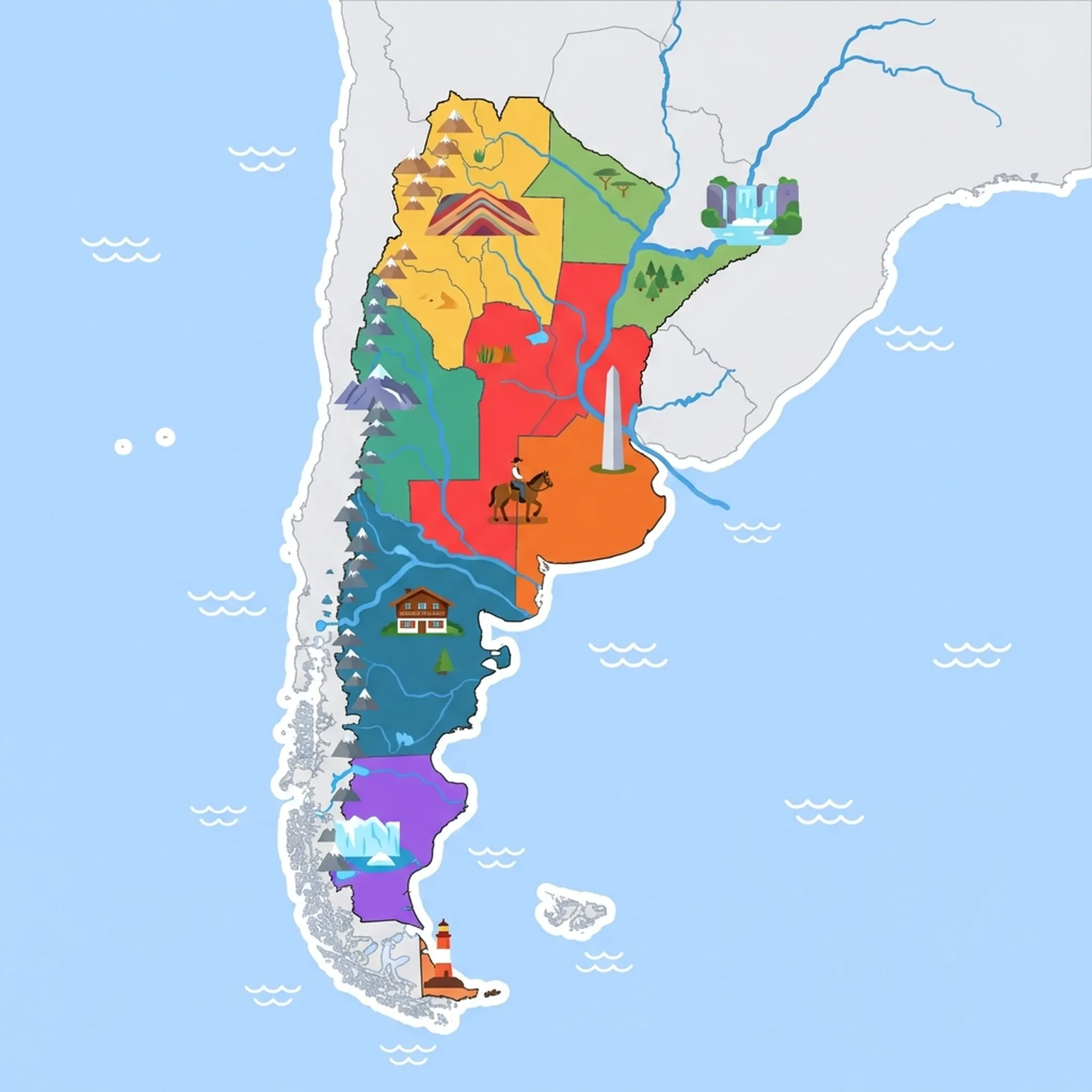
8 Regions
Buenos Aires & Río de la Plata
Tango rhythms, grand boulevards, and river adventures 🏙️🌿
Cuyo & Central Andes
Snow-capped peaks, dinosaur valleys, and golden sun 🏔️🦕☀️
Northeast Argentina & Iguazú
Jungle waterfalls, colorful toucans, and red earth paths 🌊🦜🌿
Northwest Argentina & Andean Highlands
Colorful mountains, llamas, and ancient inca trails 🌵🦙🏔️
Pampas & Central Plains
Cowboys, endless grasslands, and traditional ranch life 🐎🌾🥩
Patagonia – Northern Lakes & Steppe
Crystal lakes, alpine chocolate, and magical forests 🏔️🍫🌲
Patagonia – Southern Icefields
Crashing glaciers, granite peaks, and huge skies 🧊🏔️🌬️
Tierra del Fuego & Subantarctic South
The end of the world, penguins, and snowy peaks 🐧⚓❄️
Click on a region marker to explore details. Use the dropdown to color regions by activity suitability.

Getting There & Around
Getting There
- By Air – Ministro Pistarini International Airport (EZE) in Buenos Aires is the main gateway. Direct flights arrive from major hubs in the Americas and Europe.
- By Land – Long-distance buses connect Argentina with Chile, Brazil, Uruguay, and Bolivia. The crossing from Chile via the Andes offers spectacular views.
- By Sea – Ferries connect Buenos Aires with Montevideo and Colonia in Uruguay across the Río de la Plata.
- Entry Requirements – Citizens of the US, UK, EU, Australia, and Canada do not typically need a visa for tourist stays up to 90 days. Check your government website for the latest visa requirements, or use the IATA Travel Centre entry-requirements checker.
Getting Around
- Domestic Flights – Essential for covering the vast distances between Buenos Aires, Iguazú, and Patagonia. Aerolíneas Argentinas is the main carrier.
- Long-distance Buses – Known as micros, these are excellent for budget-conscious families. "Coche Cama" or "Ejecutivo" seats fully recline into beds, making overnight travel comfortable.
- Car Hire – Recommended for exploring the Patagonia – Northern Lakes & Steppe or the wine regions of Cuyo & Central Andes. Driving is on the right.
- City Transport – Buenos Aires has a reliable "Subte" (subway) system. You will need a SUBE card, which can be shared by the whole family.

Packing List
Argentina uses angled flat-pin plugs (same as Australia/China), which is unusual for the Americas.
The ozone layer is thinner over the southern hemisphere; UV radiation in Patagonia is surprisingly intense.
The strong, dry winds in Patagonia can cause rapid chapping and windburn, even in summer.
Crisp, clean $50/$100 notes often yield better exchange rates than smaller bills or cards in some establishments.
Essential for children on long-distance buses and winding mountain roads in the Andes.

Activities & Best Times

Adventure & Nature
ExcellentHiking, wildlife, outdoor exploration, ecotourism
Features world-class subantarctic ecosystems and the unique Tierra del Fuego National Park. Peak summer months offer long daylight hours and optimal wildlife viewing, including penguin colonies and marine mammals.
A global benchmark for wilderness tourism, featuring iconic glaciers and world-renowned trekking routes like Fitz Roy and Laguna de los Tres. Peak season aligns with the Southern Hemisphere summer when trails are accessible and daylight is longest; winter months see extreme cold and significant trail closures.
The region offers unique high-altitude Andean landscapes, including salt flats and colorful canyons, providing world-class trekking and wildlife viewing. The dry season (May-Oct) is essential for accessing remote Puna highlands, as summer rains often cause mudslides and road closures.

City & Cultural
ExcellentUrban tourism, museums, historical sites, architecture
Buenos Aires is a premier global cultural hub featuring world-class architecture, historic theaters like Teatro Colón, and prestigious art museums like MALBA. Peak visitation occurs during spring and autumn to avoid oppressive summer humidity and enjoy the city's vibrant street life and blooming jacarandas.
With well-preserved colonial architecture in Salta and the UNESCO-listed Quebrada de Humahuaca, the region offers deep immersion into Andean-Spanish heritage. Peak travel coincides with the dry season, offering comfortable walking weather and avoiding the intense heat and humidity of the summer months.
Ushuaia provides a unique 'End of the World' atmosphere with high-quality museums like the Maritime and Prison Museum. The summer cruise season brings a vibrant international vibe, while winter months are dark and cold.

Educational & Exploratory
Very GoodLearning experiences, scientific sites, historical education
The Museum of La Plata is a world-class natural history institution, and Mundo Marino offers significant marine biological engagement. These facilities provide year-round learning, though the peak travel windows align with school terms and pleasant weather for the associated outdoor grounds.
The La Plata Museum is a world-renowned natural history institution of significant scientific importance, complemented by the city's planetarium. These facilities are best visited during the academic year, excluding the hot summer months when many research-led programs are on hiatus.
The Museum of High Altitude Archaeology (MAAM) is a world-class facility housing internationally significant Inca mummies. While the museums are indoor, the best experience for families involves visiting during the dry season when regional archaeological sites are most accessible.

Sports & Active
Very GoodSport tourism, fitness activities, active recreation
Offers internationally recognized trekking routes like Laguna Esmeralda and the coastal trails within the National Park. Activity is highly seasonal, with high-altitude trails becoming inaccessible due to snow and ice from May to September.
Tucumán is an internationally renowned hub for paragliding, while the rugged valleys offer exceptional mountain biking and rafting. These activities rely on the stable atmospheric conditions and dry terrain found between April and October.
Home to elite mountaineering infrastructure on Aconcagua and specialized windsurfing venues like Cuesta del Viento. The summer period offers the necessary thermal winds and manageable high-altitude conditions for these technically demanding sports.
Beach & Sea
GoodBeach resorts, marine activities: diving, snorkelling, kite surfing, wind surfing, sailing
The Atlantic coast features established resorts like Mar del Plata and wilder dune reserves at Faro Querandí, though water temperatures are cooler than tropical benchmarks. Peak summer months (Dec-Feb) offer the best swimming conditions, while winter is unsuitable for beach recreation due to cold southerly winds.
Beaches like Bahía Lapataia offer rugged, scenic beauty rather than traditional swimming or sunbathing. Peak summer provides the calmest conditions for sea kayaking and coastal exploration in the Beagle Channel.
Coastal areas like Playa de los Témpanos offer unique glacier-side views but are unsuitable for traditional swimming or sunbathing due to frigid water temperatures. Only relevant for brief summer visits to experience the novelty of walking on glacial beaches.

Road Trips & Scenic
GoodScenic drives, countryside tours, route-based travel
Iconic routes like the end of Ruta Nacional 3 and the Paso Garibaldi offer spectacular subantarctic mountain and lake scenery. Winter driving is discouraged for international families due to heavy ice and snow on mountain passes.
Features iconic stretches of Ruta Nacional 40 and scenic routes toward Lago del Desierto, offering dramatic mountain vistas. Travel is best in summer to avoid hazardous ice on remote gravel and paved roads that can become impassable in winter.
Iconic routes like the Quebrada de las Conchas and Ruta 40 offer world-class scenery and dramatic elevation changes. Driving is safest and most scenic during the dry season; summer rains from December to February frequently make unpaved highland roads treacherous or impassable.

Ski & Snow
GoodWinter sports, ski resorts, snow activities
Home to Cerro Castor, a world-class resort known for reliable snow quality due to its high latitude. The season is strictly limited to the southern winter, with peak conditions and international training teams arriving in July and August.
Features Las Leñas, a resort internationally famous for its challenging off-piste terrain and dry Andean powder. The season is short and highly dependent on winter precipitation, with core reliability limited to July and August.
Home to South America's most extensive ski infrastructure at Cerro Catedral and Chapelco, offering reliable snow and modern facilities. The season is concentrated in winter, with July and August providing the best snow base and vibrant resort atmosphere.

Festivals & Seasonal
GoodEvents, celebrations, seasonal attractions
The internationally acclaimed Tango Festival and World Cup in August attract significant international visitors. 'Marginal' undervalues this major cultural event that is a primary draw for cultural tourists.
The Humahuaca Carnival is described as 'globally recognized' - this cannot be marginal. It's a UNESCO-area event with international attendance.
The National Grape Harvest Festival in March is described as 'a significant international draw' - this contradicts a 'marginal' rating. This is one of Argentina's most important festivals.
Theme Park & Entertainment
GoodAmusement parks, family entertainment venues
The region hosts Argentina's premier amusement parks and water parks, such as Parque de la Costa and Aquafan, which provide solid family entertainment. Visitation peaks during the southern summer and school holiday windows, with many water-based facilities closing during the cooler winter months.
Specialized mountain adventure hubs like Piedras Blancas offer unique sledding and family-oriented recreation that is highly seasonal. Operations peak during the summer school holidays and the winter vacation windows.
Venues like Parque de la Costa and Aquafan serve primarily domestic tourists and are not standalone international draws, though they provide regional entertainment. These parks are highly seasonal, with water-based attractions operating exclusively during the warm summer months.

Relaxation & Wellness
GoodSpa retreats, wellness centers, peaceful getaways
Natural thermal springs like Termas de Reyes offer authentic restorative experiences in dramatic mountain settings. The cooler winter months (May-Sept) are the peak period for wellness tourism, as the crisp air provides a perfect contrast to the hot mineral waters.
The region excels in wine-and-wellness combinations and thermal bath complexes like Cacheuta. Restorative tourism is possible year-round, though the extreme heat of summer and cold of winter make spring and autumn the most comfortable periods.
Developing thermal circuits like Termas de Dolores and the unique mineral-rich Epecuén offer genuine restorative experiences. The cooler months (May-August) are preferred for thermal bathing, as the summer heat makes hot spring visits less appealing for international travelers.

Public Holidays & Calendar Next 12 months
Public holidays, festivals, cultural celebrations, and seasonal natural phenomena coming up in Argentina over the next 12 months.
Loading holidays and events...
Climate & Weather
Buenos Aires & Río de la Plata
Show Details
| Month | Temp °C | Rain | Humidity |
|---|
Cuyo & Central Andes
Show Details
| Month | Temp °C | Rain | Humidity |
|---|
Northeast Argentina & Iguazú
Show Details
| Month | Temp °C | Rain | Humidity |
|---|
Northwest Argentina & Andean Highlands
Show Details
| Month | Temp °C | Rain | Humidity |
|---|
Pampas & Central Plains
Show Details
| Month | Temp °C | Rain | Humidity |
|---|
Patagonia – Northern Lakes & Steppe
Show Details
| Month | Temp °C | Rain | Humidity |
|---|

Travel Advisory
Argentina is generally safe for tourists with safety conditions similar to other stable Western nations. Travelers should follow standard personal security protocols, particularly in large urban centers.
Safety Topics
Traveller Advice (3 groups)

While generally welcoming, travelers are encouraged to review specific guidance on local attitudes and legal protections for sexual and gender minorities.

Children who are residents or have stayed in the country for a long period may require specific written parental authorization to depart the country. It is important to verify current documentation requirements for minors before travel.

Travelers visiting high-altitude regions in the Andes or remote areas of Patagonia should be prepared for altitude sickness and extreme weather conditions that can change rapidly.
Agency Summaries
While general safety precautions are sufficient for most of the country, travelers should be more vigilant in Buenos Aires and Rosario due to higher rates of crime. Particular attention should be paid to taxi scams at airports.
The country is considered safe for standard travel, though increased vigilance is recommended in the city of Rosario due to local crime and narcotics-related violence.
The safety environment is comparable to New Zealand, with the exception of Rosario where crime rates are higher. Travelers are advised to avoid public demonstrations.
General safety levels are high, but visitors should be aware of health risks like Dengue and Zika in the north and the potential for land border closures during winter months.
Most visits are trouble-free, but travelers are warned of frequent political protests in major cities and the risk of petty crime in tourist areas.
Tourism is generally safe, but travelers should monitor local news for demonstrations which occur regularly following recent political changes.
Information is provided for general guidance only and does not constitute travel, safety, medical, or legal advice. Conditions may change. Users are responsible for independently verifying information before travel.