
Cuyo & Central Andes
Snow-capped peaks, dinosaur valleys, and golden sun 🏔️🦕☀️
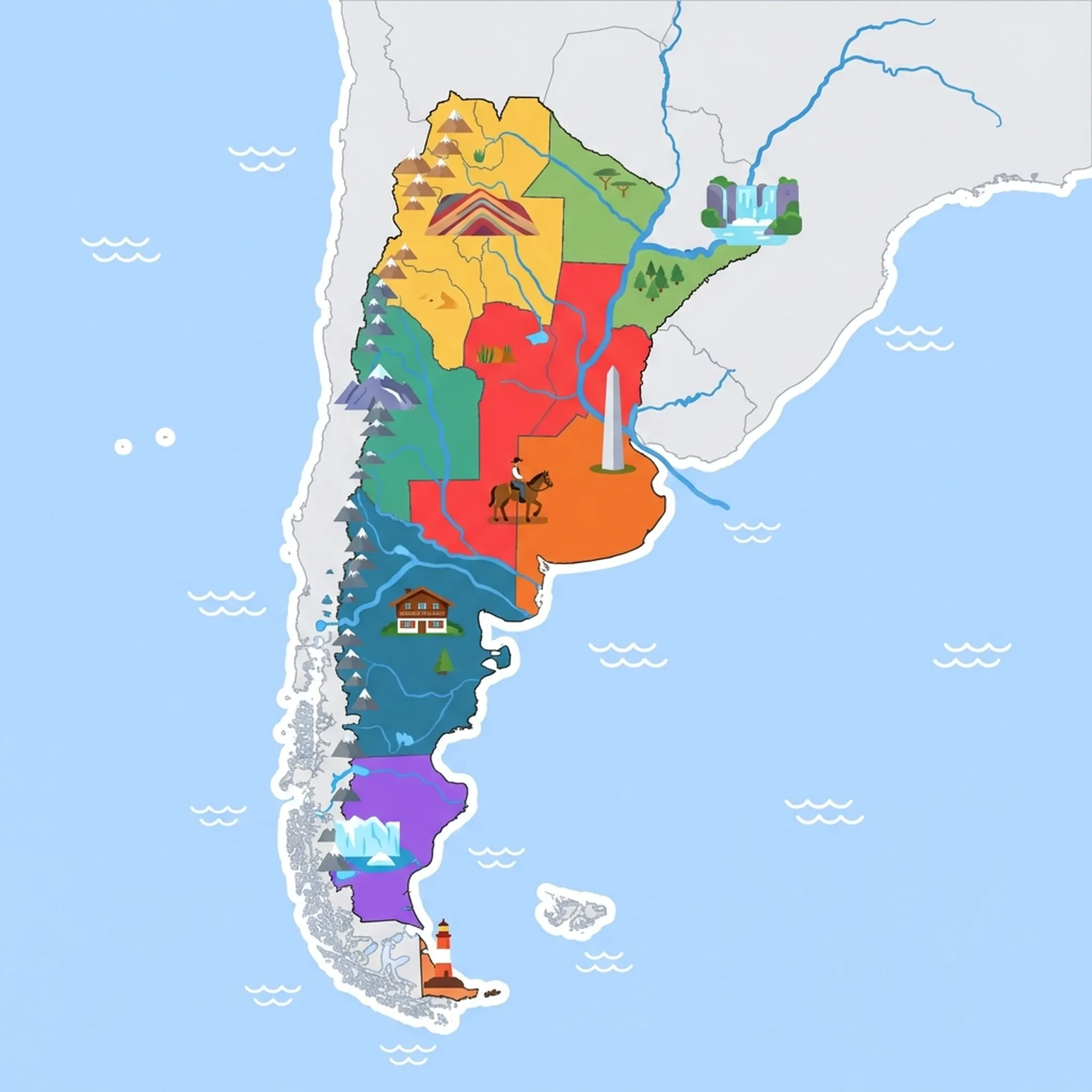
Click a region to explore
Overview
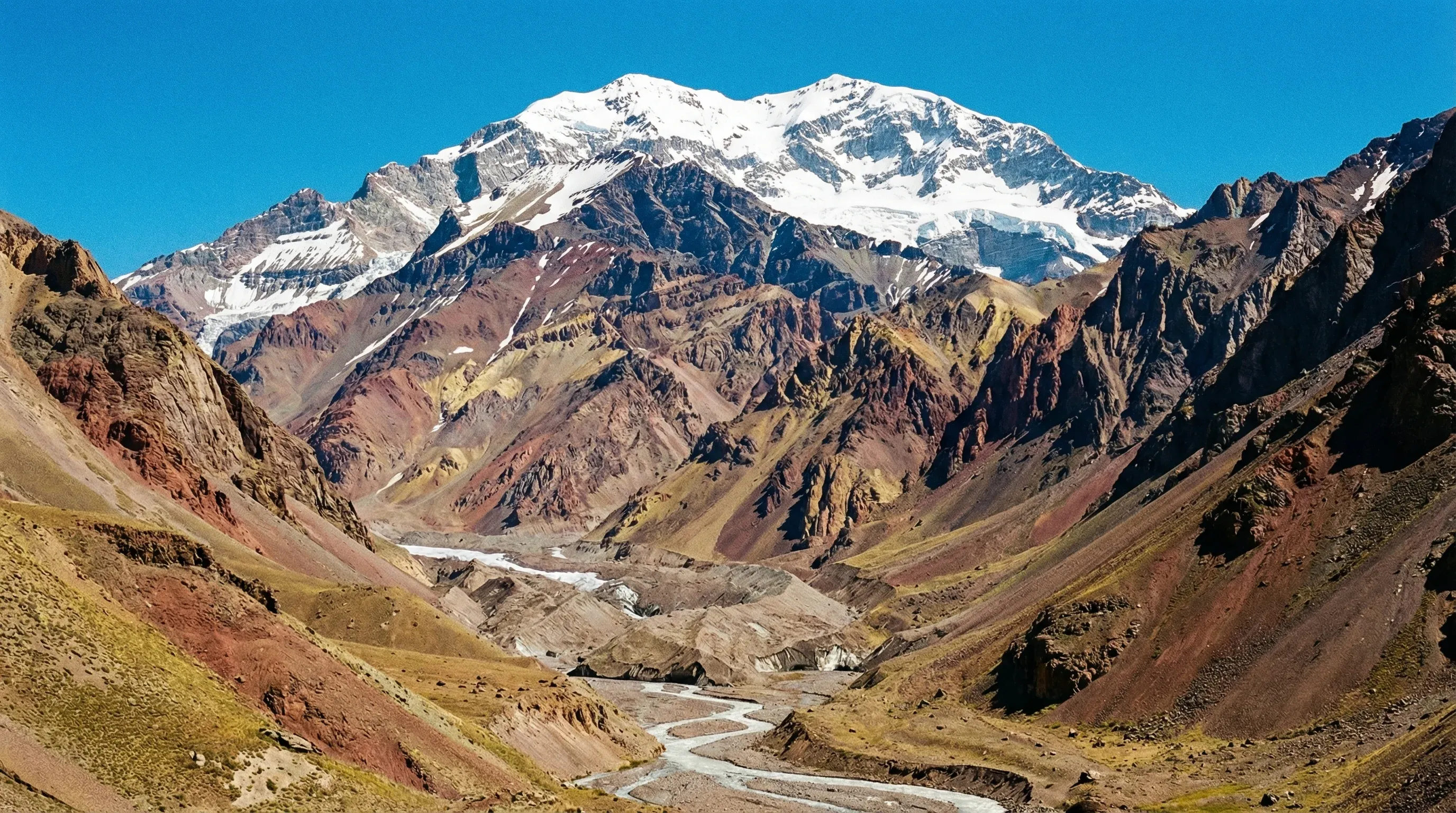
The Cuyo region is defined by the dramatic backbone of the Andes mountains, acting as a wall between Argentina and Chile. For families, this is a playground of extremes: the highest peaks in the Western Hemisphere tower over arid, moon-like deserts and lush, irrigated oases. Mendoza, the heart of the region, is famous globally for wine, but for families, it serves as a leafy, relaxed basecamp for mountain adventures. The city itself is characterized by its "acequias"—ancient irrigation canals that run alongside every street, watering the thousands of trees that provide shade from the intense sun. Beyond the green cities, the landscape turns into a geologist's dream, with red canyons and strange rock formations that look like they belong on Mars.
The climate is semi-arid desert, meaning days are generally sunny and dry, but temperatures can drop significantly at night, especially in the mountains. This makes it an excellent destination for active families who enjoy hiking, rafting, and road trips without the worry of constant rain. Culturally, the region moves at a slower pace than Buenos Aires, with a strong siesta tradition where shops close in the afternoon. The area is also one of the world's most significant paleontological sites; the Triassic parks in San Juan province offer a genuine "land before time" experience where the earliest dinosaur fossils have been discovered, sparking the imagination of any child obsessed with prehistory.
Key Attractions
The absolute highlight for adventurous families is the High Andes Route (Ruta 7). This road trip takes you deep into the mountains, passing the mesmerizing Puente del Inca, a natural stone bridge stained brilliant orange and yellow by sulfurous waters. Nearby, you can view the mighty Aconcagua, the highest mountain outside Asia; a short hike to the viewpoint is manageable even with active children. In summer, the Dique Potrerillos offers a stunning turquoise reservoir perfect for kayaking and picnicking against a backdrop of snow-capped peaks.
Further north in San Juan, the "Moon Valley" or Ischigualasto Provincial Park is unmissable. It is the only place in the world where the entire Triassic period is exposed in rock layers. You can drive through this lunar landscape and see the exact spots where dinosaur fossils were found. Nearby, Talampaya National Park features colossal red canyon walls that dwarf visitors, with guided tours in overland trucks that kids love. Back in Mendoza, the National Grape Harvest Festival (if visiting in March) is a riot of color, parades, and fireworks that celebrates the harvest with family-friendly grandeur.
Practical Advice
Rent a car; distances are vast and public transport to remote parks like Ischigualasto is difficult. The sun is incredibly strong at high altitudes—high SPF sunscreen and hats are non-negotiable. Visits to wineries are surprisingly family-friendly; many offer "kinder gardens" or art activities for kids while parents taste. Note that altitude sickness can occur on the High Andes trip; drink plenty of water and ascend slowly.
Food & Drink
Typical meal times: Lunch is 1:00 pm to 3:30 pm. Dinner is late, usually starting at 9:00 pm. Siesta is strictly observed, so finding food between 4:00 pm and 8:00 pm can be tricky outside of cafes.
Typical meal costs: A meal in a mid-range winery restaurant is ARS 40,000–70,000 (approx. $40–70 USD / €37–65 EUR). Standard city dining is cheaper, around ARS 15,000–25,000 (approx. $15–25 USD / €14–23 EUR).
Dietary requirements: Celiac-friendly options are common. Vegetarian food is available, though the region is meat-heavy. Fresh fruit is exceptional here.
Signature dishes:
- Empanadas Mendocinas – Baked (never fried) pastries filled with beef, lots of onion, egg, and usually an olive (watch out for the pit!).
- Tomaticán – A stew made from fresh local tomatoes, onions, egg, and bread; a simple, kid-friendly comfort food.
- Humita en Chala – Grated corn paste with cheese and spices, wrapped and steamed in a corn husk.
- Carne a la Olla – Slow-cooked beef pot roast that is incredibly tender and mild.
Why this score?
The region features Mount Aconcagua, the highest peak outside Asia, offering extreme mountaineering challenges and rugged desert parks like Ischigualasto. Much of the Andean interior is remote, high-altitude terrain with limited infrastructure for casual travelers.
Why this score?
The city of Mendoza offers modern healthcare facilities and decent medical infrastructure for travelers. However, services become extremely limited once moving into the high-altitude mountain regions or rural desert areas where emergency response is difficult.
Why this score?
Mendoza is a globally recognized wine destination, while the high Andes attract mountaineers from around the world. Though it sees significant international flow, it remains more of a specialized niche compared to the mass-market draw of Buenos Aires or Iguazú.

Prices are generally slightly lower than Buenos Aires for accommodation, but excursions (wine tours, high mountain treks) can be pricey. A cabin for a family of four usually runs ARS 80,000–130,000 (approx. $80–130 USD / €75–120 EUR). Entry fees to major parks like Ischigualasto are distinct for foreigners and must be paid in cash ARS.
Family Travel Notice
Children who are residents or have stayed in the country for a long period may require specific written parental authorization to depart the country. It is important to verify current documentation requirements for minors before travel.

Getting Here & Around
Getting Here
- Airports – Governor Francisco Gabrielli International Airport (MDZ) in Mendoza is the main hub, with flights from Buenos Aires, Santiago de Chile, and Sao Paulo.
- Bus – Long-distance luxury buses from Buenos Aires take about 13-14 hours. It's a long journey, but the "cama suite" (flat bed) seats make it comfortable.
- Driving – Exploring the High Andes Route (Ruta 7) requires a vehicle. The drive from Chile (Santiago) is spectacular but involves a complex border crossing.
Getting Around
- Car – Highly recommended. To visit Ischigualasto Provincial Park or the high mountains at your own pace, a rental car is essential.
- Remis/Taxi – Good for short trips within Mendoza city or to nearby wineries.
- Tours – Many operators run shuttle buses to the main attractions, which is a good option if you prefer not to drive on mountain roads.
Nearby Airports (5 airports)
San Rafael
AFASan Rafael
San Luis
LUQSan Luis
El Plumerillo
MDZMendoza
Aeropuerto Internacional Valle del Conlara
RLOSanta Rose de Conlara
San Juan Airport
UAQSan Juan
View full flight map for Argentina →
Official Links

Packing List
The air is extremely dry (often <10% humidity); keeps kids' noses comfortable.
High altitude sun and dry wind will chap lips very quickly.
Temperature drops drastically at night and in the high mountains.
Mountain roads are winding; essential for the High Andes route.
Argentina uses angled flat-pin plugs (same as Australia/China), which is unusual for the Americas.
The ozone layer is thinner over the southern hemisphere; UV radiation in Patagonia is surprisingly intense.
The strong, dry winds in Patagonia can cause rapid chapping and windburn, even in summer.
Crisp, clean $50/$100 notes often yield better exchange rates than smaller bills or cards in some establishments.
Essential for children on long-distance buses and winding mountain roads in the Andes.

Activities & Best Times

Hiking, wildlife, outdoor exploration, ecotourism
A world-class destination for high-altitude trekking and desert geology, featuring Mount Aconcagua and the UNESCO-listed Ischigualasto. Summer provides the essential window for Andean expeditions, while extreme cold and snow block high-altitude trails in winter.

Urban tourism, museums, historical sites, architecture
Mendoza is a premier cultural hub known for its sophisticated wine culture, historic urban design, and fine art museums. Peak months offer the most vibrant atmosphere and comfortable weather, while winter months see a significant reduction in urban street life and outdoor activity.

Sport tourism, fitness activities, active recreation
Home to elite mountaineering infrastructure on Aconcagua and specialized windsurfing venues like Cuesta del Viento. The summer period offers the necessary thermal winds and manageable high-altitude conditions for these technically demanding sports.

Learning experiences, scientific sites, historical education
Provides high-level scientific engagement at the Pierre Auger Observatory and the Triassic fossil beds of Ischigualasto. Field site access and interpretation centers are best visited during the moderate temperatures of spring and autumn.

Events, celebrations, seasonal attractions
The National Grape Harvest Festival in March is described as 'a significant international draw' - this contradicts a 'marginal' rating. This is one of Argentina's most important festivals.

Spa retreats, wellness centers, peaceful getaways
The region excels in wine-and-wellness combinations and thermal bath complexes like Cacheuta. Restorative tourism is possible year-round, though the extreme heat of summer and cold of winter make spring and autumn the most comfortable periods.

Scenic drives, countryside tours, route-based travel
Offers spectacular routes through the High Andes and the deep canyons of San Rafael. Driving is most rewarding in autumn for vineyard colors and spring for clear skies, while winter snow frequently closes major mountain passes.

Winter sports, ski resorts, snow activities
Features Las Leñas, a resort internationally famous for its challenging off-piste terrain and dry Andean powder. The season is short and highly dependent on winter precipitation, with core reliability limited to July and August.

Beach resorts, marine activities: diving, snorkelling, kite surfing, wind surfing, sailing
High-altitude reservoirs like Potrerillos offer inland beach recreation and sailing in a dramatic desert setting. Appeal is limited to the hottest summer months when the water is suitable for swimming.
Amusement parks, family entertainment venues
Local adventure and water parks serve as supplementary entertainment for families rather than primary travel motivators. These facilities are most active during the summer and winter school holiday peaks.

Attractions (17 total)



Public Holidays & Calendar Next 12 months
Public holidays, festivals, cultural celebrations, and seasonal natural phenomena coming up in Cuyo & Central Andes over the next 12 months.
Loading holidays and events...

Travel Advisory
Argentina is generally safe for tourists with safety conditions similar to other stable Western nations. Travelers should follow standard personal security protocols, particularly in large urban centers.
Safety Topics
Traveller Advice (3 groups)

While generally welcoming, travelers are encouraged to review specific guidance on local attitudes and legal protections for sexual and gender minorities.

Children who are residents or have stayed in the country for a long period may require specific written parental authorization to depart the country. It is important to verify current documentation requirements for minors before travel.
Travelers visiting high-altitude regions in the Andes or remote areas of Patagonia should be prepared for altitude sickness and extreme weather conditions that can change rapidly.
Agency Summaries
While general safety precautions are sufficient for most of the country, travelers should be more vigilant in Buenos Aires and Rosario due to higher rates of crime. Particular attention should be paid to taxi scams at airports.
The country is considered safe for standard travel, though increased vigilance is recommended in the city of Rosario due to local crime and narcotics-related violence.
The safety environment is comparable to New Zealand, with the exception of Rosario where crime rates are higher. Travelers are advised to avoid public demonstrations.
General safety levels are high, but visitors should be aware of health risks like Dengue and Zika in the north and the potential for land border closures during winter months.
Most visits are trouble-free, but travelers are warned of frequent political protests in major cities and the risk of petty crime in tourist areas.
Tourism is generally safe, but travelers should monitor local news for demonstrations which occur regularly following recent political changes.
Information is provided for general guidance only and does not constitute travel, safety, medical, or legal advice. Conditions may change. Users are responsible for independently verifying information before travel.