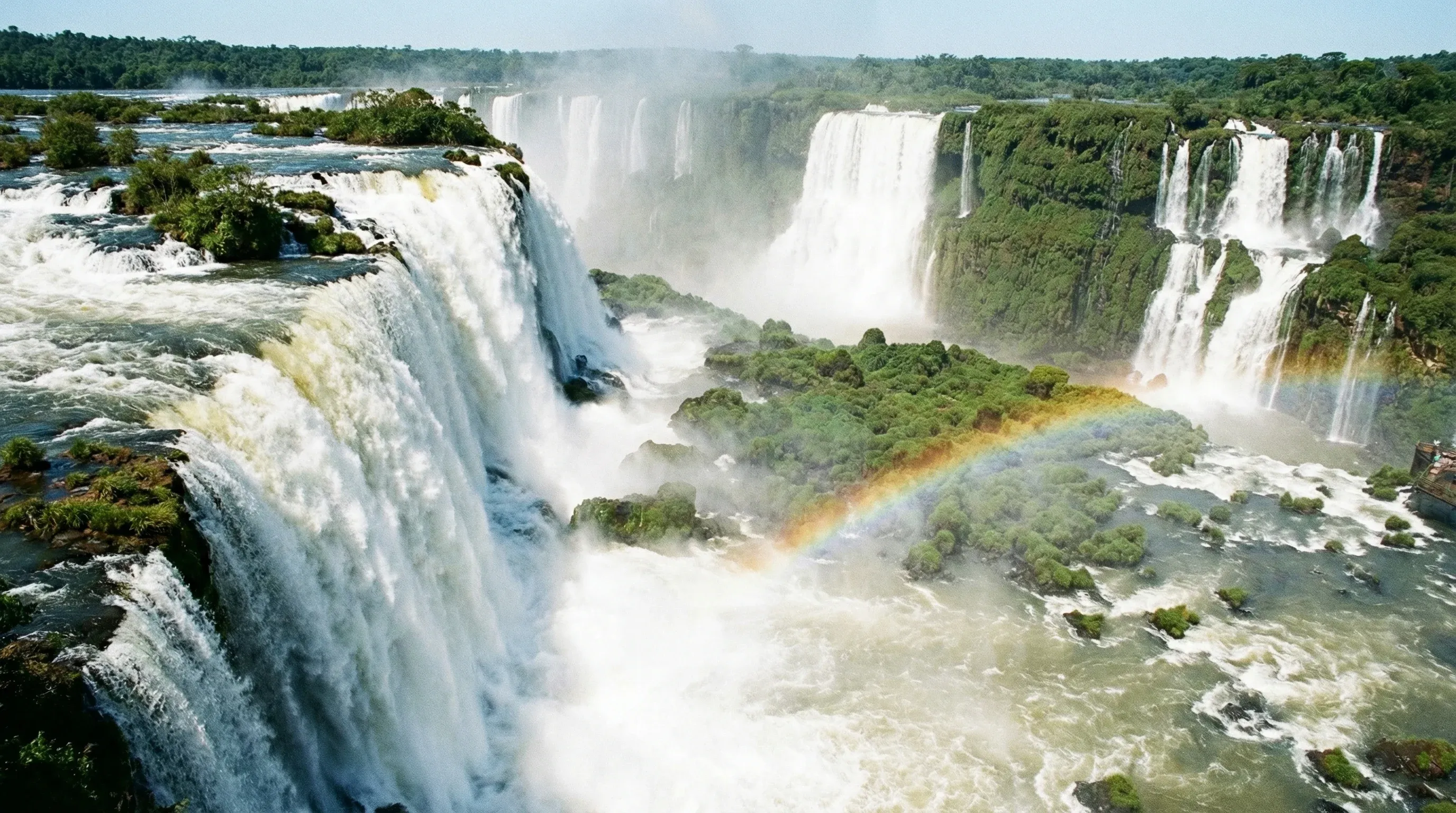

Northeast Argentina & Iguazú
Jungle waterfalls, colorful toucans, and red earth paths 🌊🦜🌿
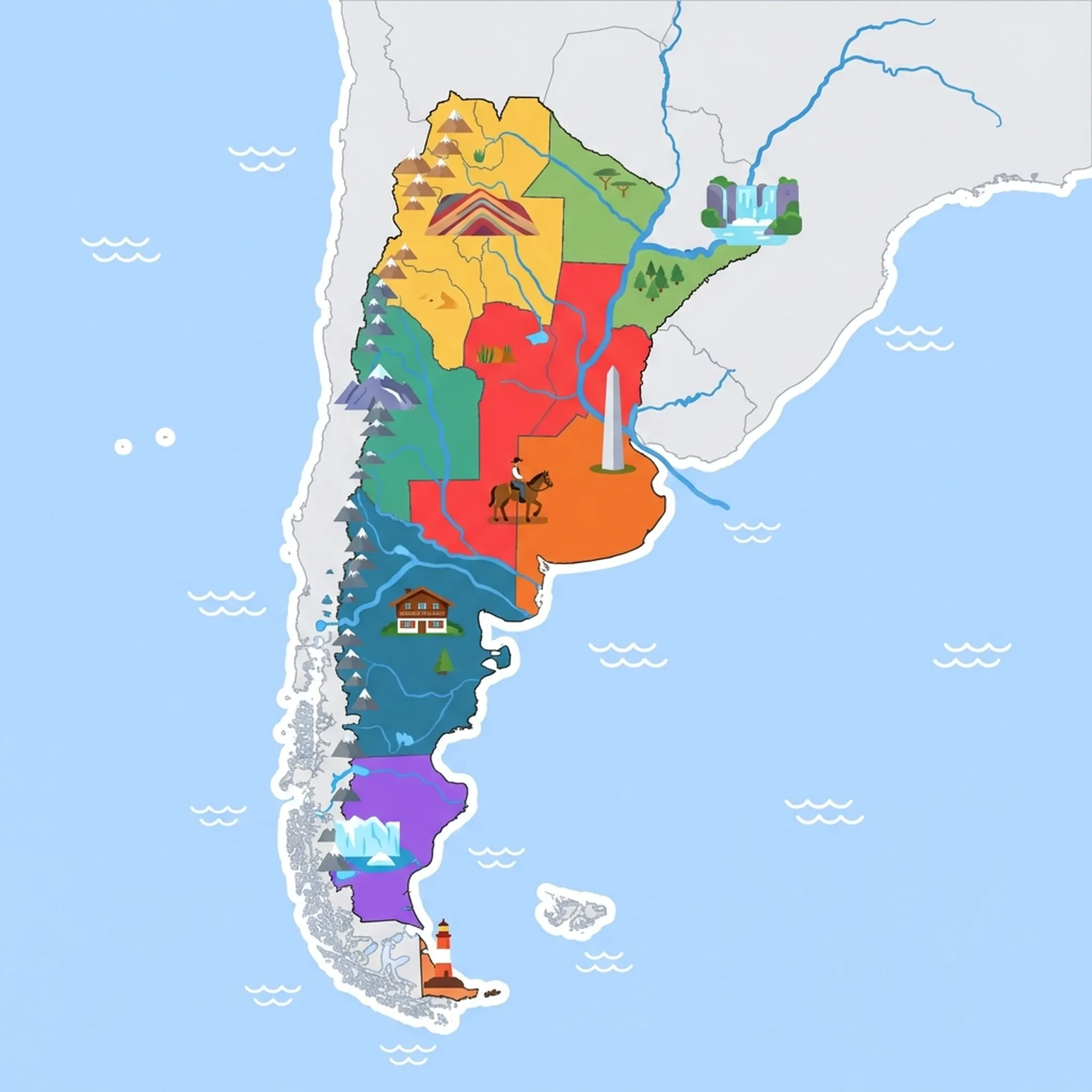
Click a region to explore
Overview
The Northeast of Argentina (Litoral) is a sensory explosion of heat, humidity, and vibrant color. The soil here is a striking rusty red, contrasting beautifully with the emerald green of the Atlantic Rainforest. For families, this is the best region in Argentina for wildlife spotting. While Patagonia has whales, the Northeast has toucans, monkeys, coatis, and capybaras that are often visible right from the trails. The atmosphere is tropical and relaxed, with a heavy influence from the indigenous Guaraní culture which permeates the food, language, and legends of the area. It feels wild and teeming with life, a stark contrast to the arid Andes or the concrete of Buenos Aires.
The climate is subtropical, meaning it is hot and humid year-round, with frequent, intense rain showers that clear up quickly. The star of the show is water—whether it's the colossal cataracts of Iguazú, the vast floating islands of the Iberá Wetlands, or the thermal springs in Entre Ríos. It is a destination that demands active participation; you will get wet, you will walk on jungle trails, and you will likely be woken up by the sound of howler monkeys or parrots. It is an unforgettable biology lesson for children, offering a chance to see nature in its most abundant and powerful form.
Key Attractions
The crown jewel is Iguazú National Park. The falls here are wider and more complex than Niagara or Victoria, consisting of 275 separate cascades. The ecological train that takes visitors to the "Devil's Throat" (Garganta del Diablo) is a huge hit with kids, as is the network of metal walkways that allow you to hover right over the rushing water. The park is also home to cheeky coatis (raccoon-like animals) that roam the paths—warn children not to feed or touch them!
South of the falls lies the Iberá National Park (Esteros del Iberá), one of the world's largest freshwater wetlands. It is Argentina's answer to the Pantanal. Here, families can take small boat safaris to see caimans (yacarés), marsh deer, and capybaras up close in a tranquil, uncrowded environment. For a touch of history, the ruins of San Ignacio Miní offer a hauntingly beautiful look at the 17th-century Jesuit missions. The red stone walls against the green jungle backdrop provide a fantastic setting for exploration, and the on-site museum helps explain this unique social experiment to older children.
Practical Advice
Bring waterproofs and quick-drying clothes; cotton stays wet forever in this humidity. The best time to visit is during the cooler months (April to September), though the falls are at their peak volume in summer (December-February) when it is very hot. Mosquitoes are plentiful; bring strong repellent. In Iguazú, stay on the Argentine side to maximize your time in the park, but bring passports if you plan to hop across to the Brazilian side for a day.
Food & Drink
Typical meal times: Lunch 12:00 pm to 2:30 pm. Dinner from 8:30 pm onwards. Roadside stalls selling snacks are common and open all day.
Typical meal costs: Generally cheaper than the capital. A family dinner costs ARS 30,000–50,000 (approx. $30–50 USD / €28–46 EUR). River fish dishes may be pricier.
Dietary requirements: Gluten-free bread (Chipá) is everywhere. Vegetarian options can be limited to pasta and salads in rural areas, but river fish is a great pescatarian option.
Signature dishes:
- Chipá – Small, chewy cheese bread balls made from cassava (yuca) flour. Naturally gluten-free and addictive for kids.
- Surubí or Pacú – Large river fish, often served grilled or with a roquefort sauce. It has a meaty texture and few bones.
- Sopa Paraguaya – Not a soup, but a dense, savory cornbread with cheese and onions.
- Mate – The regional herbal tea infusion, consumed cold (Tereré) in this hot region.
Why this score?
The Misiones rainforest and Iberá Wetlands offer excellent opportunities for wildlife spotting and jungle exploration, though the falls themselves are accessed via highly developed walkway systems. Boat safaris and trekking provide a good level of outdoor recreation without requiring extreme survival skills.
Why this score?
Puerto Iguazú has basic medical facilities capable of handling minor traveler ailments, but serious emergencies often require transfer to Posadas or Buenos Aires. While tourism-focused clinics exist, they lack the sophisticated infrastructure found in the capital.
Why this score?
Iguazú Falls is a top-tier global attraction and a UNESCO World Heritage site that draws massive international crowds year-round. The region is exceptionally well-served by flight connections and high-end hotel infrastructure specifically for foreign tourists.

Entrance fees to the National Parks are significant for non-residents (approx. $35 USD per adult for Iguazú, paid in ARS). However, food and accommodation are generally good value. A jungle lodge with a pool might cost ARS 100,000–180,000 (approx. $100–180 USD / €90–165 EUR) per night. Local bus fares are negligible.
Family Travel Notice
Children who are residents or have stayed in the country for a long period may require specific written parental authorization to depart the country. It is important to verify current documentation requirements for minors before travel.

Getting Here & Around
Getting Here
- Airports – Cataratas del Iguazú International Airport (IGR) serves the falls. For the wetlands, fly to Posadas (PSS) or Corrientes (CNQ).
- Bus – Long-distance buses from Buenos Aires are very popular but take 16-18 hours. They are usually high quality (lie-flat seats).
- Driving – The Ruta Costera 2 (Uruguay River Scenic Route) is beautiful, but distances are huge. Driving from Buenos Aires takes two full days.
Getting Around
- Public Transport – Regular buses run between Puerto Iguazú town and Iguazú National Park. They are cheap and easy to use.
- Taxis/Remis – Fixed-price taxis are the standard way to cross the border to Brazil or get to hotels in the jungle.
- Boat – Essential for viewing the Iguazú Falls from below or exploring the Esteros del Iberá.
Nearby Airports (5 airports)
Corrientes
CNQCorrientes
Formosa
FMAFormosa
Iguazu
IGRIguazu
Posadas
PSSPosadas
Resistencia
RESResistencia
View full flight map for Argentina →
Official Links

Packing List
The mist from the falls soaks everything instantly; protects electronics.
Tropical mosquitoes are aggressive and can carry dengue fever.
You will get wet at the falls; humidity makes cotton towels slow to dry.
Sun is vertical and intense; neck protection is vital for kids.
Argentina uses angled flat-pin plugs (same as Australia/China), which is unusual for the Americas.
The ozone layer is thinner over the southern hemisphere; UV radiation in Patagonia is surprisingly intense.
The strong, dry winds in Patagonia can cause rapid chapping and windburn, even in summer.
Crisp, clean $50/$100 notes often yield better exchange rates than smaller bills or cards in some establishments.
Essential for children on long-distance buses and winding mountain roads in the Andes.

Activities & Best Times

Hiking, wildlife, outdoor exploration, ecotourism
Home to the iconic Iguazú Falls and the Iberá Wetlands, providing world-class jungle immersion and wildlife viewing of caimans, capybaras, and rare birds. Peak months avoid the extreme 33°C+ humidity of summer while ensuring high water volume for the falls.

Urban tourism, museums, historical sites, architecture
Features the UNESCO-listed Jesuit Missions like San Ignacio Miní, offering a unique and authentic window into colonial history. The outdoor nature of these historic sites makes the cooler, drier months from April to October significantly more comfortable for exploration.

Sport tourism, fitness activities, active recreation
Includes world-class active experiences like the Macuco trail and boat-based jungle expeditions. High humidity in the summer months (January-February) can make the region's intense hiking and nautical activities physically taxing for families.

Spa retreats, wellness centers, peaceful getaways
Boasts significant thermal bath complexes in the Entre Ríos province with dedicated wellness infrastructure. These natural hot springs are primarily a winter and shoulder-season draw, as the high summer temperatures make thermal bathing less appealing.

Scenic drives, countryside tours, route-based travel
The Jesuit Missions Route and scenic riverside drives along the Uruguay River offer unique red-earth landscapes and historic stopovers. Best driven in spring and autumn when visibility is high and the risk of heavy subtropical storms is lower.

Attractions (15 total)



Public Holidays & Calendar Next 12 months
Public holidays, festivals, cultural celebrations, and seasonal natural phenomena coming up in Northeast Argentina & Iguazú over the next 12 months.
Loading holidays and events...

Travel Advisory
Argentina is generally safe for tourists with safety conditions similar to other stable Western nations. Travelers should follow standard personal security protocols, particularly in large urban centers.
Safety Topics
Traveller Advice (3 groups)

While generally welcoming, travelers are encouraged to review specific guidance on local attitudes and legal protections for sexual and gender minorities.

Children who are residents or have stayed in the country for a long period may require specific written parental authorization to depart the country. It is important to verify current documentation requirements for minors before travel.

Travelers visiting high-altitude regions in the Andes or remote areas of Patagonia should be prepared for altitude sickness and extreme weather conditions that can change rapidly.
Agency Summaries
While general safety precautions are sufficient for most of the country, travelers should be more vigilant in Buenos Aires and Rosario due to higher rates of crime. Particular attention should be paid to taxi scams at airports.
The country is considered safe for standard travel, though increased vigilance is recommended in the city of Rosario due to local crime and narcotics-related violence.
The safety environment is comparable to New Zealand, with the exception of Rosario where crime rates are higher. Travelers are advised to avoid public demonstrations.
General safety levels are high, but visitors should be aware of health risks like Dengue and Zika in the north and the potential for land border closures during winter months.
Most visits are trouble-free, but travelers are warned of frequent political protests in major cities and the risk of petty crime in tourist areas.
Tourism is generally safe, but travelers should monitor local news for demonstrations which occur regularly following recent political changes.
Information is provided for general guidance only and does not constitute travel, safety, medical, or legal advice. Conditions may change. Users are responsible for independently verifying information before travel.