
Northwest Argentina & Andean Highlands
Colorful mountains, llamas, and ancient inca trails 🌵🦙🏔️
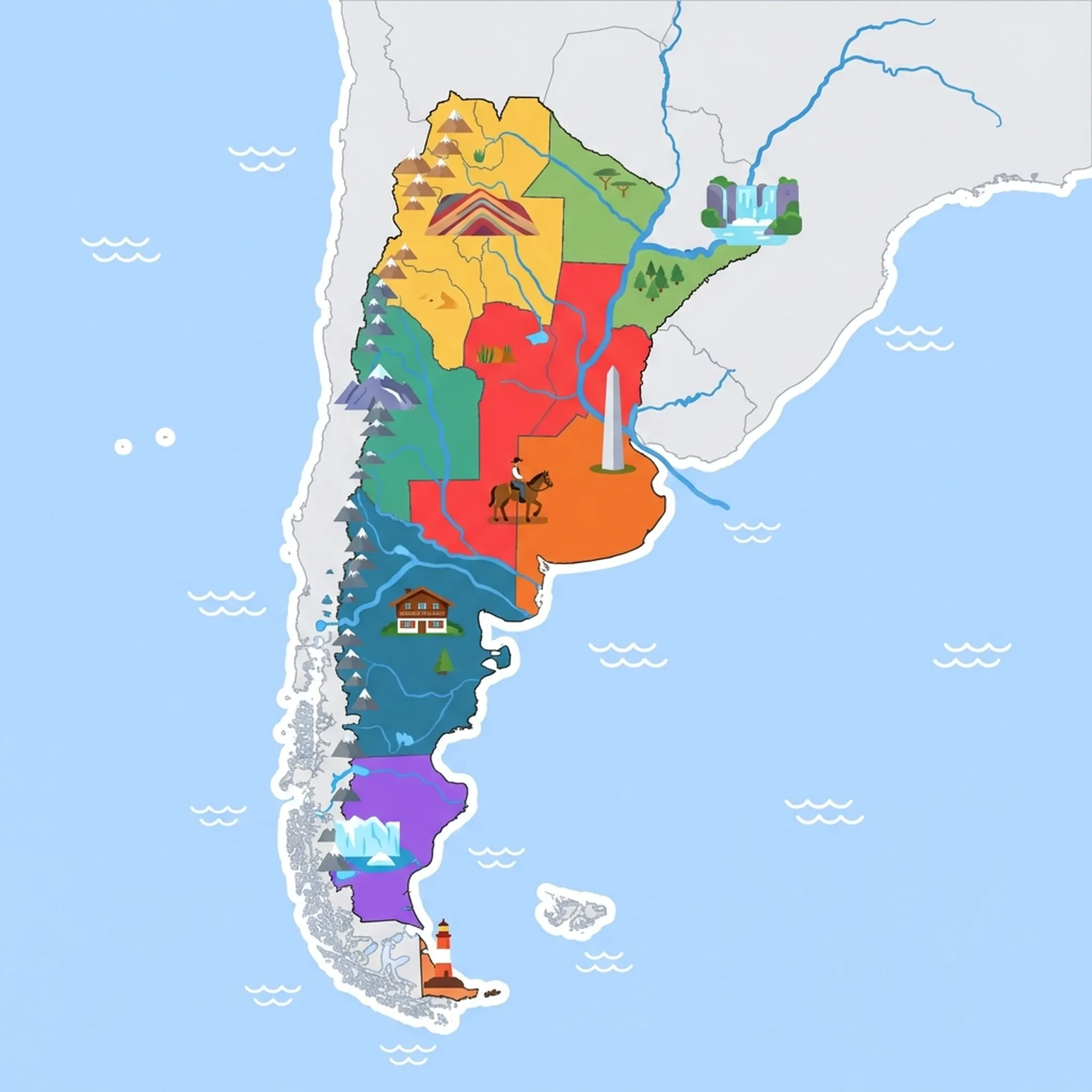
Click a region to explore
Overview
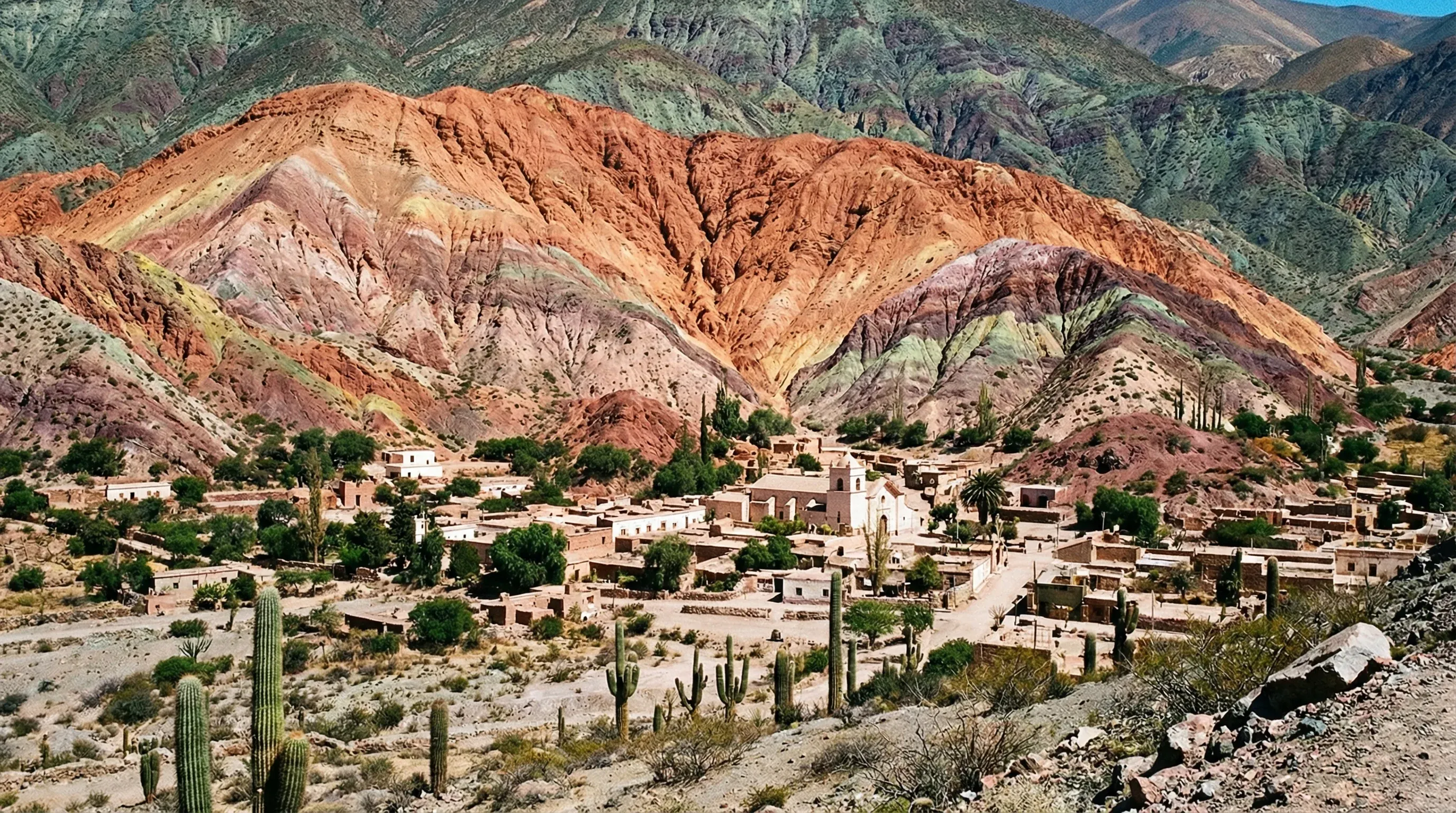
The Argentine Northwest (NOA) feels like a different country compared to Buenos Aires. Here, the Andes are not just a border but a way of life. The landscape is a vivid painter's palette: mountains made of red, green, and purple rock, valleys dotted with giant cacti (cardones), and vast white salt flats that stretch to the horizon. The culture is deeply rooted in Andean traditions; you will see locals making offerings to Pachamama (Mother Earth) and hear folklore music played on pan flutes. For children, this region is like stepping into a storybook. The high altitude means the air is crisp and the sky is an impossible shade of blue, while the presence of llamas and vicuñas by the roadside never fails to delight young travelers.
Salta, known as "La Linda" (The Beautiful), is the best base for exploration, boasting colonial architecture and excellent museums. The region is famous for its scenic drives, which are among the most spectacular in South America. However, parents should be aware of the altitude; many attractions sit above 3,000 meters (10,000 feet). The pace of life here is slow and gentle, perfect for families who want to disconnect. The dry, sunny climate makes it a year-round destination, though summer (Dec-Feb) brings the rainy season which can occasionally wash out roads.
Key Attractions
The Quebrada de Humahuaca is a UNESCO World Heritage valley that serves as a corridor of history and color. Within it, the village of Purmamarca is home to the Cerro de los Siete Colores (Hill of Seven Colors), a geological marvel that looks like marzipan. Further north, the Serranía de Hornocal offers an even more dramatic "14-colored" mountain view. These sights are easily accessible by car, requiring little hiking, which is great for little legs at high altitude.
Adventure-seeking families should not miss the Salinas Grandes. These massive salt flats allow for fun perspective-bending photos (bring toy dinosaurs!) and offer a surreal experience of walking on a white crust floating over a brine lake. In Salta city, the Museum of High Altitude Archaeology (MAAM) is fascinating but somber; it houses the "Children of Llullaillaco," Incan mummies found on a volcano. It is handled respectfully but may be intense for very sensitive children. For a journey into the past, the Quilmes Ruins in the Calchaquí Valleys offer a sprawling pre-Hispanic city that kids can scramble around and explore.
Practical Advice
Altitude Sickness: This is real. Keep kids hydrated, avoid heavy meals on the first day, and ascend gradually. "Coca tea" is a local remedy available everywhere and is safe/legal. Rent a vehicle with high clearance if possible, though a 4x4 is not strictly necessary for main roads. Carry cash; ATMs in small towns like Purmamarca often run out of money.
Food & Drink
Typical meal times: Lunch 12:30 pm to 3:00 pm. Dinner is slightly earlier here than in BA, often starting at 8:30 pm. Peñas (folk music venues) serve food late into the night.
Typical meal costs: Very affordable. A hearty regional lunch is ARS 12,000–20,000 (approx. $12–20 USD / €11–18 EUR). Street snacks are under ARS 2,000 ($2 USD).
Dietary requirements: Corn and quinoa are staples. Vegetarian options are plentiful (humita, tamales without meat). It is a great region for gluten-free travelers due to the corn-based diet.
Signature dishes:
- Empanadas Salteñas – Smaller than usual, baked, and filled with knife-cut beef, potato, and spices. Locals eat them with spicy sauce (yasgua).
- Locro – A hearty, thick stew of corn, beans, chorizo, and meat. A winter staple.
- Tamales – Corn dough filled with meat and spices, wrapped in a corn husk and boiled.
- Humita en Chala – Sweet/savory grated corn pudding steamed in a husk; kids usually love the sweetness.
Why this score?
Visitors encounter high altitudes, winding mountain roads, and vast salt flats that require careful planning and physical resilience. Many of the most striking landscapes are in remote areas where the terrain is arid and the environment is quite rugged.
Why this score?
Salta and San Salvador de Jujuy provide adequate public and private hospitals, but the quality of care and English proficiency drops significantly in the highland villages. Access to emergency services in the remote Puna regions is very challenging.
Why this score?
Known for its unique geology and indigenous culture, this region is a staple for international backpackers and cultural tourists exploring the Quebrada de Humahuaca. It has a well-established tourism loop, though total visitor numbers are lower than the major hubs.

One of the most affordable regions in Argentina. Accommodation in boutique adobe hotels is great value, often ARS 60,000–100,000 (approx. $60–100 USD / €55–90 EUR). Dining is cheap and portions are large. Buying local handicrafts (llama wool sweaters) is much cheaper here than in Buenos Aires.
Family Travel Notice
Children who are residents or have stayed in the country for a long period may require specific written parental authorization to depart the country. It is important to verify current documentation requirements for minors before travel.

Getting Here & Around
Getting Here
- Airports – Martin Miguel de Guemes International Airport (SLA) in Salta is the primary hub. Jujuy (JUJ) is closer to Quebrada de Humahuaca.
- Bus – Connections from historic cities like Tucumán are frequent. The bus ride through the Quebrada de las Conchas is scenic.
- Driving – Renting a car in Salta is the most popular way to loop through the Calchaquí Valleys and salt flats.
Getting Around
- Car – The best way to see the Salinas Grandes and stop for photos. Roads are generally paved but can be winding.
- Remis – Private drivers can be hired for day trips if you are uncomfortable driving on mountain roads.
- Bus – Local buses connect the villages of the Quebrada (Purmamarca, Tilcara, Humahuaca) frequently and cheaply.
Nearby Airports (7 airports)
Catamarca
CTCCatamarca
La Rioja Airport
IRJLa Rioja
Jujuy
JUJJujuy
Rio Hondo Airport
RHDRio Hondo
Santiago Del Estero
SDESantiago Del Estero
Salta
SLASalta
Teniente Benjamin Matienzo
TUCTucuman
View full flight map for Argentina →
Official Links

Packing List
The sun at 4,000m altitude burns lips rapidly; dry air causes cracking.
Extremely dry, dusty air can cause nosebleeds in children.
You can burn in the sun at noon and freeze in the shade or at night.
Helps with ear popping on mountain roads and mild altitude nausea.
Argentina uses angled flat-pin plugs (same as Australia/China), which is unusual for the Americas.
The ozone layer is thinner over the southern hemisphere; UV radiation in Patagonia is surprisingly intense.
The strong, dry winds in Patagonia can cause rapid chapping and windburn, even in summer.
Crisp, clean $50/$100 notes often yield better exchange rates than smaller bills or cards in some establishments.
Essential for children on long-distance buses and winding mountain roads in the Andes.

Activities & Best Times

Hiking, wildlife, outdoor exploration, ecotourism
The region offers unique high-altitude Andean landscapes, including salt flats and colorful canyons, providing world-class trekking and wildlife viewing. The dry season (May-Oct) is essential for accessing remote Puna highlands, as summer rains often cause mudslides and road closures.

Urban tourism, museums, historical sites, architecture
With well-preserved colonial architecture in Salta and the UNESCO-listed Quebrada de Humahuaca, the region offers deep immersion into Andean-Spanish heritage. Peak travel coincides with the dry season, offering comfortable walking weather and avoiding the intense heat and humidity of the summer months.

Sport tourism, fitness activities, active recreation
Tucumán is an internationally renowned hub for paragliding, while the rugged valleys offer exceptional mountain biking and rafting. These activities rely on the stable atmospheric conditions and dry terrain found between April and October.

Learning experiences, scientific sites, historical education
The Museum of High Altitude Archaeology (MAAM) is a world-class facility housing internationally significant Inca mummies. While the museums are indoor, the best experience for families involves visiting during the dry season when regional archaeological sites are most accessible.

Events, celebrations, seasonal attractions
The Humahuaca Carnival is described as 'globally recognized' - this cannot be marginal. It's a UNESCO-area event with international attendance.

Spa retreats, wellness centers, peaceful getaways
Natural thermal springs like Termas de Reyes offer authentic restorative experiences in dramatic mountain settings. The cooler winter months (May-Sept) are the peak period for wellness tourism, as the crisp air provides a perfect contrast to the hot mineral waters.

Scenic drives, countryside tours, route-based travel
Iconic routes like the Quebrada de las Conchas and Ruta 40 offer world-class scenery and dramatic elevation changes. Driving is safest and most scenic during the dry season; summer rains from December to February frequently make unpaved highland roads treacherous or impassable.

Amusement parks, family entertainment venues
Local water parks and smaller amusement centers cater to domestic families during the hot summer months. These facilities lack international scale and are generally secondary attractions for sophisticated travelers.

Attractions (18 total)



Public Holidays & Calendar Next 12 months
Public holidays, festivals, cultural celebrations, and seasonal natural phenomena coming up in Northwest Argentina & Andean Highlands over the next 12 months.
Loading holidays and events...

Travel Advisory
Argentina is generally safe for tourists with safety conditions similar to other stable Western nations. Travelers should follow standard personal security protocols, particularly in large urban centers.
Safety Topics
Traveller Advice (3 groups)

While generally welcoming, travelers are encouraged to review specific guidance on local attitudes and legal protections for sexual and gender minorities.
Children who are residents or have stayed in the country for a long period may require specific written parental authorization to depart the country. It is important to verify current documentation requirements for minors before travel.
Travelers visiting high-altitude regions in the Andes or remote areas of Patagonia should be prepared for altitude sickness and extreme weather conditions that can change rapidly.
Agency Summaries
While general safety precautions are sufficient for most of the country, travelers should be more vigilant in Buenos Aires and Rosario due to higher rates of crime. Particular attention should be paid to taxi scams at airports.
The country is considered safe for standard travel, though increased vigilance is recommended in the city of Rosario due to local crime and narcotics-related violence.
The safety environment is comparable to New Zealand, with the exception of Rosario where crime rates are higher. Travelers are advised to avoid public demonstrations.
General safety levels are high, but visitors should be aware of health risks like Dengue and Zika in the north and the potential for land border closures during winter months.
Most visits are trouble-free, but travelers are warned of frequent political protests in major cities and the risk of petty crime in tourist areas.
Tourism is generally safe, but travelers should monitor local news for demonstrations which occur regularly following recent political changes.
Information is provided for general guidance only and does not constitute travel, safety, medical, or legal advice. Conditions may change. Users are responsible for independently verifying information before travel.