
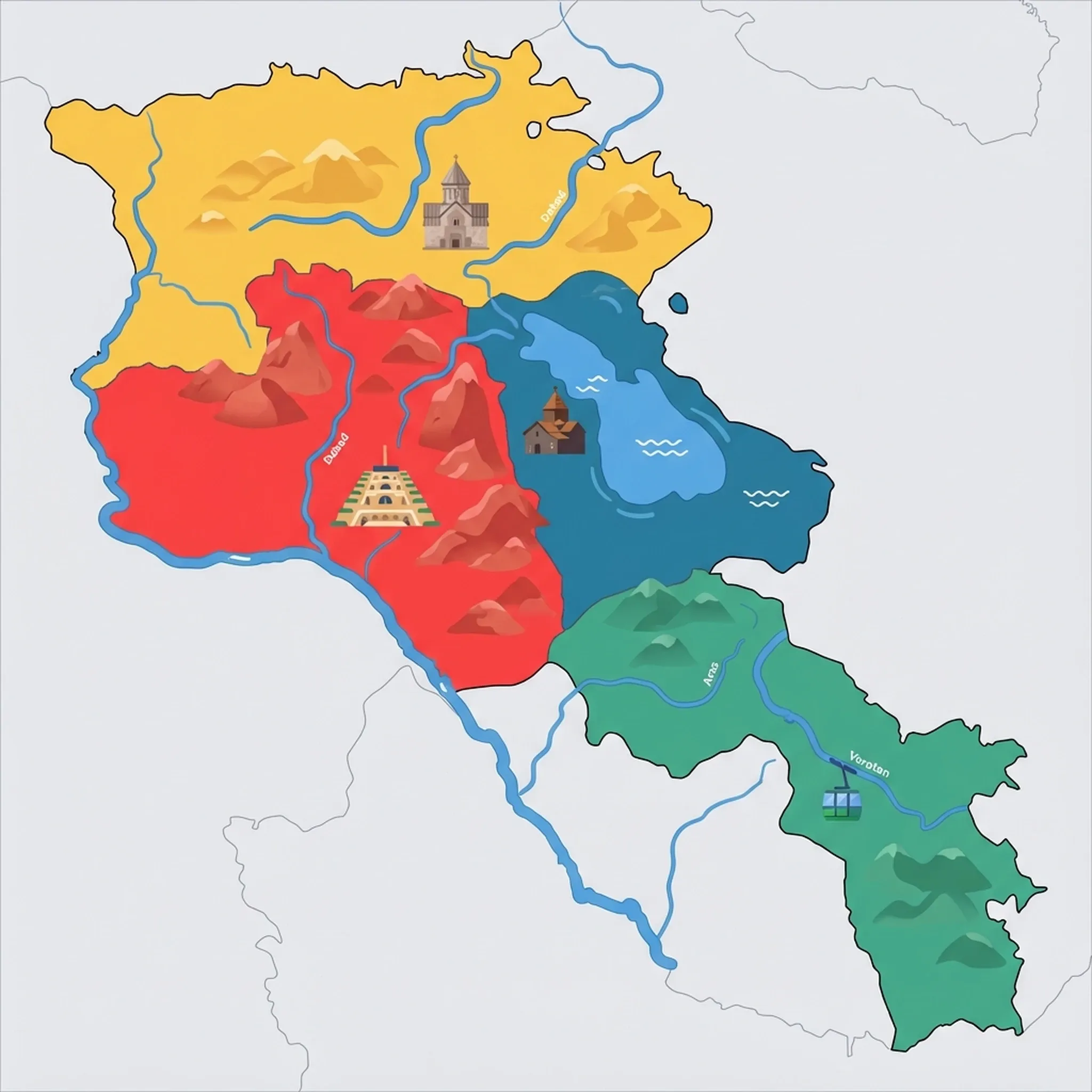
Click a region to explore
Overview
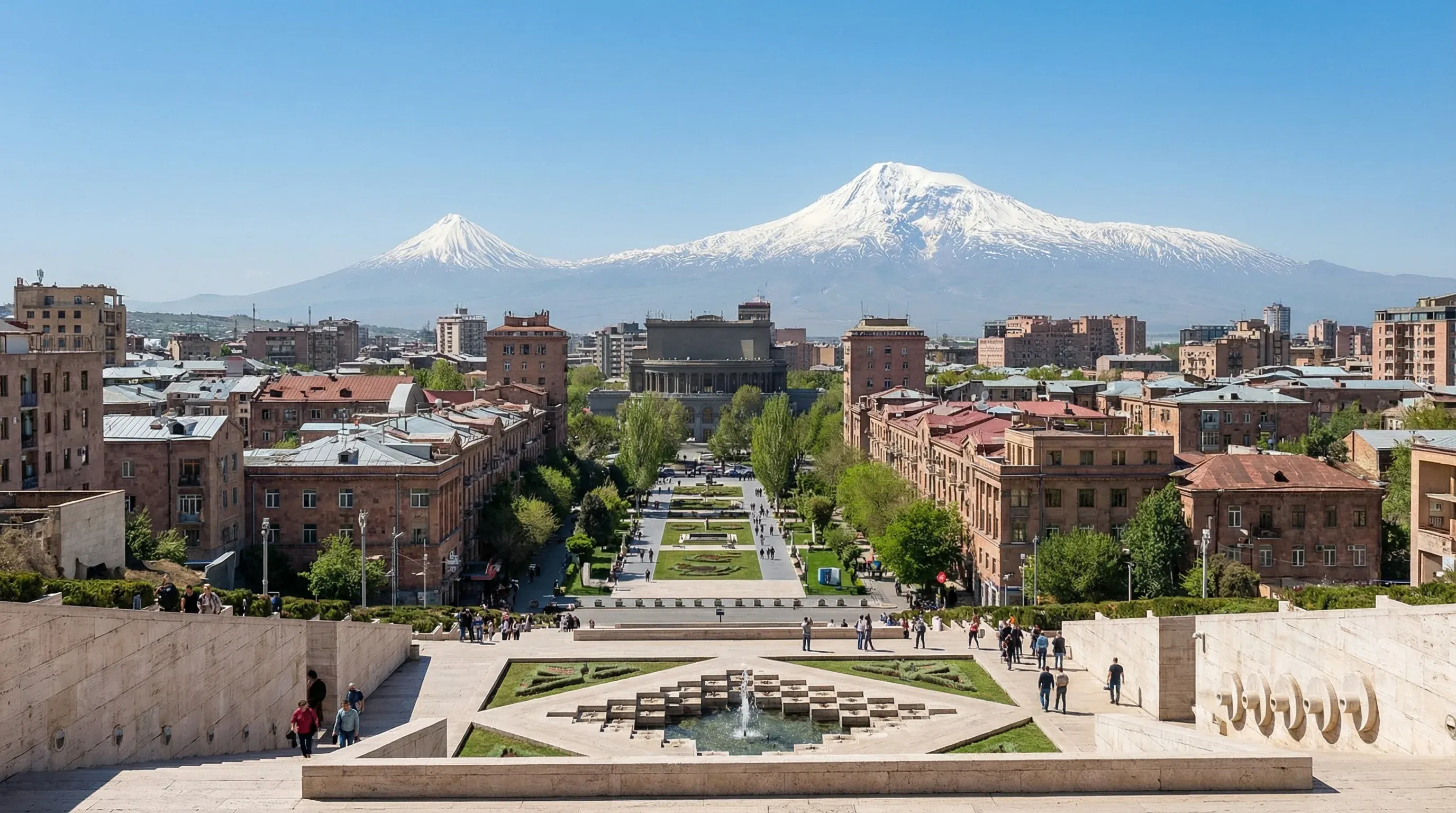
Yerevan is one of the oldest continuously inhabited cities in the world, yet it feels surprisingly youthful and vibrant. Known as the "Pink City" due to the volcanic tuff stone used in its buildings, it is an incredibly safe and welcoming capital for families. The city center is compact, designed in a circular grid that makes it easy to navigate on foot. For parents, the defining feature is the relaxed café culture—children are welcome everywhere, and you will often see kids playing in parks late into the evening while parents enjoy coffee nearby. The atmosphere is Mediterranean, with broad avenues, open-air dining, and a slow, pleasant pace of life.
The city comes alive at night. In the summer months, the heat of the day drives people indoors, but from sunset until midnight, the streets are packed with families strolling, eating ice cream, and watching street performers. There is a deep respect for children in Armenian culture; expect locals to interact with your kids, offer them sweets, and generally make them feel like VIPs. While it is a modern city, history is ever-present, offering plenty of educational opportunities that are accessible rather than stuffy.
Key Attractions
The centerpiece of the city is Republic Square. It is vast and majestic, but the real draw for families is the "Singing Fountains" show that takes place every evening (usually 8:00 pm to 10:00 pm in warm months). The lights, music, and water choreography mesmerize toddlers and teenagers alike. Another structural marvel is The Cascade Gardens, a giant limestone stairway linking the city center to the upper neighborhoods. Inside, it houses the Cafesjian Center for the Arts, which features colorful, bizarre modern art sculptures (like giant teapots and lions) that kids love to pose with.
For a dedicated animal encounter, the Yerevan Zoo has been modernized significantly and offers a pleasant space to see bears, lions, and regional wildlife. Nearby, the Matenadaran might sound dry—a museum of ancient manuscripts—but its commanding statue and the visible ancient texts can be fascinating for older children interested in codes, alphabets, and history. If you need a somber but important history lesson, Tsitsernakaberd (the Genocide Memorial) offers a large park and striking architecture, though the museum content is best for older teens.
Practical Advice
Spring (May-June) and Autumn (September-October) are glorious. July and August can be scorching (35°C+), so plan indoor activities or pool time for the middle of the day. Tap water is safe and delicious—look for "pulpulaks" (drinking fountains) on street corners. Strollers are generally fine in the center (Kentron), though some sidewalks can be uneven.
Food & Drink
Typical meal times: Lunch is flexible, 12:30 pm to 3:00 pm. Dinner is late; restaurants are busiest from 8:00 pm to 10:00 pm.
Typical meal costs: A mid-range dinner for a family of four costs 15,000–30,000 AMD (approx. $38–75 USD / €35–70 EUR). Fast food is very cheap ($3–5 USD per person).
Dietary requirements: Excellent for all diets. Fresh salads, grilled vegetables, and hummus are staples (vegan-friendly). Gluten-free pasta is appearing in modern cafes, though traditional bread is everywhere.
Signature dishes:
- Lahmacun – Often called Armenian pizza, this thin, crispy flatbread topped with minced meat, herbs, and lemon is a kid favorite.
- Khorovats – Armenian BBQ. Pork, lamb, or chicken grilled on skewers. It is not just food; it is an institution.
- Fruit Lavash – Fruit leather made from dried plums, apricots, or cherries. A healthy, chewy snack sold in markets, perfect for hiking or walking.
Why this score?
Yerevan is a highly developed, walkable urban center with modern amenities, cafes, and paved boulevards. While it serves as a base for nearby mountain excursions, the city experience itself is safe and low-impact, focused on culture rather than physical challenge.
Why this score?
The capital contains the country's best medical infrastructure, including several modern private hospitals that are accustomed to treating foreign diplomats and tourists. English-speaking doctors are more common here than elsewhere in the country, though services may still fall short of Western European standards.
Why this score?
As the primary gateway and cultural hub of Armenia, Yerevan hosts the vast majority of the country's 2.2 million annual visitors. While it is a vibrant and increasingly popular capital in the Caucasus, it remains an emerging destination rather than a global tourism heavyweight.

Yerevan is the most expensive part of Armenia but remains affordable by Western standards. A modern family apartment rental costs 25,000–45,000 AMD (approx. $60–110 USD / €55–105 EUR) per night. Public transport is negligible (approx. $0.25 USD per ride). Coffee and pastries are high quality and cost about half of what they do in Europe.

Getting Here & Around
Getting Here
- Airports – Zvartnots International Airport (EVN) is the main gateway, located just 12km (20 mins) from the city center.
- Train – The international overnight train from Tbilisi, Georgia arrives at Yerevan Railway Station.
- Shuttle – The Airport Express bus (No. 201) runs every 30 minutes to Republic Square and is very affordable.
Getting Around
- Walking – The "Kentron" (Center) is very walkable. You can easily walk from Republic Square to the Opera and Cascade.
- Metro – There is one simple line. It is clean, safe, and very cheap (100 AMD), useful for reaching the Railway Station or Erebuni Fortress.
- Taxi – Apps like GG and Yandex are essential. Rides within the center rarely cost more than 1,000–1,500 AMD ($2.50–3.75 USD).
Nearby Airports (1 airport)
Zvartnots International Airport
EVNYerevan
View full flight map for Armenia →
Official Links

Packing List
Armenians dress well; activewear is rarely worn for dinner or evening walks.
Public drinking fountains (pulpulaks) are everywhere and the water is safe/cold.
There is very little shade in open squares like Republic Square or the Cascade.
While walkable, sidewalks can be bumpy; a heavy stroller is hard to maneuver.
To use the 'pulpulaks' (free spring water fountains) found on almost every street corner.
Women generally need to cover heads/shoulders when entering active monasteries.
Essential for children on the winding mountain roads to Tatev or Dilijan.
Useful for exploring cave dwellings in Khndzoresk and navigating dimly lit village streets.
The high altitude air (often dry) and strong sun can crack lips quickly.
Convenient for visiting local homes where removing shoes is mandatory custom.

Activities & Best Times

Urban tourism, museums, historical sites, architecture
Yerevan anchors three UNESCO World Heritage Sites within day-trip range (Etchmiadzin, Zvartnots, Geghard/Azat Valley), hosts the world-renowned Matenadaran manuscript collection, and offers concentrated urban cultural infrastructure (Cascade, Republic Square, museums). As Armenia's capital with this heritage density, 'excellent' is internationally calibrated and distinguishes it from regional monastery clusters.

Hiking, wildlife, outdoor exploration, ecotourism
As a gateway to the Armenian highlands, the region provides access to the dramatic peaks of Mount Aragats and Mount Azhdahak. High-altitude trails are only fully accessible and safe during the summer months, while spring and late autumn see heavy snow cover at higher elevations.

Learning experiences, scientific sites, historical education
Yerevan hosts specialized institutions like the National Museum of Natural History and the Planetarium, offering high-quality scientific engagement. These indoor facilities are best visited during the city's pleasant transitional seasons when walking between museums is comfortable for families.

Scenic drives, countryside tours, route-based travel
The region is a hub for iconic drives to Garni-Geghard and Lake Sevan, featuring dramatic volcanic scenery and well-maintained highways. Spring and autumn offer the best visibility and landscape colors, while winter brings hazardous driving conditions on high-altitude passes.

Sport tourism, fitness activities, active recreation
The region features significant hiking infrastructure and adventure facilities like Yerevan Zipline and specialized climbing routes in Garni Gorge. Activity is concentrated in the warmer months when mountain trails are clear and outdoor adventure parks are fully operational.
Amusement parks, family entertainment venues
Local aquatic centers like Aquatek and Water World provide seasonal family entertainment but are modest compared to international theme park standards. Peak visitation is strictly limited to the hot summer months when outdoor water facilities are viable.

Attractions (11 total)



Public Holidays & Calendar Next 12 months
Public holidays, festivals, cultural celebrations, and seasonal natural phenomena coming up in Yerevan over the next 12 months.
Loading holidays and events...

Travel Advisory
While most of Armenia is safe for standard travel, the majority of international agencies suggest increased vigilance due to regional security tensions and military activity near the borders. Travelers should avoid specific conflict zones.
Safety Topics
Traveller Advice (4 groups)

Solo female travelers should follow standard safety protocols and remain observant of their surroundings, particularly at night and in less populated areas.

Accessibility infrastructure in Armenia can be limited; travelers should research specific venues and transport options in advance.

It is recommended to check local customs and legal status regarding sexual orientation before traveling, as public attitudes can be conservative.

Dual citizens should be aware that Armenia shares visitor data with Russian security services. Additionally, those entering from Iran should exercise extreme care as consular support is restricted in that region.
Agency Summaries
While the country is generally safe for visitors, a high level of vigilance is necessary near the border with Azerbaijan due to the threat of military activity. Landmines and armed skirmishes make these specific regions extremely hazardous.
Authorities strongly advise against visiting any area within 5km of the eastern border with Azerbaijan. Tensions between the two nations remain high, and certain highways near the border are also considered unsafe.
Armenia is relatively safe with low crime rates, but travelers are encouraged to keep their valuables secure and avoid sensitive border areas where political tensions exist.
The security level has been heightened because of the unstable situation in the broader region, especially concerning Iran. Travel to border zones with Azerbaijan should be avoided entirely due to the threat of conflict.
Standard safety measures are sufficient for most parts of the country. However, regional instability means travelers must avoid the borders with Azerbaijan and stay informed about local protests.
Visitors should be more alert due to potential military confrontations. Certain areas near the border with Azerbaijan are designated as 'Do Not Travel' zones because of the ongoing risk of armed conflict.
Information is provided for general guidance only and does not constitute travel, safety, medical, or legal advice. Conditions may change. Users are responsible for independently verifying information before travel.