

Overview
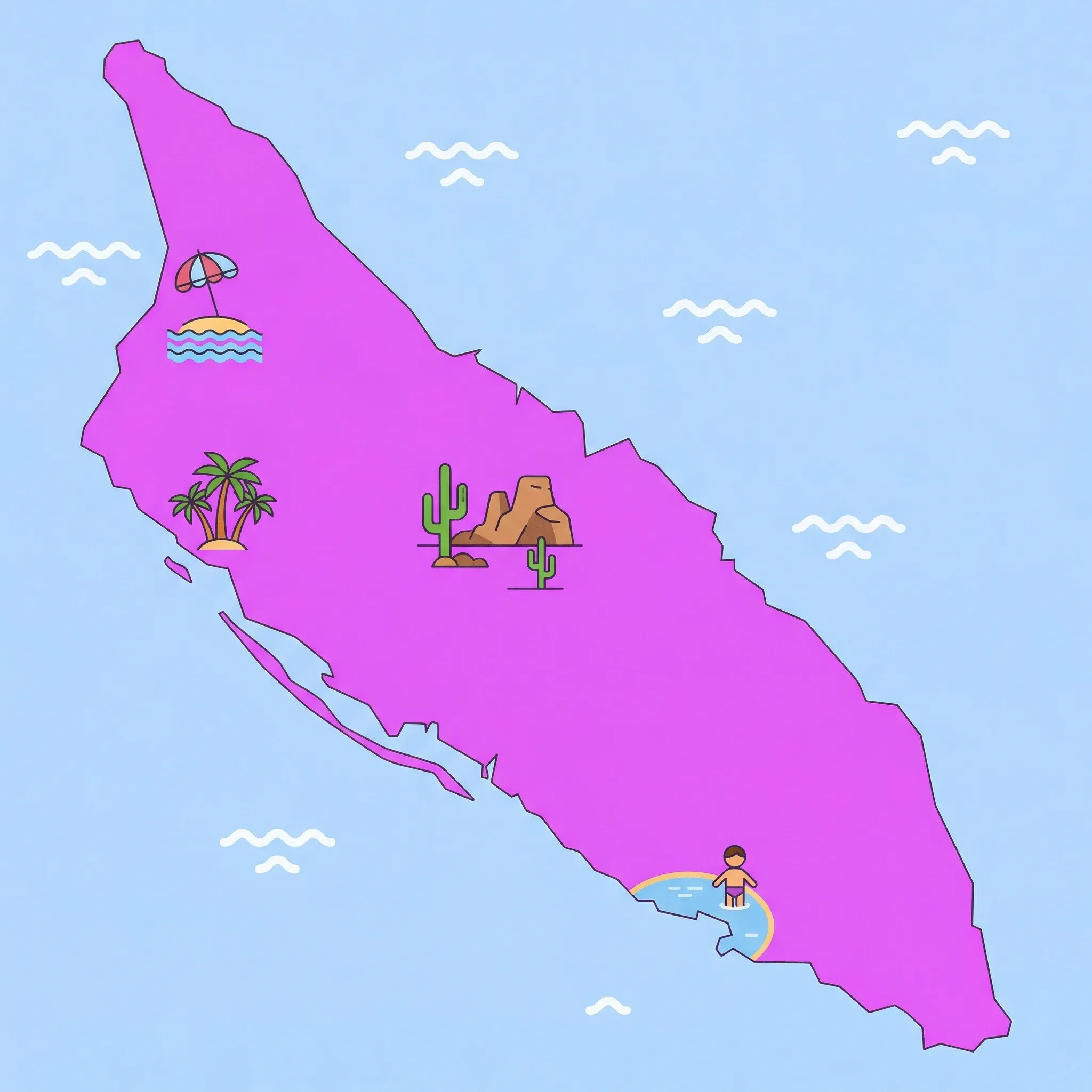
Aruba is distinct from the typical lush Caribbean archetype; it is a desert island filled with cacti, aloe plants, and dramatic rock formations, all cooled by the famous trade winds that blow constantly from the east. For families, this unique geography is a massive advantage: the climate is dry with low humidity, mosquitoes are fewer than on wetter islands, and most importantly, Aruba sits outside the hurricane belt, making it a safe bet for travel even during the traditional storm season (June to November). The island is part of the Kingdom of the Netherlands, blending Caribbean laid-back vibes with Dutch efficiency, safety, and infrastructure.
The west coast is lined with calm, turquoise waters and white sand beaches perfect for swimming, while the north coast is wild, rocky, and battered by crashing waves. This contrast offers families a mix of relaxation and adventure. You can spend the morning building sandcastles on world-famous Eagle Beach and the afternoon exploring rugged trails in a 4x4. The local culture is welcoming and multilingual; most Arubans speak four languages (Dutch, Papiamento, English, and Spanish), so communication is effortless for English-speaking families.
Key Attractions
For families with toddlers and young children, Baby Beach in the south is the undisputed highlight. As the name suggests, this sheltered man-made lagoon offers warm, shallow water that stays waist-deep for a long distance, allowing little ones to splash safely while parents relax. Further north, Palm Beach is the hub of high-rise hotels and water sports, offering calm seas and easy access to amenities, piers, and restaurants. For a photo opportunity, visit Eagle Beach to see the iconic Fofoti trees twisting towards the sea.
Adventure-seeking families should head to Arikok National Park, which covers nearly 20% of the island. Here, you can explore ancient caves with Arawak Indian drawings or take a rugged vehicle to the Natural Pool (Conchi), a protected swimming hole surrounded by crashing ocean waves-an unforgettable experience for older kids. For a gentler animal encounter, Philip's Animal Garden is a wonderful non-profit sanctuary where children can feed and interact with rescued exotic animals. History buffs can visit the Fort Zoutman Historical Museum in Oranjestad to learn about the island's colonial past and catch the weekly Bon Bini Festival.
Practical Advice
Sun & Wind Safety: The trade winds are deceptive; they keep you cool, so you may not feel your skin burning. The UV index is extremely high-apply reef-safe sunscreen constantly. The wind also means hats can easily blow away; use chin straps.
Water: Aruba’s tap water is desalinated, pure, and delicious. There is no need to buy bottled water; simply bring insulated bottles and refill them anywhere.
Entry Requirements: All visitors must complete the digital ED Card (Embarkation-Disembarkation) online up to 7 days before travel. This includes paying a mandatory Sustainability Fee (approx. $20 USD).
Food & Drink
Typical meal times: Breakfast is typically 7:00 am to 10:00 am, lunch from 12:00 pm to 2:00 pm, and dinner from 6:00 pm to 9:00 pm. Many restaurants in tourist areas stay open later.
Typical meal costs: 27–45 AWG (approx. $15–25 USD / €14–23 EUR) for casual lunch or food trucks; 54–108 AWG (approx. $30–60 USD / €28–55 EUR) for a mid-range dinner main course.
Dietary requirements: Excellent. Due to the high volume of North American and European tourists, restaurants are very accustomed to vegetarian, gluten-free, and allergy-specific requests.
Family-friendly dining: Most restaurants are very welcoming to children, offering highchairs and kids' menus ('kindermenu'). Beachfront restaurants often allow kids to play in the sand while parents finish their meal.
Signature dishes:
- Keshi Yena – The national dish; a hollowed-out round of Edam or Gouda cheese stuffed with spiced chicken, raisins, and olives, then baked. A rich, savory hit with kids who love cheese.
- Pastechi – A fried half-moon pastry filled with cheese, meat, or fish. The perfect cheap beach snack.
- Pan Bati – Meaning "smashed bread," this is a sweet, fluffy cornmeal pancake often served as a side dish, similar to cornbread.
- Funchi – A polenta-like cornmeal side dish, often served fried (Funchi Hasa) like thick fries.
- Pisca Hasa – Fresh local fish (often mahi-mahi or snapper) pan-fried and served with Creole sauce.
Safety
Aruba is one of the safest destinations in the Caribbean, with very low crime rates. You can feel comfortable walking around tourist areas at night. The main danger is environmental: the ocean currents on the north/windward coast are extremely dangerous. Swimming is strongly discouraged on the north side (outside of the protected Natural Pool). Stick to the calm west and south coasts for swimming. Always watch children near the water, even on calm beaches, as offshore winds can push inflatables out to sea.

Aruba is one of the pricier Caribbean islands. A family of four should budget roughly 630–900 AWG (approx. $350–500 USD / €320–460 EUR) per day for mid-range hotels, car rental, and meals. Supermarkets are well-stocked but imported goods are expensive. You can save money by eating 'pastechi' for lunch and visiting free beaches.
Age Suitability





Did you know? Aruba welcomes approximately 1.1 million international visitors per year. Most visitors come from Americas.
Why this score?
The island is largely developed with a focus on luxury resorts and accessible beaches, but it offers moderate adventure in the rugged Arikok National Park. Visitors can engage in off-road 4x4 excursions to the Natural Pool (Conchi) or hike desert trails, providing a controlled but distinct outdoor experience compared to purely urban destinations.
Why this score?
Aruba boasts some of the most reliable medical infrastructure in the Caribbean, centered around the modern Dr. Horacio E. Oduber Hospital in Oranjestad. Medical professionals are typically multilingual and accustomed to treating international tourists, offering a high standard of care that exceeds many other regional island destinations.
Why this score?
Aruba is a major Caribbean destination that consistently attracts over one million international visitors annually, primarily from the United States and Canada. Its reputation for safety and world-class beaches like Eagle Beach ensures a steady flow of high-volume tourism, though it lacks the global 'mega-destination' status of cities like Paris or Dubai.
Aruba is a premium Caribbean destination. While street food like pastechi is cheap (approx. 5 AWG), sit-down dining and activities add up quickly. A mid-range hotel room often costs 450–700 AWG (approx. $250–390 USD / €230–360 EUR) per night. Supermarket prices are higher than the US/Europe as most goods are imported. US Dollars are accepted almost everywhere at a rate of roughly 1.75–1.80 AWG per dollar.

Getting There & Around
Getting There
- By Air – Queen Beatrix International Airport (AUA) receives direct flights from major US, European, and South American cities. A major benefit for US-bound travelers is the US Pre-clearance facility, allowing you to clear US Customs in Aruba before departure.
- By Sea – Aruba is a popular port of call for major cruise lines, docking right in the capital, Oranjestad.
- Entry Requirements – US, UK, and EU citizens do not need a visa. However, ALL visitors must complete the online ED Card (Embarkation-Disembarkation) within 7 days of travel and pay the Sustainability Fee. Check your government website for the latest visa requirements, or use the IATA Travel Centre entry-requirements checker.
Getting Around
- Car Hire – The best way for families to explore. Driving is on the right-hand side, and navigating to places like Baby Beach or the ruins in Aruba is easy. 4x4 vehicles are required for Arikok National Park.
- The Arubus – A clean, reliable, and colorful public bus system. The main line runs between Oranjestad and the hotel strips at Palm Beach and Eagle Beach. Fares are approx. 4.50 AWG ($2.60 USD) per ride.
- Taxis – Taxis are safe and unmetered; rates are fixed by destination (government regulated). Verify the price with the driver before getting in. Rates are per car, not per person, which is good for families.
- Free Trolley – An open-air tram loops through downtown Oranjestad, which is fun for young children and completely free.

Packing List
Aruba's fine white sand sticks to everything; powder removes it instantly from wet skin.
Sunscreens with oxybenzone are banned to protect corals; UV is very high here.
The constant trade winds will blow your towels off sunbeds without sturdy clips.
Essential for the rocky north coast and entering the Natural Pool (Conchi).
Tap water is safe and delicious, but plastic bottles heat up instantly in the sun.
The cooling wind masks the heat, making sunburns on backs likely while swimming.

Activities & Best Times

Adventure & Nature
Very GoodHiking, wildlife, outdoor exploration, ecotourism
Arikok National Park provides extensive desert-like wilderness, limestone caves, and rugged volcanic coastlines unique in the Caribbean. Conditions are best for trail exploration during the drier, slightly cooler months.

Sports & Active
Very GoodSport tourism, fitness activities, active recreation
Excellent infrastructure for active travelers including the Hooiberg stairs and specialized hiking networks within Arikok. Best visited when heat and humidity are at their relative annual minimums.

Beach & Sea
GoodBeach resorts, marine activities: diving, snorkelling, kite surfing, wind surfing, sailing
Home to globally ranked beaches like Eagle and Palm Beach with crystal clear waters and steady trade winds. Peak months correspond to the driest period and the high winter season for international travelers.

City & Cultural
GoodUrban tourism, museums, historical sites, architecture
Oranjestad offers pleasant Dutch colonial architecture and small museums, but lacks the depth of cultural institutions, UNESCO heritage sites, or historical significance that would justify 'very_good' when compared to internationally significant cultural cities. 'Good' accurately reflects a pleasant cruise port capital with limited but worthwhile cultural offerings.

Festivals & Seasonal
GoodEvents, celebrations, seasonal attractions
The notes describe Aruba Carnival as 'a major international-standard cultural event with parades' - this contradicts the 'marginal' rating. If the carnival genuinely attracts international visitors and features significant cultural programming, 'good' is more appropriate. Marginal should be reserved for minor local festivals.

Educational & Exploratory
MarginalLearning experiences, scientific sites, historical education
The Aruba Aloe Museum and Museum of Industry offer authentic insights into the island's unique economic history. These are quality indoor facilities but remain supporting attractions rather than primary travel motivators.

Road Trips & Scenic
MarginalScenic drives, countryside tours, route-based travel
Aruba is approximately 32km long. While scenic coastal drives and routes through Arikok exist, the island's small scale doesn't support road trip tourism as typically understood internationally (multi-day scenic drives through varied landscapes). The drives are pleasant but brief. 'Marginal' better reflects that scenic drives exist but scale is severely limited.
Theme Park & Entertainment
MarginalAmusement parks, family entertainment venues
Limited to specialized local entertainment like the Bushiri Karting Speedway, which serves as a secondary activity for visiting families. Operational peaks follow the general tourism calendar.

Attractions (14 total)



Public Holidays & Calendar Next 12 months
Public holidays, festivals, cultural celebrations, and seasonal natural phenomena coming up in Aruba over the next 12 months.
Loading holidays and events...

Travel Advisory
All major agencies agree that Aruba is a safe destination requiring only standard safety awareness. No significant security threats or travel restrictions are currently in place.
Safety Topics
Traveller Advice (2 groups)

Aruba is widely regarded as a welcoming and inclusive destination for LGBTQ+ visitors, with many hotels and businesses being 'TAG Approved' and the local culture generally being tolerant.

Standard safety measures are sufficient for most visitors. Maintain awareness of your surroundings and keep valuables secure in public places.
Agency Summaries
Most trips to Aruba are without incident. While serious crime against tourists is rare, petty theft occurs. Visitors should be mindful of hurricane season and follow local advice if tropical storms approach.
The U.S. government considers Aruba a safe destination where standard safety measures are sufficient. Travelers are advised to be aware of their surroundings as they would in any tourist area.
Aruba is generally safe for visitors, though travelers should remain alert to petty crimes like pickpocketing or theft from vehicles and beaches. The island is usually outside the main hurricane belt, but weather events can still occur between June and November.
New Zealand classifies Aruba as a low-risk destination. Standard security awareness is recommended to mitigate risks of opportunistic theft in tourist hotspots.
Ireland advises that Aruba has a high level of safety. It is recommended to secure valuables and be cautious of theft from rental cars or unattended items on the beach.
Australia recommends standard safety awareness. Petty crime is the most common issue. Travelers should maintain travel insurance and be cautious in isolated areas at night.
Information is provided for general guidance only and does not constitute travel, safety, medical, or legal advice. Conditions may change. Users are responsible for independently verifying information before travel.