

Australia is a continent-sized destination that captivates families with its sheer scale and diversity. It is a land of stark contrasts, where cosmopolitan cities perch on the edge of vast, untamed wilderness. For families, the appeal lies in the ease of travel; despite the distances, the infrastructure is excellent, the culture is incredibly child-friendly, and the natural environment serves as a giant, open-air classroom. The climate varies from the tropical humidity of Queensland to the cool, temperate charm of Tasmania, meaning there is always a region with perfect holiday weather.
The Australian lifestyle is built around the outdoors. Families will find themselves embracing the beach culture, where weekends are spent by the ocean and parks are equipped with free public barbecues and world-class playgrounds. Whether you are snorkeling on the Great Barrier Reef, spotting kangaroos in the wild, or exploring the urban laneways of Melbourne & Victoria, the vibe is relaxed and welcoming. The "no worries" attitude is real, making it a low-stress destination for parents, even if the flight to get there is long.
Key Attractions
Australia's wildlife is a primary draw for children, and there is no better place to start than the world-famous Australia Zoo in Queensland, where the legacy of Steve Irwin inspires conservation. For a more hands-on experience, the Currumbin Wildlife Sanctuary on the Gold Coast allows kids to feed wild lorikeets. In Western Australia, a visit to AQWA - The Aquarium of Western Australia offers a mesmerizing underwater journey through the state's diverse marine environments, perfect for younger children who aren't ready for open-ocean snorkeling.
City experiences here are equally engaging. In Sydney, families can soak up the sun at Bondi Beach, exploring the coastal walk and rock pools, or visit the Australian Museum to learn about dinosaur history and Indigenous culture. Melbourne offers the delightful Collingwood Children's Farm, a slice of country life right in the city. For adventurous families heading to the Top End, the immense Kakadu National Park offers boat cruises to spot crocodiles and ancient rock art galleries that tell the stories of the world's oldest living culture.
Practical Advice
Best Time to Visit: The seasons are reversed from the Northern Hemisphere. Summer (Dec–Feb) is hot and popular for beaches but can be scorching in the outback. Spring (Sept–Nov) and Autumn (Mar–May) offer the most comfortable temperatures for touring. The tropical north is best visited in the dry winter season (May–Oct).
Sun Safety: The Australian sun is exceptionally strong. "Slip, Slop, Slap" (slip on a shirt, slop on sunscreen, slap on a hat) is a national mantra. Always use SPF 50+ and wear rash vests (swim shirts) in the water.
Food & Drink
Typical meal times: Lunch is generally served from 12:00 pm to 2:30 pm. Dinner service typically runs from 6:00 pm to 8:30 pm. In rural areas ('the bush'), kitchens may close strictly at 8:00 pm, so plan accordingly.
Typical meal costs: Mains in a mid-range restaurant or pub cost $25–45 AUD (approx. $16–29 USD / €15–27 EUR). Kid's meals usually range from $12–18 AUD (approx. $8–12 USD / €7–11 EUR). Café breakfasts are popular and cost $18–28 AUD (approx. $12–18 USD / €11–17 EUR).
Dietary requirements: Australia is a world leader in allergy awareness. Vegetarian, vegan, and gluten-free options are standard in almost every cafe and restaurant. Staff are generally very knowledgeable about ingredients.
Family-friendly dining: The "pub" (hotel) is the heart of family dining, often featuring large outdoor beer gardens and dedicated playgrounds for children. Most venues provide highchairs and activity packs.
Signature dishes:
- Meat Pie – A flaky hand-sized pastry filled with minced meat and gravy, often eaten with tomato sauce at sports games or bakeries.
- Barramundi – A premium native white fish, mild and buttery, often served grilled or battered-an excellent introduction to seafood for kids.
- Vegemite on Toast – A dark, salty yeast extract spread thinly on buttered toast. A breakfast staple that divides opinion but must be tried.
- Lamington – A sponge cake square dipped in chocolate icing and rolled in desiccated coconut, sometimes with jam and cream in the middle.
- Fish and Chips – Battered fish served with hot chips, best eaten out of paper by the seaside while watching out for seagulls.
Family Travel Notice
Parents should be highly attentive to weather warnings, as infants and children are particularly vulnerable to extreme heatwaves. Ensure children are protected from high UV levels and stay hydrated during outdoor activities.

Australia is an expensive destination. A family of four should budget approximately $450–700 AUD (approx. $290–450 USD / €270–420 EUR) per day. This covers mid-range apartment accommodation, car rental, grocery basics with one restaurant meal, and entry to major attractions. Domestic flights and remote outback supplies can significantly increase costs.
Age Suitability





Did you know? Australia welcomes approximately 5.1 million international visitors per year. Most visitors come from East Asia and the Pacific.

Explore Regions
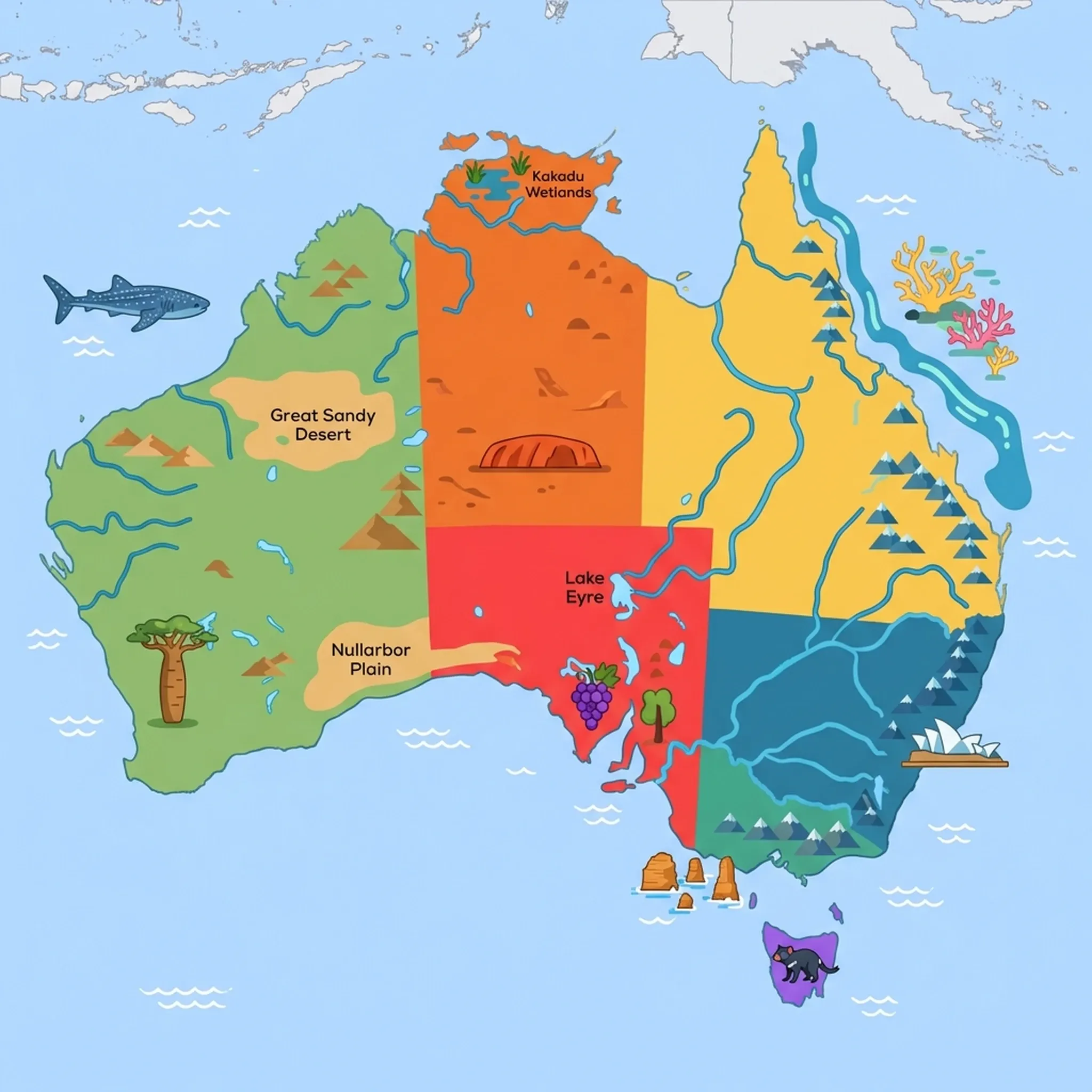
7 Regions
Adelaide & South Australia
wildlife wonders, ancient outback landscapes, and family beach fun 🐨🍇🌊
Melbourne & Victoria
Culture, coastlines, and koalas in a compact state 🚋☕🐧
Northern Territory (Top End & Red Centre)
The spiritual heart of Australia and a wild frontier 🐊🏜️🌄
Perth & Western Australia
Endless sunsets, friendly quokkas, and wild blue oceans 🌊🌞🐚
Queensland (Brisbane, Gold Coast, Great Barrier Reef & Tropical QLD)
Beautiful one day, perfect the next – nature's playground 🐠🎢🌴
Sydney & New South Wales
Iconic harbour views and endless coastal adventures 🌉🏄♂️🏞️
Tasmania
A wilderness island of devils, history, and clean air 😈🌲🏔️
Click on a region marker to explore details. Use the dropdown to color regions by activity suitability.

Getting There & Around
Getting There
- By Air – Most international flights land in Sydney (SYD), Melbourne (MEL), or Brisbane (BNE). Flight times from Europe or the US are long (14+ hours), so consider a stopover in Asia or the Middle East to break the journey for children.
- By Sea – International cruise ships frequently dock in Sydney and Brisbane during the summer season (October to April).
- Entry Requirements – Almost all visitors need a visa. US, UK, and EU citizens can usually apply for an instant ETA (Electronic Travel Authority) or eVisitor visa online. Strict biosecurity laws prohibit bringing most food, plants, and animal products. Check your government website for the latest visa requirements, or use the IATA Travel Centre entry-requirements checker.
Getting Around
- Car Hire – Essential for exploring regions like the Perth & Western Australia coast or the Northern Territory. Distances are vast, so plan rest stops every 2 hours. Drive on the left.
- Domestic Flights – The only practical way to move between major hubs, e.g., from Sydney & New South Wales to the Great Barrier Reef. Qantas, Virgin Australia, and Jetstar are the main carriers.
- Campervans – A very popular family option. Sites are well-equipped, often with pools and jumping pillows for kids.
- City Transport – Major cities have excellent public transport. Melbourne has an extensive tram network (free in the CBD), and Sydney has an iconic ferry system.

Packing List
UV is extreme; t-shirts offer little protection. A UPF50+ swim shirt is essential for kids.
Crucial for the Outback/Red Centre where flies are relentless and swarm faces constantly.
Thick colored sunblock for noses/lips; stays on in surf better than lotion and kids love the colors.
Picnics are a national pastime; keeps snacks cool during long drives or beach days.
Required in some marine parks to protect coral; buy 'broad spectrum' specifically.
Australian plugs are unique (Type I); one adapter plus a strip charges all family devices.

Activities & Best Times

Adventure & Nature
ExcellentHiking, wildlife, outdoor exploration, ecotourism
Home to unique wildlife like the Phillip Island penguins and diverse landscapes from the Grampians to the Otways. The warmer months provide ideal conditions for hiking and wildlife viewing, while winter is often too wet and cold for backcountry exploration.
Tasmania is a global leader in wilderness tourism, featuring the iconic Cradle Mountain and Freycinet National Parks with unique endemic wildlife. Summer and early autumn provide the most stable weather for traversing its diverse alpine and coastal ecosystems.
With Kangaroo Island and the Flinders Ranges, the region offers world-class wildlife and outback immersion that appeals to sophisticated travelers. Spring and autumn provide ideal temperatures for exploration, whereas summer heat can be intense in the interior and winter brings variable coastal weather.

Beach & Sea
ExcellentBeach resorts, marine activities: diving, snorkelling, kite surfing, wind surfing, sailing
Whitehaven Beach ranks in global top 10 beaches consistently. Great Barrier Reef is a bucket-list diving/snorkeling destination. Tropical beaches with year-round swimming. This is genuinely world-class beach territory.
Bondi and Manly are globally iconic urban beaches. Byron Bay is internationally renowned. While excellent quality, the temperate climate (not year-round swimming like QLD) keeps it at very_good rather than excellent.
Features iconic coastal markers like the Twelve Apostles and Brighton Bathing Boxes. While scenic, the southern ocean water is cold, making the high summer months the only period truly suitable for beach recreation for most families.

City & Cultural
ExcellentUrban tourism, museums, historical sites, architecture
Melbourne is a global hub for coffee culture, laneway dining, and prestigious arts institutions like the NGV. Sophisticated families will enjoy the city's living culture most in spring and autumn, avoiding the grey, damp winter days.
Adelaide and the Barossa Valley offer an authentic mix of fine arts, colonial heritage, and globally renowned wine culture. The peak period aligns with the major festival season and pleasant walking weather, while mid-winter is often too damp and cold for optimal urban exploration.
Sydney is a world-class cultural hub featuring the iconic Opera House, historic quarters, and a sophisticated culinary scene. Peak interest aligns with major events like Vivid and NYE, plus the vibrant festive atmosphere of summer.

Educational & Exploratory
Very GoodLearning experiences, scientific sites, historical education
Features internationally significant sites like the Seal Bay sea lion colony and the South Australian Museum's natural history collections. Conditions are best during the milder months when wildlife is active and outdoor archaeological or nature sites are easily accessible.
Features destination-level facilities including the SEA LIFE Sydney Aquarium and the Australian Museum for world-class learning. Peak family visitation follows the Australian school holiday calendar when specialized interactive programming is available.
The Melbourne Museum and Scienceworks provide world-class, purpose-built educational experiences. These indoor facilities are excellent year-round, with peak interest coinciding with Australian school holiday periods.

Festivals & Seasonal
Very GoodEvents, celebrations, seasonal attractions
Sydney NYE is globally televised and iconic. Mardi Gras is one of the world's largest LGBTQ+ events. Vivid Sydney draws international visitors. These are genuinely world-class festival events, not just nationally significant.
The Melbourne Cup Carnival is internationally famous (stops the nation), and the Comedy Festival is one of the world's largest. These justify 'good' rather than 'marginal' - they are destination-level events.
The mid-winter Dark Mofo festival is a globally unique cultural event that draws sophisticated travelers despite the cold. The summer season features the finish of the Sydney-Hobart Yacht Race and associated food festivals.

Sports & Active
Very GoodSport tourism, fitness activities, active recreation
Boasts world-class trails like the Grampians Peaks Trail and the iconic surfing breaks of Bells Beach. Peak season aligns with dry conditions for hiking and cycling, whereas winter rain makes many trails difficult for families.
Home to world-class walking infrastructure including the Overland Track and the Three Capes Track which offer premium hut-based trekking experiences. The primary hiking season runs from October to May, with peak demand during the stable summer months.
Offers world-class cycling on the Mawson Trail and unique active experiences like the Adelaide Oval RoofClimb. These activities are most enjoyable during the mild shoulder seasons, as winter rain and summer heat waves present genuine barriers to active outdoor sports.

Theme Park & Entertainment
Very GoodAmusement parks, family entertainment venues
The Gold Coast theme park strip (Movie World, Dreamworld, Sea World) is a concentrated international-quality cluster. This is the only genuine theme park destination in Australia and attracts international visitors specifically for the parks.
Luna Park and the URBNSURF wave park offer high-quality family entertainment. Visitation is highest during summer school holidays, as the outdoor nature of these attractions makes them less appealing during the cold winter months.
The Beachouse and coastal aquatic centers provide high-quality family entertainment in the Glenelg precinct. These facilities are primary draws during the summer school holiday period, but seasonal water-based attractions are significantly less appealing during the cooler winter months.

Relaxation & Wellness
GoodSpa retreats, wellness centers, peaceful getaways
The Mornington Peninsula and Hepburn Springs are established thermal bath destinations. While available year-round, the experience is best in winter when the hot springs provide a restorative contrast to the cool air.
Boasts unique experiences like the Yarrangobilly thermal pools and high-end wellness retreats in Byron Bay. Winter is peak for thermal bathing, while summer is preferred for coastal spa and yoga retreats.
Distinctive thermal springs at Mataranka and Katherine offer a unique outback wellness experience in lush, natural surroundings. These sites are most refreshing during the cooler months when humidity is low and water temperatures are most inviting.

Road Trips & Scenic
GoodScenic drives, countryside tours, route-based travel
The Great Ocean Road is one of the world's most famous drives, offering spectacular coastal views. Summer and shoulder months provide the best driving visibility and weather, while winter can bring high winds and low cloud cover.
Celebrated routes like the Great Eastern Drive offer world-class coastal views and access to artisanal food producers. Summer and autumn provide the best visibility and safest driving conditions for exploring the island's winding, scenic roads.
Celebrated scenic routes like the Southern Ocean Drive and Epicurean Way showcase diverse landscapes from rugged coastlines to premium vineyards. Autumn and spring provide the best visibility and mildest temperatures for long-distance touring across the state's diverse terrains.

Ski & Snow
MarginalWinter sports, ski resorts, snow activities
Same international calibration issue as NSW. Falls Creek and Mt Buller are small resorts by global standards with limited reliable snow. Australia offers skiing as a novelty rather than a world-class ski destination.
Limited ski infrastructure at Ben Lomond and Mt Mawson offers a niche alpine experience for those seeking local character. Snow reliability is low by international standards, with activity restricted to the core winter months.
Australian ski resorts are small by international standards. Perisher has ~47 lifts vs 200+ at major Alpine resorts. Short season (June-Oct) with unreliable snow. While infrastructure exists, this is not internationally competitive skiing.

Public Holidays & Calendar Next 12 months
Public holidays, festivals, cultural celebrations, and seasonal natural phenomena coming up in Australia over the next 12 months.
Loading holidays and events...

Climate & Weather
Adelaide & South Australia
Show Details
| Month | Temp °C | Rain | Humidity |
|---|
Melbourne & Victoria
Show Details
| Month | Temp °C | Rain | Humidity |
|---|
Northern Territory (Top End & Red Centre)
Show Details
| Month | Temp °C | Rain | Humidity |
|---|
Perth & Western Australia
Show Details
| Month | Temp °C | Rain | Humidity |
|---|
Queensland (Brisbane, Gold Coast, Great Barrier Reef & Tropical QLD)
Show Details
| Month | Temp °C | Rain | Humidity |
|---|
Sydney & New South Wales
Show Details
| Month | Temp °C | Rain | Humidity |
|---|

Travel Advisory
All major international agencies agree that Australia maintains a stable security environment where standard safety awareness is sufficient for travellers.
Safety Topics
Traveller Advice (5 groups)

When exploring the outback or remote regions, ensure you carry extensive supplies of fuel, water, and food. It is vital to have a reliable means of communication, such as a satellite phone or an emergency beacon, as mobile coverage is non-existent in many areas.

Australia is considered a welcoming destination for LGBTQ+ visitors, with established legal protections and a generally inclusive atmosphere.

Parents should be highly attentive to weather warnings, as infants and children are particularly vulnerable to extreme heatwaves. Ensure children are protected from high UV levels and stay hydrated during outdoor activities.

During summer months, older travellers should take extra care to avoid heatstroke and dehydration. It is recommended to stay in climate-controlled environments like shopping centres or libraries during peak heat and avoid long-distance driving in extreme conditions.

While Australia is generally safe, female solo travellers are encouraged to follow standard safety protocols and consult specific resources for independent travel provided by government agencies.
Agency Summaries
Australia is generally considered safe for visitors, with security conditions comparable to those in Canada. While the overall risk is low, travellers should remain vigilant regarding petty crimes like theft and vehicle break-ins, particularly in urban centers. Significant emphasis is placed on environmental hazards, including severe heatwaves, the potential for cyclones in northern regions, and the extreme isolation of the outback which requires thorough preparation.
New Zealand emphasizes the importance of staying informed about the national terrorism threat level and environmental risks. The advice specifically highlights the dangers of local wildlife, such as crocodiles and venomous snakes, and reminds New Zealanders of their special visa status and healthcare rights while visiting.
The British government advises that normal safety measures are sufficient for Australia. It notes that while the country is stable, there is an ongoing global risk of terrorism and seasonal threats from bushfires between October and February. Travellers are encouraged to ensure their insurance covers specific regional activities, including adventure travel and remote outback explorations.
Ireland advises its citizens that Australia is safe but strictly regulated. Key advice includes complying with visa conditions to avoid detention or deportation and being aware of the strict approach taken by local police toward public order and laws. Irish visitors are also reminded of the reciprocal healthcare benefits available, though private insurance remains highly recommended.
Visitors should maintain standard safety awareness throughout the country. US authorities highlight the importance of enrolling in local safety programs and preparing for natural events such as bushfires and severe storms. Detailed guidance is provided for those venturing into remote areas, where road conditions and the distance between settlements pose unique challenges.
Information is provided for general guidance only and does not constitute travel, safety, medical, or legal advice. Conditions may change. Users are responsible for independently verifying information before travel.