
Northern Territory (Top End & Red Centre)
The spiritual heart of Australia and a wild frontier 🐊🏜️🌄
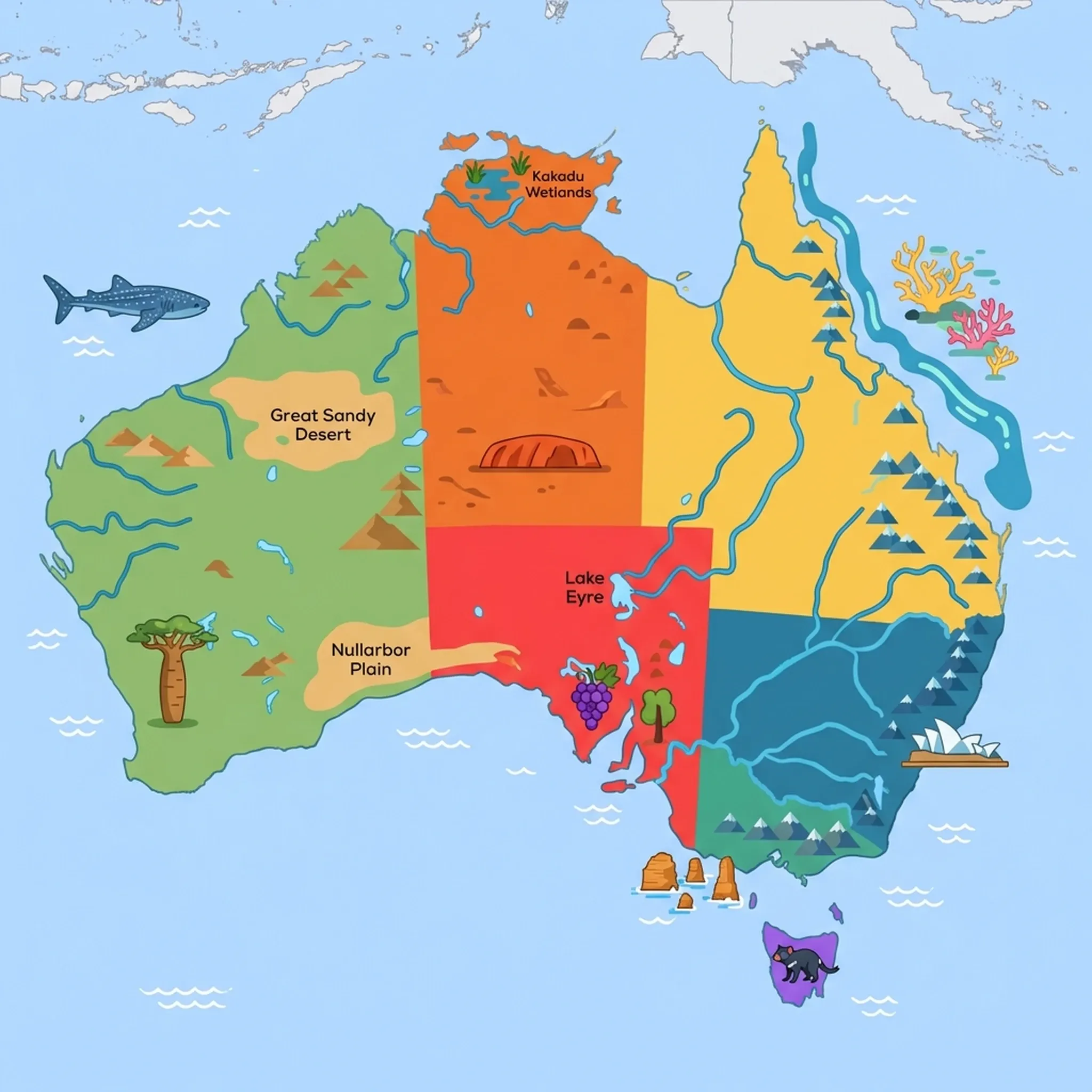
Click a region to explore
Safety Warning: This region presents real environmental hazards. In the Top End (Darwin/Kakadu), saltwater crocodiles are present in many waterways; never swim unless a sign explicitly says it is safe. In the Red Centre, extreme heat can be fatal. Always carry significant water (4L per person per day) and avoid hiking during the middle of the day in warmer months.
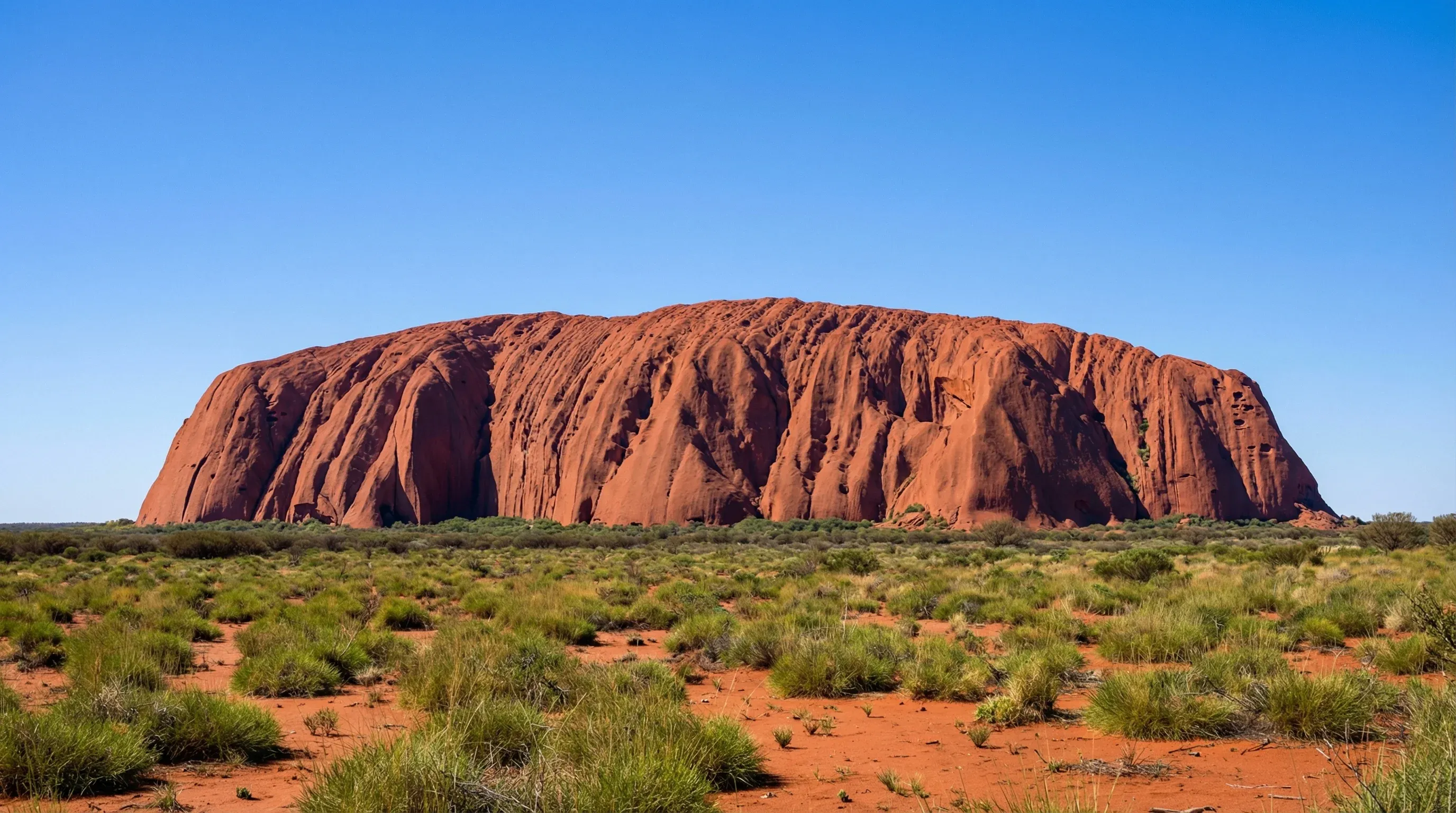
The Northern Territory (NT) is unlike anywhere else on earth—a land of extremes that feels like a true frontier. For families, it is an opportunity to disconnect from city life and reconnect with nature and the world's oldest living culture. The Territory is divided into two distinct zones: the tropical Top End, with its waterfalls, wetlands, and crocodiles; and the Red Centre, a desert landscape of red earth, blue skies, and dramatic rock formations. The sheer scale of the landscape is humbling. This is not a destination for a quick weekend trip; it requires time and a sense of adventure. The indigenous culture here is accessible and vibrant, offering children a chance to learn about Dreamtime stories, bush tucker, and art directly from Traditional Owners.
The vibe is rugged but welcoming. Facilities in major tourist hubs are good, but distances between stops can be vast. The Top End is green, humid, and teeming with life, while the Red Centre is dry, vast, and silent. Both offer incredible night skies perfect for stargazing. For kids, the thrill of spotting a crocodile in the wild or climbing the rim of a canyon is unmatched. It is a place that challenges you physically but rewards you with experiences that define the Australian outback spirit. While it requires more planning than a beach holiday, the memories of watching a sunset over Uluru or swimming under a waterfall in Litchfield are priceless.
Key Attractions
In the Top End, Litchfield National Park is a family favourite because of its accessible, crocodile-free swimming holes like Florence Falls and Buley Rockhole (check safety signs always). It also features giant magnetic termite mounds that fascinate children. Further east, Kakadu National Park is a UNESCO World Heritage site where you can view ancient rock art at Ubirr Rock Art Site and take a yellow water cruise to see wildlife. In Darwin, Mindil Beach offers famous sunset markets with food from all over Asia.
Down in the Red Centre, the Territory Wildlife Park (near Darwin, actually—check location: Territory Wildlife Park is Berry Springs, Top End. For Red Centre wildlife, visit Alice Springs Desert Park). The Alice Springs Desert Park is essential for understanding the desert environment, offering nocturnal tours to see bilbies and malas. The headline act is, of course, the drive along the Red Centre Way to reach Uluru and the spectacular Kings Canyon, where the Rim Walk (or the easier Creek Walk) offers breathtaking geology.
Practical Advice
Timing is critical. The best time to visit the Top End is the dry season (May–October) when humidity is lower and roads are open. The Wet Season (November–April) brings monsoons and road closures. The Red Centre is best visited in cooler months (May–September); summer temps can hit 45°C. Mobile reception is non-existent outside towns—carry a satellite phone or reliable maps for remote driving.
Food & Drink
Typical meal times: Early dining is common. Lunch 12:00 pm – 2:00 pm; Dinner 6:00 pm – 8:30 pm. In remote roadhouses, kitchens may close early.
Typical meal costs: Prices are higher due to remoteness. A pub meal costs A$30–45 (approx. $20–30 USD / €18–27 EUR). Fuel and groceries are significantly more expensive than in cities.
Dietary requirements: Darwin and Alice Springs have good options. Remote roadhouses mostly serve burgers, steaks, and fried food. Vegetarians should pack supplies for long drives.
Signature dishes:
- Barramundi – The premier eating fish of the north, often wild-caught, served grilled or battered. Sweet, white, and flaky.
- Laksa – Darwin is famous for its Laksa, a spicy noodle soup influenced by its proximity to Asia. The Darwin International Laksa Festival is a local highlight.
- Kangaroo Loin – Lean game meat, widely available in restaurants, often served rare with berry sauces.
- Buffalo Burger – Found in pubs and roadhouses, a legacy of the introduced water buffalo population.
Why this score?
This region offers significant adventure characterized by extreme heat, remote desert landscapes, and tropical wetlands inhabited by saltwater crocodiles. Traveling between hubs often requires long drives through uninhabited terrain, and many attractions involve unsealed roads or challenging bushwalking. It is one of the most rugged environments in Australia, requiring careful preparation for visiting families.
Why this score?
While Darwin and Alice Springs have modern hospitals capable of handling most emergencies, the vast distances of the Territory pose significant logistical challenges for medical access. Many tourist sites are hours away from professional care, often requiring the Royal Flying Doctor Service for evacuations. For international families, the lack of immediate proximity to specialized clinics in remote areas is a notable consideration.
Why this score?
The Northern Territory hosts iconic global landmarks like Uluru and Kakadu, making it a bucket-list destination for many international travelers. However, the high cost of travel and extreme climate limit the sheer volume of visitors compared to the coastal cities. It remains a niche but highly recognized destination for culture and nature-focused tourists.

The NT is expensive due to logistics. Fuel can be 30-50% higher than city prices. Accommodation at Uluru is premium; a family room can cost A$400–600 (approx. $260–390 USD / €240–360 EUR) per night. National Park passes are required: Kakadu is approx. A$40 per adult; Uluru-Kata Tjuta is A$38 per adult (kids often free). Budget for A$100 (approx. $65 USD / €60 EUR) per day for food for a family if self-catering.
Family Travel Notice
Parents should be highly attentive to weather warnings, as infants and children are particularly vulnerable to extreme heatwaves. Ensure children are protected from high UV levels and stay hydrated during outdoor activities.

Getting Here & Around
Getting Here
- Airports – Darwin International Airport (DRW) serves the Top End. Alice Springs (ASP) and Ayers Rock Airport (AYQ) serve the Red Centre. Flights connect from major Australian capitals.
- Train – The Ghan is one of the world's great rail journeys, running between Adelaide and Darwin via Alice Springs.
- Driving – The Stuart Highway runs north-south through the centre. It is a sealed, two-lane highway, but distances are huge (Alice Springs to Darwin is approx. 15 hours driving).
Getting Around
- Car – A vehicle is essential. 4WD is recommended for unsealed roads like the Mereenie Loop on the Red Centre Way, but standard cars can access major sites like Uluru and Litchfield National Park on sealed roads.
- Bus – Shuttle buses operate at Uluru (Yulara resort). Guided coach tours are available if you prefer not to drive.
- Walking – Trails like the Jatbula Trail are for experienced hikers, but short walks at Kings Canyon are family-friendly.
Nearby Airports (7 airports)
Alice Springs
ASPAlice Springs
Ayers Rock
AYQAyers Rock
Darwin Intl
DRWDarwin
Gove
GOVGove
Tindal Airport
KTRKatherine
Mcarthur River
MCVMcarthur River
Tennant Creek
TCATennant Creek
View full flight map for Australia →
Official Links

Packing List
Absolutely non-negotiable for the Red Centre; flies are incessant and will ruin your hike without one.
Carrying water in hand is tiring on walks; hands-free hydration encourages kids to drink more in the heat.
The desert air is extremely dry and can cause nosebleeds in children (and adults).
Better than sunscreen for sun protection and keeps the flies off your skin.
UV is extreme; t-shirts offer little protection. A UPF50+ swim shirt is essential for kids.
Thick colored sunblock for noses/lips; stays on in surf better than lotion and kids love the colors.
Picnics are a national pastime; keeps snacks cool during long drives or beach days.
Required in some marine parks to protect coral; buy 'broad spectrum' specifically.
Australian plugs are unique (Type I); one adapter plus a strip charges all family devices.

Activities & Best Times

Hiking, wildlife, outdoor exploration, ecotourism
A global pinnacle for wilderness and Indigenous culture, featuring iconic sites like Uluru, Kakadu, and Nitmiluk Gorge. The dry season (May-Oct) is essential for access to swimming holes and trails, as the wet season brings extreme heat and road closures.

Urban tourism, museums, historical sites, architecture
Offers a unique blend of frontier history and rich Aboriginal heritage through world-class galleries and the Desert Park. The cooler dry season is the only viable time for families to comfortably explore the outdoor markets and urban cultural sites.

Sport tourism, fitness activities, active recreation
Home to the world-renowned Larapinta and Jatbula trekking trails, providing challenging but spectacular routes for active families. These trails are strictly seasonal, as extreme summer temperatures (Oct-Mar) make multi-day hiking dangerous.

Learning experiences, scientific sites, historical education
The Museum and Art Gallery of the Northern Territory provides an internationally significant look at natural history and the Cyclone Tracy event. While facilities are indoor, the broader region's accessibility for accompanying field-based learning is limited to the dry season.

Spa retreats, wellness centers, peaceful getaways
Distinctive thermal springs at Mataranka and Katherine offer a unique outback wellness experience in lush, natural surroundings. These sites are most refreshing during the cooler months when humidity is low and water temperatures are most inviting.

Scenic drives, countryside tours, route-based travel
Celebrated routes like the Red Centre Way and Nature's Way provide safe, well-maintained access to spectacular desert and tropical scenery. Travel is best during the dry season to avoid road closures and the high-risk driving conditions associated with monsoon rains.
Beach resorts, marine activities: diving, snorkelling, kite surfing, wind surfing, sailing
Coastal areas offer stunning sunsets and the famous Mindil Beach markets, but ocean swimming is largely prohibited due to crocodiles and seasonal stingers. The Wave Lagoon provides a safe, family-friendly alternative during the dry winter months.

Events, celebrations, seasonal attractions
Events like Parrtjima in April and the Darwin Festival or Henley-on-Todd in August provide unique, authentic cultural spectacles. These festivals are timed specifically to coincide with optimal weather windows for outdoor attendance.
Amusement parks, family entertainment venues
Lacking major international theme parks, the region features quality regional water parks like Leanyer and the Wave Lagoon that cater well to families. Peak visitation aligns with the school holiday periods during the dry season when outdoor recreation is most comfortable.

Attractions (32 total)



Public Holidays & Calendar Next 12 months
Public holidays, festivals, cultural celebrations, and seasonal natural phenomena coming up in Northern Territory (Top End & Red Centre) over the next 12 months.
Loading holidays and events...

Travel Advisory
All major international agencies agree that Australia maintains a stable security environment where standard safety awareness is sufficient for travellers.
Safety Topics
Traveller Advice (5 groups)

When exploring the outback or remote regions, ensure you carry extensive supplies of fuel, water, and food. It is vital to have a reliable means of communication, such as a satellite phone or an emergency beacon, as mobile coverage is non-existent in many areas.

Australia is considered a welcoming destination for LGBTQ+ visitors, with established legal protections and a generally inclusive atmosphere.

Parents should be highly attentive to weather warnings, as infants and children are particularly vulnerable to extreme heatwaves. Ensure children are protected from high UV levels and stay hydrated during outdoor activities.

During summer months, older travellers should take extra care to avoid heatstroke and dehydration. It is recommended to stay in climate-controlled environments like shopping centres or libraries during peak heat and avoid long-distance driving in extreme conditions.

While Australia is generally safe, female solo travellers are encouraged to follow standard safety protocols and consult specific resources for independent travel provided by government agencies.
Agency Summaries
Australia is generally considered safe for visitors, with security conditions comparable to those in Canada. While the overall risk is low, travellers should remain vigilant regarding petty crimes like theft and vehicle break-ins, particularly in urban centers. Significant emphasis is placed on environmental hazards, including severe heatwaves, the potential for cyclones in northern regions, and the extreme isolation of the outback which requires thorough preparation.
New Zealand emphasizes the importance of staying informed about the national terrorism threat level and environmental risks. The advice specifically highlights the dangers of local wildlife, such as crocodiles and venomous snakes, and reminds New Zealanders of their special visa status and healthcare rights while visiting.
The British government advises that normal safety measures are sufficient for Australia. It notes that while the country is stable, there is an ongoing global risk of terrorism and seasonal threats from bushfires between October and February. Travellers are encouraged to ensure their insurance covers specific regional activities, including adventure travel and remote outback explorations.
Ireland advises its citizens that Australia is safe but strictly regulated. Key advice includes complying with visa conditions to avoid detention or deportation and being aware of the strict approach taken by local police toward public order and laws. Irish visitors are also reminded of the reciprocal healthcare benefits available, though private insurance remains highly recommended.
Visitors should maintain standard safety awareness throughout the country. US authorities highlight the importance of enrolling in local safety programs and preparing for natural events such as bushfires and severe storms. Detailed guidance is provided for those venturing into remote areas, where road conditions and the distance between settlements pose unique challenges.
Information is provided for general guidance only and does not constitute travel, safety, medical, or legal advice. Conditions may change. Users are responsible for independently verifying information before travel.