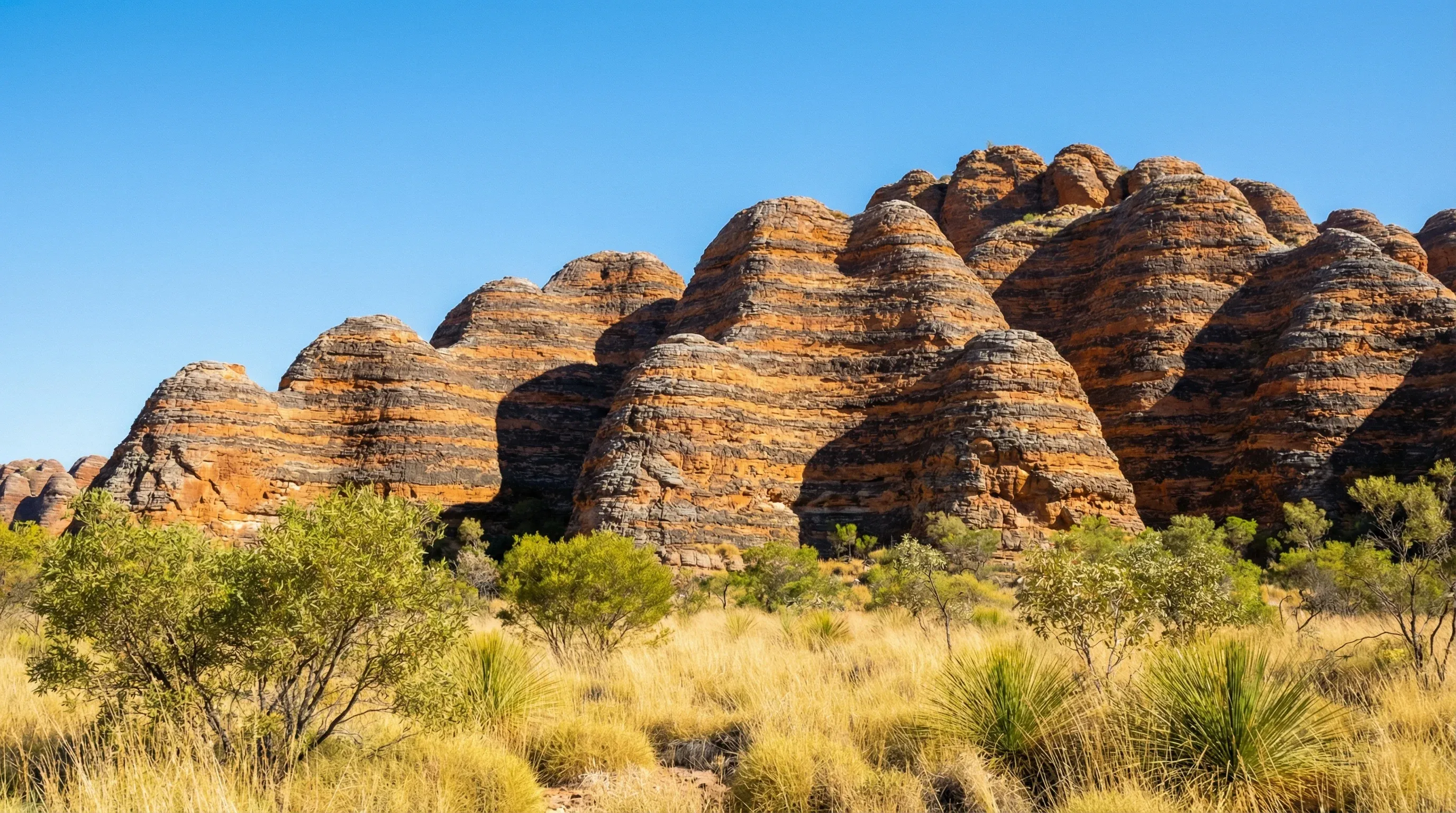

Perth & Western Australia
Endless sunsets, friendly quokkas, and wild blue oceans 🌊🌞🐚
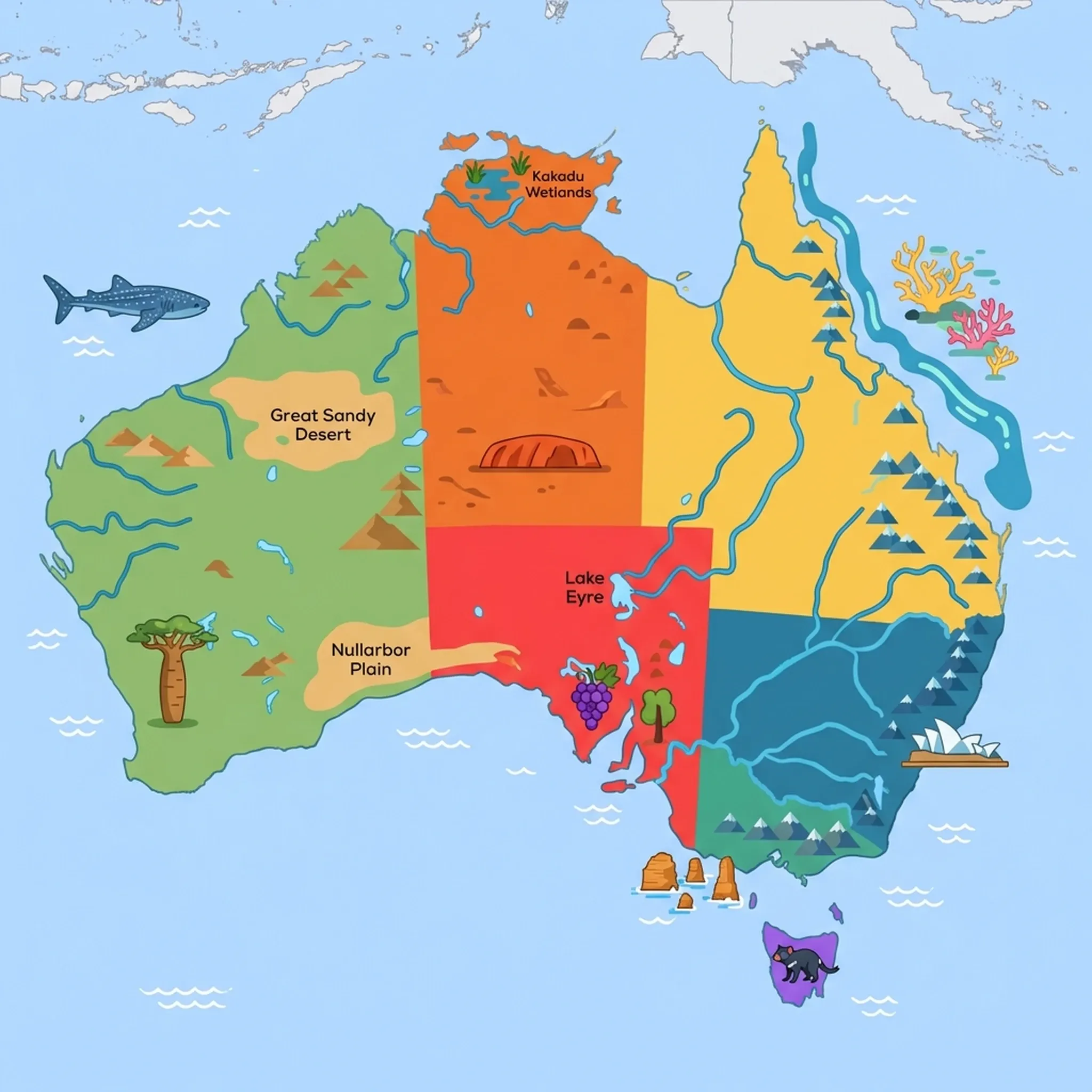
Click a region to explore
Western Australia (WA) is vast—really vast. It covers one-third of the Australian continent, meaning the landscape changes from temperate forests in the south to tropical deserts in the north. For families, the focus is usually on the South West and the Coral Coast, both accessible from Perth. Perth itself is Australia's sunniest capital, a clean, modern city with the massive Kings Park and beautiful beaches like Cottesloe Beach. The lifestyle here is outdoorsy and relaxed. Families spend their days by the ocean or the Swan River. The isolation of Perth (it is closer to Jakarta than Sydney) creates a self-sufficient, friendly community vibe that feels safe and easy for travellers.
South of Perth, the Margaret River region is a family paradise, balancing world-class wineries with surf beaches, caves, and hedge mazes. It is one of the few wine regions where children are genuinely catered for with playgrounds and lawn games. Heading north, the Coral Coast offers the Ningaloo Reef, which is arguably more accessible than the Great Barrier Reef—you can snorkel right off the beach. WA is about road trips. The drives are long, but the traffic is light and the scenery—wildflowers, red dirt, turquoise water—is stunning. It is a place for families who love the water, whether it is surfing, snorkelling, or just playing on some of the whitest sand beaches in the world.
Key Attractions
In Perth, a day trip to Rottnest Island (accessible by ferry from Fremantle) is mandatory to meet the quokkas, dubbed the "world's happiest animal." Back on the mainland, Fremantle Prison offers fascinating tours (including "torchlight" tours for brave older kids) that bring convict history to life. The Fremantle Markets are great for food and crafts. For marine lovers, AQWA - The Aquarium of Western Australia features a moving walkway beneath a shark-filled tank that mesmerizes toddlers.
Heading south, the drive along Caves Road takes you past stunning limestone caves like Lake Cave and Jewel Cave, which offer guided tours suitable for families. Further north, the Kalbarri National Park features the 'Nature's Window' rock formation and the new Skywalk, offering thrilling views over the Murchison River gorges. If you venture far north, the Karijini National Park offers some of the country's most spectacular gorges and swimming holes, though it is a remote adventure suited to older families.
Practical Advice
Distances are deceptive. Perth to Coral Bay (Ningaloo) is a 12-hour drive. Plan your itinerary carefully or fly to regional hubs. The wildflowers bloom Sept–Nov, making the landscapes pop with colour. Summer can be very hot; carry plenty of water. Perth has excellent cycle paths, so consider renting bikes.
Food & Drink
Typical meal times: Lunch 12:00 pm – 2:30 pm; Dinner 6:00 pm – 9:00 pm. Coastal towns often close kitchens early, around 8:00 pm.
Typical meal costs: Prices are slightly higher than the east coast. A main meal costs A$30–50 (approx. $20–33 USD / €18–30 EUR). A 'Sunday Sesh' pub lunch is a local tradition and offers good value.
Dietary requirements: Very good in Perth and Margaret River. Gluten-free and vegan options are common. In remote roadhouses, options will be limited to chips and salads.
Signature dishes:
- Western Rock Lobster (Crayfish) – A delicacy of the region, often grilled with garlic butter.
- Conti Roll – A continental roll filled with Italian cured meats and pickled vegetables, a Perth lunch staple with Italian heritage.
- Manjimup Truffles – The region produces world-class black truffles, often featured on menus in winter.
- Chilli Mussels – A spicy tomato-based mussel pot, very popular in Fremantle.
Why this score?
WA is characterized by its immense scale and 'frontier' feel, with the Kimberley region offering some of the most remote wilderness on earth. Families can engage in significant adventure through coastal 4WD tracks and snorkeling in wild reef systems like Ningaloo. Even the more developed south-west features rugged coastlines and vast forests that feel more untamed than eastern Australia.
Why this score?
Perth offers excellent, modern healthcare facilities that cater well to international visitors, but the state's massive size means medical quality drops off in rural areas. While regional hubs have basic hospitals, specialized care often requires a flight back to the capital. The system is highly professional and English-speaking, but the sheer distance to help in the northern regions justifies a lower score than Sydney or Melbourne.
Why this score?
Western Australia is a recognized international destination, particularly famous for the quokkas of Rottnest Island and the whale sharks of Ningaloo Reef. Its geographic isolation from the East Coast keeps it from reaching 'mega-destination' status, but it maintains a dedicated following of international adventure and nature tourists. The region has seen significant growth in recent years due to increased direct flight connectivity from Europe and Asia.

WA has a reputation for being pricey, partly due to the mining boom legacy and remoteness. A family hotel in Perth costs A$200–350 (approx. $130–230 USD / €120–210 EUR). Eating out is comparable to Sydney. Car hire can be expensive due to high demand, so book months in advance. Entry to <a data-attraction-id="35975">Fremantle Prison</a> family pass is approx. A$60 (approx. $40 USD / €36 EUR).
Family Travel Notice
Parents should be highly attentive to weather warnings, as infants and children are particularly vulnerable to extreme heatwaves. Ensure children are protected from high UV levels and stay hydrated during outdoor activities.

Getting Here & Around
Getting Here
- Airports – Perth Airport (PER) is the primary gateway, connecting to Asia, Europe (direct flights from London), and all major Australian cities.
- Driving – The Nullarbor Plain crossing from South Australia is a bucket-list drive, but takes 2-3 days of solid driving. Most families fly and rent a car.
- Ferry – Ferries run to Rottnest Island from Perth City, Hillarys Boat Harbour, and Fremantle.
Getting Around
- Car – Essential. Public transport is good in Perth (Transperth) but non-existent for regional touring. Indian Ocean Drive is the main route north.
- Public Transport – Perth has a clean, modern train network. The line to Fremantle is convenient for tourists. Buses within the Perth CBD specifically (CAT buses) are free.
- Walking & Cycling – Perth has an extensive network of shared paths along the Swan River and coast, perfect for family cycling.
Nearby Airports (24 airports)
Albany Airport
ALHAlbany
Busselton Airport
BQBBusselton
Balgo Hills Airport
BQWBalgo Hills
Carnarvon
CVQCarnarvon
Esperance
EPREsperance
Fitzroy Crossing Airport
FIZFitzroy Crossing
Geraldton
GETGeraldton
Halls Creek Airport
HCQHalls Creek
Kalgoorlie Airport
KGIKalgoorlie
Kununurra
KNXKununurra
Karratha
KTAKarratha
Learmonth
LEALearmonth
Leonora Airport
LNOLeonora
Laverton
LVOLaverton
Monkey Mia
MJKMonkey Mia
Meekatharra
MKRMeekatharra
Mount Magnet
MMGMount Magnet
Onslow Airport
ONSOnslow
Paraburdoo
PBOParaburdoo
Perth International
PERPerth
Port Hedland International
PHEPort Hedland
Kalumburu Airport
UBUKalumburu
Wiluna
WUNWiluna
Newman
ZNENewman
View full flight map for Australia →
Official Links

Packing List
The UV index in WA is extreme, often higher than the east coast. Burn times can be under 10 minutes.
Sandflies (midges) on the coast and mosquitoes in the north can be fierce.
Essential for sun protection during long days at the beach or snorkelling.
The 'Fremantle Doctor' (afternoon sea breeze) is strong and will blow loose hats away.
UV is extreme; t-shirts offer little protection. A UPF50+ swim shirt is essential for kids.
Crucial for the Outback/Red Centre where flies are relentless and swarm faces constantly.
Thick colored sunblock for noses/lips; stays on in surf better than lotion and kids love the colors.
Picnics are a national pastime; keeps snacks cool during long drives or beach days.
Required in some marine parks to protect coral; buy 'broad spectrum' specifically.
Australian plugs are unique (Type I); one adapter plus a strip charges all family devices.

Activities & Best Times

Hiking, wildlife, outdoor exploration, ecotourism
Home to the iconic Kimberley wilderness, whale shark encounters at Ningaloo, and unique endemic wildlife at Rottnest Island. The dry season (May-Oct) is essential for accessing remote northern regions, while the summer months are avoided due to extreme heat and cyclones in the tropics.

Urban tourism, museums, historical sites, architecture
Perth and the historic port of Fremantle offer a sophisticated blend of world-class galleries, botanical gardens, and a vibrant culinary scene. Peak visitation occurs during the Perth Festival (February) and the pleasant shoulder seasons, avoiding the wet and windier winter months.

Sport tourism, fitness activities, active recreation
Features internationally recognized long-distance hiking routes like the Cape to Cape and Bibbulmun tracks. Optimal conditions for active exploration occur during the cooler spring and autumn windows, with the intense summer heat presenting a safety risk for outdoor sports.

Beach resorts, marine activities: diving, snorkelling, kite surfing, wind surfing, sailing
Offers a dual-season coastline with world-class spots like Ningaloo Reef and Cable Beach in the north, and pristine white-sand urban beaches in Perth. Peak season targets the southern summer, while shoulder months capture the ideal dry-season conditions for northern marine adventures.

Scenic drives, countryside tours, route-based travel
Famous for the Indian Ocean Drive and the Coral Coast Highway, providing vast, scenic landscapes and high-quality road infrastructure. Best explored in autumn and spring to enjoy wildflowers and manageable temperatures, while mid-summer heat makes long-distance driving in the interior uncomfortable.

Events, celebrations, seasonal attractions
Anchored by the internationally respected Perth Festival in February and the unique Whale Shark Festival in May. These events provide specific windows of high cultural and seasonal activity that attract discerning international travelers.

Spa retreats, wellness centers, peaceful getaways
While the region features high-end resorts, the primary natural wellness draw is the remote Zebedee Springs in the Kimberley. This facility is strictly seasonal, accessible only during the northern dry months and closed during the wet season.

Attractions (33 total)



Public Holidays & Calendar Next 12 months
Public holidays, festivals, cultural celebrations, and seasonal natural phenomena coming up in Perth & Western Australia over the next 12 months.
Loading holidays and events...

Travel Advisory
All major international agencies agree that Australia maintains a stable security environment where standard safety awareness is sufficient for travellers.
Safety Topics
Traveller Advice (5 groups)

When exploring the outback or remote regions, ensure you carry extensive supplies of fuel, water, and food. It is vital to have a reliable means of communication, such as a satellite phone or an emergency beacon, as mobile coverage is non-existent in many areas.

Australia is considered a welcoming destination for LGBTQ+ visitors, with established legal protections and a generally inclusive atmosphere.

Parents should be highly attentive to weather warnings, as infants and children are particularly vulnerable to extreme heatwaves. Ensure children are protected from high UV levels and stay hydrated during outdoor activities.

During summer months, older travellers should take extra care to avoid heatstroke and dehydration. It is recommended to stay in climate-controlled environments like shopping centres or libraries during peak heat and avoid long-distance driving in extreme conditions.

While Australia is generally safe, female solo travellers are encouraged to follow standard safety protocols and consult specific resources for independent travel provided by government agencies.
Agency Summaries
Australia is generally considered safe for visitors, with security conditions comparable to those in Canada. While the overall risk is low, travellers should remain vigilant regarding petty crimes like theft and vehicle break-ins, particularly in urban centers. Significant emphasis is placed on environmental hazards, including severe heatwaves, the potential for cyclones in northern regions, and the extreme isolation of the outback which requires thorough preparation.
New Zealand emphasizes the importance of staying informed about the national terrorism threat level and environmental risks. The advice specifically highlights the dangers of local wildlife, such as crocodiles and venomous snakes, and reminds New Zealanders of their special visa status and healthcare rights while visiting.
The British government advises that normal safety measures are sufficient for Australia. It notes that while the country is stable, there is an ongoing global risk of terrorism and seasonal threats from bushfires between October and February. Travellers are encouraged to ensure their insurance covers specific regional activities, including adventure travel and remote outback explorations.
Ireland advises its citizens that Australia is safe but strictly regulated. Key advice includes complying with visa conditions to avoid detention or deportation and being aware of the strict approach taken by local police toward public order and laws. Irish visitors are also reminded of the reciprocal healthcare benefits available, though private insurance remains highly recommended.
Visitors should maintain standard safety awareness throughout the country. US authorities highlight the importance of enrolling in local safety programs and preparing for natural events such as bushfires and severe storms. Detailed guidance is provided for those venturing into remote areas, where road conditions and the distance between settlements pose unique challenges.
Information is provided for general guidance only and does not constitute travel, safety, medical, or legal advice. Conditions may change. Users are responsible for independently verifying information before travel.