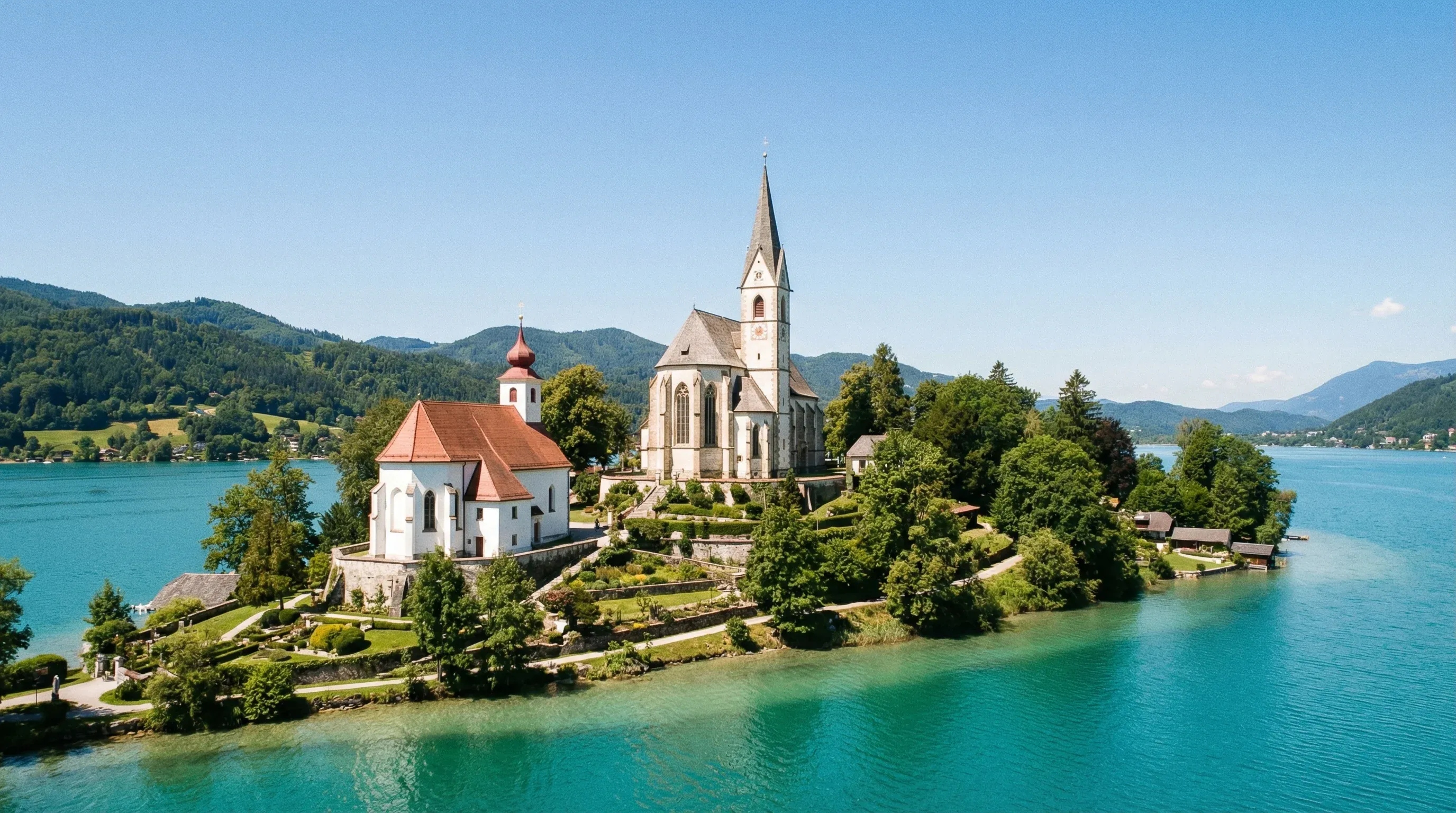

Carinthian Lakes & Southern Alps
Austria's sunny southern riviera where mountains meet warm lakes 🏊♂️
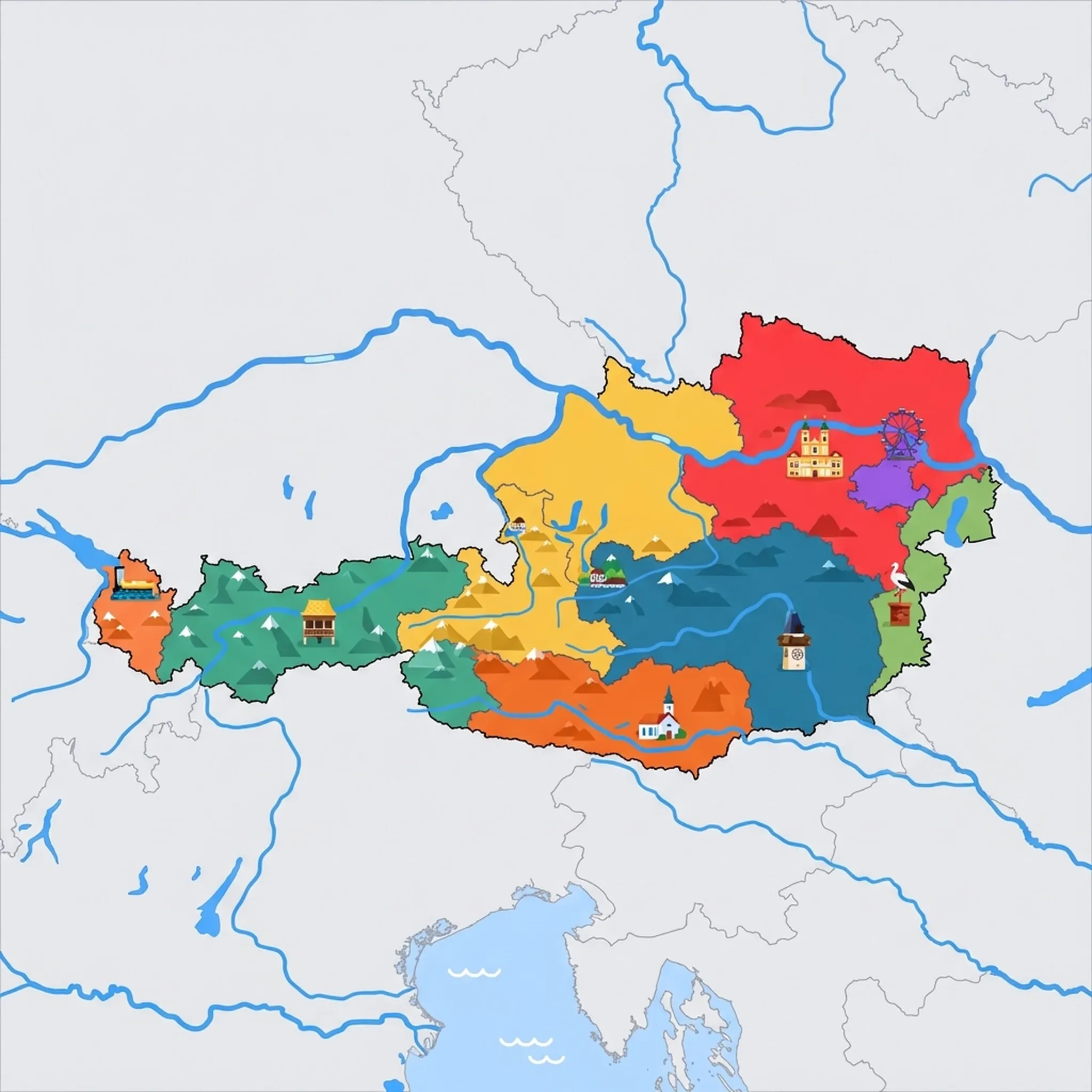
Click a region to explore
Carinthia (Kärnten) holds a special place in the hearts of Austrian families as the premier summer holiday destination. Located on the sunny southern side of the Alps, near the borders of Italy and Slovenia, it enjoys a climate that feels distinctly more Mediterranean than the rest of the country. The landscape is defined by over 200 lakes, many of which have drinking-quality water that warms up to 28°C (82°F) in the summer—perfect for children who might find glacial lakes elsewhere too cold. It is a region that encourages an active lifestyle; families spend their days swimming, cycling along riverbanks, or hiking in the gentle Nockberge mountains, which are less jagged and more accessible for little legs than the high central Alps.
The vibe here is laid-back and cheerful, with a strong emphasis on "dolce vita" Austrian style. The influence of the neighboring countries is palatable in the food and the architecture. For parents, the stunning lakeside promenades offer romantic evening strolls, while the sheer variety of kid-centric infrastructure—from lidos with giant slides to interactive mountain trails—makes logistics easy. Whether you are driving the spectacular Grossglockner High Alpine Road to see glaciers or relaxing by the turquoise waters, Carinthia balances adventure and relaxation perfectly.
Key Attractions
A mandatory stop for every family is Minimundus in Klagenfurt, where over 150 iconic buildings from around the world are recreated in miniature. Kids love feeling like giants as they walk past the Eiffel Tower and the Taj Mahal. Nearby, the Pyramidenkogel is the world's highest wooden observation tower; the best part isn't just the view, but the massive indoor slide that allows you to whizz from the top down to the ground in seconds. For history that captures the imagination, visit Hochosterwitz Castle, a fortress with 14 defensive gates that was never conquered—walking up the spiraling path feels like stepping into a knight's tale. Nature lovers should drive the Nockalm Road, a scenic route through a biosphere reserve with plenty of playgrounds and easy hiking stops along the way.
Practical Advice
The "Kärnten Card" is an essential purchase (or often included with accommodation) that offers free entry to over 100 attractions and boat lines. The lakes are busiest in July and August; for a quieter experience with warm water, early September is a hidden gem. Note that some lakeside areas are private, so look for "Strandbad" (public lido) signs for lake access.
Food & Drink
Typical meal times: Lunch is served 12:00 pm to 2:00 pm. Dinner runs from 6:00 pm to 9:00 pm. In tourist hotspots around Wörthersee, kitchens may stay open later.
Typical meal costs: Main courses in a 'Gasthaus' range from €15–25 (approx. $16–27 USD / £13–21 GBP). Lakeside dining can be significantly more expensive.
Dietary requirements: Italian influence means excellent pasta and pizza options are everywhere, making it easy for picky eaters. Gluten-free options are common in larger towns.
Signature dishes:
- Kärntner Kasnudeln – Large pasta pockets crimped with a mint-leaf pattern, filled with a mixture of quark cheese, potato, and herbs (mint/chervil), served with brown butter.
- Kärntner Reindling – A bundt-cake-like yeast pastry filled with cinnamon, sugar, raisins, and walnuts, often eaten at Easter but available year-round.
- Kärntner Lax'n – Local lake trout, often served grilled or smoked, known for its high quality.
- Ritschert – A hearty, thick stew made from barley, beans, and smoked pork, dating back to Celtic times.
Why this score?
The presence of the Karawanken range and the Grossglockner High Alpine Road provides significant mountain terrain for hiking and climbing. However, the region's focus on lakeside 'Mediterranean' style resorts keeps the overall adventure level moderate.
Why this score?
Klagenfurt and Villach house modern state hospitals that offer excellent emergency services for the region's many active tourists. Facilities are high-quality and generally well-equipped to handle international insurance and English-speaking patients.
Why this score?
This region is a major summer draw for Central Europeans due to warm lakes like Wörthersee and Millstätter See. While well-known regionally, it sees fewer intercontinental tourists compared to the Tyrolean Alps or Vienna.

Costs vary by lake. Wörthersee is the "lifestyle" lake and can be pricey (High), with hotels €150–300+ (approx. $160–325 USD / £130–255 GBP). Millstätter See and Weissensee are generally more affordable (Mid). Activities are good value if you use the regional discount card.
Family Travel Notice
Single parents or guardians traveling with minors who are not their own should carry notarized consent letters and proof of relationship to prevent delays at border control.

Getting Here & Around
Getting Here
- Airports – Klagenfurt Airport (KLU) is small and central. Alternatively, Ljubljana Airport (LJU) in Slovenia is just an hour's drive away.
- Train – Direct Railjet trains connect Vienna to Klagenfurt and Villach in about 4 hours. The route over the Semmering pass is scenic.
- Driving – The A2 motorway connects the region to Vienna and Italy. The Grossglockner High Alpine Road is a scenic arrival route from the north but requires a toll.
Getting Around
- Car – Highly recommended for exploring the mountain roads and reaching different lakes.
- Cycling – The Drau Cycle Path (Drauradweg) is excellent for families, following the river downhill or on flat terrain with train connections for the return leg.
- Boat – Ferries on the larger lakes (Wörthersee, Millstätter See) are a fun way to hop between towns like Maria Wörth.
Nearby Airports (1 airport)
Klagenfurt(Aus-Afb)
KLUKlagenfurt
View full flight map for Austria →

Packing List
Some lake entries are pebbly or have slippery wooden piers; these help kids enter safely.
Despite hot days, lakeside evenings can cool down rapidly once the sun sets.
Southern Austria has ticks in tall grass; essential if you plan on hiking in the woods.
The mountain roads (Nockalm, Grossglockner) are very winding.
Tick-borne encephalitis is a risk in tall grass and forests; essential for hikers.
Many mountain huts (Almhütten) and small rural cafes do not accept cards.
Tap water is pure alpine spring water almost everywhere—don't buy plastic.
Essential for safe traction on alpine trails and walking on city cobblestones.
Austria has no ocean, but its crystal-clear lakes are a summer highlight.

Activities & Best Times

Hiking, wildlife, outdoor exploration, ecotourism
Excellent family-oriented nature exploration with high-quality adventure parks and wildlife sanctuaries like Affenberg Landskron. Peak months provide the best access to high-alpine trails and gorges before winter snow closes seasonal attractions.

Sport tourism, fitness activities, active recreation
World-class cycling and hiking infrastructure, including the Drau Cycle Path and Alpe-Adria-Trail. Optimal weather and full facility availability make June through September the premier window for active families.

Urban tourism, museums, historical sites, architecture
Klagenfurt and Villach offer a blend of Austrian tradition and Mediterranean influence with high-quality museums like MMKK. Summer months are peak for outdoor cafe culture, while December is noted for traditional Advent markets.

Scenic drives, countryside tours, route-based travel
Spectacular high-alpine driving on celebrated routes like the Nockalm Road and Malta High Alpine Road. These scenic roads are closed by snow in winter, making the summer and early autumn the only viable windows for touring.

Winter sports, ski resorts, snow activities
Reliable alpine skiing at major resorts like Nassfeld and Bad Kleinkirchheim, offering sophisticated infrastructure for families. The season is strictly winter-focused, with March providing acceptable spring skiing conditions.

Amusement parks, family entertainment venues
Features world-class thermal water complexes like KärntenTherme that are primary draws for families. Peak periods align with summer school holidays and the winter wellness season.

Learning experiences, scientific sites, historical education
Offers interesting niche learning sites like Terra Mystica and Reptilienzoo Happ. While high-quality, these are generally secondary activities for international travelers rather than primary destination motivators.

Events, celebrations, seasonal attractions
Hosts unique international events such as the World Bodypainting Festival and European Bike Week. Visitation is highly concentrated around these specific event dates and the regional Advent celebrations.

Spa retreats, wellness centers, peaceful getaways
Established thermal bath culture in Bad Kleinkirchheim and Warmbad-Villach provides a restorative escape. The experience is most relevant for international travelers during the colder months when indoor wellness facilities are most appealing.

Attractions (31 total)



Public Holidays & Calendar Next 12 months
Public holidays, festivals, cultural celebrations, and seasonal natural phenomena coming up in Carinthian Lakes & Southern Alps over the next 12 months.
Loading holidays and events...

Travel Advisory
All major agencies agree that Austria is a low-risk destination where standard personal safety awareness is sufficient.
Safety Topics
Traveller Advice (3 groups)
Single parents or guardians traveling with minors who are not their own should carry notarized consent letters and proof of relationship to prevent delays at border control.

The social environment is inclusive and same-sex relationships are legally recognized. Travelers are unlikely to face issues, though standard discretion in less urban areas is always a balanced approach.
Mountain enthusiasts should monitor avalanche warnings closely before skiing or hiking. It is essential to have specialized insurance that covers alpine rescue and medical evacuation by air.
Agency Summaries
Austria is considered a safe destination where travelers should apply standard safety measures. Risks are comparable to those found in Canada.
Austria maintains a low threat profile. While general vigilance is recommended due to global trends, the local situation is very safe.
The country is categorized at the lowest risk level. Visitors are advised to follow standard security protocols and stay informed of local conditions.
No specific warnings against travel are in place. The environment is stable, though visitors should remain aware of their surroundings in urban centers.
Ireland advises its citizens to follow typical safety routines while visiting. The country remains a low-risk destination for international visitors.
General safety levels are high. Travelers are advised to use common sense and be alert to petty crime in areas popular with tourists.
Information is provided for general guidance only and does not constitute travel, safety, medical, or legal advice. Conditions may change. Users are responsible for independently verifying information before travel.