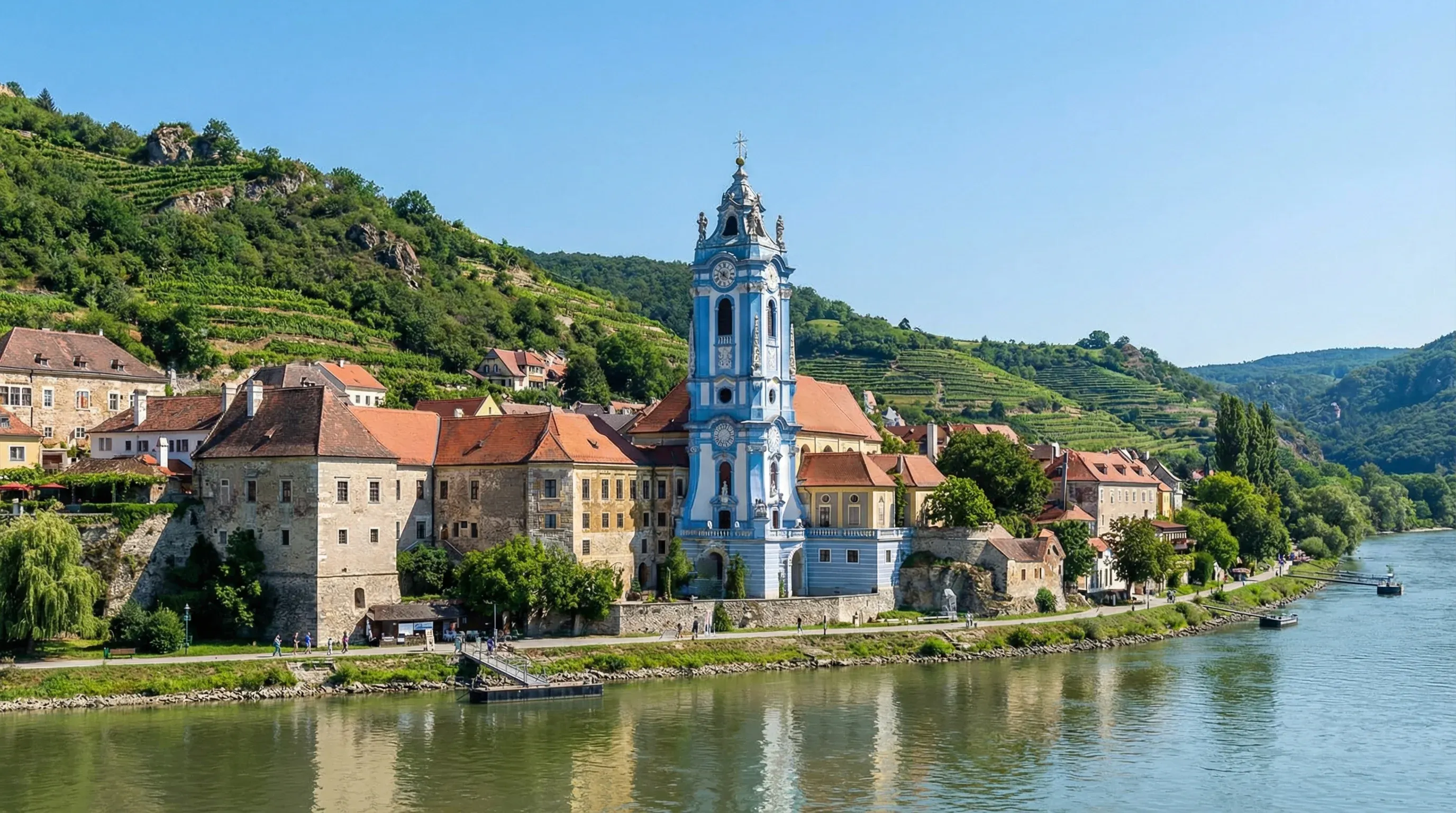

Danube & Wachau Valley
Cycle through history along Europe's majestic blue river 🚴
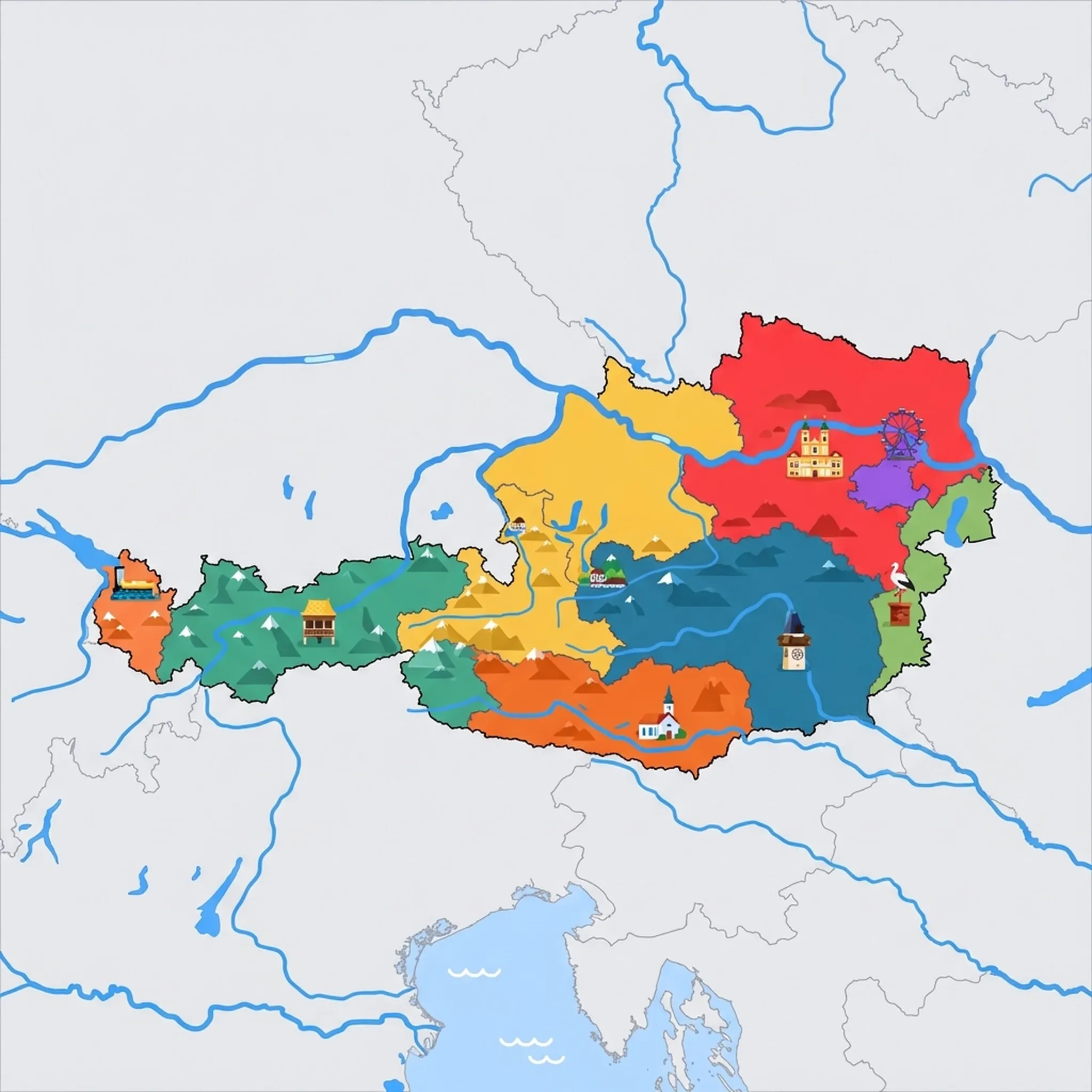
Click a region to explore
The Wachau Valley stretches along the Danube River between Melk and Krems and is widely considered one of the most scenic river landscapes in Europe. For families, this region offers a brilliant mix of history and activity without the extreme physical demands of the high Alps. The valley is famous for its terraced vineyards and apricot orchards, which bloom beautifully in spring and provide sweet fruit in summer. The primary allure here is the Danube Cycle Path (Donauradweg), a flat, paved, and safe route that runs along the riverbank, entirely separated from car traffic. It is arguably the best place in Austria to introduce children to multi-day cycling trips or simple day rides.
Beyond the bikes, the region is steeped in legends of knights and kings. The ruins perched high above the river are not just scenic backdrops but playgrounds for imagination—most notably the castle where Richard the Lionheart was once imprisoned. The river itself offers swimming at sandy beaches (rare in landlocked Austria) and boat cruises that allow tired little legs to rest while the scenery glides by. While the Wachau is historic, nearby cities like Linz offer cutting-edge modernity with interactive museums, providing a perfect rainy-day backup. The pace here is slow and rhythmic, dictated by the flow of the river, making it ideal for families seeking quality time together outdoors.
Key Attractions
Start with the Dürnstein Castle Ruins; the hike up is steep but short (about 20-30 minutes), and kids love scrambling over the old walls while parents enjoy the panoramic river views. Just down the river, the massive Melk Abbey is a must-see; its golden hues and massive library are impressive, and the adjoining Stiftspark Melk (abbey gardens) features a whimsical baroque pavilion with exotic frescoes. For a full day of adventure, head to Burgruine Aggstein. This is one of Austria's most famous castle ruins, featuring wooden walkways, hidden staircases, and medieval games that bring history to life. If you venture towards Linz, the Ars Electronica Center is a world-class "Museum of the Future" where kids can experiment with AI, robotics, and biotechnology in a hands-on environment.
Practical Advice
Spring (apricot blossom) and Autumn (wine harvest) are visually stunning but can be busy. Summer is great for cycling, but avoid midday heat on the exposed paths. If cycling with small kids, stick to the north bank of the Danube where the path is often wider and runs through the picturesque villages. The region is very dog-friendly.
Food & Drink
Typical meal times: Lunch 11:30 am to 2:00 pm. Dinner 6:00 pm to 9:00 pm. Many 'Heuriger' (wine taverns) open from late afternoon onwards.
Typical meal costs: Meals are reasonable, around €12–20 (approx. $13–22 USD / £10–17 GBP) per person in taverns. Tourist spots in Dürnstein charge a premium.
Dietary requirements: Vegetarian options are easy to find. Vegan options are growing but less common in traditional "Gasthaus" menus outside major towns.
Signature dishes:
- Wachauer Marillenknödel – Dumplings made from curd cheese dough filled with a whole local apricot and rolled in buttered breadcrumbs. A must-try in summer.
- Wachauer Laberl – A special round, crusty roll made with rye and wheat flour and caraway seeds, invented in Dürnstein.
- Saumaise – A type of smoked pork sausage or meat loaf, often served with sauerkraut and dumplings.
- Marillenschnaps/Juice – Apricot nectar is a delicious non-alcoholic drink for kids, while adults might try the schnapps.
Why this score?
The region is defined by the gentle Danube river and flat, paved cycling paths through apricot orchards and vineyards. Adventure is limited to light hill hiking around castle ruins rather than any true wilderness or rugged exploration.
Why this score?
Proximity to major urban centers like St. Pölten and Krems ensures quick access to high-standard medical facilities. These hospitals are very experienced with the high volume of international river cruise passengers and cyclists passing through the valley.
Why this score?
As a UNESCO World Heritage site, the Wachau attracts significant international flow via Danube river cruises and day trips from Vienna. Iconic spots like Melk Abbey and Dürnstein ensure a steady stream of global visitors throughout the warmer months.

Accommodation prices are moderate, though premium hotels in the vineyards can be expensive. A typical family guesthouse costs €90–140 (approx. $95–150 USD / £75–120 GBP) per night. Ferries and bike rentals are affordable additions to the budget.
Family Travel Notice
Single parents or guardians traveling with minors who are not their own should carry notarized consent letters and proof of relationship to prevent delays at border control.

Getting Here & Around
Getting Here
- Train – Excellent connections from Vienna to Melk or Krems (approx. 1 hour). The 'Wachau Railway' runs between these towns on weekends.
- Driving – The A1 motorway runs parallel to the region. It is about a 1-hour drive from Vienna to the valley entrance at Krems.
- Boat – DDSG Blue Danube ships run daily between Melk and Krems, stopping at major sights like Dürnstein Town Center.
Getting Around
- Cycling – The premier way to move. Rental stations ('Nextbike') are everywhere, allowing one-way rentals between towns.
- Boat – Regular scheduled ships connect the villages. A fun way to combine travel with sightseeing.
- Bus – Yellow 'Postbus' lines connect the villages that the train doesn't reach, specifically along the north bank.
Nearby Airports (1 airport)
Vienna International Airport
VIEVienna
View full flight map for Austria →

Packing List
Even if you only cycle for one day, the saddle soreness is real; these make the trip much happier.
Essential for carrying water and snacks while cycling, as panniers aren't always available on rental bikes.
Rentals are available, but your own properly fitted helmet is safer and more hygienic.
The cycle paths are often exposed with little shade in the middle of the day.
Tick-borne encephalitis is a risk in tall grass and forests; essential for hikers.
Many mountain huts (Almhütten) and small rural cafes do not accept cards.
Tap water is pure alpine spring water almost everywhere—don't buy plastic.
Essential for safe traction on alpine trails and walking on city cobblestones.
Austria has no ocean, but its crystal-clear lakes are a summer highlight.

Activities & Best Times

Urban tourism, museums, historical sites, architecture
Home to UNESCO World Heritage sites like Melk Abbey and Dürnstein, offering a dense concentration of medieval architecture and high-end art galleries. Peak season aligns with the cultural vitality of the valley and Christmas markets in December, while late winter sees reduced accessibility to historic sites.

Hiking, wildlife, outdoor exploration, ecotourism
The Wachau World Heritage Trail provides sophisticated hiking through iconic vineyards and river landscapes, complemented by high-quality family experiences like Tierpark Haag. Activity is optimal during the warm, stable weather of late spring through early autumn; winter conditions are generally too damp and cold for immersive nature exploration.

Scenic drives, countryside tours, route-based travel
The Wachau Valley Scenic Drive and Austrian Romantic Road offer world-class driving through historic landscapes and vineyard terraces. Spring blossoms and autumn harvest provide the most visually stunning conditions, while summer months see higher traffic congestion on the narrow riverside roads.

Sport tourism, fitness activities, active recreation
The Danube Cycle Path is a premier European cycling route with exceptional infrastructure for active families, supported by adventure parks like Rosenburg. Peak months offer mild temperatures ideal for long-distance cycling; summer heat and winter frost define the shoulder and off-seasons respectively.

Learning experiences, scientific sites, historical education
Features the Ars Electronica Center and voestalpine Stahlwelt, providing internationally significant perspectives on science and technology. These indoor facilities are accessible much of the year, though peak visitation correlates with broader cultural tourism and school-age family travel windows.

Events, celebrations, seasonal attractions
The Ars Electronica Festival and Summer Solstice are significant but short-lived events that anchor specific visit dates. Apricot blossom in April and Advent markets in December provide secondary seasonal draws, while much of the year lacks major international events.

Winter sports, ski resorts, snow activities
Small regional resorts like Jauerling offer basic winter sports, but lack the scale and infrastructure of the major Austrian Alps. The season is short and highly dependent on peak winter cold for viable snow conditions.
Amusement parks, family entertainment venues
Regional water parks and the Grottenbahn provide local entertainment but are not destination-level attractions for well-travelled families. Operations and peak appeal are entirely weather-dependent, centered on the summer school holiday period.

Attractions (24 total)



Public Holidays & Calendar Next 12 months
Public holidays, festivals, cultural celebrations, and seasonal natural phenomena coming up in Danube & Wachau Valley over the next 12 months.
Loading holidays and events...

Travel Advisory
All major agencies agree that Austria is a low-risk destination where standard personal safety awareness is sufficient.
Safety Topics
Traveller Advice (3 groups)

Single parents or guardians traveling with minors who are not their own should carry notarized consent letters and proof of relationship to prevent delays at border control.

The social environment is inclusive and same-sex relationships are legally recognized. Travelers are unlikely to face issues, though standard discretion in less urban areas is always a balanced approach.

Mountain enthusiasts should monitor avalanche warnings closely before skiing or hiking. It is essential to have specialized insurance that covers alpine rescue and medical evacuation by air.
Agency Summaries
Austria is considered a safe destination where travelers should apply standard safety measures. Risks are comparable to those found in Canada.
Austria maintains a low threat profile. While general vigilance is recommended due to global trends, the local situation is very safe.
The country is categorized at the lowest risk level. Visitors are advised to follow standard security protocols and stay informed of local conditions.
No specific warnings against travel are in place. The environment is stable, though visitors should remain aware of their surroundings in urban centers.
Ireland advises its citizens to follow typical safety routines while visiting. The country remains a low-risk destination for international visitors.
General safety levels are high. Travelers are advised to use common sense and be alert to petty crime in areas popular with tourists.
Information is provided for general guidance only and does not constitute travel, safety, medical, or legal advice. Conditions may change. Users are responsible for independently verifying information before travel.