
Styria & Southern Alpine Greens
The green heart of Austria full of castles and white horses 🏰
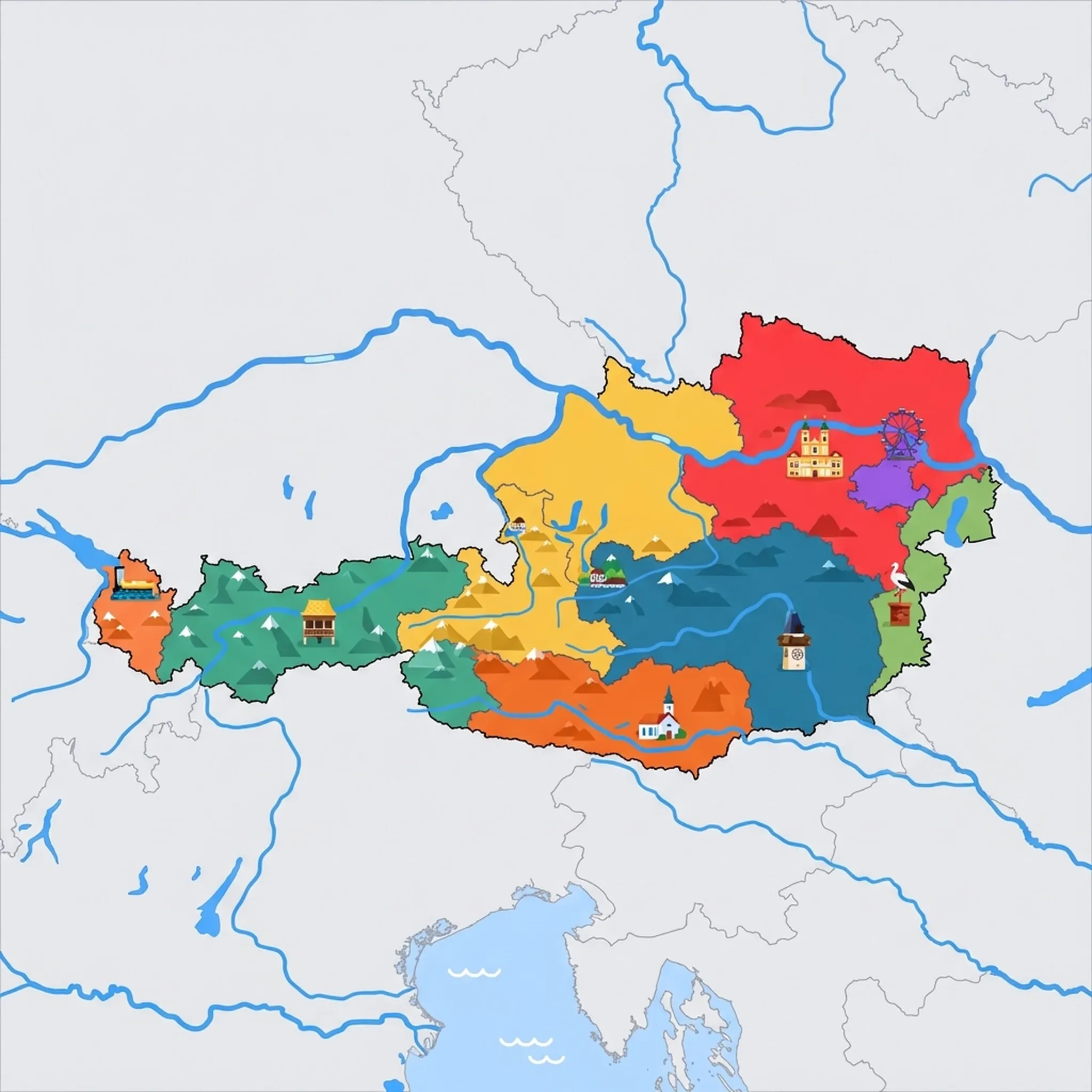
Click a region to explore
Styria (Steiermark) is Austria's most forested province, earning it the nickname "The Green Heart." For families, it offers a diverse mix of experiences that feel less manicured and more authentic than some of the western tourist hubs. The north is dominated by dramatic mountains and glaciers, while the south transforms into a rolling, Tuscany-like landscape of vineyards and pumpkin fields. The capital, Graz, is a UNESCO World Heritage site that is incredibly pedestrian-friendly and packed with futuristic architecture alongside medieval alleyways. It feels livable, relaxed, and welcoming to children.
A major draw for families is the region's focus on food and farming. Kids can visit chocolate factories (like Zotter) and pumpkin farms, learning where their food comes from. The region is also the nursery for the world-famous Lipizzaner stallions, and seeing the foals in the meadows at Piber is a magical experience. Adventure is never far away, with castles perched on top of extinct volcanoes and mysterious swimming spots like the Green Lake. Styria is perfect for families who want a mix of city culture, culinary discovery, and outdoor hiking without the extreme crowds of the main tourist trail.
Key Attractions
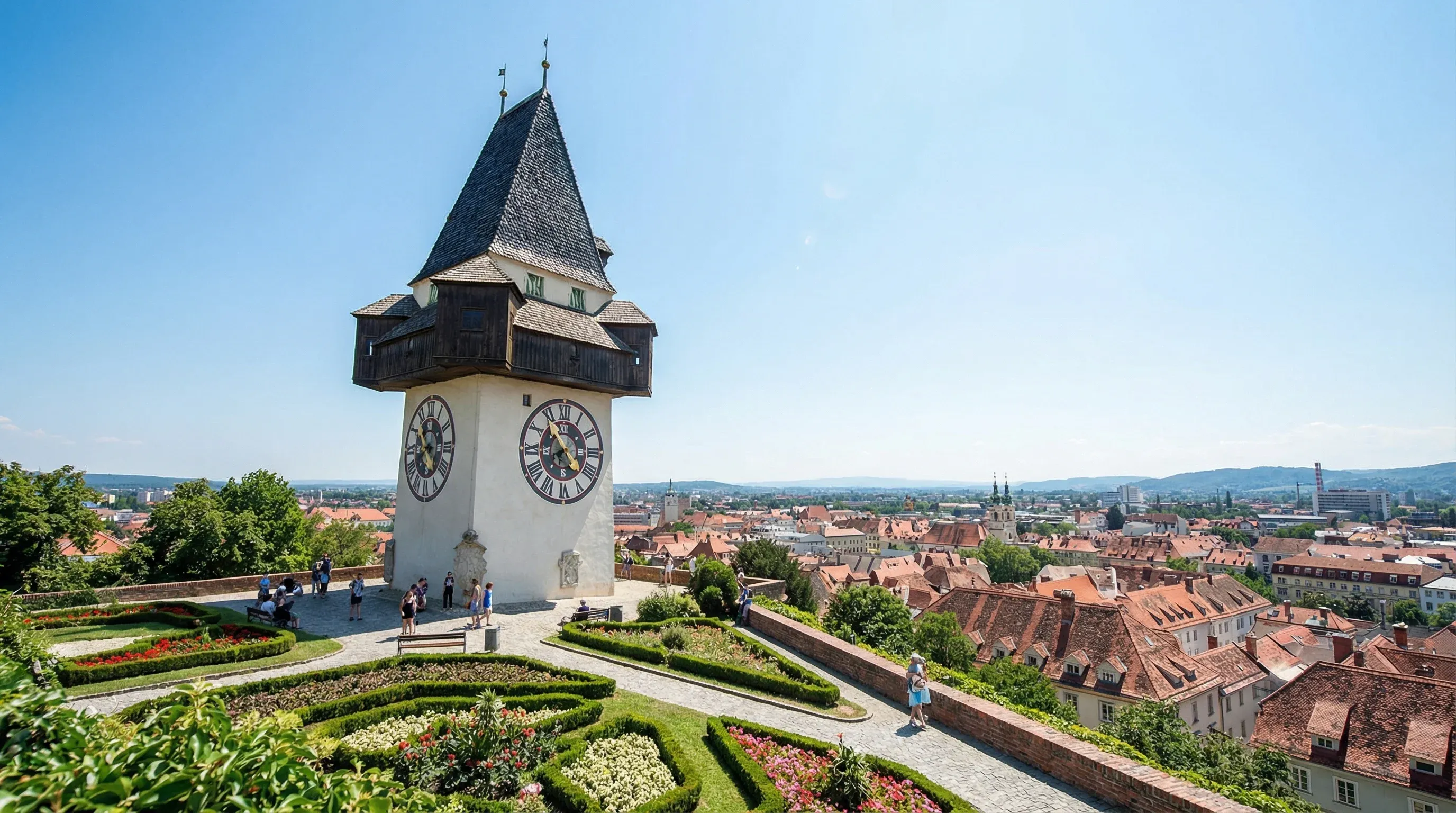
In the capital, the Grazer Schloßberg & Clock Tower offers great views, but the highlight for kids is the slide inside the mountain—the tallest underground slide in the world—offering a thrilling descent. Nearby, Eggenberg Palace has peacocks roaming freely in the gardens, which toddlers love. A short drive away, the Austrian Open-Air Museum Stübing allows families to walk through centuries of rural history with original farmhouses reassembled in a valley; it’s spacious and interactive. For horse lovers, the Lipizzanergestüt Piber shows the famous white horses in their home environment. Finally, the Riegersburg Castle is a showstopper—a fortress on a volcanic rock with a falconry show and a witch museum that captivates older children.
Practical Advice
Graz is a year-round destination, but the southern vineyards are best in Autumn during the harvest ('Sturm' season). The "GenussCard" is a guest card provided by many hosts in Eastern Styria that includes entry to over 200 destinations, including thermal baths and the Lipizzaner stud. Graz has excellent public transport (trams), and the Altstadt-Bim (Old Town Tram) is free to ride in the center.
Food & Drink
Typical meal times: Lunch 12:00 pm to 2:00 pm. Dinner 6:00 pm to 9:00 pm. Graz has a vibrant student population, so cheap eats and later dining are easier to find there.
Typical meal costs: Very reasonable. Family meals in rural taverns cost €40–60 (approx. $45–65 USD / £35–50 GBP). Graz offers budget-friendly international options.
Dietary requirements: Graz is very progressive with many vegan/vegetarian restaurants. Traditional rural inns rely heavily on chicken and pork.
Signature dishes:
- Backhendl – Breaded and fried chicken (not schnitzel, but bone-in pieces), a Styrian religion. Served with potato salad.
- Kürbiskernöl (Pumpkin Seed Oil) – The "black gold" of Styria. You'll find it on salads, soups, and even vanilla ice cream.
- Käferbohnensalat – Giant scarlet runner beans served with onions and pumpkin seed oil.
- Sterz – A rustic polenta-like dish made from buckwheat or corn, formerly a peasant breakfast.
Why this score?
The landscape varies from the rugged Dachstein glacier in the north to gentle rolling hills in the south, offering a mix of serious hiking and easy walking. It provides a good balance of outdoor recreation without being overly intimidating for families.
Why this score?
Graz is a major European medical hub, home to one of Austria’s largest university hospitals (LKH-Univ. Klinikum Graz). The quality of care is exceptional, with high availability of specialists and excellent English-speaking services across the city and surrounding areas.
Why this score?
Styria is known as the 'Green Heart' of Austria and is popular for its culinary and spa tourism, particularly among domestic and German visitors. While Graz is a cultural hub, the rural vineyard areas see fewer international travelers than the western alpine provinces.

Styria provides great value. A high-end meal in Graz is cheaper than Vienna or Salzburg. Hotel nights run €100–160 (approx. $110–170 USD / £85–135 GBP) for families. The guest cards available in thermal regions add significant savings.
Family Travel Notice
Single parents or guardians traveling with minors who are not their own should carry notarized consent letters and proof of relationship to prevent delays at border control.

Getting Here & Around
Getting Here
- Airports – Graz Airport (GRZ) is user-friendly and close to the city. Vienna Airport is about 2 hours away by bus/train.
- Train – The 'Semmering' railway line from Vienna to Graz is a UNESCO World Heritage site itself, offering stunning views. Takes approx. 2.5 hours.
- Driving – The A2 motorway connects Vienna to Graz. To reach the Dachstein Glacier in the north, smaller alpine roads are used.
Getting Around
- Public Transport – Graz has an excellent tram and bus network. The Grazer Schloßberg is accessible by funicular or lift.
- Car – Essential for exploring the 'Apple Road' or 'Wine Road' in the south and reaching Riegersburg Castle.
- Cycling – The Mur Cycle Path follows the river and is a popular family route.
Nearby Airports (1 airport)
Graz Mil/Civ
GRZGraz
View full flight map for Austria →
Official Links

Packing List
You will likely want to bring home glass bottles of Pumpkin Seed Oil or vinegar.
Graz is a city of cobblestones, and the castle hill requires steep walking if you skip the lift.
The region is famous for thermal spas (Thermen) which are great in any weather.
Tick-borne encephalitis is a risk in tall grass and forests; essential for hikers.
Many mountain huts (Almhütten) and small rural cafes do not accept cards.
Tap water is pure alpine spring water almost everywhere—don't buy plastic.
Essential for safe traction on alpine trails and walking on city cobblestones.

Activities & Best Times

Hiking, wildlife, outdoor exploration, ecotourism
Features the iconic Dachstein glacier and high alpine wilderness offering world-class hiking and unique attractions like the Skywalk. Summer and early autumn provide the best trail accessibility and visibility for families exploring the rugged limestone massifs.

Urban tourism, museums, historical sites, architecture
Graz is a UNESCO City of Design with a perfectly preserved medieval center and avant-garde landmarks like the Kunsthaus. Late spring and autumn offer the best conditions for urban exploration, while December is popular for its atmospheric Advent markets.

Sport tourism, fitness activities, active recreation
Offers exceptional cycling infrastructure like the Mur Cycle Path and specialized mountain activity centers. Best experienced in summer when the specialized outdoor infrastructure is fully accessible and the alpine weather is stable for active families.

Learning experiences, scientific sites, historical education
Features the world's largest monastic library at Admont Abbey and the unique industrial heritage of Erzberg mine. These sites are best visited during the warmer months when guided tours and full facilities are operational for international travelers.

Spa retreats, wellness centers, peaceful getaways
The Styrian Thermenland is a premier European wellness destination focused on natural hot springs and therapeutic muds. International visitors favor the colder months for the most authentic and restorative thermal bathing experience.

Scenic drives, countryside tours, route-based travel
The South Styrian Wine Road offers a sophisticated driving experience through rolling vineyards often compared to Tuscany. Autumn is the peak for scenic beauty due to the harvest season and vibrant leaf colors.

Winter sports, ski resorts, snow activities
Home to the Planai/Schladming world-cup circuits, offering high-quality infrastructure and authentic Austrian après-ski culture. The season is reliable from December through March, with April providing sunny spring skiing on higher slopes.
Amusement parks, family entertainment venues
Dominated by world-class thermal water complexes like Loipersdorf and the Hundertwasser-designed Blumau, which function as year-round aquatic entertainment hubs. Peak periods align with summer family holidays and the peak winter wellness season.

Attractions (31 total)



Public Holidays & Calendar Next 12 months
Public holidays, festivals, cultural celebrations, and seasonal natural phenomena coming up in Styria & Southern Alpine Greens over the next 12 months.
Loading holidays and events...

Travel Advisory
All major agencies agree that Austria is a low-risk destination where standard personal safety awareness is sufficient.
Safety Topics
Traveller Advice (3 groups)
Single parents or guardians traveling with minors who are not their own should carry notarized consent letters and proof of relationship to prevent delays at border control.

The social environment is inclusive and same-sex relationships are legally recognized. Travelers are unlikely to face issues, though standard discretion in less urban areas is always a balanced approach.
Mountain enthusiasts should monitor avalanche warnings closely before skiing or hiking. It is essential to have specialized insurance that covers alpine rescue and medical evacuation by air.
Agency Summaries
Austria is considered a safe destination where travelers should apply standard safety measures. Risks are comparable to those found in Canada.
Austria maintains a low threat profile. While general vigilance is recommended due to global trends, the local situation is very safe.
The country is categorized at the lowest risk level. Visitors are advised to follow standard security protocols and stay informed of local conditions.
No specific warnings against travel are in place. The environment is stable, though visitors should remain aware of their surroundings in urban centers.
Ireland advises its citizens to follow typical safety routines while visiting. The country remains a low-risk destination for international visitors.
General safety levels are high. Travelers are advised to use common sense and be alert to petty crime in areas popular with tourists.
Information is provided for general guidance only and does not constitute travel, safety, medical, or legal advice. Conditions may change. Users are responsible for independently verifying information before travel.