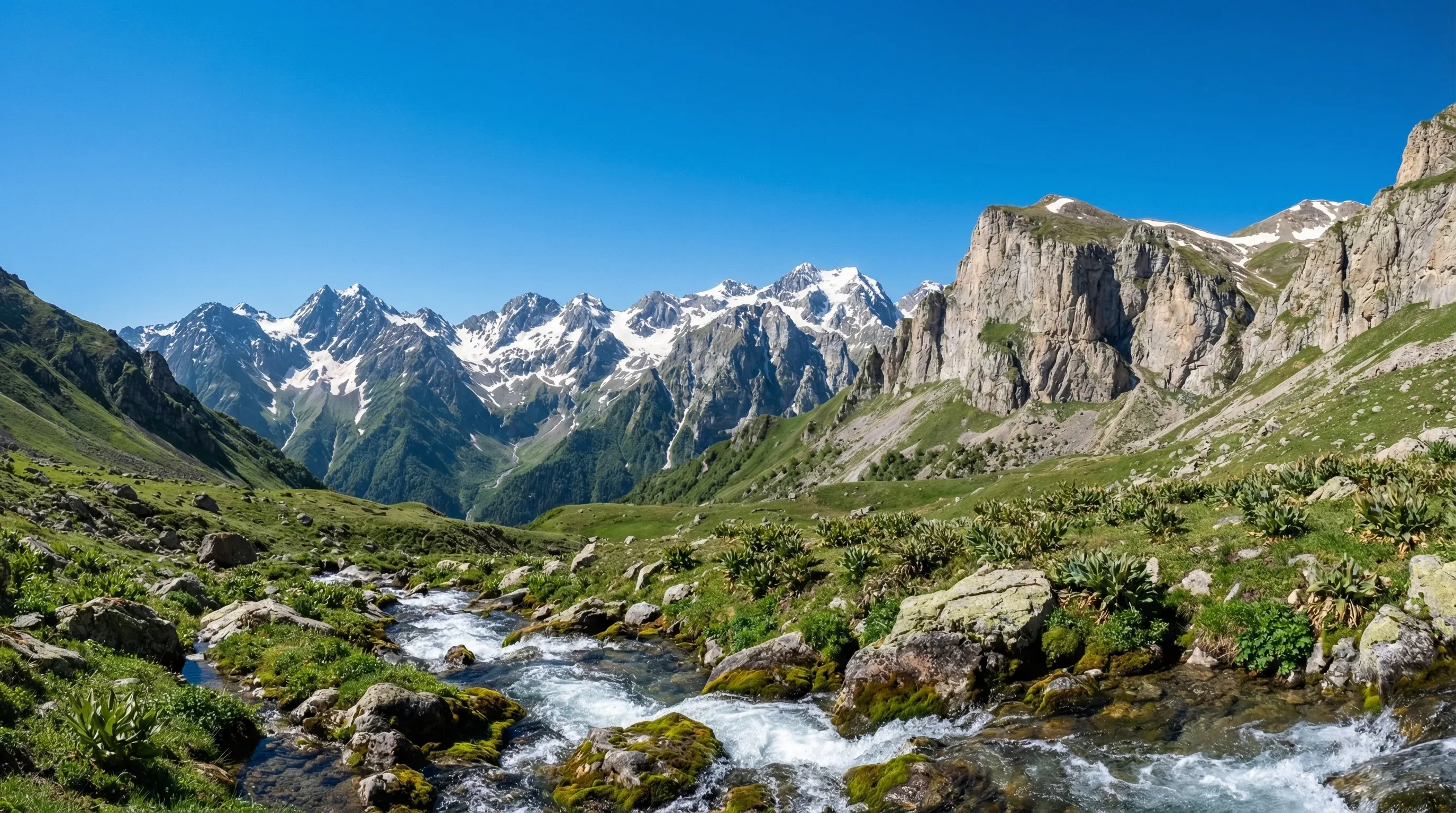

Caucasus Mountains
Peaks, valleys, and villages above the clouds 🏔️🦅
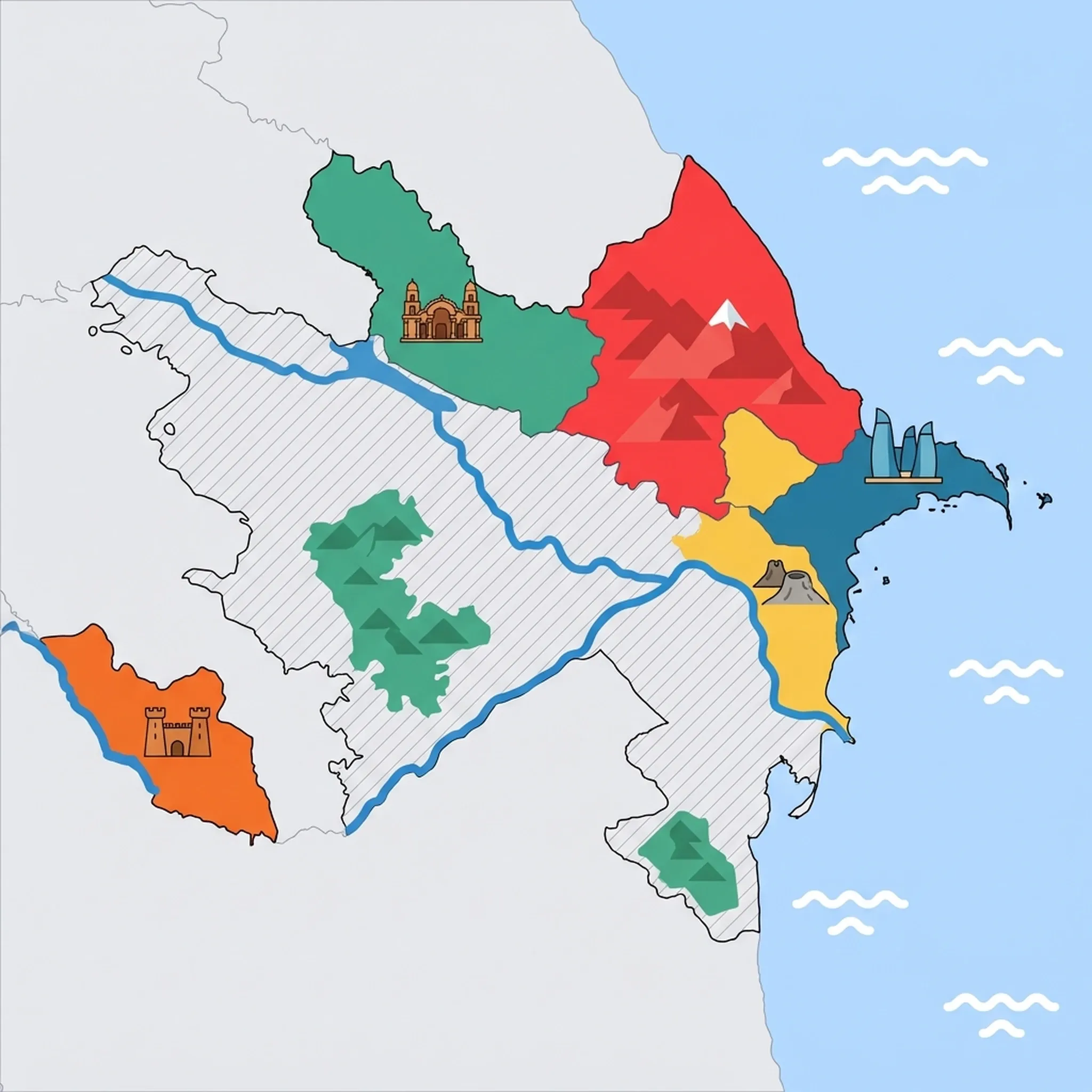
Click a region to explore
Rising sharply from the plains, the Greater Caucasus range in northern Azerbaijan is a playground for nature-loving families. The air here is crisp and thin, and the landscapes shift from dense deciduous forests to stark, dramatic alpine tundra as you climb higher. This region is not just about views; it is about immersion in a slower, more rugged way of life that has persisted for centuries. For children raised in cities, seeing flocks of sheep blocking the road or eagles circling overhead is a genuine thrill. The region is divided roughly into the Quba-Qusar zone (home to the Lezgin people and mountain Jews) and the Gabala-Ismayilli zone, both offering distinct cultural flavors.
In winter (December to March), this is Azerbaijan's premier ski destination. The infrastructure is surprisingly modern, with state-of-the-art lifts, snow cannons, and ski schools designed for beginners. In summer, the snow melts to reveal wildflower meadows and waterfalls. It is a place to disconnect from screens; families can hike to waterfalls near Laza, ride cable cars for panoramic picnics, or explore remote villages that were entirely cut off from the world until recently. The hospitality here is legendary—do not be surprised if a local invites you in for tea and jam.
Key Attractions
The crown jewel for active families is the Shahdag Mountain Resort. In winter, it offers gentle 'magic carpet' slopes for toddlers and challenging runs for teens. In summer, it transforms into an adventure park with a mountain coaster (a sled on rails) that kids absolutely adore, along with zip-lines and segregation cycling paths. It is a resort environment, so amenities are high-quality and reliable.
For a history lesson wrapped in an adventure, hire a 4x4 driver to take you to Khinalig Village. Located at 2,350 meters, it is one of the highest continuously inhabited places in Europe. The drive up the canyon is spectacular (though hair-raising), and the village itself looks like a honeycomb of stone houses built into the cliff. It is a living museum where families can see how people survive harsh winters with ancient techniques. Nearby, the Quba Genocide Memorial Complex offers a somber but important look at history for older children, while the unique Red Village (Krasnaya Sloboda) is fascinating as the only all-Jewish town outside Israel and the USA.
Practical Advice
Weather in the mountains is unpredictable. Even in July, nights can be chilly, and fog can roll in rapidly. Pack layers. If visiting remote villages like Khinalig, bring cash, as card machines do not exist there. The altitude can affect some children; keep them hydrated and take the ascent slowly.
Food & Drink
Typical meal times: Lunch is usually 1:00 pm to 2:00 pm. Dinner is flexible but often eaten around 7:00 pm to 8:00 pm in guesthouses.
Typical meal costs: Dining is cheaper than in Baku. A hearty meal for four costs 40–70 AZN (approx. $24–41 USD / €22–38 EUR). Roadside tea with jam is about 10–15 AZN (approx. $6–9 USD / €5.50–8 EUR) for a set.
Dietary requirements: The cuisine is meat-heavy (lamb and beef). Vegetarians can rely on fresh salads, cheeses, and excellent bread (tandir), but vegan options are very limited in rural guesthouses.
Signature dishes:
- Saj – Meat and vegetables cooked on a large, convex iron griddle over an open fire; it is served sizzling at the table and is perfect for sharing.
- Qutab (Mountain style) – These are often filled with wild mountain herbs and greens that you cannot find in the city, giving them a unique, grassy flavor.
- Lezgin Bread – Sun-shaped, dense bread cooked in clay ovens, famous in the Qusar region and delicious when hot with local cheese.
Why this score?
Home to Mount Bazarduzu and remote high-altitude villages like Khinalig, the terrain is rugged and requires significant effort to navigate. It offers notable trekking and mountaineering opportunities in the Greater Caucasus range that appeal to serious outdoor adventurers.
Why this score?
Beyond basic clinics in regional centers like Quba and localized medical stations at the major ski resorts, advanced healthcare is scarce. Families with serious medical needs would require emergency transport back to the capital for comprehensive treatment.
Why this score?
This region is a significant draw for regional tourists from Russia and the Gulf states, particularly for the Shahdag and Tufandag ski resorts. However, it lacks the massive global footprint of the Alps, catering mostly to domestic travelers and niche international winter sports enthusiasts.

Resort stays at Shahdag or Tufandag are priced similarly to European budget ski destinations, with rooms around 150–250 AZN (approx. $88–147 USD / €82–137 EUR) in peak season. Village guesthouses are much cheaper, often 40–60 AZN (approx. $24–35 USD / €22–33 EUR) including breakfast. Lift passes are excellent value compared to the Alps.

Getting Here & Around
Getting Here
- Driving – The drive from Baku to Quba/Shahdag takes about 2.5 to 3 hours on a modern highway. It is the most convenient way to reach the resorts with family luggage.
- Bus – Buses run from the Baku International Bus Terminal to Quba and Qusar regularly. From there, you must hire a local taxi to reach the Shahdag Mountain Resort or mountain villages.
Getting Around
- Car (4x4) – Essential for visiting Khinalig Village or Laza. Standard cars cannot handle the rough mountain tracks to the remote settlements. You can hire local drivers with Niva 4x4s in Quba.
- Cable Car – Within the resorts of Shahdag Mountain Resort and Tufandag Mountain Resort, gondolas are the primary way to move between altitudes and enjoy the views.
No airports in this region. See the country flight map for nearby connections.
Official Links

Packing List
The mountain roads, especially to Khinalig, are extremely winding and can affect kids.
Temperatures drop significantly at night, and hotel floors can be cold.
The high altitude sun burns much faster than at sea level, even when it feels cool.
Rural villages and roadside vendors rarely accept cards; ATMs are only in main towns.
If you plan to dip into the mud volcanoes, the grey mud can be difficult to wash out of expensive fabrics.
Essential for visiting mosques and carpeted museums where frequent shoe removal is required.
Baku is famously called the 'City of Winds' and can get very gusty even on sunny days.
Women need to cover their heads when entering mosques like Bibu-Heybat; useful to have one handy.
To clean up mud after volcano visits and for general hygiene before eating street food like qutab.

Activities & Best Times

Hiking, wildlife, outdoor exploration, ecotourism
The region offers exceptional high-altitude trekking between remote villages like Laza and Khinaliq and access to Mount Bazarduzu. Peak summer months provide the necessary dry conditions for high-mountain navigation, while winter snow makes these wilderness routes inaccessible for most families.

Urban tourism, museums, historical sites, architecture
Home to the unique Jewish heritage of the Red Village and the high-altitude living culture of Khinaliq, alongside the UNESCO-listed Sheki Khan's Palace. May-June and Sept-Oct offer ideal temperatures for exploring these heritage sites, avoiding the peak summer heat and harsh mountain winters.

Scenic drives, countryside tours, route-based travel
Spectacular and dramatic drives such as the Quba to Khinalug route offer world-class scenery through narrow canyons and high plateaus. These routes are best experienced from late spring to autumn; winter conditions often lead to road closures or hazardous ice on steep mountain passes.

Sport tourism, fitness activities, active recreation
Features purpose-built infrastructure for mountain biking and adventure sports at Shahdag and Tufandag resorts. Activity is concentrated in the summer window when resort facilities and high-altitude trails are fully operational and free of snow.
Amusement parks, family entertainment venues
Includes modern additions like the Shahdag Alpine Coaster and Tufandag Swing, which provide structured family entertainment within mountain resorts. These facilities operate primarily during the warmer months and are supplemental to the natural attractions rather than standalone international destinations.

Attractions (11 total)



Public Holidays & Calendar Next 12 months
Public holidays, festivals, cultural celebrations, and seasonal natural phenomena coming up in Caucasus Mountains over the next 12 months.
Loading holidays and events...

Travel Advisory
All major agencies maintain a consensus that travellers should exercise a high degree of caution in Azerbaijan, primarily due to the ongoing threat of terrorism and the volatile security environment in regions bordering Armenia.
Safety Topics
Traveller Advice (4 groups)
Personnel working near conflict-affected zones should be extremely wary of unmarked landmine fields and avoid travel off paved roads in liberated territories.

Same-sex relationships are not illegal but remain socially taboo. Public displays of affection are generally discouraged and may lead to unwanted attention or discrimination.

Ensure you obtain an e-visa before travel and be aware that land borders are closed; all entry must be by air. Always carry your passport as local police conduct frequent identity checks.

While Baku is cosmopolitan, women should dress more conservatively when travelling to rural regions. Exercise caution when walking alone late at night in less-populated areas.
Agency Summaries
While general conditions are stable, there is a risk of terrorism and civil unrest. The UK government advises against all travel to areas near the Armenian border. Travellers are warned of strict local laws regarding photography and identification.
Increased vigilance is recommended due to terrorism risks. Significant danger exists in border regions with Armenia and former conflict zones due to unexploded ordnance and active military presence. Land borders remain closed for entry.
A high level of vigilance is required due to the threat of terrorist attacks and regional instability. Military activity and landmines make border areas highly dangerous. Foreigners should avoid large gatherings and protests.
New Zealand notes an unpredictable security situation and terrorism threat. Travel to the border with Armenia is extremely dangerous. Public demonstrations should be avoided as they can lead to police intervention.
Travellers should be very vigilant due to the threat of terrorism and volatile security near the Armenian border. All travel is advised against to Nagorno-Karabakh and within 5km of the border with Armenia because of potential armed conflict and landmines.
Ireland advises heightened caution across the country. There is a strong recommendation to avoid the south-western border regions and Nagorno-Karabakh due to the high risk of landmines and intermittent military clashes.
Information is provided for general guidance only and does not constitute travel, safety, medical, or legal advice. Conditions may change. Users are responsible for independently verifying information before travel.