
Click a region to explore
Gobustan is an arid, moon-like landscape that offers one of the best day trips from Baku for families. It is a place where history and geology collide in a way that is accessible and tangible for children. The region is arid and rocky, dominated by the semi-desert landscape that stretches toward the Caspian Sea. Unlike the polished museums of the capital, Gobustan is raw and open to the elements. The silence here is profound, broken only by the wind and the gurgling of mud.
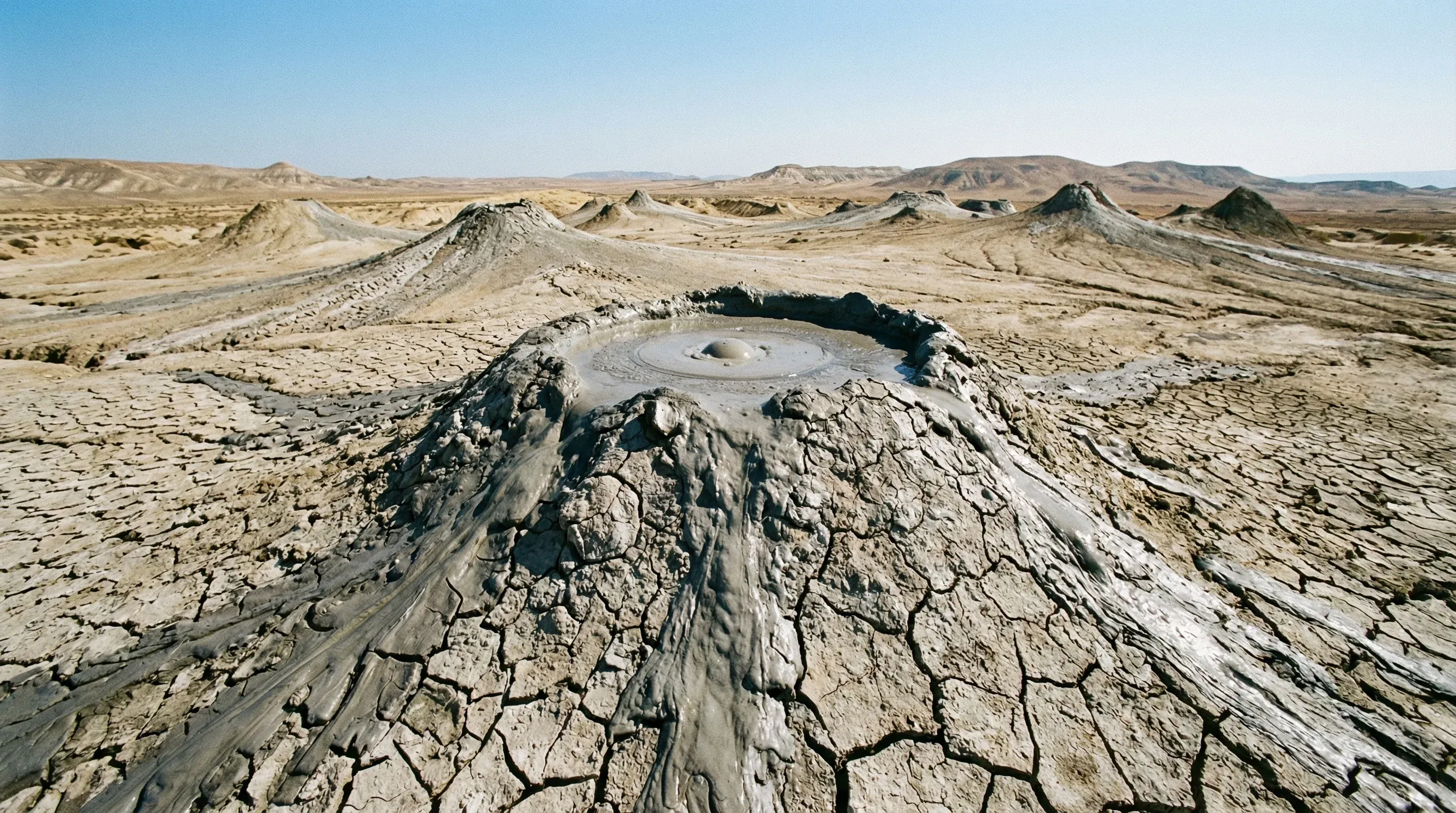
This region allows children to time-travel. First, to the Stone Age, where they can see drawings of dancing figures and hunting scenes etched into the rocks by hunter-gatherers millennia ago. Then, to a geological oddity: the mud volcanoes. Azerbaijan is home to nearly half of the world's mud volcanoes. These aren't the hot, lava-spewing mountains of cartoons; they are small, cold, grey cones that burp gas and ooze wet clay. It is messy, weird, and utterly fascinating for kids, who can actually touch the cold mud (and often do, much to their parents' dismay/delight).
Key Attractions
The Gobustan Rock Art Cultural Landscape is a UNESCO World Heritage site. Before hiking up to the rocks, stop at the Gobustan Petroglyph Museum at the base. It is interactive and modern, explaining the history with touch screens and displays that help kids understand what they are about to see. The outdoor path through the boulders is well-marked and stroller-accessible in parts, though a carrier is better for the upper terraces. Kids love trying to spot the outlines of bulls, boats, and warriors in the rock face.
A short (but bumpy) drive away are the famous Mud Volcanoes near Alat. There are no ticket booths or guards here—just open nature. The volcanoes bubble with cold grey mud that is said to have healing properties. It is a tactile experience; you can hear the gas escaping and watch bubbles form and burst. It is a fantastic, weird geography lesson come to life.
Practical Advice
Gobustan is best visited in spring or autumn. Summer (July–August) can be fiercely hot with no shade, and the rocks radiate heat. If visiting in summer, go very early in the morning. Wear closed-toe shoes; the terrain is rocky and dusty, and snakes are occasionally seen in the high grass (stick to the paths). There are no restaurants at the Mud Volcanoes, so bring plenty of water and snacks.
Food & Drink
Typical meal times: This is primarily a day-trip destination. Families usually eat lunch between 12:30 pm and 2:30 pm on the way back to Baku or at roadside fish restaurants near the coast.
Typical meal costs: Roadside restaurants are cheaper than Baku. A fresh fish lunch for a family costs roughly 40–60 AZN (approx. $24–35 USD / €22–33 EUR).
Dietary requirements: Options are limited near the park. It is advisable to pack a picnic. Roadside places mostly serve fried fish and bread.
Signature dishes:
- Kutum – The Caspian Sea fish, often served grilled or smoked whole at seaside shacks along the highway back to Baku.
- Tandir Bread – You will see rows of clay ovens along the highway; stop to buy hot, fresh bread straight from the fire.
Why this score?
The semi-desert landscape and bubbling mud volcanoes provide a unique natural experience, but most areas are easily accessible via guided vehicle tours from the capital. The terrain is interesting for children but not physically demanding or remote enough to be considered high adventure.
Why this score?
The region is largely a protected archaeological and natural reserve with no major medical facilities on-site. Visitors are entirely dependent on the proximity of Baku's hospitals, which are approximately 60 to 90 minutes away by road depending on traffic.
Why this score?
As a UNESCO World Heritage site featuring unique mud volcanoes and petroglyphs, it is a staple of the Azerbaijan tourist circuit for day-trippers from Baku. Despite high foot traffic, it is rarely a destination where tourists stay overnight, limiting its popularity as a standalone region.

Entry to the Gobustan Museum is very affordable at roughly 10 AZN (approx. $6 USD / €5.50 EUR) per adult; kids are often free or half-price. The main cost is transport; a private driver for a half-day trip charges 80–120 AZN (approx. $47–70 USD / €44–66 EUR). The mud volcanoes are free to visit.

Getting Here & Around
Getting Here
- Driving – Located about 60km southwest of Baku. A private driver or tour is highly recommended. The highway is good, but the final leg to the Mud Volcanoes is an off-road track.
- Tour Bus – Many operators run half-day tours from Baku to the Gobustan Rock Art Cultural Landscape. This is the stress-free option for families.
Getting Around
- Walking – Within the Gobustan Rock Art Cultural Landscape, you will be on foot. The paths are paved but steep in places.
- Lada Taxi – To reach the mud volcanoes from the main museum, local drivers with battered Lada cars wait to shuttle tourists over the rough tracks. Riding in these vintage cars is often an adventure in itself for the kids!
No airports in this region. See the country flight map for nearby connections.
Official Links

Packing List
The mud volcanoes are messy; if kids touch the mud (which they will), you need clean-up gear.
Volcanic mud dries like cement and is hard to scrub off nice sneakers.
There is virtually zero shade among the petroglyphs or volcanoes; sun is intense.
Helps children spot the petroglyphs high up on the rocks that are otherwise hard to see.
If you plan to dip into the mud volcanoes, the grey mud can be difficult to wash out of expensive fabrics.
Essential for visiting mosques and carpeted museums where frequent shoe removal is required.
Baku is famously called the 'City of Winds' and can get very gusty even on sunny days.
Women need to cover their heads when entering mosques like Bibu-Heybat; useful to have one handy.
To clean up mud after volcano visits and for general hygiene before eating street food like qutab.

Activities & Best Times

Hiking, wildlife, outdoor exploration, ecotourism
Features globally unique mud volcanoes and UNESCO-listed prehistoric rock art set within a striking, arid landscape. Peak visitation occurs in spring and autumn when temperatures are mild enough for exploring the exposed volcanic fields and hiking trails.

Urban tourism, museums, historical sites, architecture
Home to the world-class Gobustan Petroglyph Museum and ancient rock carvings representing thousands of years of human history. The site is best experienced during the temperate months as the lack of shade makes the archaeological landscape difficult to navigate in the peak summer heat.

Sport tourism, fitness activities, active recreation
Offers dedicated mountain biking loops and discovery trails through the volcanic landscapes and Jingirdagh Mountain. Spring and autumn provide the firm ground and cool air necessary for active exploration, whereas July is excessively hot for physical exertion.

Scenic drives, countryside tours, route-based travel
The drive from Baku provides a scenic transition from urban development to dramatic desert-like terrain and coastal Caspian views. Travel is most pleasant in spring and autumn to avoid the haze of summer and the biting winds of the winter season.




Public Holidays & Calendar Next 12 months
Public holidays, festivals, cultural celebrations, and seasonal natural phenomena coming up in Gobustan over the next 12 months.
Loading holidays and events...

Travel Advisory
All major agencies maintain a consensus that travellers should exercise a high degree of caution in Azerbaijan, primarily due to the ongoing threat of terrorism and the volatile security environment in regions bordering Armenia.
Safety Topics
Traveller Advice (4 groups)

Personnel working near conflict-affected zones should be extremely wary of unmarked landmine fields and avoid travel off paved roads in liberated territories.

Same-sex relationships are not illegal but remain socially taboo. Public displays of affection are generally discouraged and may lead to unwanted attention or discrimination.

Ensure you obtain an e-visa before travel and be aware that land borders are closed; all entry must be by air. Always carry your passport as local police conduct frequent identity checks.

While Baku is cosmopolitan, women should dress more conservatively when travelling to rural regions. Exercise caution when walking alone late at night in less-populated areas.
Agency Summaries
While general conditions are stable, there is a risk of terrorism and civil unrest. The UK government advises against all travel to areas near the Armenian border. Travellers are warned of strict local laws regarding photography and identification.
Increased vigilance is recommended due to terrorism risks. Significant danger exists in border regions with Armenia and former conflict zones due to unexploded ordnance and active military presence. Land borders remain closed for entry.
A high level of vigilance is required due to the threat of terrorist attacks and regional instability. Military activity and landmines make border areas highly dangerous. Foreigners should avoid large gatherings and protests.
New Zealand notes an unpredictable security situation and terrorism threat. Travel to the border with Armenia is extremely dangerous. Public demonstrations should be avoided as they can lead to police intervention.
Travellers should be very vigilant due to the threat of terrorism and volatile security near the Armenian border. All travel is advised against to Nagorno-Karabakh and within 5km of the border with Armenia because of potential armed conflict and landmines.
Ireland advises heightened caution across the country. There is a strong recommendation to avoid the south-western border regions and Nagorno-Karabakh due to the high risk of landmines and intermittent military clashes.
Information is provided for general guidance only and does not constitute travel, safety, medical, or legal advice. Conditions may change. Users are responsible for independently verifying information before travel.