
Sheki & Northwest
Silk Road secrets and stained-glass palaces 🏰🍬
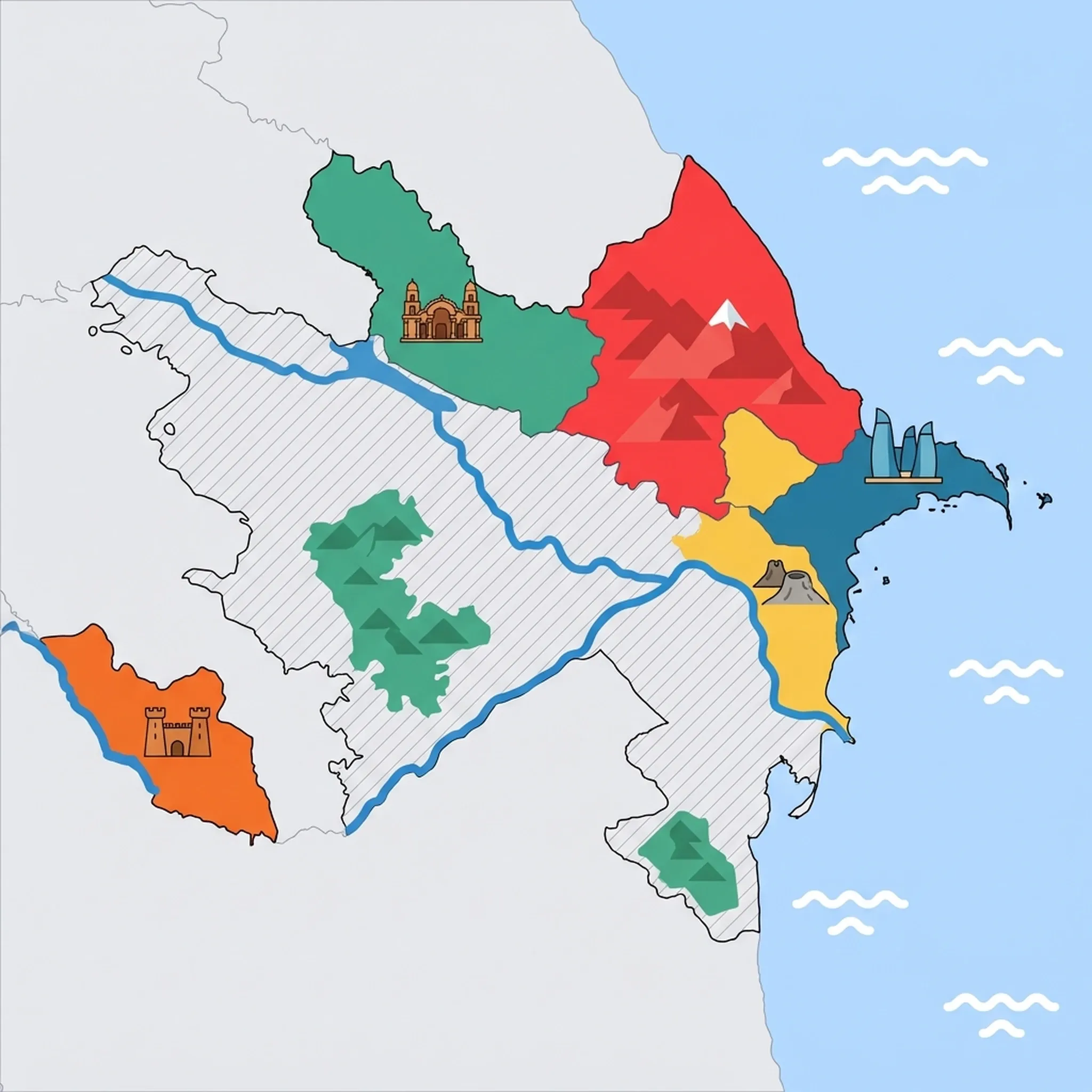
Click a region to explore
The Northwest of Azerbaijan is the country's greenest, most charming region. It stands in stark contrast to the semi-desert of Baku. Here, thick forests cover the mountains, and streams run through ancient stone villages. The pace of life is slower, making it perfect for families who want to relax and explore history without the rush. The region was a major stop on the Silk Road, and that legacy is visible everywhere—from the crafts sold in the markets to the giant caravanserais that once hosted merchants and their camels.
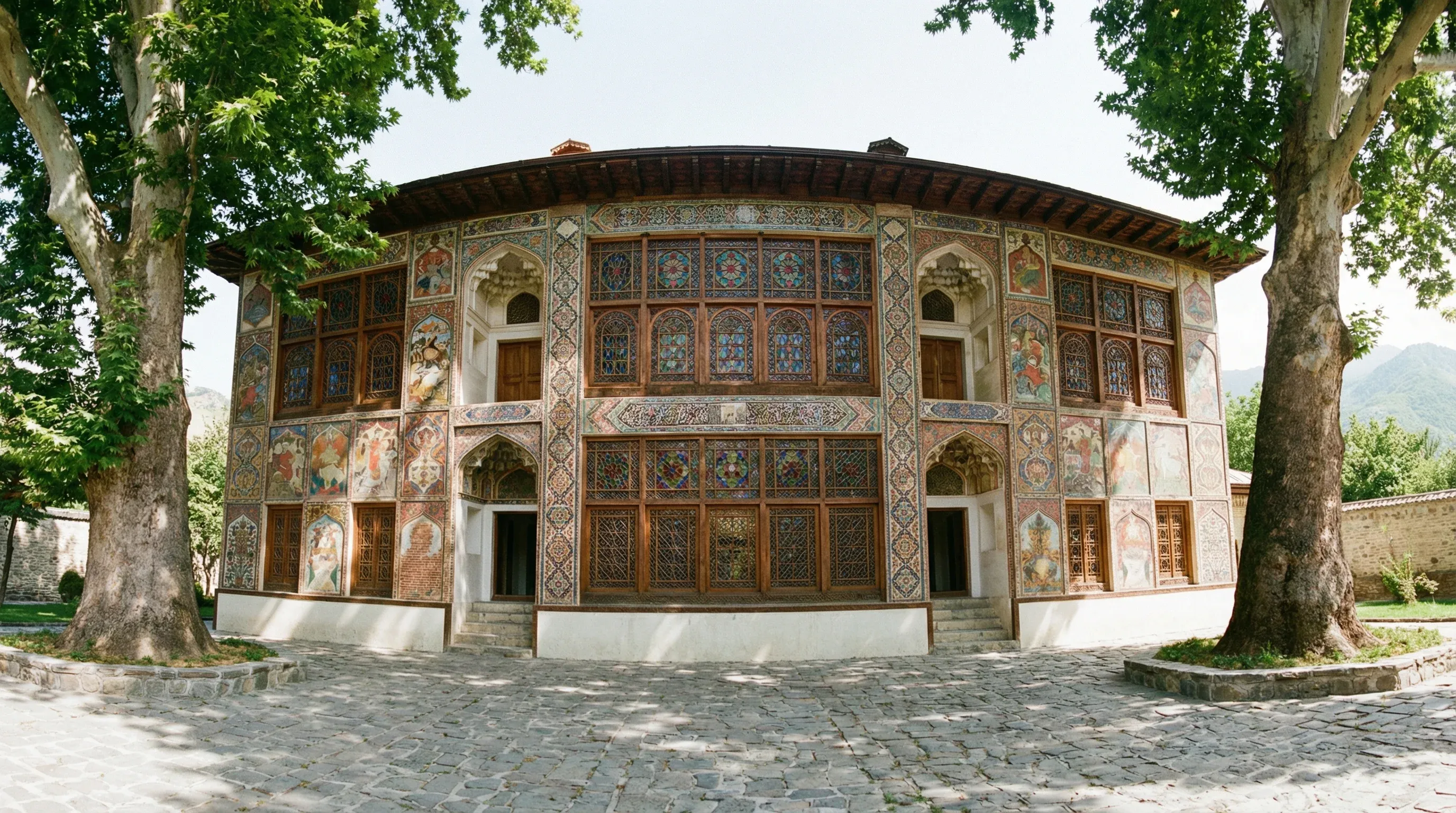
Sheki is the heart of the region. It is a UNESCO-listed city known for its humor, its sweets, and its architecture. The streets are lined with plane trees and traditional brick houses. For children, the town feels manageable and friendly. You can watch artisans making 'shebeke' (stained glass puzzles without glue or nails) or potters throwing clay. Beyond Sheki, the region includes Gabala (Qabala), which is the entertainment capital of the interior, featuring amusement parks and cable cars, offering a modern break from the history-heavy touring.
Key Attractions
The Sheki Khan's Palace is a miniature jewel box of a building. It is small enough that kids won't get bored, but the interior—covered floor-to-ceiling in murals and colored glass—is dazzling. The light filtering through the shebeke windows creates a rainbow effect on the floor that children love. (Note: Photography is usually forbidden inside, so encourage them to memorize the colors!).
Just down the hill is the Sheki Upper Caravanserai. This is a 18th-century traveler's inn that is still functioning as a hotel. Even if you don't stay here, you can walk into the massive stone courtyard. It echoes, it's cool in the summer, and it lets kids imagine the noise of camels and traders from centuries past. In Gabala, the Tufandag Mountain Resort offers cable car rides that operate year-round, giving easy access to high-altitude views without the hike.
Practical Advice
Sheki is hilly with cobblestones; leave the stroller at the hotel and use a carrier for babies. The best time to visit is late spring when the hills are emerald green, or October for the harvest. English is less spoken here than in Baku, so have Google Translate ready.
Food & Drink
Typical meal times: Lunch 1:00 pm to 2:30 pm. Dinner is often earlier here, around 7:00 pm to 8:30 pm.
Typical meal costs: Very affordable. A family feast costs 30–60 AZN (approx. $18–35 USD / €16–33 EUR).
Dietary requirements: This region is famous for its sweets and heavy stews. Vegetarian options include lobya (bean stew) and fresh salads.
Signature dishes:
- Sheki Piti – A rich lamb and chickpea stew cooked in individual clay pots. It is eaten in two stages: first, you pour the broth over bread, then you mash the remaining meat and chickpeas together. A fun, interactive meal for kids.
- Sheki Halva – An incredibly sweet, sticky dessert made of rice flour, nuts, and spice syrup. The pattern on top looks like a spiderweb. It is a sugar rush, so share small squares!
Why this score?
The area offers a blend of lush deciduous forests, mountain foothills, and developed leisure parks like Gabaland. It is ideal for active families seeking forest hikes and cable car rides, but it lacks the extreme ruggedness found in the higher peaks to the north.
Why this score?
Regional centers like Gabala and Sheki have functional public hospitals and some private clinics capable of treating minor injuries and common illnesses. For serious surgeries or specialized pediatric care, travelers are generally advised to return to the higher-standard facilities in Baku.
Why this score?
This region is the cultural heart of the country, famous for the Palace of Shaki Khans and its Silk Road heritage. While it is a popular secondary stop for international tours exploring the Caucasus, its visitor volume is still relatively modest on a global scale.

The Northwest provides excellent value. Boutique hotels in converted historic houses cost 60–100 AZN (approx. $35–59 USD / €33–55 EUR). Food is significantly cheaper than in the capital. Entry to the Khan's Palace is nominal (approx. 5–10 AZN).

Getting Here & Around
Getting Here
- Train – An overnight train runs from Baku to Sheki, but the station is far from the town center. A newer, faster train line runs to Gabala, which is a good entry point to the region.
- Bus/Minibus – Buses leave Baku's main terminal frequently. The ride takes about 4.5–5 hours. It is scenic but can be tiring for small children.
- Driving – Hiring a driver is the best option. It allows you to stop at the beautiful forests in Ismayilli along the way.
Getting Around
- Taxi – Within Sheki, taxis are cheap (1–3 AZN). You will need them to get up the steep hill to the Sheki Khan's Palace.
- Walking – Sheki's center is walkable, though steep. Walking down from the Palace to the Caravanserai is a pleasant downhill stroll past souvenir shops.
Nearby Airports (1 airport)
Ganja Airport
GNJGyandzha
View full flight map for Azerbaijan →

Packing List
Rural guesthouses often have roosters that crow very early; walls can be thin in historic buildings.
You will take shoes off frequently when entering carpet shops, mosques, or traditional homes.
Sheki Halva is delicious but incredibly sticky; you will need to clean kids' hands immediately.
The road to Sheki involves winding mountain passes which can upset stomachs.
If you plan to dip into the mud volcanoes, the grey mud can be difficult to wash out of expensive fabrics.
Baku is famously called the 'City of Winds' and can get very gusty even on sunny days.
Women need to cover their heads when entering mosques like Bibu-Heybat; useful to have one handy.
To clean up mud after volcano visits and for general hygiene before eating street food like qutab.

Activities & Best Times

Hiking, wildlife, outdoor exploration, ecotourism
Features significant segments of the Transcaucasian Trail and the Greater Caucasus foothills, offering pristine mountain wilderness and accessible trekking. Peak months align with the hiking season when high-altitude trails are clear of snow and lush with vegetation.

Urban tourism, museums, historical sites, architecture
Anchored by the UNESCO-listed Sheki Khan's Palace and historic caravanserai, the region offers unique Silk Road heritage and Caucasian Albanian architecture. Peak timing avoids the humid heat of mid-summer and the biting cold of winter in the foothills.

Spa retreats, wellness centers, peaceful getaways
Authentic thermal bath experiences in Ilisu and historic hamams in Sheki provide a genuine connection to regional wellness traditions. Spring and autumn offer the most pleasant ambient temperatures for enjoying these therapeutic sulfur springs.

Scenic drives, countryside tours, route-based travel
The North-West Route through the Caucasus foothills is highly scenic, featuring winding mountain passes and historic villages. Peak conditions offer the best visibility and safe driving, while winter months are avoided due to potential ice and fog on mountain roads.

Sport tourism, fitness activities, active recreation
Tufandag and Gabaland offer purpose-built infrastructure for shooting, adventure sports, and organized mountain activities. Peak months provide optimal conditions for outdoor sport, with mid-summer relegated to shoulder status due to high humidity levels.

Learning experiences, scientific sites, historical education
The Gabala Archaeological Center offers significant insights into the Caucasian Albanian era, serving as a specialized destination for history-focused families. Best visited during temperate months when archaeological sites surrounding the center are easily explored.

Amusement parks, family entertainment venues
Gabaland provides a major regional entertainment hub, though its scale and offerings are modest compared to international benchmarks. Visitation is strictly seasonal, peaking during school summer holidays when all outdoor rides are operational.

Attractions (7 total)



Public Holidays & Calendar Next 12 months
Public holidays, festivals, cultural celebrations, and seasonal natural phenomena coming up in Sheki & Northwest over the next 12 months.
Loading holidays and events...

Travel Advisory
All major agencies maintain a consensus that travellers should exercise a high degree of caution in Azerbaijan, primarily due to the ongoing threat of terrorism and the volatile security environment in regions bordering Armenia.
Safety Topics
Traveller Advice (4 groups)

Personnel working near conflict-affected zones should be extremely wary of unmarked landmine fields and avoid travel off paved roads in liberated territories.

Same-sex relationships are not illegal but remain socially taboo. Public displays of affection are generally discouraged and may lead to unwanted attention or discrimination.

Ensure you obtain an e-visa before travel and be aware that land borders are closed; all entry must be by air. Always carry your passport as local police conduct frequent identity checks.

While Baku is cosmopolitan, women should dress more conservatively when travelling to rural regions. Exercise caution when walking alone late at night in less-populated areas.
Agency Summaries
While general conditions are stable, there is a risk of terrorism and civil unrest. The UK government advises against all travel to areas near the Armenian border. Travellers are warned of strict local laws regarding photography and identification.
Increased vigilance is recommended due to terrorism risks. Significant danger exists in border regions with Armenia and former conflict zones due to unexploded ordnance and active military presence. Land borders remain closed for entry.
A high level of vigilance is required due to the threat of terrorist attacks and regional instability. Military activity and landmines make border areas highly dangerous. Foreigners should avoid large gatherings and protests.
New Zealand notes an unpredictable security situation and terrorism threat. Travel to the border with Armenia is extremely dangerous. Public demonstrations should be avoided as they can lead to police intervention.
Travellers should be very vigilant due to the threat of terrorism and volatile security near the Armenian border. All travel is advised against to Nagorno-Karabakh and within 5km of the border with Armenia because of potential armed conflict and landmines.
Ireland advises heightened caution across the country. There is a strong recommendation to avoid the south-western border regions and Nagorno-Karabakh due to the high risk of landmines and intermittent military clashes.
Information is provided for general guidance only and does not constitute travel, safety, medical, or legal advice. Conditions may change. Users are responsible for independently verifying information before travel.