

⚠️ SAFETY WARNING: Due to active regional military operations, potential terrorism, and volatile security conditions, government agencies (including CA, USA, UK, AU, IE, NZ) advise travelers to avoid all travel (or reconsider travel) to Bahrain. The security situation is unpredictable, with risks of civil unrest and airspace closures. Families are strongly urged to consult their own government's official travel advisory before considering a trip, as circumstances and risk assessments vary.
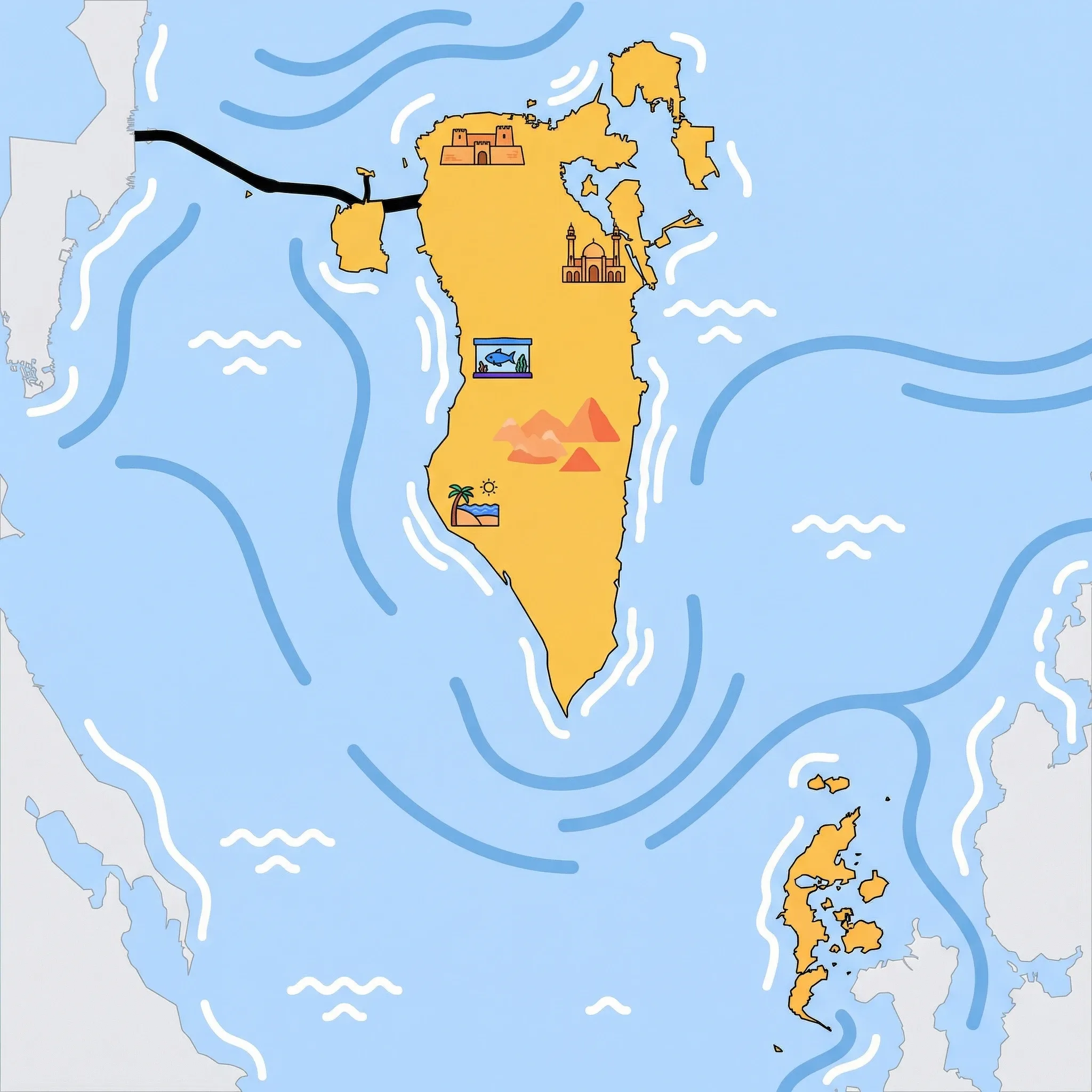
For those who do visit, Bahrain offers a relaxed and open introduction to the Gulf. Unlike its flashier neighbours, this archipelago of 33 islands retains a soulful, historic character that feels genuine and grounded. The name itself means "Two Seas," referring to the unique freshwater springs that bubble up within the salty sea, a phenomenon that has sustained civilization here for millennia. Families will find a destination that is manageable in size-you can drive across the main island in under an hour-yet packed with layers of history, from the ancient Dilmun civilization to the pearling era.
Culturally, Bahrain is known for its tolerance and hospitality. The atmosphere is generally more liberal than other parts of the region, making it an easier adjustment for Western families. Children will be fascinated by the contrasts: one moment you are walking through the winding alleyways of a traditional souq, and the next you are looking up at the futuristic wind turbines of the Bahrain World Trade Center. The cooler months bring a pleasant climate perfect for outdoor exploration, while the heat of summer drives life into the spectacular air-conditioned malls and indoor entertainment centres.
Key Attractions
A journey through Bahrain's history begins at the Bahrain Fort (Qal'at al-Bahrain). This UNESCO World Heritage site is a massive archaeological mound that reveals layers of human settlement dating back 4,000 years. It is an excellent spot for children to run around the open ruins and imagine ancient battles, and there is a brilliant site museum that contextualises the finds. Nearby, the Bahrain National Museum offers a cool, spacious environment to learn about the Dilmun era, with life-sized dioramas of traditional life that effectively engage younger visitors.
To understand the island's soul, walk a section of the Pearling Path on the island of Muharraq. This open-air museum weaves through old neighbourhoods, connecting historic merchant houses and pearling dhows. For a spiritual and architectural highlight, the Al Fateh Grand Mosque is stunning. It is one of the largest mosques in the world, capable of holding 7,000 worshippers, and welcomes non-Muslim visitors with guided tours that are respectful and educational for older children.
For a true desert adventure, drive south to see the Tree of Life. This 400-year-old mesquite tree stands alone in the barren desert with no known water source-a botanical mystery that sparks the imagination. It is a great excuse for a family 4x4 trip into the Sakhir Desert, where you might also spot camels and oil wells, symbols of Bahrain's past and present.
Practical Advice
The best time to visit is between November and March, when temperatures are mild (15–25°C) and perfect for outdoor activities. The summer months (May to September) are intensely hot and humid, often exceeding 40°C, restricting families to indoor activities. English is widely spoken, and the healthcare standards are high. Visas are required for most visitors but are easily obtained online or on arrival for many nationalities.
Food & Drink
Typical meal times: Lunch is the main meal of the day, typically eaten late between 2:00 pm and 3:30 pm. Dinner is usually served from 8:00 pm onwards, often extending late into the night, especially on weekends.
Typical meal costs: 4–8 BHD (approx. $10–21 USD / £8–17 GBP) for a casual local meal; 12–25 BHD (approx. $32–66 USD / £25–52 GBP) for a mid-range restaurant dinner.
Dietary requirements: Vegetarian and vegan options are widely available, thanks in part to the large Indian expat community. Halal food is the standard. Gluten-free options are increasing in modern cafés but less common in traditional eateries.
Family-friendly dining: Bahraini culture adores children. You will find highchairs in almost all restaurants, and staff are generally very patient and accommodating with young ones. "Kid's meals" are common in international chains, but local restaurants will happily provide extra plates for sharing.
Signature dishes:
- Machboos – The national dish consisting of spiced rice cooked with meat (usually chicken or lamb) and dried lime (loomi), similar to biryani but with distinct local spices.
- Muhammar – Sweet rice dish cooked with dates and molasses, traditionally served alongside fried fish to create a unique sweet-savoury contrast.
- Balaleet – A popular breakfast dish made of sweet vermicelli noodles flavoured with cardamom and rose water, topped with a savoury saffron omelette.
- Halwa Bahraini – A gelatinous, sweet confection made with cornstarch, saffron, nuts, and rose water-famous throughout the Gulf and a must-try treat.
- Khubz – Traditional Bahraini flatbread baked in a special oven (tannour), best eaten hot and fresh with cheese or dips.
Safety
Given the current Level 3 advisory, safety is the primary concern for any travel here. While street crime is generally low, the risk of civil unrest and protests is significant, particularly in villages outside the main capital area and near religious sites. Demonstrations can escalate quickly. There is also a heightened risk of regional conflict impacting airspace and infrastructure. If you are in the country, avoid all large gatherings, monitor local media, and keep your embassy's contact details at hand. The roads can be hazardous due to aggressive driving; always wear seatbelts and use child seats.

A family of four can expect to spend around 120–200 BHD (approx. $320–530 USD / £250–415 GBP) per day. High-end hotels and private transport drive up costs, though local dining is reasonably priced. A mid-range dinner costs roughly 15–25 BHD (approx. $40–66 USD / £30–52 GBP) per person. Alcohol, where available, is heavily taxed and expensive.
Age Suitability





Did you know? Bahrain welcomes approximately 6.6 million international visitors per year. Most visitors come from Middle East.
Why this score?
The country is a highly developed archipelago with most tourist activities centered around urban areas, shopping malls, and man-made resorts. While the Sakhir Desert and landmarks like the Tree of Life offer a taste of the outdoors, they are easily accessible by paved roads and lack the ruggedness of true wilderness. True adventure is largely limited to controlled environments like indoor skydiving or offshore boat trips.
Why this score?
Bahrain offers excellent medical services with a mix of high-quality public and private hospitals that frequently cater to expatriates and tourists. English is the standard language of communication in the medical field, and facilities are equipped with the latest technology. Its compact size ensures that world-class emergency care is always within a 20-30 minute drive from any point on the main island.
Why this score?
Bahrain receives over 6 million visitors annually, though a large percentage are regional travelers from neighboring Saudi Arabia using the King Fahd Causeway. It is a recognized destination for its blend of UNESCO World Heritage sites like the Pearling Path and modern attractions such as the Bahrain International Circuit. While it lacks the global scale of Dubai, it maintains a consistent and significant international presence in the Persian Gulf tourism market.
Bahrain is generally more expensive than parts of Asia but cheaper than Dubai. The currency is very strong. A budget family hotel room costs BHD 25–40 (approx. $66–106 USD / €62–100 EUR) per night, while luxury resorts can easily exceed BHD 100 (approx. $265 USD / €250 EUR). Supermarket prices are reasonable, but alcohol (in hotels) is heavily taxed and expensive.

Getting There & Around
Getting There
- By Air – Bahrain International Airport (BAH) is the main hub, located on the island of Muharraq. It is well-connected to major cities in Europe, Asia, and the Middle East.
- By Land – The King Fahd Causeway connects Bahrain to Saudi Arabia. It is a major entry point for regional travellers but can have long border wait times during weekends and holidays.
- Entry Requirements – Many nationalities (including US, UK, and EU citizens) can obtain a visa on arrival or an eVisa. Check your government website for the latest visa requirements, or use the IATA Travel Centre entry-requirements checker.
Getting Around
- Car Hire – The most convenient way for families to explore. Roads are generally good, but driving can be aggressive. An International Driving Permit is often required alongside your licence.
- Taxis – Widely available and safe. Official taxis are red and white or orange and white. Meters are mandatory; ensure the driver uses one. Apps like Uber and Careem are reliable alternatives for fixed pricing.
- Buses – The red public buses are modern, air-conditioned, and very cheap, connecting major sites like the Bahrain National Museum and souqs, though routes may be slower than driving.
Official Links

Packing List
Essential for women to cover heads at mosques and shoulders in conservative areas.
Dehydration is a risk even in winter; insulated bottles keep water cool in the heat.
Bahrain uses British-style three-pin plugs (Type G), unlike most of Europe or the US.
You will frequently remove shoes when entering mosques or traditional homes.
The combination of desert aridity and powerful air conditioning dries skin very quickly.

Activities & Best Times

City & Cultural
Very GoodUrban tourism, museums, historical sites, architecture
Boasts significant heritage sites including the UNESCO-listed Bahrain Fort and world-class museums that showcase the ancient Dilmun civilization. The mild winter months are ideal for walking through historic Muharraq, while the humid summer months limit activity to indoor venues.

Sports & Active
Very GoodSport tourism, fitness activities, active recreation
Home to world-class facilities including the Bahrain International Karting Circuit and dedicated cycling tracks at Zallaq. Activity peaks during the winter months, coinciding with major international motorsport events and comfortable temperatures for outdoor endurance sports.

Adventure & Nature
GoodHiking, wildlife, outdoor exploration, ecotourism
Features unique desert landmarks like the Tree of Life and the Al Areen Wildlife Reserve, offering authentic Gulf ecosystem encounters. These sites are best visited during the cool winter window, as the extreme desert heat from May to September makes outdoor exploration unsafe.

Beach & Sea
GoodBeach resorts, marine activities: diving, snorkelling, kite surfing, wind surfing, sailing
Bahrain offers quality private island resorts and beach clubs such as Al Dar and Marassi, though it lacks the biodiversity of major reef destinations. Optimal conditions occur in spring and autumn when water and air temperatures are balanced; summer is excessively hot for beach lounging.
Theme Park & Entertainment
GoodAmusement parks, family entertainment venues
The Lost Paradise of Dilmun is a major regional water park that appeals to international families. Peak visitation aligns with warm transitional months; winter can be slightly too cool for water activities, while summer heat is too intense for outdoor entertainment.

Educational & Exploratory
MarginalLearning experiences, scientific sites, historical education
Facilities like the Bahrain Aquarium and the Oil Museum offer specialized learning, though they function primarily as secondary attractions. While indoor and accessible year-round, they are best integrated into a trip during the primary winter tourism season.

Road Trips & Scenic
MarginalScenic drives, countryside tours, route-based travel
The Sakhir Desert Loop and Zallaq coastal roads provide pleasant, short-duration scenic drives through arid landscapes. These routes are most enjoyable in winter when clear skies and cooler temperatures allow for comfortable stops at desert overlooks.

Attractions (11 total)



Public Holidays & Calendar Next 12 months
Public holidays, festivals, cultural celebrations, and seasonal natural phenomena coming up in Bahrain over the next 12 months.
Loading holidays and events...

Travel Advisory
The majority of international agencies have issued high-level warnings against visiting Bahrain. This consensus is driven by an active regional military conflict, significant threats of retaliatory strikes, and widespread disruption to international flights and transportation infrastructure.
Safety Topics
Traveller Advice (3 groups)

Travellers should dress modestly in public and be mindful of local cultural expectations, especially during times of heightened tension.

Individuals should exercise extreme discretion as local laws and social norms remain highly conservative regarding sexual orientation and gender identity.

Visitors should maintain emergency supplies, monitor international news for escalation, and be prepared to shelter in place if missile or drone alerts are issued.
Agency Summaries
New Zealand advises against all travel to Bahrain due to the deteriorating security environment in the Middle East and the immediate danger posed by armed conflict and military strikes.
The Irish government recommends avoiding all non-essential travel to Bahrain in light of regional tensions and safety concerns. Citizens are instructed to stay informed through local media and follow instructions from Bahraini authorities.
U.S. authorities recommend reconsidering travel to Bahrain because of terrorism risks and regional armed conflict. Non-essential government personnel and their families were ordered to depart the country on March 2 following a spike in regional hostilities and threats of aerial attacks.
The Canadian government advises against all travel to Bahrain due to active regional military operations and the high risk of retaliatory strikes. Individuals currently in the country should remain in secure locations or seek departure via the King Fahd Causeway if conditions allow.
The UK advises against all non-essential visits to Bahrain due to the worsening security climate and potential for military escalation in the Gulf. British nationals are urged to register their presence and prepare for possible shelter-in-place directives.
Australia has raised its advisory to the highest level, warning citizens not to travel to Bahrain because of the extremely volatile security situation and active military strikes in the region. There is a high risk of air travel disruption and threats to critical infrastructure.
Information is provided for general guidance only and does not constitute travel, safety, medical, or legal advice. Conditions may change. Users are responsible for independently verifying information before travel.