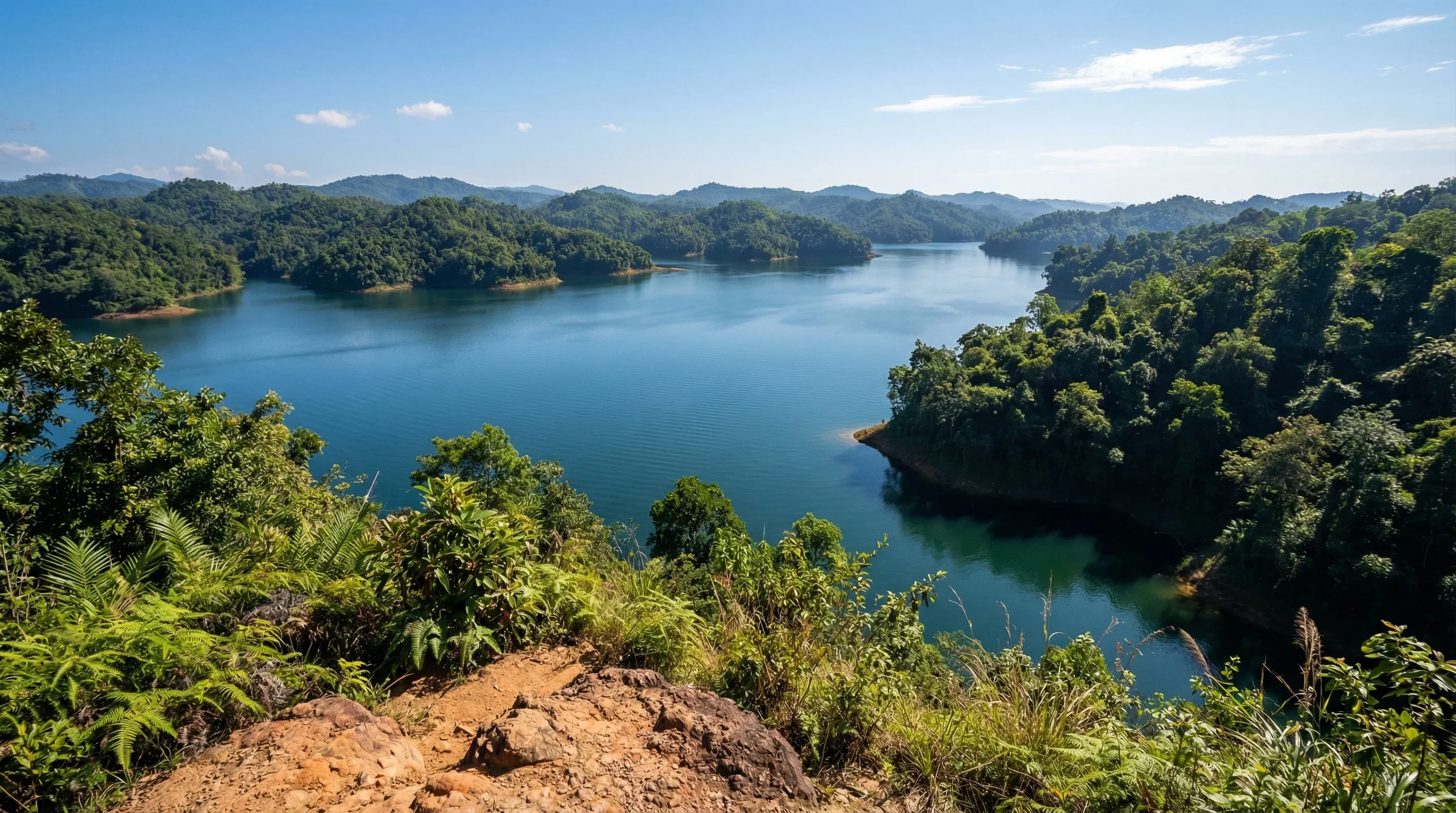

Chittagong Hill Tracts
Misty hills and tribal heritage above the clouds ☁️⛰️
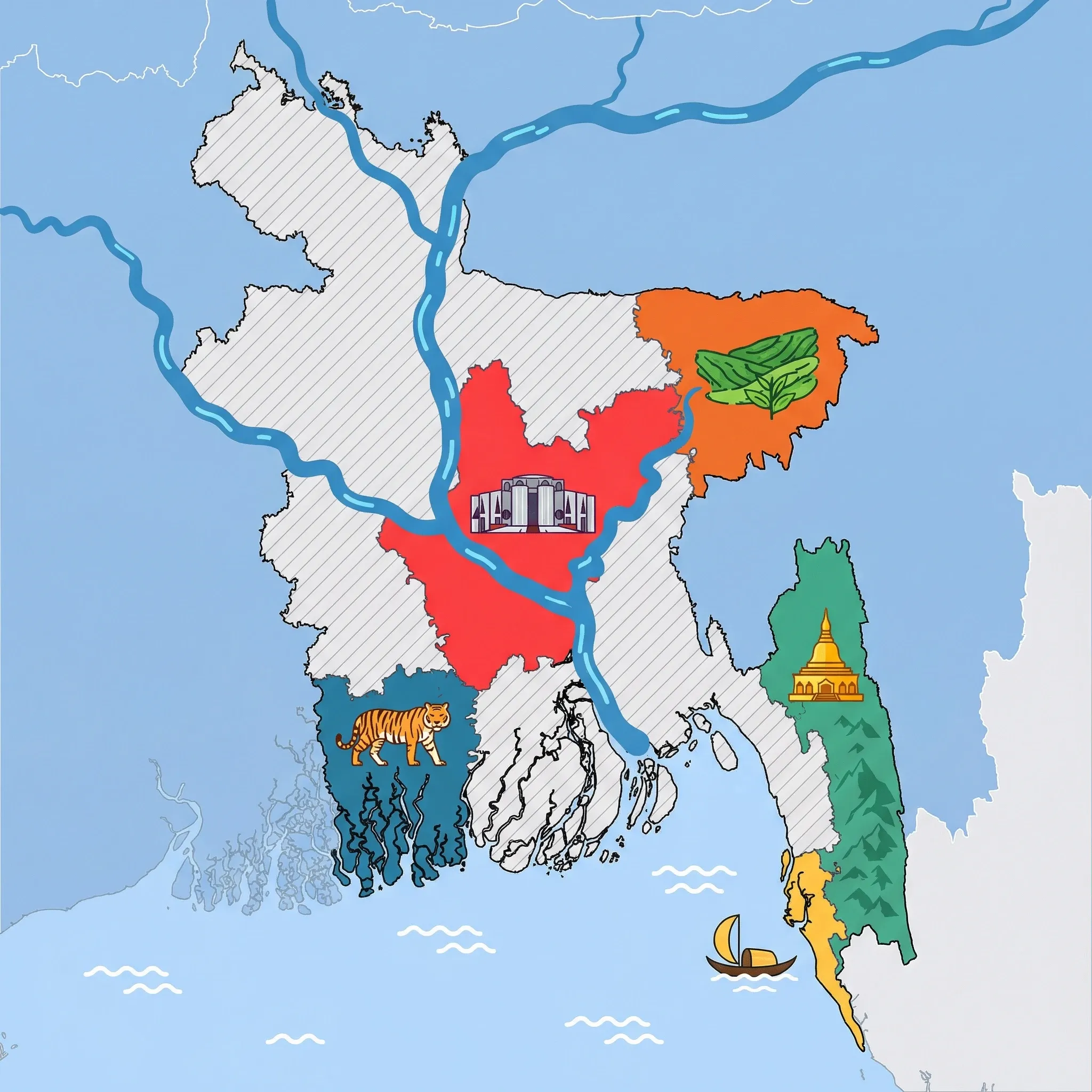
Click a region to explore
⚠️ SAFETY WARNING: Due to long-standing ethnic tensions, military presence, and a volatile security environment, government agencies (including CA, USA, UK, and NZ) advise travelers to reconsider your need to travel or avoid non-essential travel to the Chittagong Hill Tracts. Foreign nationals require special government permits to enter the region. Families are strongly urged to consult their own government's official travel advisory before considering a trip, as circumstances and risk assessments vary significantly.
Overview
The Chittagong Hill Tracts (CHT) represent the most geographically distinct region in Bangladesh. Unlike the flat alluvial plains that characterize the rest of the country, this area consists of steep, jungle-covered hills, rushing waterfalls, and winding rivers. It is home to diverse indigenous groups (including the Chakma, Marma, and Tripura people), each with unique languages, dress, and bamboo-based architecture. For families who secure the necessary permits, the region offers a breathtaking escape into nature, far removed from the urban chaos of the capital.
The pace of life here is slow and dictated by the terrain. Children will be fascinated by the bamboo boat rides and the sight of houses built on stilts. The air is cooler and fresher than in the cities, making it a popular retreat during the hotter months. While infrastructure is developing, the journey involves winding mountain roads that require patience. The cultural immersion—seeing traditional weaving or tasting food cooked in bamboo—provides an educational experience that contrasts sharply with the rest of Bengal.
Key Attractions
The region is divided into three main districts, each with specific highlights. In Rangamati, the centerpiece is the massive man-made Kaptai Lake. Families can hire private boats to cruise the calm waters, visiting island restaurants and the Rajban Bihar, a serene Buddhist monastery that welcomes respectful visitors. The iconic Kaptai National Park offers green spaces for walking and spotting local wildlife.
Further south in Bandarban, the landscape becomes more rugged. The Buddha Dhatu Jadi (Golden Temple) stands atop a high hill, offering panoramic views and a chance to introduce children to Buddhist architecture (note: strict dress codes apply). For a true adventure, the drive along the Thanchi-Alikadam Road (Dim Pahar) is the highest motorable road in the country, winding through clouds and deep valleys—though it is best suited for older children who don't suffer from car sickness. The crown jewel for scenery is the Sajek Valley, often called the 'Queen of Hills', where you can watch clouds drift below your feet in the early morning.
Practical Advice
Permits are mandatory for foreign tourists and usually take 3–7 days to process via the Deputy Commissioner's office; it is highly recommended to use a registered local tour operator to handle this paperwork. The best time to visit is winter (November to February) when skies are clear and temperatures are cool. Roads are winding; allow double the travel time you expect.
Food & Drink
Typical meal times: Lunch is typically served from 1:00 pm to 2:30 pm, and dinner from 8:00 pm to 10:00 pm.
Typical meal costs: A meal for a family of four at a tribal restaurant costs around BDT 1,200–2,000 (approx. $10–17 USD / €9–16 EUR).
Dietary requirements: Indigenous cuisine uses less oil than Bengali food but features fermented fish paste (Sidol) which has a strong smell. Vegetarian options are available (bamboo shoots, wild potatoes) but require clear communication.
Signature dishes:
- Bamboo Chicken – Chicken marinated in indigenous spices and slow-cooked inside a fresh bamboo hollow over an open fire.
- Mundis – A spicy rice noodle soup traditionally eaten by the Marma people, often served as a snack.
- Binni Rice – A sticky, sweet local rice variety often served with bhortas (mashed vegetables) or curries.
Why this score?
Featuring Keokradong Peak and the rugged Sangu River, this is the most physically demanding region of Bangladesh. The terrain consists of dense hills and winding mountain roads, offering genuine off-the-beaten-path experiences for families seeking trekking and cultural immersion.
Why this score?
Medical services in the Hill Tracts are extremely limited, with small government clinics often located far from the main tourist spots like Sajek Valley. Tourists must often rely on basic local dispensaries or prepare for long-distance transport to Chittagong for serious care.
Why this score?
This region sees very few international visitors due to its remote location and historical administrative permit requirements for foreigners. It remains a niche destination for intrepid travelers and researchers interested in indigenous cultures rather than mass tourism.

Accommodation in the Hill Tracts ranges from basic guesthouses to eco-resorts. A decent family cottage in a resort costs BDT 4,000–8,000 (approx. $35–70 USD / €32–64 EUR) per night. Transport costs are higher here due to terrain; hiring a 'Chander Gari' jeep for a day trip costs BDT 3,000–5,000 (approx. $26–43 USD / €24–40 EUR). Food is generally inexpensive.

Getting Here & Around
Getting Here
- Bus – Direct overnight or day buses run from Dhaka to Rangamati, Bandarban, and Khagrachhari. The journey takes 8–10 hours.
- Train – Trains run from Dhaka to Chittagong (Chattogram) Railway Station. From there, you must hire a private car or take a local bus to the hill districts (approx. 2–3 hours).
- Private Car – The most comfortable option for families. You can hire a driver in Dhaka or Chittagong. Note that foreign nationals may be required to register at checkpoints upon entering the hill districts.
Getting Around
- Chander Gari (Moon Car) – These open-air, vintage jeeps are the primary transport for reaching Sajek Valley and remote waterfalls. Kids love the bumpy, adventurous ride, but hold on tight!
- CNG Auto-Rickshaw – Green three-wheelers are available in town centers for short hops between hotels and markets.
- Boat – Essential for exploring Kaptai Lake. Colorful wooden boats with roof covers can be hired for half-day or full-day excursions.
Nearby Airports (1 airport)
Shah Amanat International
CGPChittagong
View full flight map for Bangladesh →

Packing List
Required at multiple military checkpoints when entering hill districts.
Roads are extremely winding and hilly; essential for kids in jeeps.
The hill tracts are a known malaria zone; consult a doctor before travel.
Electricity outages are frequent, especially in remote areas like Sajek.
Hotels in remote areas may not provide them, and dengue/malaria protection is vital.
You will frequently remove shoes when entering homes, mosques, and some shops.
Running water and soap are not always available in public restrooms or roadside stops.
Essential for quick recovery from dehydration due to heat or stomach upsets.
Dhaka is one of the loudest cities in the world; essential for sleeping and sensory relief.

Activities & Best Times

Hiking, wildlife, outdoor exploration, ecotourism
Offers unique jungle trekking and indigenous village experiences, including major peaks like Keokradong. Peak season provides dry trails and clear views, while the heavy monsoon (May-Sept) creates significant landslide risks and leech activity.

Urban tourism, museums, historical sites, architecture
Rich in authentic tribal heritage and significant Buddhist landmarks like the Buddha Dhatu Jadi. Best visited in the cooler dry months to comfortably explore temples and cultural institutes; the monsoon months are excessively humid and wet for urban exploration.

Scenic drives, countryside tours, route-based travel
Features dramatic mountain roads like Thanchi-Alikadam and the scenic drive to Sajek Valley. Winter offers stable road conditions and high visibility, whereas the monsoon season makes these steep, winding roads hazardous due to heavy rainfall and potential washouts.

Sport tourism, fitness activities, active recreation
Evidence cites 'strong potential' and mentions Rangamati Parjatan Motel (a hotel). No established cycling routes, climbing facilities, or organized sports tourism infrastructure. Trekking exists but is limited.

Amusement parks, family entertainment venues
Contains regional-level facilities like Aranyak Water Park that serve local families. These outdoor venues are most accessible during the dry winter months but do not meet international standards for destination-level entertainment.




Public Holidays & Calendar Next 12 months
Public holidays, festivals, cultural celebrations, and seasonal natural phenomena coming up in Chittagong Hill Tracts over the next 12 months.
Loading holidays and events...

Travel Advisory
The security situation in Bangladesh is categorized by significant volatility following a period of civil unrest and political transition. Major international agencies are evenly split between recommending extreme caution (L1) and advising travelers to reconsider the necessity of their visit (L2). The higher assessment (L2) reflects persistent concerns regarding terrorism, kidnapping in regional areas, and the unpredictability of violent protests.
Safety Topics
Traveller Advice (5 groups)

Be aware that verbal and physical harassment is commonly reported. It is advised to dress modestly, avoid travelling alone at night, and stay away from isolated or poorly lit areas.

Companies are advised to provide private security escorts for personnel traveling outside of major hotels or business districts in Dhaka. Ensure insurance policies specifically cover civil unrest and terrorism.

Stay away from all political gatherings, demonstrations, and large crowds as they can escalate into violence without warning. Closely monitor local news and follow the guidance of security forces.

There is a heightened risk of kidnapping and politically motivated violence in the Chittagong Hill Tracts. Dedicated security protocols and local government notification are essential for travel to these regions.

Same-sex relationships are illegal and can lead to criminal prosecution. Societal attitudes are generally conservative, and public displays of affection may attract negative attention or legal risk.
Agency Summaries
Due to persistent civil unrest, the threat of terrorism, and the potential for large gatherings to become violent, travelers should reconsider the necessity of their trip to the country.
While the 2026 national election period has concluded, the potential for political rallies and sudden unrest remains. Irish citizens are advised to exercise heightened alertness and avoid all demonstrations.
The government recommends avoiding non-essential travel to specific districts like the Chittagong Hill Tracts. Elsewhere, visitors should be alert to shifting security conditions and the likelihood of terrorist activity.
Significant security and safety concerns, including the threat of terrorism and civil disorder, necessitate a recommendation to avoid all but essential travel to the country.
Travelers are urged to rethink their plans to visit Bangladesh because of significant risks related to crime, terrorism, and civil instability. Specific regions carry a higher danger level of 4 (Do Not Travel).
Visitors should maintain a high level of vigilance due to a volatile security environment, frequent political demonstrations, and the risk of civil unrest. A regional advisory is in effect for the Chittagong Hill Tracts.
Information is provided for general guidance only and does not constitute travel, safety, medical, or legal advice. Conditions may change. Users are responsible for independently verifying information before travel.