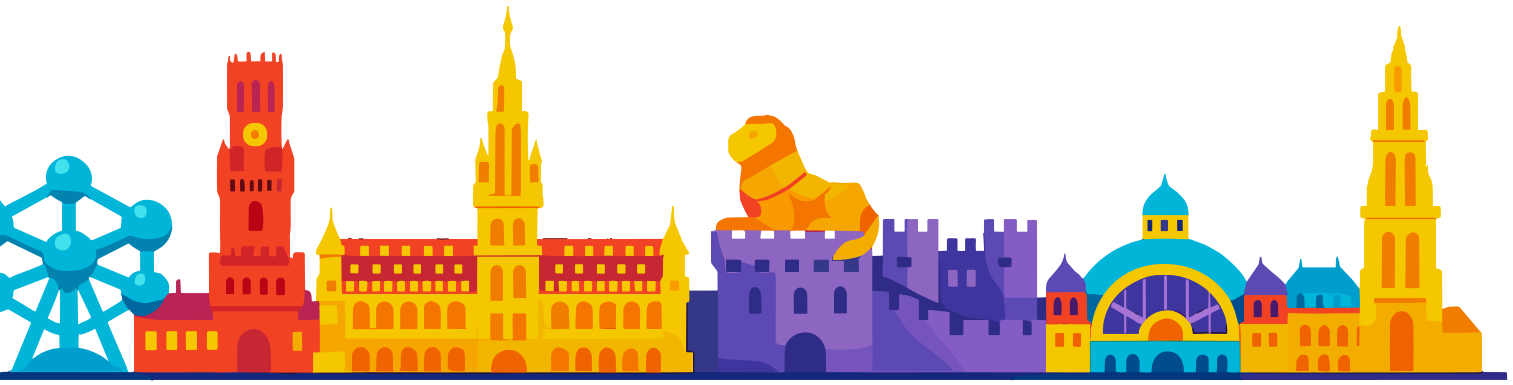

Belgium packs a surprising amount of variety into a small package, making it an ideal starter destination for families exploring Europe. Geographically, the country is divided into the flat, Dutch-speaking north (Flanders) and the rolling, French-speaking south (Wallonia), with the bilingual capital, Brussels, sitting centrally. For families, this means you can experience two distinct cultures within a short train ride. The vibe is relaxed and welcoming, with pedestrian-friendly city centers that feel like open-air museums.
Culturally, Belgium is serious about having fun. It is the birthplace of The Smurfs and Tintin, and this comic-strip heritage is visible everywhere, from colorful street murals to dedicated museums. The country is also famous for its ' Burgundian lifestyle'-a love of good food and drink that extends to family dining. With excellent rail connections, safe cities, and a wealth of interactive attractions-from medieval castles to space centers-Belgium offers a stress-free mix of education and indulgence.
Key Attractions
Start your journey in the capital at the breathtaking Grand-Place, often cited as one of the most beautiful squares in the world. Just a few blocks away, children will giggle at the Manneken Pis, the tiny but iconic statue of a peeing boy. For a full day of excitement, head to Mini-Europe to see the continent in miniature, or visit the Museum of Natural Sciences, home to one of the world's largest halls of dinosaur skeletons-a guaranteed hit with kids.
In Flanders, the Gravensteen (Castle of the Counts) in Ghent is a must; it’s a brooding medieval fortress with a torture museum that older kids find fascinatingly spooky. For a fairytale experience, take a boat tour through the Historic Centre of Bruges, where swans glide past brick gingerbread houses. If you want to let off steam, the Bokrijk Open-Air Museum offers a massive outdoor playground and interactive history workshops where kids can bake bread or try pottery.
Heading south to Wallonia, adventure awaits at the Euro Space Center, where families can simulate moonwalks and Mars missions. Nature lovers should explore the Grottes de Remouchamps, a cave system featuring the world's longest underground boat ride. For spectacular views, take the cable car up to the Citadel of Dinant, perched high above the Meuse River.
Practical Advice
Belgium is a year-round destination, though the weather is notoriously unpredictable. Rain is frequent, so pack layers and waterproofs even in summer. English is widely spoken in Flanders and Brussels, making travel easy, though a few words of French will be helpful in rural Wallonia. Public toilets almost always require payment (coins), so keep small change handy. The country is generally very safe, but be vigilant about pickpockets in major train stations like Brussels Midi.
Food & Drink
Typical meal times: Lunch is typically served from 12:00 pm to 2:00 pm. Dinner usually runs from 6:00 pm to 9:00 pm. Kitchens often close strictly between these times, though brasseries may serve snacks.
Typical meal costs: Main dishes in sit-down restaurants cost €18–25 (approx. $19–27 USD / £15–21 GBP). A quick meal of fries or a waffle from a street vendor costs €4–8 (approx. $4.50–8.50 USD / £3.50–7 GBP).
Dietary requirements: Vegetarian options are standard everywhere. Vegan and gluten-free options are common in cities like Ghent and Brussels but may be limited to salads or fries (ask about cooking fat) in traditional rural brasseries.
Family-friendly dining: Belgians welcome children in restaurants. Kindermenu (children's menus) are common, offering smaller portions of classics like meatballs or chicken with applesauce. Highchairs are generally available.
Signature dishes:
- Moules-frites – A steaming pot of fresh mussels served with a side of crispy golden fries.
- Gaufre de Liège / Luikse Wafel – The superior Belgian waffle: oval, doughy, and containing chunks of pearl sugar that caramelize when baked.
- Carbonade flamande / Stoofvlees – A tender beef stew slow-cooked in Belgian brown beer, usually served with fries.
- Croquettes aux crevettes / Garnaalkroketten – Crispy breaded rolls filled with a creamy ragout of North Sea grey shrimps.

Belgium is a Western European destination with prices comparable to France or Germany. A family of four should budget €180–250 (approx. $195–270 USD / £155–215 GBP) per day for mid-range accommodation, meals, and activities. Dining out is the biggest expense, but you can save significantly by enjoying street food like frites and waffles or utilizing the free rail travel for young children.
Age Suitability





Did you know? Belgium welcomes approximately 9.6 million international visitors per year. Most visitors come from Europe.
Explore Regions
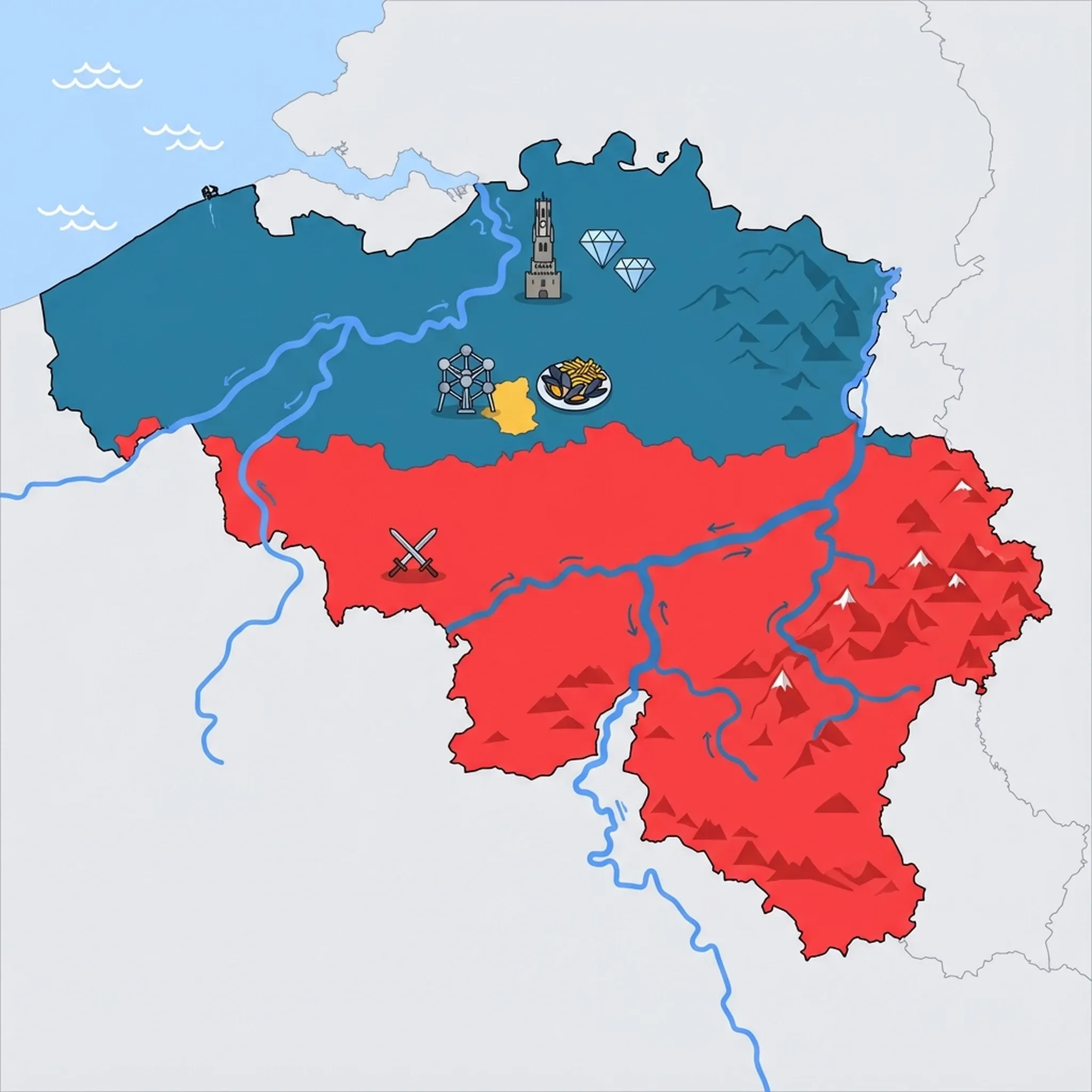
Click on a region marker to explore details. Use the dropdown to color regions by activity suitability.

Getting There & Around
Getting There
- By Air – Brussels Airport (BRU) is the main hub, with direct trains to the city center in 20 minutes. Brussels South Charleroi (CRL) serves budget airlines but is an hour from the capital.
- By Train – High-speed Eurostar trains connect Brussels to London (2 hours), Paris (1.5 hours), and Amsterdam (2 hours). It is the most convenient way to arrive from neighboring countries.
- Entry Requirements – Belgium is in the Schengen Area. US, UK, Canadian, and Australian citizens do not need a visa for short stays. Check your government website for the latest visa requirements, or use the IATA Travel Centre entry-requirements checker.
Getting Around
- Trains – The SNCB/NMBS network is dense and efficient. Best of all, up to 4 children under 12 travel free with each fare-paying adult (ticket-free, just bring ID).
- Trams & Metro – Brussels has a comprehensive metro system. The Coastal Tram (Kusttram) in Flanders is the longest in the world, connecting all seaside towns from De Panne to Knokke.
- Car Hire – Useful only for exploring the rolling hills of the Ardennes in Wallonia. In historic cities like Bruges or Ghent, cars are a hindrance due to pedestrian zones and expensive parking.

Packing List
Public toilets ('Madame Pipi') and station turnstiles almost always charge a fee and often do not accept cards.
Supermarkets and shops in Belgium generally do not provide free bags; you must buy them or bring your own.
Weather changes rapidly; if you plan on cycling or walking in Flanders, wet legs are guaranteed without them.
Belgian hotels typically provide towels but rarely provide face cloths/flannels, which can be tricky for bathing small kids.
If you plan to buy Belgian chocolate in summer, it will melt instantly. A small cooler bag keeps your souvenirs safe.

Activities & Best Times

City & Cultural
ExcellentUrban tourism, museums, historical sites, architecture
As the capital of Europe, Brussels offers world-class museums like the Magritte and Oldmasters alongside the UNESCO-listed Grand-Place. Peak travel aligns with pleasant summer weather and the famous Winter Wonders festive markets in December.
Flanders contains world-class heritage cities like Bruges and Ghent alongside the global fashion and diamond hub of Antwerp. Peak season spans from the spring through autumn, with a significant secondary peak in December for traditional Christmas markets.
The region offers unique historic citadels and medieval castles along the Meuse Valley, such as Bouillon and Dinant. These sites are best visited in late spring or early autumn to avoid summer crowds while enjoying the atmospheric urban heritage in comfortable weather.

Adventure & Nature
Very GoodHiking, wildlife, outdoor exploration, ecotourism
Features the Ardennes' dense forests and world-class limestone cave systems like the Grottes de Han. Peak months provide optimal conditions for wildlife spotting and immersive trekking, while winter months are typically too damp for sophisticated outdoor exploration.
The UNESCO-listed Sonian Forest and the 60km Promenade Verte provide exceptional wilderness immersion within an urban context. These natural sites are best experienced from late spring to early autumn before the heavy winter rains make trails muddy.
Offers high-quality curated nature experiences like the Lieteberg Barefoot Path and Zwin Nature Park, though it lacks true wilderness. The best conditions for exploring these managed landscapes occur during the warmer, drier months of late spring and summer.

Sports & Active
Very GoodSport tourism, fitness activities, active recreation
The global heartland of cycling culture with iconic routes like the Tour of Flanders Blue Loop and dedicated infrastructure. Peak timing aligns with the Spring Classics in April and the optimal summer riding weather.
Features the Vennbahn, a premier international rail-trail cycling route, and extensive adventure infrastructure in Durbuy. Cycling and river-based activities are optimal in the drier, milder windows of late spring and early autumn.
The region features sophisticated cycling infrastructure, including sections of the EuroVelo 5, and specialized facilities like the Nemo33 diving pool. Outdoor active pursuits are most reliable during the drier summer and transition months.

Theme Park & Entertainment
Very GoodAmusement parks, family entertainment venues
Home to major European attractions like Plopsaland De Panne and Bobbejaanland, offering high-standard family entertainment. Peak visitation occurs during school holidays and summer when all outdoor aquatic and theme facilities are fully operational.
Home to Walibi Belgium and significant aquatic centers like Aqualibi that meet international family entertainment standards. Seasonal operations mean these venues are primary summer draws, with most outdoor parks closing during the cold winter period.
Mini-Europe and the LEGO Discovery Centre offer high-quality, internationally recognized family entertainment. Summer and school holiday windows provide the best experience, though several indoor venues remain viable during the shoulder seasons.

Beach & Sea
GoodBeach resorts, marine activities: diving, snorkelling, kite surfing, wind surfing, sailing
The Belgian coast offers sophisticated beach resorts like Knokke and unique ecological sites like Zwin, but is limited by the North Sea's climate. Peak suitability is strictly limited to the height of summer for comfortable sea temperatures and beach recreation.
Managed inland lake beaches like Lacs de l'Eau d'Heure provide seasonal water recreation for families. These serve as localized alternatives to coastal resorts and are only suitable during the peak heat of the summer months.

Educational & Exploratory
GoodLearning experiences, scientific sites, historical education
The Euro Space Center provides a world-class, purpose-built astronaut training experience that acts as a major educational draw for families. The facility is best experienced when coupled with the region's accessible spring or autumn conditions, though indoor exhibits remain functional through much of the year.
The Museum of Natural Sciences, housing a world-renowned Iguanodon collection, and the iconic Atomium serve as primary educational draws. These facilities offer climate-controlled environments, but peak visitation coincides with the broader tourist season.
Features internationally significant learning centers like Technopolis and the historic Antwerp Zoo. While these are mostly indoor, peak visits coincide with family holiday periods when the region's broader tourism infrastructure is most active.

Road Trips & Scenic
GoodScenic drives, countryside tours, route-based travel
Scenic driving routes through the Semois and Meuse valleys offer high-quality rural touring through rolling hills and historic villages. Late spring blossoms and vibrant October foliage provide the most visually rewarding periods for exploring these named routes.
Brussels is the central hub for the Belgian Art Cities Route and scenic circuits through the surrounding Green Belt. Optimal driving conditions and the best rural scenery occur during the brighter months from May through September.
Features historically significant routes like the Flanders Fields Remembrance Route and scenic drives through Haspengouw fruit regions. Driving conditions are best from spring through early autumn, particularly during April's blossom season or summer's long daylight hours.

Festivals & Seasonal
MarginalEvents, celebrations, seasonal attractions
The UNESCO-listed Carnival of Binche in February is a unique cultural event of international significance. Beyond this and traditional Christmas markets, the region has few large-scale events that draw global family travelers.
The biennial Flower Carpet in August and the Winter Wonders event in December are world-class attractions. Outside of these major international highlights, seasonal festivities are more domestically focused.
Hosts world-renowned events like Tomorrowland and Rock Werchter, though the narrow focus on summer music festivals limits year-round appeal. Classification is conservative due to the limited number of major international festival attractions listed.

Relaxation & Wellness
MarginalSpa retreats, wellness centers, peaceful getaways

Ski & Snow
MarginalWinter sports, ski resorts, snow activities

Public Holidays & Calendar Next 12 months
Public holidays, festivals, cultural celebrations, and seasonal natural phenomena coming up in Belgium over the next 12 months.
Loading holidays and events...
Climate & Weather
Brussels
Show Details
| Month | Temp °C | Rain | Humidity |
|---|
Flanders
Show Details
| Month | Temp °C | Rain | Humidity |
|---|
Wallonia
Show Details
| Month | Temp °C | Rain | Humidity |
|---|

Travel Advisory
The majority of international agencies advise exercising increased caution (Level 2 or equivalent) primarily due to a heightened threat of terrorism and recent increases in urban crime and civil disruption. While the country remains a major tourist destination, situational awareness in crowded areas and transit hubs is strongly recommended.
Safety Topics
Traveller Advice (4 groups)

Solo female travelers should follow standard safety precautions, particularly in large transit hubs and poorly lit urban areas late at night.

Public transport in major cities is generally accessible, but check specific route accessibility ahead of time during strike actions which can limit staff availability.

Belgium is generally very inclusive, but travelers are encouraged to review standard guidance for European travel to ensure a safe trip.

Ensure you carry official photographic identification at all times as it is a legal requirement. Be prepared for delays at airports and train stations due to the implementation of the new Schengen Entry/Exit System (EES).
Agency Summaries
Increased vigilance is recommended due to the persistent risk of terrorist activity and a recent rise in violent incidents, including stabbings and shootings, within the Brussels-Capital Region and other urban centers.
Heightened caution is advised following recent security incidents. Travelers should monitor local media and avoid areas of known unrest or heavy police activity.
Travelers should remain alert because of the threat of terrorism. Attacks can occur with little warning, targeting locations frequented by tourists and public transportation infrastructure.
Due to the threat of terrorism and the possibility of civil unrest or strikes, visitors should maintain a high level of situational awareness, especially in Brussels.
While the overall advice is to take standard safety measures, travelers are reminded of the high domestic terror threat level and the recent implementation of new biometric entry/exit systems at borders.
Most visits are safe, but travelers should be prepared for potential transport disruption from strikes and remain aware of a general threat from international terrorism.
Information is provided for general guidance only and does not constitute travel, safety, medical, or legal advice. Conditions may change. Users are responsible for independently verifying information before travel.