
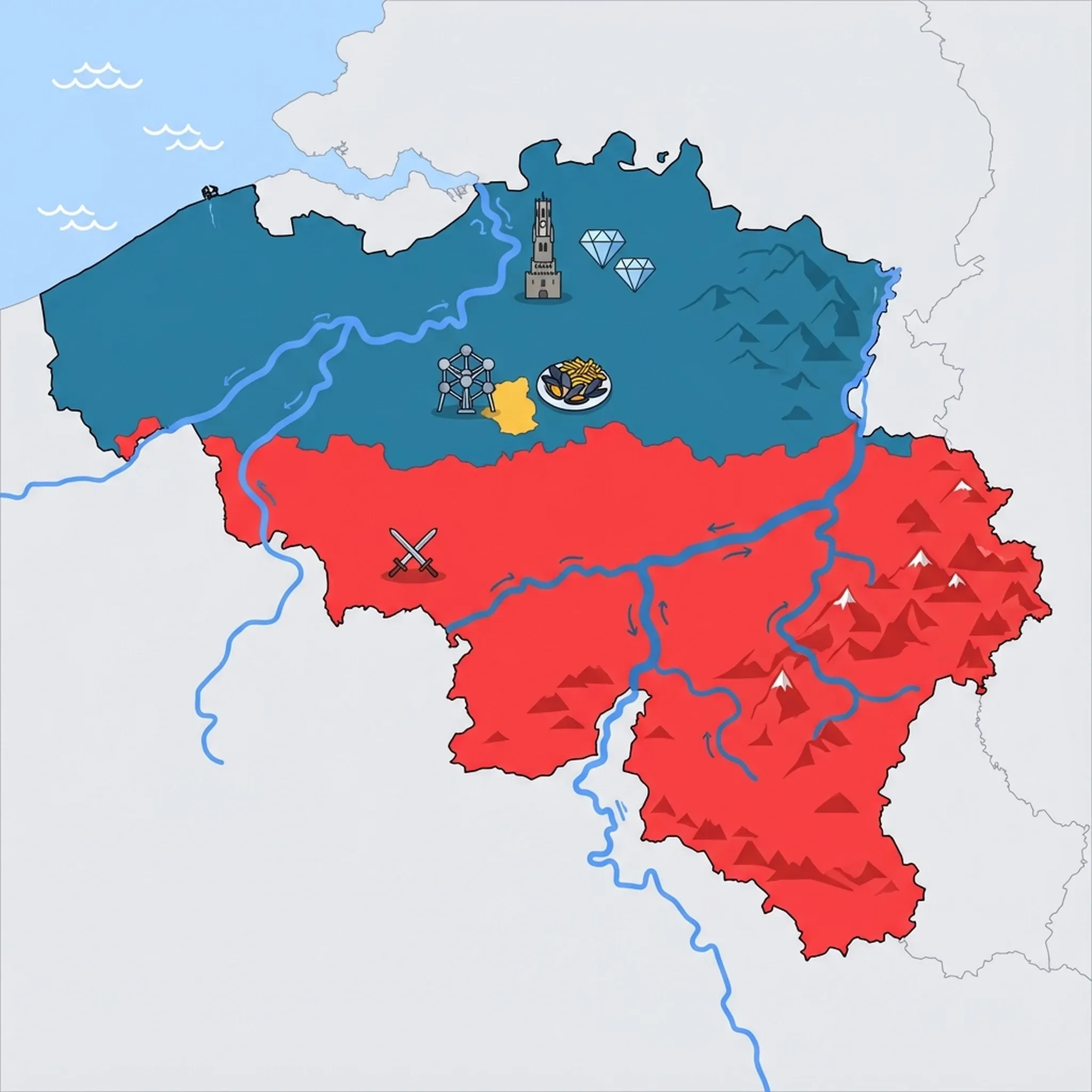
Click a region to explore
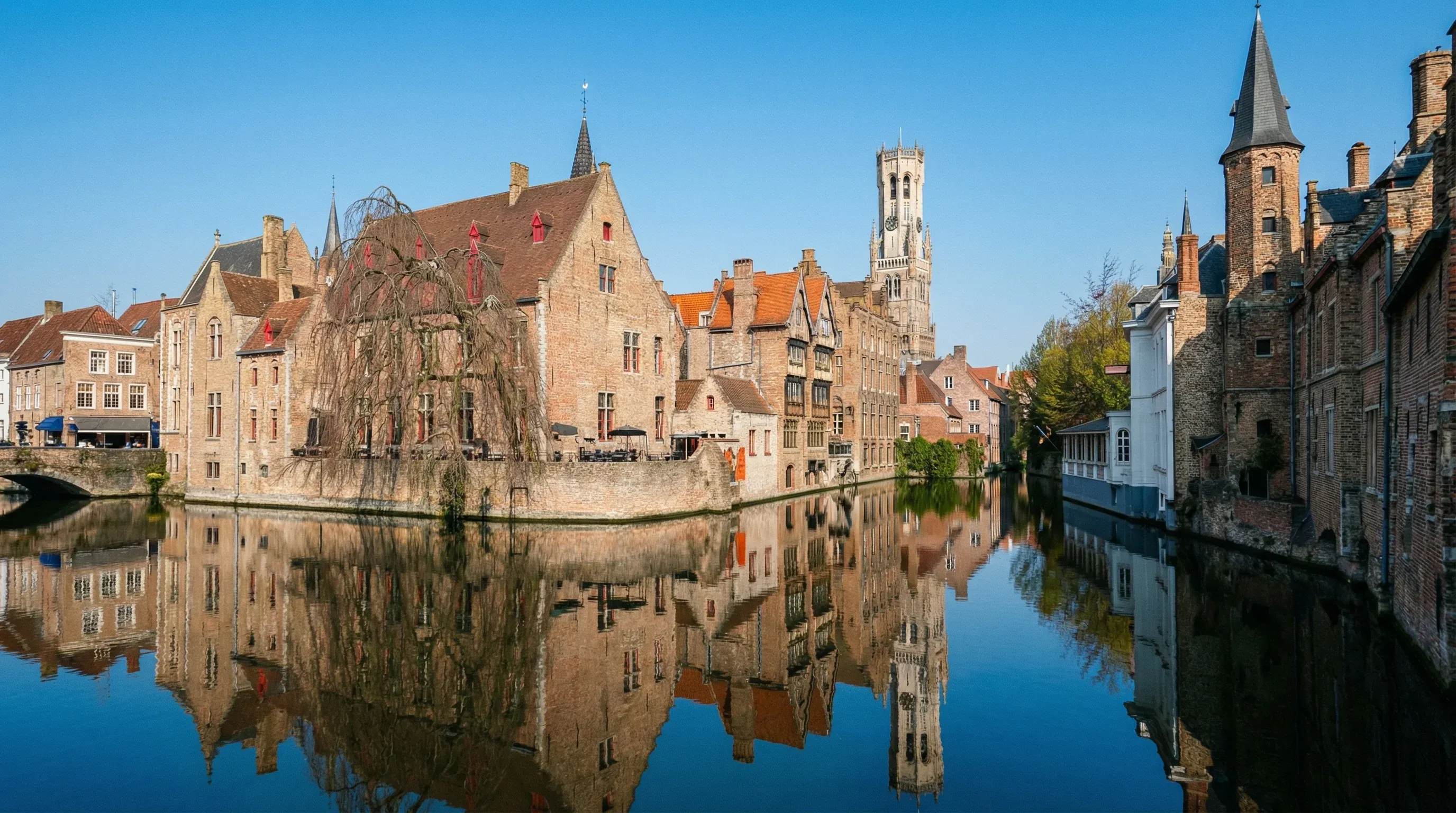
Flanders, the northern Dutch-speaking tier of Belgium, is historically one of the wealthiest and most urbanized regions in Europe, yet it retains a charming, approachable scale for families. The landscape is famously flat, making it a world-class destination for cycling holidays with children; you can safely pedal from town to town along dedicated, car-free towpaths. The region is anchored by its "Art Cities"—Bruges, Ghent, Antwerp, and Leuven—which feel like open-air museums. These cities are incredibly well-preserved, filled with Gothic belfries, market squares, and mysterious alleyways that ignite the imagination. Yet, Flanders is not stuck in the past; it is a modern, fashion-forward region with a high standard of living and excellent infrastructure.
For families, Flanders offers a "best of both worlds" scenario. You have the intense culture of the cities, where masterpieces by Rubens and Van Eyck reside, balanced by a coastline that features the longest tram line in the world, connecting a string of sandy beach resorts. The culture here is warm and family-centric. Restaurants are generally welcoming to children, and the region is dotted with high-quality theme parks and interactive museums designed specifically for younger visitors. The linguistic barrier is non-existent for English speakers, as the level of English proficiency in Flanders is among the highest in the world.
Key Attractions
The Historic Centre of Bruges is the crown jewel. Families should take a boat tour through the canals to see the city from a swan's-eye view, then climb the Belfry of Bruges (featured in the movie In Bruges, though parents might keep that reference to themselves!). In Ghent, the Gravensteen (Castle of the Counts) is a massive hit with kids; it’s a proper medieval fortress with a moat, turrets, and a torture museum that delights older children with its gruesome history.
For pure entertainment, Flanders excels with theme parks. Bellewaerde Park near Ypres combines rollercoasters with animal encounters, while Bobbejaanland offers high-adrenaline thrills. For a more educational but equally fun day out, the Bokrijk Open-Air Museum takes you back in time with historic buildings and actors, plus it features a massive free open-air playground. Nature lovers should head to Hallerbos in spring to see the magical bluebell carpet, or explore the dunes of the Hoge Kempen National Park.
Practical Advice
Flanders is a year-round destination, but spring (April-May) is stunning for flowers, and summer (July-August) is best for the coast. Be aware that the coast can get very crowded during Belgian school holidays. Renting bikes is easy at almost every train station. Baby changing facilities are widespread and clean. If visiting the coast, look out for the "verdwaalpaal" (lost children poles) on beaches—distinctive totem poles that help kids orient themselves.
Food & Drink
Typical meal times: Lunch is strictly 12:00 pm to 2:00 pm. Many kitchens close in the afternoon. Dinner is usually 6:00 pm to 9:30 pm.
Typical meal costs: Expect to pay €20–35 (approx. $22–38 USD / £17–30 GBP) for a main course in a tourist center like Bruges. Casual cafes are cheaper, around €12–18 (approx. $13–20 USD / £10–15 GBP).
Dietary requirements: Flanders is very progressive with dietary needs. Gluten-free and vegan options are widely available in cities like Ghent (often called the vegetarian capital of Europe).
Signature dishes:
- Stoofvlees (Flemish Stew) – Tender beef slow-cooked in dark beer, served with fries and mayonnaise. It is sweet, savory, and very kid-friendly.
- Grijze Garnalen (Grey Shrimp) – Tiny, sweet North Sea shrimp, often served in a hollowed-out tomato (Tomate-crevette) or in creamy croquettes.
- Waterzooi – A creamy, soup-like stew made with chicken or fish, vegetables, and egg yolk. Comfort food at its best.
- Mattentaart – A puff pastry tart filled with a light almond and cheese curd curd mixture, a specialty of Geraardsbergen.
Why this score?
The landscape is predominantly flat and highly developed, making it ideal for leisure cycling rather than rugged adventure. Most family 'thrills' are found in large-scale theme parks like Plopsaland or Bobbejaanland rather than wild environments.
Why this score?
Flanders features one of the highest densities of quality healthcare in Europe, anchored by institutions like UZ Leuven, one of the continent's premier research hospitals. International visitors have easy access to English-speaking specialists and modern emergency services in every major city area.
Why this score?
Flanders is home to global tourism magnets like Bruges, a world-famous medieval city, alongside Antwerp and Ghent. The region benefits from high-density infrastructure and a large share of the country's hotel capacity, drawing consistent crowds from across the globe.

Flanders offers a range of options. Bruges and Antwerp can be expensive, similar to Brussels. Rural Flanders and smaller towns are better value. A family meal in a pub is around €60–80 (approx. $65–88 USD / £50–70 GBP). Train travel is very affordable, especially with a "Rail Pass" or weekend discounts. Accommodation averages €120–180 (approx. $130–200 USD / £100–155 GBP) per night.

Getting Here & Around
Getting Here
- Airports – Brussels Airport (BRU) is the primary entry point, with direct trains to Antwerp, Ghent, and Bruges. Antwerp has a small airport (ANR) with limited flights.
- Train – Excellent connections from neighboring countries. High-speed trains stop at Antwerp Central and Brussels. From London, take the Eurostar to Brussels and switch to a local InterCity (IC) train (often included in the ticket).
- Ferry – For those driving from the UK, ferries run from Dover to Dunkirk or Calais (France), which are just a short drive from the Flemish border and coast.
Getting Around
- Train – The NMBS/SNCB network is dense and reliable. The "Weekend Ticket" offers 50% off return travel. Antwerp Central Station is a sight in itself, known as the "Railroad Cathedral".
- Tram – The Coastal Tram (Kusttram) runs the entire length of the Belgian coast from De Panne to Knokke, stopping at all major beach towns and attractions like Bellewaerde Aquapark.
- Cycling – This is the best way to see the countryside. The "fietsknooppunten" (cycle node network) allows you to plan easy, numbered routes between towns.
Nearby Airports (3 airports)
Deurne
ANRAntwerp
Brussels
BRUBrussels
Oostende
OSTOstend
View full flight map for Belgium →
Official Links

Packing List
The North Sea coast is notoriously windy even on sunny days; a windproof layer is essential for beach walks.
If you plan on enjoying the famous cycle networks for more than an hour, your unaccustomed family will thank you.
Great for spotting seals on the coast or birdwatching in the Zwin nature reserve.
Essential for safety if cycling on rural roads, especially during grey afternoons.
Public toilets ('Madame Pipi') and station turnstiles almost always charge a fee and often do not accept cards.
Supermarkets and shops in Belgium generally do not provide free bags; you must buy them or bring your own.
Weather changes rapidly; if you plan on cycling or walking in Flanders, wet legs are guaranteed without them.
Belgian hotels typically provide towels but rarely provide face cloths/flannels, which can be tricky for bathing small kids.
If you plan to buy Belgian chocolate in summer, it will melt instantly. A small cooler bag keeps your souvenirs safe.

Activities & Best Times

Urban tourism, museums, historical sites, architecture
Flanders contains world-class heritage cities like Bruges and Ghent alongside the global fashion and diamond hub of Antwerp. Peak season spans from the spring through autumn, with a significant secondary peak in December for traditional Christmas markets.

Hiking, wildlife, outdoor exploration, ecotourism
Offers high-quality curated nature experiences like the Lieteberg Barefoot Path and Zwin Nature Park, though it lacks true wilderness. The best conditions for exploring these managed landscapes occur during the warmer, drier months of late spring and summer.

Sport tourism, fitness activities, active recreation
The global heartland of cycling culture with iconic routes like the Tour of Flanders Blue Loop and dedicated infrastructure. Peak timing aligns with the Spring Classics in April and the optimal summer riding weather.
Amusement parks, family entertainment venues
Home to major European attractions like Plopsaland De Panne and Bobbejaanland, offering high-standard family entertainment. Peak visitation occurs during school holidays and summer when all outdoor aquatic and theme facilities are fully operational.

Beach resorts, marine activities: diving, snorkelling, kite surfing, wind surfing, sailing
The Belgian coast offers sophisticated beach resorts like Knokke and unique ecological sites like Zwin, but is limited by the North Sea's climate. Peak suitability is strictly limited to the height of summer for comfortable sea temperatures and beach recreation.

Learning experiences, scientific sites, historical education
Features internationally significant learning centers like Technopolis and the historic Antwerp Zoo. While these are mostly indoor, peak visits coincide with family holiday periods when the region's broader tourism infrastructure is most active.

Scenic drives, countryside tours, route-based travel
Features historically significant routes like the Flanders Fields Remembrance Route and scenic drives through Haspengouw fruit regions. Driving conditions are best from spring through early autumn, particularly during April's blossom season or summer's long daylight hours.

Events, celebrations, seasonal attractions
Hosts world-renowned events like Tomorrowland and Rock Werchter, though the narrow focus on summer music festivals limits year-round appeal. Classification is conservative due to the limited number of major international festival attractions listed.

Attractions (33 total)



Public Holidays & Calendar Next 12 months
Public holidays, festivals, cultural celebrations, and seasonal natural phenomena coming up in Flanders over the next 12 months.
Loading holidays and events...

Travel Advisory
The majority of international agencies advise exercising increased caution (Level 2 or equivalent) primarily due to a heightened threat of terrorism and recent increases in urban crime and civil disruption. While the country remains a major tourist destination, situational awareness in crowded areas and transit hubs is strongly recommended.
Safety Topics
Traveller Advice (4 groups)

Solo female travelers should follow standard safety precautions, particularly in large transit hubs and poorly lit urban areas late at night.

Public transport in major cities is generally accessible, but check specific route accessibility ahead of time during strike actions which can limit staff availability.

Belgium is generally very inclusive, but travelers are encouraged to review standard guidance for European travel to ensure a safe trip.

Ensure you carry official photographic identification at all times as it is a legal requirement. Be prepared for delays at airports and train stations due to the implementation of the new Schengen Entry/Exit System (EES).
Agency Summaries
Increased vigilance is recommended due to the persistent risk of terrorist activity and a recent rise in violent incidents, including stabbings and shootings, within the Brussels-Capital Region and other urban centers.
Heightened caution is advised following recent security incidents. Travelers should monitor local media and avoid areas of known unrest or heavy police activity.
Travelers should remain alert because of the threat of terrorism. Attacks can occur with little warning, targeting locations frequented by tourists and public transportation infrastructure.
Due to the threat of terrorism and the possibility of civil unrest or strikes, visitors should maintain a high level of situational awareness, especially in Brussels.
While the overall advice is to take standard safety measures, travelers are reminded of the high domestic terror threat level and the recent implementation of new biometric entry/exit systems at borders.
Most visits are safe, but travelers should be prepared for potential transport disruption from strikes and remain aware of a general threat from international terrorism.
Information is provided for general guidance only and does not constitute travel, safety, medical, or legal advice. Conditions may change. Users are responsible for independently verifying information before travel.