
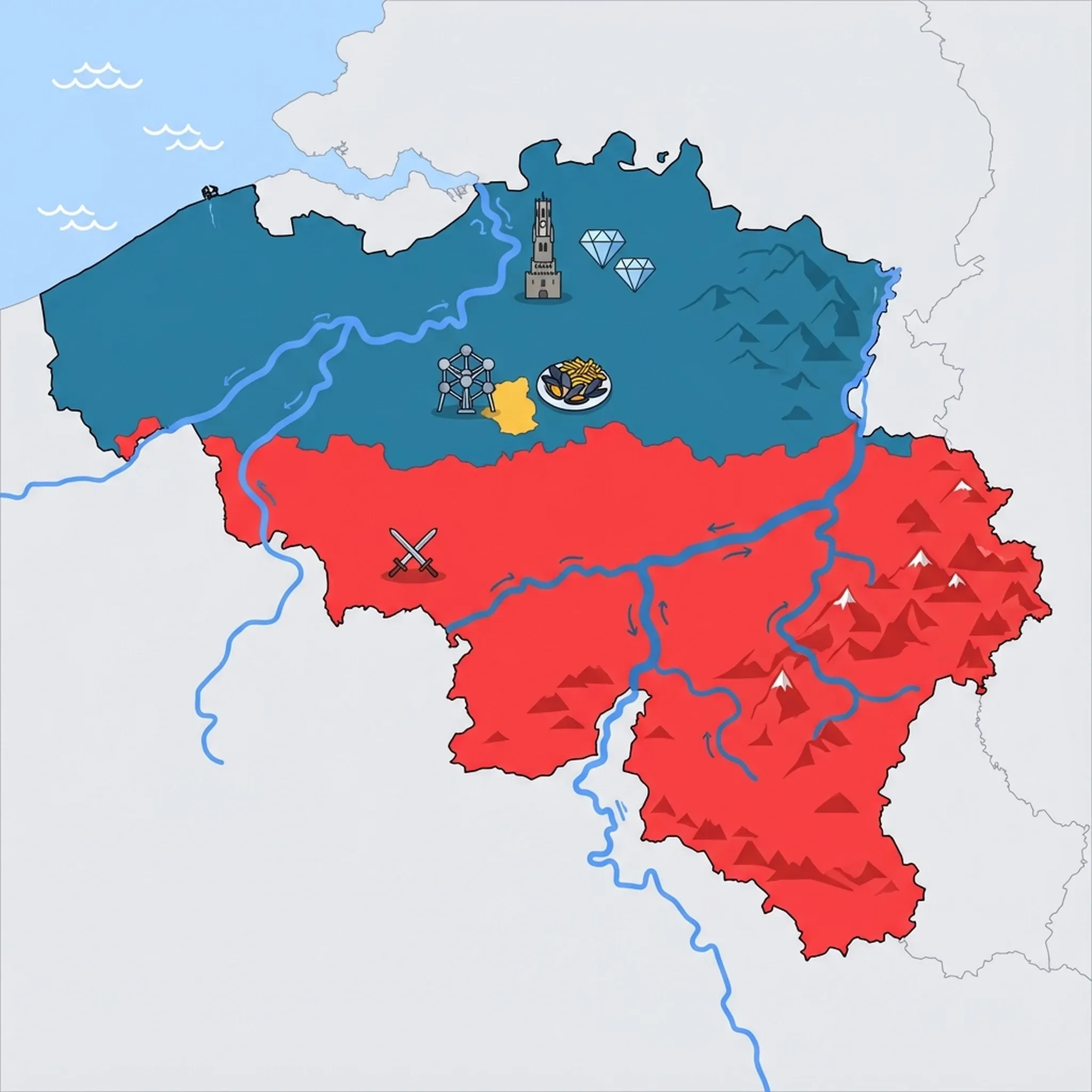
Click a region to explore
Wallonia offers a dramatic contrast to the flat north. This is the French-speaking southern half of Belgium, a land of rolling hills, deep river valleys, and vast forests known as the Ardennes. For families who love the outdoors, history, and folklore, Wallonia is an undiscovered gem. The pace of life here is slower, the people are incredibly hospitable (often called the "Latin" spirit of Belgium), and the landscape invites adventure. It is a region of legends, where almost every hilltop ruins has a ghost story and every valley has a hidden cave system. While the cities like Liège and Namur offer culture and shopping, the true magic of Wallonia lies in its countryside.
The region is particularly well-suited for active children. In summer, the rivers fill with kayaks; in winter, the Baraque de Fraiture offers downhill and cross-country skiing when snow falls. The industrial heritage of the region has been transformed into fascinating attractions, such as old coal mines turned into museums, which provide a gritty, educational counterpoint to the fairytale castles. Wallonia also hosts some of Europe's most unique folklore, including the UNESCO-recognized Carnival of Binche, where strange, wax-masked figures dance through the streets throwing oranges—a surreal spectacle kids will never forget.
Key Attractions
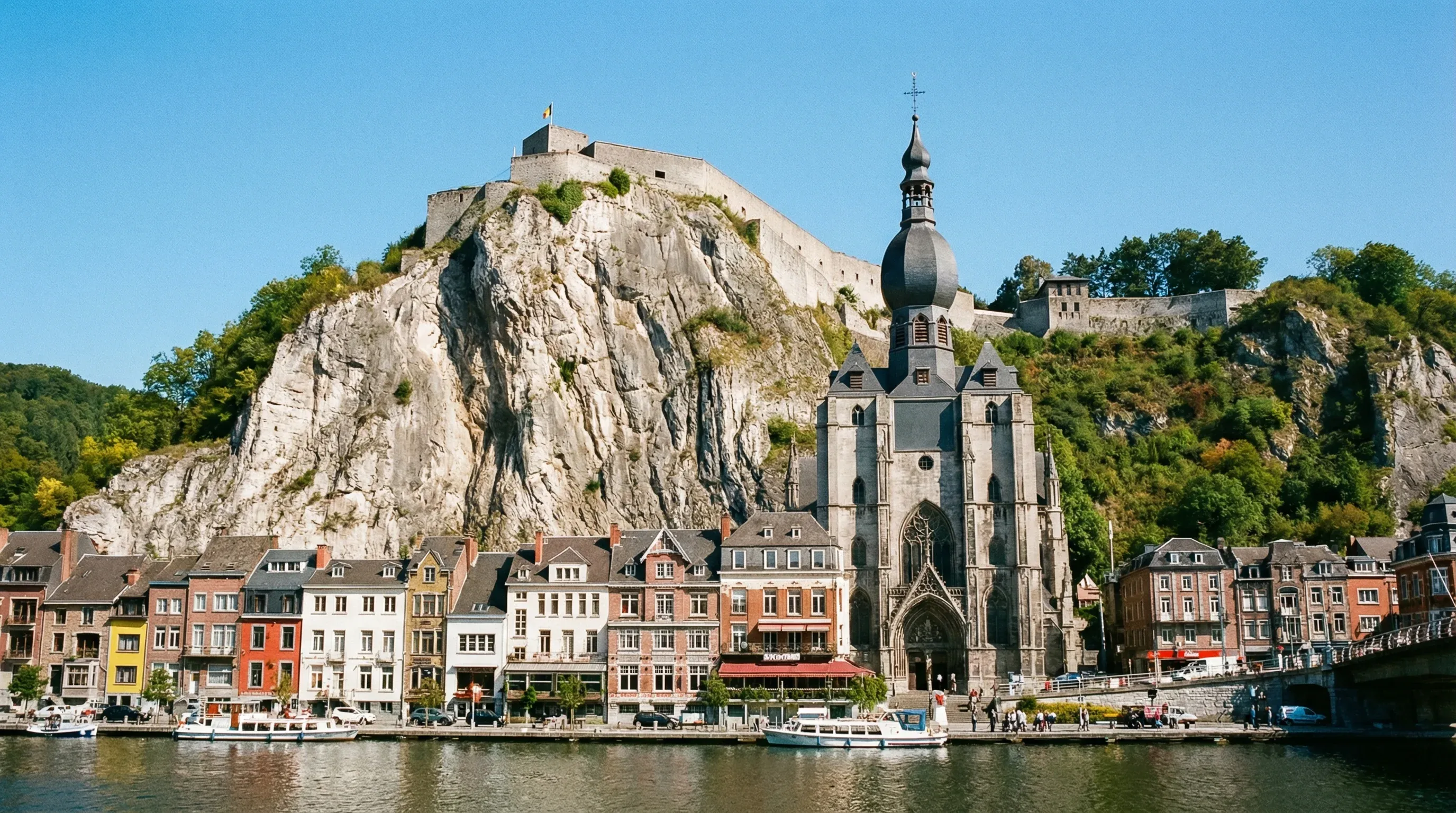
If your children dream of space, the Euro Space Center is non-negotiable. It is one of the only places in Europe where kids can experience a moonwalk simulator and rotating chair training. For those who prefer knights to astronauts, the Castle of Bouillon is a masterpiece of medieval military architecture. You can explore the dungeons and watch spectacular falconry shows in the courtyard. Another fortress worth scaling is the Citadel of Dinant, accessible by cable car, offering sweeping views of the Meuse river and the city of the saxophone (invented here by Adolphe Sax).
Below ground, Wallonia is just as impressive. The Grottes de Remouchamps allow families to take the longest underground boat ride in the world, drifting silently through illuminated caverns. For a nature fix, the High Fens – Eifel Nature Park offers mysterious boardwalk paths over peat bogs that feel like a landscape from Lord of the Rings. Animal lovers should visit the Aquarium-Muséum de l'Université de Liège to see diverse aquatic life.
Practical Advice
Wallonia is best explored by car, as many rural attractions are far from train stations. The terrain means weather can be different from the north; the Ardennes are often cooler and wetter, and snow is common in winter. If you plan to kayak, book weeks in advance for summer weekends. French is the dominant language, and while English is understood in tourist areas, it is less widely spoken than in Flanders, so learning a few basic phrases (Bonjour, Merci) goes a long way.
Food & Drink
Typical meal times: Lunch is 12:00 pm to 2:00 pm. Dinner is generally 6:30 pm to 9:30 pm. In rural areas, finding food mid-afternoon can be difficult.
Typical meal costs: Generally slightly cheaper than Brussels. A hearty tavern meal costs €15–25 (approx. $16.50–27.50 USD / £13–21.50 GBP). A local beer is €3–5 (approx. $3.30–5.50 USD / £2.50–4.25 GBP).
Dietary requirements: Walloon cuisine is meat-heavy (game, pork). Vegetarians can usually find options (often goat cheese salads), but vegans may struggle in traditional rural inns ("Auberges").
Signature dishes:
- Boulets à la Liégeoise – Large meatballs served in a rich, sweet-savory sauce made from Rabbit of Liège syrup (apple and pear spread). A kid favorite.
- Jambon d'Ardenne – Protected (PGI) smoked ham from the Ardennes, often served with melon or on bread.
- Salade Liégeoise – A warm salad of green beans, potatoes, and bacon bits, dressed with vinegar.
- Tarte au Riz – A rich, creamy rice pudding tart, best eaten fresh from a bakery in Verviers or Liège.
Why this score?
The Ardennes mountain range provides a moderate level of adventure through river kayaking on the Lesse, extensive cave exploration at Han-sur-Lesse, and forest hiking. It is the most rugged region in the Benelux, though it remains well-marked and accessible for families.
Why this score?
Major cities like Liège and Namur offer excellent hospital services, though language barriers may be slightly more common than in the international hub of Brussels. While quality is high, the more rural, forested areas have longer transit times to specialized medical centers compared to the urban north.
Why this score?
While popular for nature-based tourism and historical sites like Waterloo, Wallonia sees significantly lower international visitor numbers than the Flemish art cities. It primarily caters to domestic tourists and visitors from neighboring France, Germany, and the Netherlands seeking the Ardennes forests.

Wallonia offers good value, particularly for accommodation. A rural gite or family B&B can cost €90–140 (approx. $100–155 USD / £75–120 GBP) per night. Outdoor activities are reasonably priced; kayaking costs around €20–30 (approx. $22–33 USD / £17–26 GBP) per person. Dining portions are generous.

Getting Here & Around
Getting Here
- Airports – Brussels Airport (BRU) is the main gateway. Brussels Charleroi (CRL) is actually located in Wallonia and is a major hub for Ryanair, making it very convenient for budget travelers.
- Train – The gateway stations are Liège-Guillemins (a futuristic architectural marvel) and Namur. High-speed trains connect Liège to Cologne and Brussels.
- Driving – The E411 motorway cuts through the region, connecting Brussels to Luxembourg. It is the most practical way to arrive for an Ardennes holiday.
Getting Around
- Car – Essential for visiting the High Fens Nature Reserve and scattered castles. Roads in the Ardennes can be winding and unlit at night.
- Train – Connects major cities (Mons, Namur, Liège) effectively. The line through the Meuse valley offers scenic views.
- Cable Car – Fun transport methods exist in tourist towns, such as the cable cars at the Citadel of Namur and Dinant.
Nearby Airports (2 airports)
Brussels South Charleroi Airport
CRLBrussels
Liege
LGGLiege
View full flight map for Belgium →
Official Links

Packing List
The Ardennes forests have a high population of ticks; essential if hiking in tall grass or woodland.
The roads in the Ardennes are beautiful but very winding; sensitive kids will need these in the car.
Trails in the High Fens can be muddy, rocky, and uneven; sneakers won't cut it.
Essential for kayaking the Lesse or Semois rivers to protect feet from sharp riverbed stones.
Public toilets ('Madame Pipi') and station turnstiles almost always charge a fee and often do not accept cards.
Supermarkets and shops in Belgium generally do not provide free bags; you must buy them or bring your own.
Weather changes rapidly; if you plan on cycling or walking in Flanders, wet legs are guaranteed without them.
Belgian hotels typically provide towels but rarely provide face cloths/flannels, which can be tricky for bathing small kids.
If you plan to buy Belgian chocolate in summer, it will melt instantly. A small cooler bag keeps your souvenirs safe.

Activities & Best Times

Hiking, wildlife, outdoor exploration, ecotourism
Features the Ardennes' dense forests and world-class limestone cave systems like the Grottes de Han. Peak months provide optimal conditions for wildlife spotting and immersive trekking, while winter months are typically too damp for sophisticated outdoor exploration.

Urban tourism, museums, historical sites, architecture
The region offers unique historic citadels and medieval castles along the Meuse Valley, such as Bouillon and Dinant. These sites are best visited in late spring or early autumn to avoid summer crowds while enjoying the atmospheric urban heritage in comfortable weather.

Learning experiences, scientific sites, historical education
The Euro Space Center provides a world-class, purpose-built astronaut training experience that acts as a major educational draw for families. The facility is best experienced when coupled with the region's accessible spring or autumn conditions, though indoor exhibits remain functional through much of the year.

Scenic drives, countryside tours, route-based travel
Scenic driving routes through the Semois and Meuse valleys offer high-quality rural touring through rolling hills and historic villages. Late spring blossoms and vibrant October foliage provide the most visually rewarding periods for exploring these named routes.

Sport tourism, fitness activities, active recreation
Features the Vennbahn, a premier international rail-trail cycling route, and extensive adventure infrastructure in Durbuy. Cycling and river-based activities are optimal in the drier, milder windows of late spring and early autumn.

Amusement parks, family entertainment venues
Home to Walibi Belgium and significant aquatic centers like Aqualibi that meet international family entertainment standards. Seasonal operations mean these venues are primary summer draws, with most outdoor parks closing during the cold winter period.

Beach resorts, marine activities: diving, snorkelling, kite surfing, wind surfing, sailing
Managed inland lake beaches like Lacs de l'Eau d'Heure provide seasonal water recreation for families. These serve as localized alternatives to coastal resorts and are only suitable during the peak heat of the summer months.

Events, celebrations, seasonal attractions
The UNESCO-listed Carnival of Binche in February is a unique cultural event of international significance. Beyond this and traditional Christmas markets, the region has few large-scale events that draw global family travelers.

Spa retreats, wellness centers, peaceful getaways
The historic town of Spa features the world-renowned Les Thermes de Spa, offering an authentic thermal experience. This wellness focus is most restorative during the colder winter months, as the high-heat thermal baths lose their appeal during the warmer summer season.

Winter sports, ski resorts, snow activities
Offers limited alpine and cross-country skiing at high points like Signal de Botrange when snow conditions permit. Reliability is low compared to global benchmarks, restricting the viable season to short windows in mid-winter.

Attractions (41 total)



Public Holidays & Calendar Next 12 months
Public holidays, festivals, cultural celebrations, and seasonal natural phenomena coming up in Wallonia over the next 12 months.
Loading holidays and events...

Travel Advisory
The majority of international agencies advise exercising increased caution (Level 2 or equivalent) primarily due to a heightened threat of terrorism and recent increases in urban crime and civil disruption. While the country remains a major tourist destination, situational awareness in crowded areas and transit hubs is strongly recommended.
Safety Topics
Traveller Advice (4 groups)

Solo female travelers should follow standard safety precautions, particularly in large transit hubs and poorly lit urban areas late at night.
Public transport in major cities is generally accessible, but check specific route accessibility ahead of time during strike actions which can limit staff availability.

Belgium is generally very inclusive, but travelers are encouraged to review standard guidance for European travel to ensure a safe trip.

Ensure you carry official photographic identification at all times as it is a legal requirement. Be prepared for delays at airports and train stations due to the implementation of the new Schengen Entry/Exit System (EES).
Agency Summaries
Increased vigilance is recommended due to the persistent risk of terrorist activity and a recent rise in violent incidents, including stabbings and shootings, within the Brussels-Capital Region and other urban centers.
Heightened caution is advised following recent security incidents. Travelers should monitor local media and avoid areas of known unrest or heavy police activity.
Travelers should remain alert because of the threat of terrorism. Attacks can occur with little warning, targeting locations frequented by tourists and public transportation infrastructure.
Due to the threat of terrorism and the possibility of civil unrest or strikes, visitors should maintain a high level of situational awareness, especially in Brussels.
While the overall advice is to take standard safety measures, travelers are reminded of the high domestic terror threat level and the recent implementation of new biometric entry/exit systems at borders.
Most visits are safe, but travelers should be prepared for potential transport disruption from strikes and remain aware of a general threat from international terrorism.
Information is provided for general guidance only and does not constitute travel, safety, medical, or legal advice. Conditions may change. Users are responsible for independently verifying information before travel.