

Overview
Belize packs an incredible diversity of landscapes into a tiny footprint, making it one of the most accessible adventure destinations for families. Unlike its neighbors, Belize is English-speaking, which removes language barriers and makes navigating logistics with children significantly easier. The country is split between the laid-back Caribbean coast-home to the world's second-largest barrier reef-and the lush inland jungles of the Cayo District. For active families, this means you can be snorkeling in turquoise waters in the morning and climbing a Maya temple by the afternoon.
The cultural mix is equally enriching for children, blending Maya, Creole, Mestizo, and Garifuna influences. The vibe is decidedly unhurried; "Belize time" is a real phenomenon that encourages families to slow down and disconnect. Whether you are spotting howler monkeys in the canopy or learning to drum with the Garifuna people, the country feels like a living classroom. It is rugged but approachable, offering wild experiences without the intense logistical challenges of larger nations.
Key Attractions
For underwater adventures, the Belize District & Cayes are the primary draw. A short boat ride from Caye Caulker Village-a car-free island where "Go Slow" is the motto-brings you to the Hol Chan Marine Reserve. Here, even young children can safely snorkel alongside gentle nurse sharks and stingrays in Shark Ray Alley. For a bird's-eye view of a natural wonder, scenic flights over the Great Blue Hole offer an unforgettable history lesson in geology without getting wet.
Inland, the Cayo & Inland (San Ignacio) region offers Indiana Jones-style exploration. Xunantunich Maya Ruins is particularly family-friendly; to reach it, you take a hand-cranked ferry across the Mopan River, and kids can climb to the top of "El Castillo" for panoramic views. For families with older children (minimum height 40 inches/101cm), the Actun Tunichil Muknal (ATM Cave) is a world-class adventure involving swimming into a cave to see crystallized Maya artifacts. Animal lovers should not miss The Belize Zoo and Tropical Education Center, a "little zoo" that houses only rescued native species like tapirs and jaguars in natural settings.
Down south in Placencia & Southern Coast, families can explore the world's first jaguar preserve at Cockscomb Basin Wildlife Sanctuary. The trails here are well-marked, and splashing in the waterfalls is a perfect way to cool off after a hike. Nearby, the Gladden Spit and Silk Cayes Marine Reserve offers pristine snorkeling spots that feel like swimming in an aquarium.
Practical Advice
The best time to visit is during the dry season (late November to April), though this is also peak season for prices. The Belize Dollar (BZD) is permanently pegged to the US Dollar at 2:1, and USD is accepted everywhere, eliminating currency math headaches. Malaria risk is low in tourist areas, but bug protection is essential. Tap water is generally not safe to drink; stick to purified water. Public transport (chicken buses) is cheap but often crowded and hot; families often prefer private shuttles or renting a car (SUV recommended) for comfort and flexibility.
Food & Drink
Typical meal times: Lunch is typically served from 11:30 am to 2:00 pm, and dinner from 6:00 pm to 9:00 pm. On the islands, restaurants often stay open later, but in inland towns, kitchens can close surprisingly early (around 8:30 pm).
Typical meal costs: Street food and local diners cost BZ$10–25 (approx. $5–12.50 USD / €4.50–11.50 EUR). Sit-down meals at tourist restaurants range from BZ$40–90 (approx. $20–45 USD / €18–42 EUR). Lobster, when in season, is a premium item but cheaper than in the US/Europe.
Dietary requirements: Vegetarian options are common thanks to the staple of rice and beans. Vegan options are available but less varied outside major tourist hubs. Gluten-free travelers should be careful with sauces but can rely on fresh corn tortillas and grilled seafood. Nut allergies are generally understood in hotels but less so in local street stalls.
Family-friendly dining: Belizean dining is extremely casual. Kids will love the fresh fruit smoothies (watermelon, pineapple) available everywhere. Highchairs are available in resort restaurants but rare in local "cool spots." The food is generally not spicy unless you add the habanero sauce yourself.
Signature dishes:
- Stew Chicken with Rice and Beans – The national dish. Tender chicken stewed in red recado spices, served with coconut-milk rice and beans and potato salad. Mild and kid-approved.
- Fry Jacks – Puffy, deep-fried dough triangles served at breakfast. Kids love them smothered in jam, honey, or refried beans.
- Conch Fritters – Small balls of conch meat and batter, deep-fried and served with a dipping sauce. A perfect finger food starter.
- Hudut – A traditional Garifuna dish featuring fish cooked in a coconut broth, served with mashed plantains. A delicious way to introduce local culture through taste.

Belize is more expensive than its neighbors. A family of four should budget BZ$400–700 (approx. $200–350 USD / €185–325 EUR) per day for mid-range hotels, meals, and one activity. Street food like fry jacks is cheap (BZ$2–5), but guided tours are pricey, often costing BZ$200+ ($100 USD) per person. Transport to islands adds to the cost.
Age Suitability





Did you know? Belize welcomes approximately 373,000 international visitors per year. Most visitors come from Americas.
Explore Regions
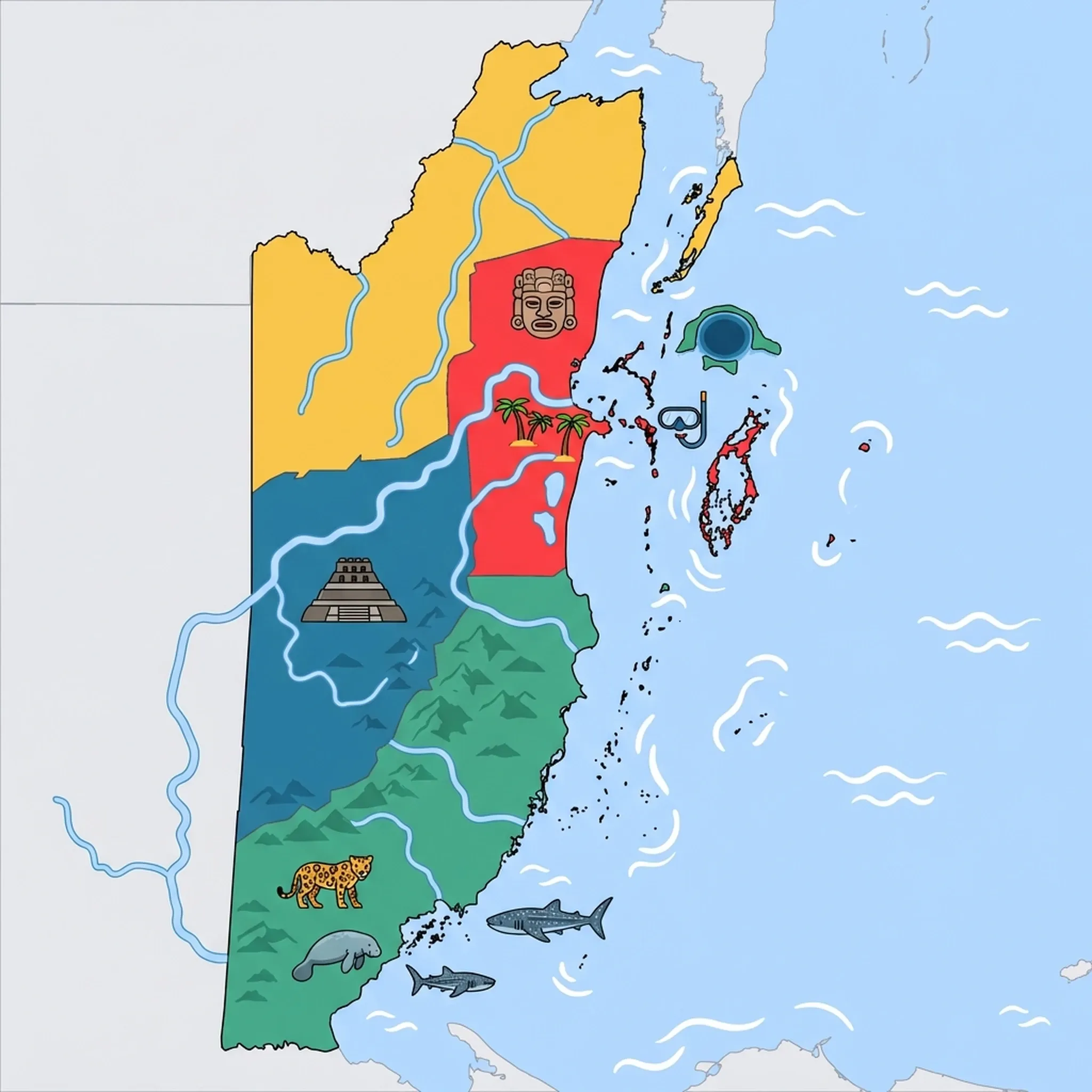
4 Regions
Belize District & Cayes
Island hopping adventures on the world's second-largest barrier reef 🐠
Cayo & Inland (San Ignacio)
Jungle adventures and ancient Maya temples 🍃
Northern Belize (Corozal)
River safaris and a taste of local culture 🛶
Placencia & Southern Coast
Golden beaches and Jaguar preserves 🐆
Click on a region marker to explore details. Use the dropdown to color regions by activity suitability.

Getting There & Around
Getting There
- By Air – Philip Goldson International Airport (BZE) in Belize City is the main gateway. Direct flights arrive from major US hubs (Miami, Houston, Atlanta, LA). From Europe, connections typically route through the US or Cancún.
- By Land – Families can cross from Mexico (Chetumal) in the north or Guatemala (Melchor de Mencos) in the west. The border crossing near Cayo & Inland (San Ignacio) is popular for combining Tikal (Guatemala) with Belize.
- By Sea – Water taxis run daily between Chetumal (Mexico) and Caye Caulker Village/San Pedro. This is a scenic but longer entry route.
- Entry Requirements – Citizens of the US, UK, EU, and Canada do not need a visa for stays up to 30 days. You must have a return ticket and a passport valid for at least 3 months beyond your arrival date. Check your government website for the latest visa requirements, or use the IATA Travel Centre entry-requirements checker.
Getting Around
- Domestic Flights – "Puddle jumper" flights with Tropic Air or Maya Island Air connect Belize District & Cayes to inland towns in minutes. The small planes offer incredible views but can be pricey for families.
- Water Taxis – Large speedboats connect Belize City to Caye Caulker Village and San Pedro. It is a bumpy 45–90 minute ride. Kids usually enjoy the spray, but seasickness is possible.
- Car Hire – Renting a car is popular for exploring Cayo & Inland (San Ignacio). A 4x4 is recommended for unpaved roads leading to waterfalls or ruins. Driving is on the right.
- Golf Carts – The primary mode of transport on Caye Caulker and Ambergris Caye. Fun for kids, but check safety features like seatbelts if travelling with toddlers.

Packing List
The most effective local remedy against 'sand flies' (no-see-ums) on the beaches, which DEET often misses.
Mandatory for the ATM Cave tour; shoes must be removed to protect the fragile crystallized artifacts.
Strictly enforced in marine reserves like Hol Chan to protect the coral; standard sunscreen is often banned.
Essential for keeping phones and clothes dry during frequent water taxi rides and 'wet' cave tubing tours.
Power outages can occur on the islands, and many eco-lodges or paths are poorly lit at night.

Activities & Best Times

Adventure & Nature
ExcellentHiking, wildlife, outdoor exploration, ecotourism
Home to the world's first jaguar preserve and the challenging Victoria Peak, this region offers unparalleled immersion in tropical ecosystems. Peak visitation aligns with the dry season when trails are navigable and wildlife sightings at Cockscomb Basin are most frequent.
Offers world-class jungle immersion, the unique ATM Cave system, and high-quality wildlife centers like The Belize Zoo. Peak season aligns with the dry months when trails and caves are most accessible for families.
Features pristine wilderness areas like Rio Bravo and Shipstern, offering exceptional birding and jungle exploration. The dry season from January to April provides the best trail conditions and wildlife viewing as animals congregate near permanent water sources.

City & Cultural
Very GoodUrban tourism, museums, historical sites, architecture
Centred on significant Maya archaeological sites like Lamanai, reachable via a scenic river boat journey that combines history with nature. Visits are best planned during the dry season to ensure reliable access to ruins and comfortable walking conditions.
Home to major Mayan archaeological sites like Altun Ha and the iconic Great Blue Hole, offering a mix of ancient history and natural landmarks. Visitation is best during the cooler, drier months which allow for comfortable exploration of historic ruins and urban heritage sites.
Offers authentic encounters with Garifuna culture in Hopkins and the unique Maya history of the Stann Creek district. November is peak due to the internationally significant Garifuna Settlement Day celebrations, while the rainy summer months hinder village exploration.

Sports & Active
Very GoodSport tourism, fitness activities, active recreation
High-quality infrastructure for rainforest adventures, including major ziplining centers and demanding trek routes like Tiger Fern. Activities are highly weather-dependent, with the mid-year rainy season often causing trail closures or safety restrictions.
Renowned for specialized activities like cave tubing at Nohoch Che'en and jungle trekking through the Pine Ridge reserve. Safety and accessibility for these water-and-trail-based sports are optimal during the dry season.
The region provides significant infrastructure for hiking and trekking within its large conservation areas like the Rio Bravo. These activities are most enjoyable from January to April when lower humidity and dry paths facilitate exploration of the jungle trails.

Beach & Sea
GoodBeach resorts, marine activities: diving, snorkelling, kite surfing, wind surfing, sailing
Access to the Belize Barrier Reef and Hol Chan Marine Reserve provides exceptional snorkeling and diving in clear, calm waters. Peak season aligns with the dry months when underwater visibility is highest and sea conditions are most stable for boat excursions.
Features world-class snorkeling and diving at offshore cayes like Laughing Bird and Silk Caye, accessible from the Placencia Peninsula. Optimal sea visibility and calm conditions occur during the winter and spring, while the hurricane season brings siltation and rougher waters.
Offers low-key coastal recreation on Corozal Bay, providing a relaxed atmosphere away from more commercialized hubs. Peak visitation occurs during the calm, dry spring months, while the rainy season can lead to increased turbidity in the shallow bay waters.

Road Trips & Scenic
GoodScenic drives, countryside tours, route-based travel
Routes like the Manatee Highway and Old Northern Highway offer scenic drives through diverse tropical landscapes and rural villages. Travel is optimal in the first quarter of the year; heavy rainfall from June onwards can make unpaved sections difficult for family travelers.
The Hummingbird Highway is widely considered one of the most scenic drives in the Caribbean, offering dramatic mountain vistas and jungle canopy views. Driving conditions are safest and most scenic during the dry months when road visibility is high and flood risks are minimal.
Features the scenic Hummingbird Highway and the rugged Mountain Pine Ridge Forest Reserve Road. Driving conditions are best from December to April, as unpaved interior roads can become difficult during the peak rainy season.

Educational & Exploratory
MarginalLearning experiences, scientific sites, historical education
Swallow Caye Wildlife Sanctuary offers destination-level educational opportunities focused on manatee conservation. Tours are most reliable during the dry season when sea conditions allow for safe boat access and better viewing opportunities.
Niche scientific interest focused on marine biology at Tobacco Caye and jaguar conservation at Cockscomb Basin. While these facilities provide authentic learning, they serve primarily as adjuncts to nature tours rather than standalone primary travel motivators.
The Chaa Creek Natural History Centre offers destination-level discovery for families interested in ecology and Maya heritage. While significant, it often serves as a high-quality educational supplement to broader adventure itineraries.

Theme Park & Entertainment
MarginalAmusement parks, family entertainment venues

Public Holidays & Calendar Next 12 months
Public holidays, festivals, cultural celebrations, and seasonal natural phenomena coming up in Belize over the next 12 months.
Loading holidays and events...

Climate & Weather
Belize District & Cayes
Show Details
| Month | Temp °C | Rain | Humidity |
|---|
Cayo & Inland (San Ignacio)
Show Details
| Month | Temp °C | Rain | Humidity |
|---|
Northern Belize (Corozal)
Show Details
| Month | Temp °C | Rain | Humidity |
|---|
Placencia & Southern Coast
Show Details
| Month | Temp °C | Rain | Humidity |
|---|

Travel Advisory
Most major agencies recommend exercising a high degree of caution throughout Belize. This assessment is primarily driven by high levels of violent crime and gang activity, particularly in urban centers like Belize City.
Safety Topics
Traveller Advice (4 groups)

While same-sex relations are legal, social conservative attitudes persist. Public displays of affection may attract negative attention or abuse, especially outside of major tourist hubs like San Pedro and Ambergris Caye.

Older travellers should consult a physician regarding yellow fever vaccination requirements if arriving from a high-risk country, as those over 60 may require a medical waiver letter if the vaccine is medically contraindicated.

Solo female travellers may experience verbal harassment. There have been reported incidents of sexual assault targeting women travelling alone or in small groups, particularly in isolated areas or popular tourist cayes.

Exercise extreme vigilance when exploring remote forested areas near the Guatemalan border, as armed criminal activity has been reported. Ensure water sports and adventure activities are booked through licensed operators, as safety standards can vary and rescue services are inconsistent.
Agency Summaries
A high degree of caution is necessary due to violent crime. New Zealanders should avoid non-essential travel to the Southside of Belize City. Safety risks are notably higher than in New Zealand, with muggings being common in major towns.
Visitors are advised to stay informed and follow local safety guidelines. Crime is a serious concern, particularly in urban areas. Because there is no Irish resident embassy, consular help is limited and managed through the embassy in Mexico.
Maintain increased awareness due to prevalent crime. Violent incidents, including home invasions and armed robberies, occur frequently even in daylight and within tourist-heavy regions. Belize City as a whole is classified as Level 3 (Reconsider Travel) due to concentrated gang violence in its southern districts.
Travellers should remain highly vigilant across the country due to significant rates of violent crime. A more severe warning to avoid non-essential travel is in place for the Southside of Belize City, specifically areas south of Haulover Creek River, because of intense gang activity and drug-related violence.
Heightened vigilance is recommended because of the threat posed by violent crime. Travellers are urged to reconsider their need to visit the Southside of Belize City. Additionally, expect increased security protocols at all domestic airports.
While no specific travel restrictions are in effect for the whole country, visitors must be aware of exceptionally high murder rates and the risk of violent crime. Gang-related conflicts are most intense in Southside Belize City, though tourists are rarely the primary targets.
Information is provided for general guidance only and does not constitute travel, safety, medical, or legal advice. Conditions may change. Users are responsible for independently verifying information before travel.