

Overview
Benin is a slender key-shaped country in West Africa that packs a dense cultural punch. For families, it offers a deeply educational and colorful journey unlike any other. Unlike the safari-focused destinations of East Africa, Benin is about living culture. It is the spiritual heartland of Vodun (Voodoo), a religion often misunderstood in the West but practiced here as a peaceful and integral part of daily life. The geography shifts from the sandy Atlantic coast lined with coconut palms to the lush, rolling hills of the center, providing a tropical backdrop for your adventures.
Traveling here with children is an immersion in warmth and hospitality. The Beninese are fond of children, and you will likely be greeted with smiles and waves everywhere you go. While the infrastructure is developing, the coastal south is relatively easy to navigate. Families can explore the floating village of Ganvié (often called the "Venice of Africa"), learn about the sombre but important history of the Transatlantic Slave Trade in Ouidah, and witness vibrant masquerades that will captivate children's imaginations. It is a destination for families who want to show their children a different, authentic side of the world.
Key Attractions
Most family-friendly sights are concentrated in the south. A must-visit is Ouidah, the spiritual capital. Here, the Temple des Pythons is a highlight for kids; they can touch and even hold the docile royal pythons that are worshipped as deities-a thrilling but safe photo opportunity. Nearby, the Forêt Sacrée de Kpassè offers a walk among ancient trees and statues of Vodun deities, feeling like a real-life secret garden. For a dose of history, the Ouidah Museum of History located in an old Portuguese fort provides accessible context, while the imposing Door of No Return on the beach offers a poignant lesson in history that even younger children can sense the gravity of.
In the bustling city of Cotonou, the Fondation Zinsou is a world-class contemporary art space that often has kid-friendly exhibits and a cafe. Just a short drive north lies the UNESCO-listed Royal Palaces of Abomey in the Abomey & Central region. The complex of earthen palaces, with its bas-reliefs telling stories of past kings, feels like stepping into a storybook kingdom. In the capital, Porto-Novo, families can enjoy a peaceful afternoon at the Jardin des Plantes et de la Nature (JPN), a botanical garden that serves as a green lung in the city, or marvel at the Afro-Brazilian architecture of the Great Mosque of Porto-Novo.
Practical Advice
The best time to visit is during the dry season from November to February, when the weather is warm but less humid, and mosquitoes are fewer. Visas are required for most visitors but are easily obtained online (e-Visa) before departure. Health is a priority: a Yellow Fever vaccination certificate is mandatory for entry, and malaria prophylaxis is essential for all family members. Pack lightweight, breathable clothing and be prepared for dust. While French is the official language, English is limited, so having a guide or a translation app is very helpful.
Food & Drink
Typical meal times: Lunch is the main meal, typically eaten from 12:00 pm to 3:00 pm. Dinner is lighter and served from 7:00 pm to 9:00 pm.
Typical meal costs: 2,500–8,000 XOF (approx. $4–13 USD / €3.80–12 EUR) for a hearty local meal; 10,000–18,000 XOF (approx. $16–30 USD / €15–27 EUR) for western-style dining in hotels.
Dietary requirements: Vegetarian options are available but limited in local "maquis" (eateries), often restricted to beans, yams, or salads. Peanuts and shellfish are common ingredients, so allergy sufferers must be vigilant and communicate clearly.
Family-friendly dining: Kids will enjoy the fresh tropical fruit and grilled chicken. Highchairs are rare outside of top-tier international hotels, so bringing a portable travel booster is recommended.
Signature dishes:
- Wagasi – A soft, mild fried cheese made from cow's milk, often served in a spicy sauce but delicious plain for kids.
- Amiwo – A red corn dough dish seasoned with tomato and onion, usually served with chicken or fish.
- Aloko – Fried ripe plantain slices, a sweet and universally loved snack perfect for fussy eaters.
- Yovo Doko – Sweet fried dough balls (fritters) often sold as street food, similar to doughnuts.
Safety
Apart from the northern border regions which are off-limits, Benin is one of the safer countries in West Africa. Violent crime against tourists is rare in the south. However, ocean currents are extremely strong-swimming in the sea is dangerous and often prohibited; stick to hotel pools. Traffic can be chaotic, and the "Zemidjans" (motorbike taxis) are ubiquitous but risky for children; reputable car hire with a driver is the safest transport option.

A family of four can expect to spend around 80,000–120,000 XOF (approx. $130–200 USD / €120–180 EUR) per day for mid-range travel, including a private driver, guesthouse accommodation, and meals. High-end hotels in Cotonou will push costs higher, while local street food can keep food costs very low. Cash is king; carry Euros to exchange.
Age Suitability




Did you know? Benin welcomes approximately 325,000 international visitors per year. Most visitors come from Africa.
Explore Regions
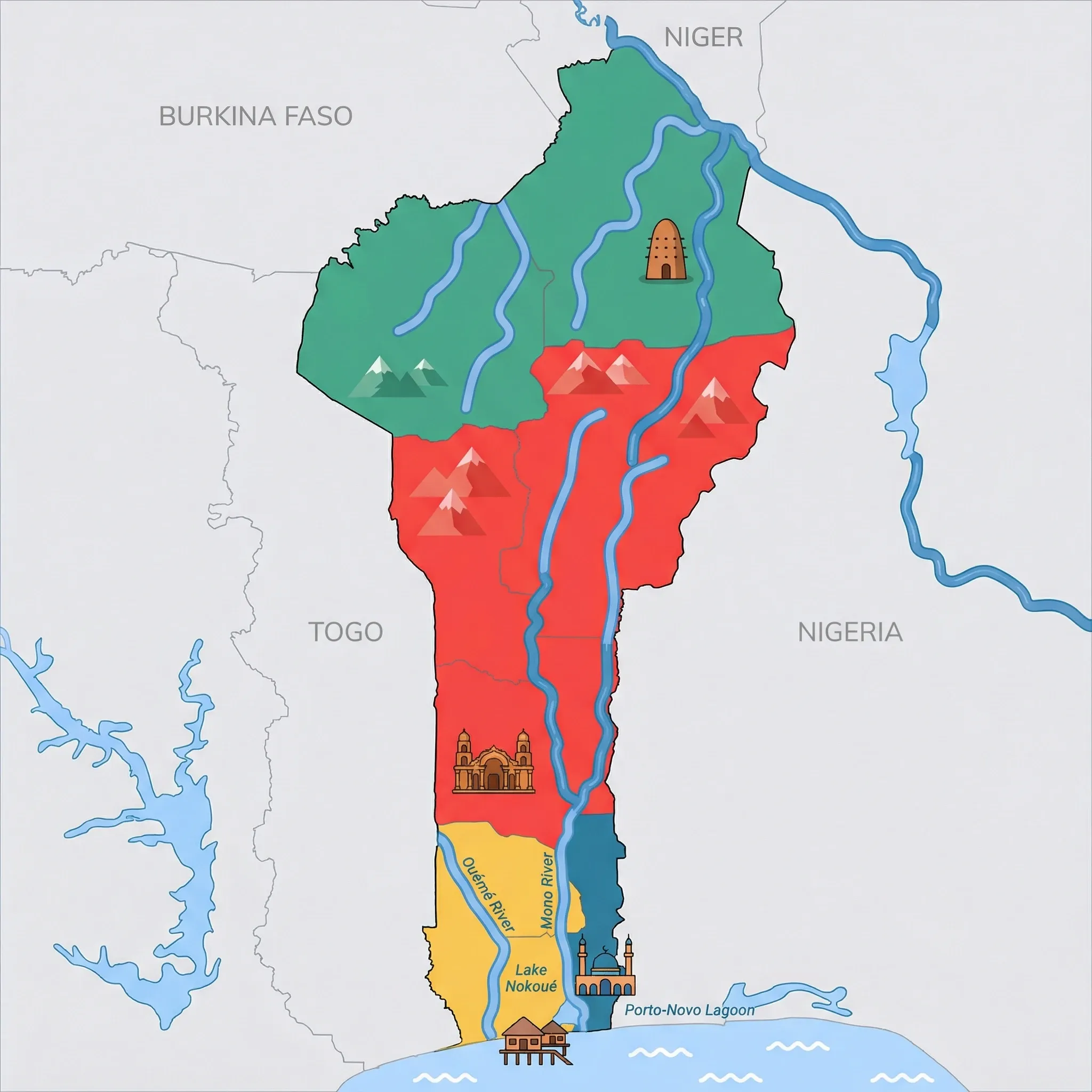
4 Regions
Abomey & Central
Where the legends of the Dahomey Kings come to life 🦁
Cotonou & Coast
Golden beaches, voodoo history, and the Venice of Africa 🌊
Pendjari NP & North
Rugged mountains and West Africa's last great wildlife refuge 🦁🐘
Porto-Novo (capital)
The City of Three Names and Afro-Brazilian charm 🏛️
Click on a region marker to explore details. Use the dropdown to color regions by activity suitability.

Getting There & Around
Getting There
- By Air – Cadjehoun Airport (COO) in Cotonou is the main international hub, with regular flights from Paris, Brussels, and regional African capitals. It is the gateway to the Cotonou & Coast.
- By Land – Border crossings exist with Togo (Lomé to Cotonou is a common route) and Nigeria, though the Nigerian border can be chaotic. The northern borders with Burkina Faso and Niger are closed or highly dangerous due to security risks.
- Entry Requirements – A Yellow Fever vaccination certificate is mandatory. Most travelers need a visa, which is easily obtained as an e-Visa. Check your government website for the latest visa requirements, or use the IATA Travel Centre entry-requirements checker.
Getting Around
- Private Car with Driver – The safest and most convenient option for families. Hiring a car and driver for the day allows you to explore the Cotonou & Coast region at your own pace with air-conditioning.
- Taxis – Available in major cities like Cotonou and Porto-Novo. Agree on the fare before getting in, as meters are rarely used.
- Zemidjans (Moto-taxis) – The yellow-shirted motorcyclists are everywhere, but they are not recommended for children due to safety concerns.

Packing List
Mandatory for entry; you will likely be refused at the border without the original card.
Power cuts (load shedding) are common even in cities; street lighting is often inconsistent.
Benin is a high-risk zone year-round; bring enough paediatric medication for the whole trip.
ATMs are unreliable outside Cotonou; Euros are the easiest currency to exchange for XOF.
Public bins are rare; carry your own rubbish bag to avoid littering in nature or towns.
Dust and limited running water in rural areas make these essential for keeping kids clean.

Activities & Best Times

Adventure & Nature
Very GoodHiking, wildlife, outdoor exploration, ecotourism
The region features the unique Ganvié stilt village on Lake Nokoué and the Sitatunga Valley, offering authentic immersion in West African water-based ecosystems. Travel is best during the long dry season when lake navigation is safest and outdoor wildlife and python shrines are most accessible.
Pendjari and W National Parks represent the best wildlife viewing in West Africa, offering authentic savanna experiences with lions, elephants, and hippos. The peak season occurs during the dry months when thinning vegetation and congregating animals at water holes maximize visibility.
The region features unique inselberg landscapes like Les 41 Collines and Savalou Hills, providing authentic wilderness exploration and scenic trekking. The dry season (November to February) offers optimal visibility and trail access, while heavy rains from May to September make terrain difficult to navigate.

City & Cultural
Very GoodUrban tourism, museums, historical sites, architecture
Porto-Novo offers a unique fusion of Afro-Brazilian architecture and deep Voodoo heritage, preserved in high-quality museums like the Alexandre Sènou Adandé Ethnographic Museum. The dry season from November to February is ideal for exploring the historic quarters and vibrant cultural centers without the disruption of heavy tropical rains.
Ouidah offers a profound historical experience via the Slave Route, while Cotonou's Fondation Zinsou provides a world-class platform for contemporary African art. These cultural landmarks provide deep, authentic insights into the region's complex heritage, best enjoyed when humidity is lower and rain is minimal.
Home to the UNESCO-listed Koutammakou landscape, the region offers highly unique Batammariba 'Tata Somba' architecture and authentic tribal heritage. Access to remote traditional villages like Taneka Beri is most reliable during the cooler dry season before the intense pre-monsoon heat and heavy rains.

Beach & Sea
GoodBeach resorts, marine activities: diving, snorkelling, kite surfing, wind surfing, sailing
The Route des Pêches and Fidjrossé Beach offer wide sandy stretches with authentic fishing culture, though the Atlantic surf is often too strong for casual swimming. International families will find the most pleasant lounging and coastal atmosphere during the dry months from December to February.
Sèmè Beach provides a natural coastal escape, though it lacks the sophisticated resort amenities expected by discerning international families. Peak visitation aligns with the dry season when the Atlantic swell is more predictable and humidity is slightly lower.

Road Trips & Scenic
GoodScenic drives, countryside tours, route-based travel
The scenic drive along the Route des Pêches between Cotonou and Ouidah offers a celebrated coastal route through traditional villages and coconut groves. Driving conditions are optimal during the dry seasons, as heavy tropical rains in June and October can significantly degrade unpaved coastal roads.
Scenic routes like the Boulevard Lagunaire and the Ouémé Valley drive offer views of the delta landscape and riverside life. While infrastructure is developing, the dry months are essential for clear visibility and safe passage along the unpaved sections of the rural scenic drives.
The Route des Tata Somba and the Atacora Scenic Highway offer distinctive landscape views and cultural stops. Driving is best during the peak dry season to ensure unpaved village access roads remain navigable for international travelers.

Sports & Active
GoodSport tourism, fitness activities, active recreation
The region features established cycling circuits between Porto-Novo and Adjarra and guided boat tours through the river networks. Visiting during the dry season ensures reliable trail conditions and safer river navigation, as heavy precipitation in the off-months can lead to localized flooding.
Established facilities like Bab's Dock provide high-quality water sports and outdoor activities on the calmer lagoon waters, appealing to active international families. These activities are most enjoyable during the clear-sky months when water conditions are stable and outdoor temperatures are manageable.
The Koussoukoingou Heritage Trail and Route des Tata provide specialized infrastructure for hiking and cycling through mountain landscapes. Activity is limited to the brief window of cooler weather in December and January, as extreme heat and seasonal rains make physical exertion difficult during the rest of the year.

Educational & Exploratory
MarginalLearning experiences, scientific sites, historical education

Festivals & Seasonal
MarginalEvents, celebrations, seasonal attractions

Theme Park & Entertainment
MarginalAmusement parks, family entertainment venues

Relaxation & Wellness
MarginalSpa retreats, wellness centers, peaceful getaways

Public Holidays & Calendar Next 12 months
Public holidays, festivals, cultural celebrations, and seasonal natural phenomena coming up in Benin over the next 12 months.
Loading holidays and events...

Climate & Weather
Abomey & Central
Show Details
| Month | Temp °C | Rain | Humidity |
|---|
Cotonou & Coast
Show Details
| Month | Temp °C | Rain | Humidity |
|---|
Pendjari NP & North
Show Details
| Month | Temp °C | Rain | Humidity |
|---|
Porto-Novo (capital)
Show Details
| Month | Temp °C | Rain | Humidity |
|---|

Travel Advisory
Benin is generally assessed as requiring elevated caution due to common street crime and localized security instability. Major agencies highlight severe risks in northern border regions that contrast with the more stable southern tourist areas.
Safety Topics
Traveller Advice (3 groups)

Maintain a low profile, avoid carrying large amounts of cash, and be particularly vigilant in crowded markets and on beaches after dark. Always carry a copy of your identification and remain aware of local political developments.

While legal status is complex, same-sex relationships are not widely socially accepted. Discretion is strongly recommended, as public displays of affection may lead to harassment or negative attention.

Female travellers may experience verbal harassment or unwanted attention. It is advisable to dress modestly, especially in rural or conservative areas, and avoid walking alone at night.
Agency Summaries
New Zealand does not have a specific travel advisory for Benin but recommends that visitors maintain standard safety awareness and secure comprehensive travel insurance.
A high level of caution is required nationwide due to violent crime and the potential for civil unrest. Security remains sensitive following a thwarted coup attempt in early December 2025.
Increased caution is advised across Benin due to risks of civil unrest, crime, terrorism, and kidnapping. Certain northern border regions are designated as Level 4 (Do Not Travel) due to extreme safety threats.
Travellers should remain highly vigilant throughout Benin due to prevalent crime. Heightened security risks exist in northern border regions, where all travel should be avoided because of the threat of terrorism and kidnapping.
While general travel is permitted in the south, the UK advises against all travel to northern border parks and all but essential travel to several northern and eastern departments due to terrorist activity and rising criminality.
Irish citizens should exercise a high degree of caution. Following political instability in late 2025, travellers are urged to avoid large gatherings and remain alert to security updates.
Information is provided for general guidance only and does not constitute travel, safety, medical, or legal advice. Conditions may change. Users are responsible for independently verifying information before travel.