
Cotonou & Coast
Golden beaches, voodoo history, and the Venice of Africa 🌊
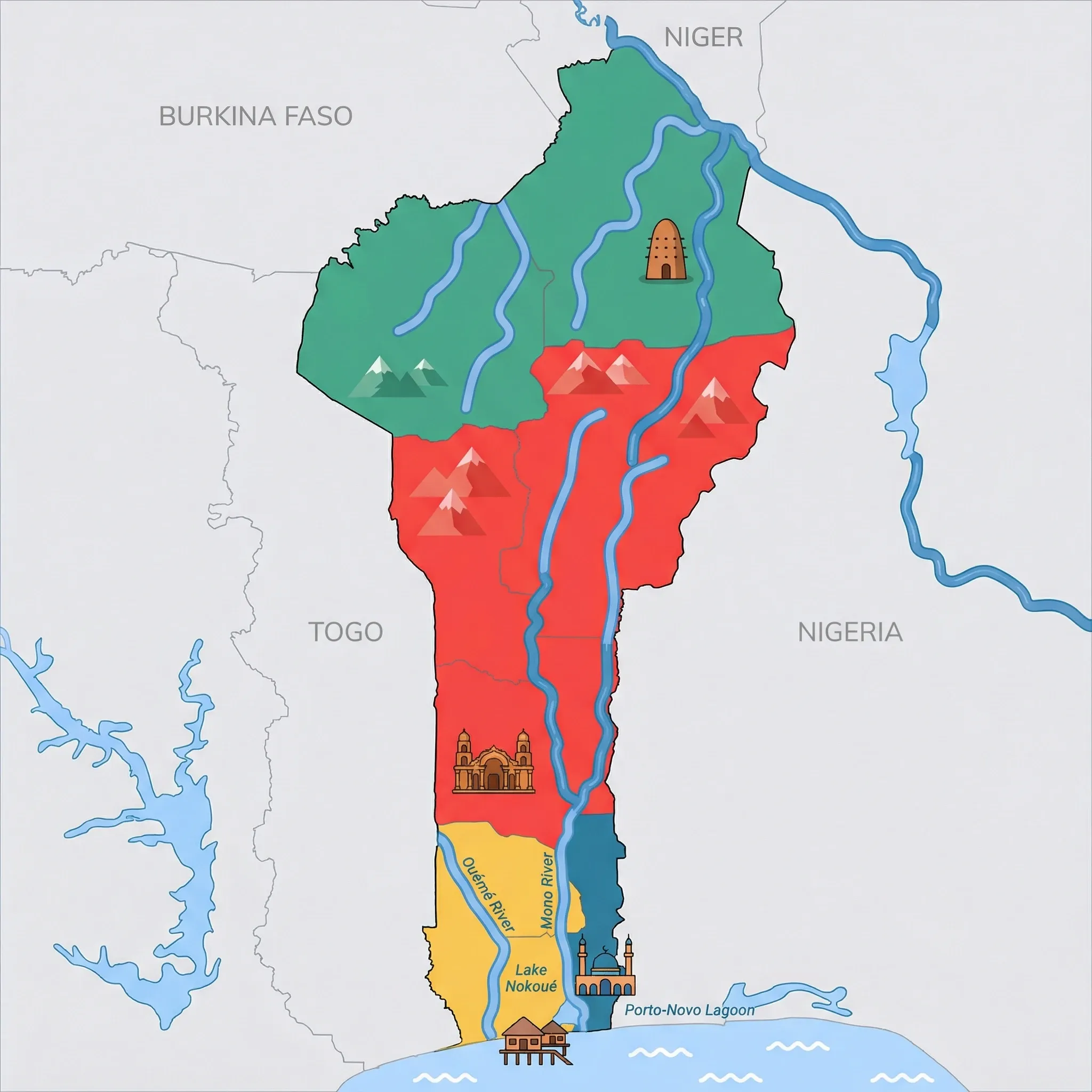
Click a region to explore
The coast of Benin is where the country's pulse beats fastest. Cotonou, the economic capital, is a sensory overload of swarming motorbikes (zemidjans), lively markets, and ocean spray. While the ocean itself is often too rough for swimming due to strong currents, the beaches along the Route des Pêches provide a beautiful backdrop for family walks and sandcastle building. Just a short drive west lies Ouidah, a town of immense historical significance as a center of the Voodoo religion and a former slave port. It offers a quieter, more atmospheric experience than Cotonou and serves as an open-air classroom for older children learning about world history.
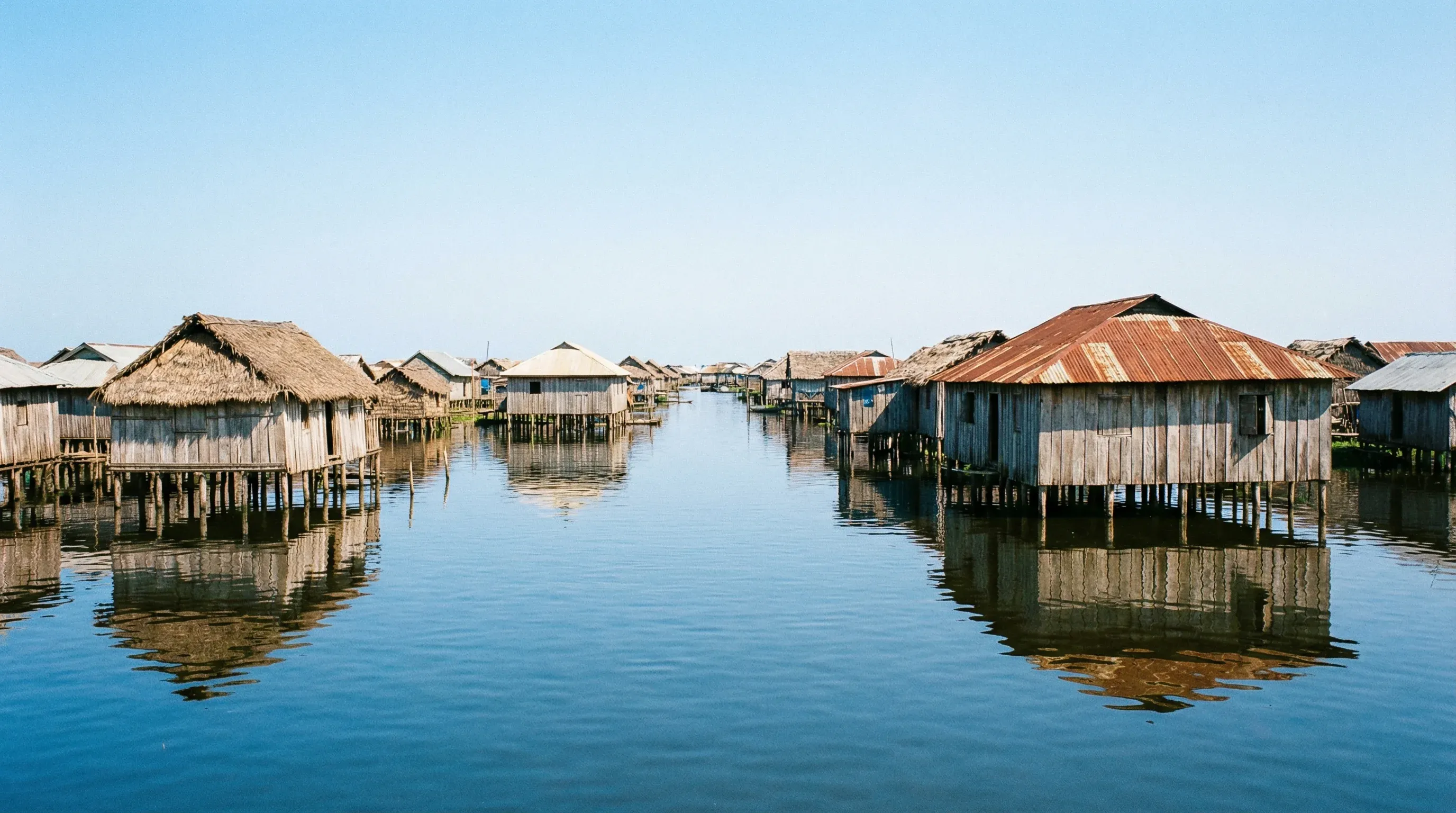
For a truly magical experience, families must head to Lake Nokoué. Here lies Ganvié, often called the "Venice of Africa," a village built entirely on stilts. Taking a pirogue (canoe) through the water channels, watching children row to school and vendors sell fruit from boats, is an unforgettable memory. The coast is also the best place to experience Benin's contemporary art scene, which is surprisingly accessible and colorful for kids.
Key Attractions
In Ouidah, the Temple des Pythons is a unique stop where dozens of royal pythons (revered as sacred deities) live inside a small temple. They are harmless, and brave children can even touch or hold them. Nearby, the Forêt Sacrée de Kpassè offers a walk among ancient trees and sculptures of voodoo deities, feeling like a scene from a fantasy movie.
For a dose of culture, the Fondation Zinsou in Cotonou and its counterpart Musée de la Fondation Zinsou (Villa Ajavon) in Ouidah offer world-class contemporary African art in spaces that are welcoming and often free. Finally, the Door of No Return remains a powerful monument on the beach, marking the point where enslaved people were forced onto ships; it is a somber but essential visit.
Practical Advice
The coast is hot and humid year-round. The ocean currents are dangerous; families should stick to hotel pools for swimming. Cotonou traffic can be overwhelming, so allow extra time to get anywhere. The "Petit Dry Season" in August is a pleasant time to visit, as is December.
Food & Drink
Typical meal times: Lunch is the main affair, usually 12:00 pm to 2:30 pm. Dinner is served from 7:00 pm to 10:00 pm, with restaurants in Cotonou staying open late.
Typical meal costs: A mid-range meal in Cotonou costs 6,000–12,000 XOF (approx. $10–20 USD / €9–18 EUR). Western-style hotel meals can reach 15,000–20,000 XOF (approx. $25–33 USD / €23–30 EUR).
Dietary requirements: Cotonou has the most diverse dining scene, with French, Lebanese, and Italian options making it easy to accommodate vegetarian or gluten-free diets. In Ouidah, options are more limited to local cuisine and simple French staples.
Signature dishes:
- Dja – A spicy tomato sauce typically served with rice or pasta, often containing small pieces of meat or fish.
- Manchin Pikk – A spicy, crunchy fried biscuit made from sheep fat and flour, a popular street snack in the coastal south.
- Fresh Seafood – Grilled barracuda, carp, and giant prawns are staples at beachside restaurants.
- Aloko – Fried plantains, a sweet and starchy side dish that children almost always love.
Why this score?
The adventure level is low as most activities, such as visiting the Python Temple or the Door of No Return, are focused on culture and history in urban or semi-urban settings. Boat trips to Ganvié on Lake Nokoué offer a unique experience but are well-organized and not physically demanding. The Route des Pêches is a developed coastal strip primarily used for relaxation and dining.
Why this score?
Cotonou offers the best medical care in Benin, featuring the national teaching hospital (CNHU) and several private clinics that cater to the expatriate community. While these facilities are the most likely to have English-speaking staff and modern diagnostic tools, they still fall below Western European or North American standards. Major trauma or complex surgeries typically necessitate medical evacuation.
Why this score?
This is Benin's primary tourist hub, home to major attractions like the Ganvié stilt village and the historical sites of Ouidah. It receives the highest concentration of international visitors in the country, though it remains a minor destination on a global scale. The proximity to the international airport and established beach resorts makes it the most accessible region for foreigners.

Cotonou is the most expensive part of Benin. High-end hotels charge international rates, often 60,000–120,000 XOF (approx. $100–200 USD / €90–180 EUR) per night. However, street food and local transport remain very cheap. Entry to the <a data-attraction-id="21902">Fondation Zinsou</a> is often free, making culture accessible.

Getting Here & Around
Getting Here
- Airports – Cotonou Cadjehoun Airport (COO) is the main international gateway, located right in the city.
- Driving – The coastal road connects Cotonou to Lomé (Togo) in the west and Lagos (Nigeria) in the east.
- Taxi – Official yellow taxis are available at the airport for transfers to hotels.
Getting Around
- Zemidjan (Moto-taxi) – The yellow-shirted bikers are everywhere. While fast, they can be risky for small children; look for drivers with helmets.
- Taxi – Private taxis or ride-hailing apps (like Gozem) are safer for families, especially in chaotic Cotonou traffic.
- Boat – Essential for visiting Ganvié; motorized boats can be hired at the Abomey-Calavi pier.
Nearby Airports (1 airport)
Cotonou Cadjehoun
COOCotonou
View full flight map for Benin →
Official Links

Packing List
Essential for the canoe trip to Ganvié where splashing is common and dropping a phone is fatal.
The equatorial sun is deceptive on the coast; extra protection is needed even if not swimming.
Malaria risk is present, especially near the stagnant waters of Lake Nokoué and lagoons.
Humidity in Cotonou can be stifling, and air conditioning is not guaranteed in shops or museums.
Mandatory for entry; you will likely be refused at the border without the original card.
Power cuts (load shedding) are common even in cities; street lighting is often inconsistent.
Benin is a high-risk zone year-round; bring enough paediatric medication for the whole trip.
ATMs are unreliable outside Cotonou; Euros are the easiest currency to exchange for XOF.
Public bins are rare; carry your own rubbish bag to avoid littering in nature or towns.
Dust and limited running water in rural areas make these essential for keeping kids clean.

Activities & Best Times

Hiking, wildlife, outdoor exploration, ecotourism
The region features the unique Ganvié stilt village on Lake Nokoué and the Sitatunga Valley, offering authentic immersion in West African water-based ecosystems. Travel is best during the long dry season when lake navigation is safest and outdoor wildlife and python shrines are most accessible.

Urban tourism, museums, historical sites, architecture
Ouidah offers a profound historical experience via the Slave Route, while Cotonou's Fondation Zinsou provides a world-class platform for contemporary African art. These cultural landmarks provide deep, authentic insights into the region's complex heritage, best enjoyed when humidity is lower and rain is minimal.

Beach resorts, marine activities: diving, snorkelling, kite surfing, wind surfing, sailing
The Route des Pêches and Fidjrossé Beach offer wide sandy stretches with authentic fishing culture, though the Atlantic surf is often too strong for casual swimming. International families will find the most pleasant lounging and coastal atmosphere during the dry months from December to February.

Scenic drives, countryside tours, route-based travel
The scenic drive along the Route des Pêches between Cotonou and Ouidah offers a celebrated coastal route through traditional villages and coconut groves. Driving conditions are optimal during the dry seasons, as heavy tropical rains in June and October can significantly degrade unpaved coastal roads.

Sport tourism, fitness activities, active recreation
Established facilities like Bab's Dock provide high-quality water sports and outdoor activities on the calmer lagoon waters, appealing to active international families. These activities are most enjoyable during the clear-sky months when water conditions are stable and outdoor temperatures are manageable.

Learning experiences, scientific sites, historical education
Nature Tropicale offers specialized educational experiences regarding marine conservation and local biodiversity, though it serves more as a supplementary activity than a primary destination. The site is best visited during the dry seasons to facilitate the outdoor and aquarium-based learning components.

Events, celebrations, seasonal attractions
National Voodoo Day in January is a globally unique event in Ouidah, offering a rare and authentic glimpse into traditional spiritual practices. While a major international draw, its peak is highly concentrated around the specific festival dates in early January.

Amusement parks, family entertainment venues
Local entertainment venues like Magic Parc and Dream Parc provide regional-scale amusement, though they lack the world-class immersion expected by sophisticated international travelers. These parks are best visited during major school holiday windows when weather is dry and facilities are fully operational.




Public Holidays & Calendar Next 12 months
Public holidays, festivals, cultural celebrations, and seasonal natural phenomena coming up in Cotonou & Coast over the next 12 months.
Loading holidays and events...

Travel Advisory
Benin is generally assessed as requiring elevated caution due to common street crime and localized security instability. Major agencies highlight severe risks in northern border regions that contrast with the more stable southern tourist areas.
Safety Topics
Traveller Advice (3 groups)

Maintain a low profile, avoid carrying large amounts of cash, and be particularly vigilant in crowded markets and on beaches after dark. Always carry a copy of your identification and remain aware of local political developments.

While legal status is complex, same-sex relationships are not widely socially accepted. Discretion is strongly recommended, as public displays of affection may lead to harassment or negative attention.

Female travellers may experience verbal harassment or unwanted attention. It is advisable to dress modestly, especially in rural or conservative areas, and avoid walking alone at night.
Agency Summaries
New Zealand does not have a specific travel advisory for Benin but recommends that visitors maintain standard safety awareness and secure comprehensive travel insurance.
A high level of caution is required nationwide due to violent crime and the potential for civil unrest. Security remains sensitive following a thwarted coup attempt in early December 2025.
Increased caution is advised across Benin due to risks of civil unrest, crime, terrorism, and kidnapping. Certain northern border regions are designated as Level 4 (Do Not Travel) due to extreme safety threats.
Travellers should remain highly vigilant throughout Benin due to prevalent crime. Heightened security risks exist in northern border regions, where all travel should be avoided because of the threat of terrorism and kidnapping.
While general travel is permitted in the south, the UK advises against all travel to northern border parks and all but essential travel to several northern and eastern departments due to terrorist activity and rising criminality.
Irish citizens should exercise a high degree of caution. Following political instability in late 2025, travellers are urged to avoid large gatherings and remain alert to security updates.
Information is provided for general guidance only and does not constitute travel, safety, medical, or legal advice. Conditions may change. Users are responsible for independently verifying information before travel.