

Bhutan is unlike any other family destination on Earth. Nestled deep in the Himalayas between China and India, this small kingdom remained isolated for centuries, preserving a unique culture that feels both ancient and alive. For families, it offers a safe, educational, and deeply spiritual adventure. The landscape is a dramatic canvas of snow-capped peaks, lush valleys, and rushing rivers, dotted with imposing dzongs (fortresses) and fluttering prayer flags. Traveling here requires a registered guide and driver, which makes logistics effortless for parents-you simply enjoy the ride while a local expert handles the winding mountain roads and cultural etiquette.
What truly sets Bhutan apart for children is its atmosphere of magic and mythology. Stories of flying tigresses, divine madmen, and thunder dragons are woven into the landscape. While the drives between valleys can be long and curvy, the destination is always rewarding. The air is pristine, the people are incredibly welcoming to children, and the philosophy of "Gross National Happiness" translates into a relaxed, mindful pace of travel. It is an expensive destination due to the daily Sustainable Development Fee, but this ensures crowds are low and the environment remains unspoiled.
Key Attractions
No trip to Bhutan is complete without visiting Paro Taktsang (Tiger's Nest). Clinging to a cliffside 900 metres above the valley, this monastery looks like it belongs in a fairy tale. While the full hike is challenging for young children, families can hire ponies for the first leg up to the cafeteria, making the journey manageable and exciting. In the same region, Rinpung Dzong offers a perfect introduction to Bhutanese architecture with its massive woodwork and courtyards where little monks often play.
In the capital, Thimphu, the Motithang Takin Preserve is a hit with kids who are fascinated by the Takin-Bhutan's national animal that looks like a cross between a cow and a goat. Nearby, the National Memorial Chorten is always buzzing with elderly locals spinning giant prayer wheels, a hypnotic sight for children. For a hands-on cultural experience, the Royal Textile Academy showcases the intricate art of weaving, and families can often watch weavers at work.
Driving east to Punakha, you will cross the stunning Dochula Pass. On clear days, the panoramic views of the Himalayas are breathtaking, and kids love running among the 108 memorial chortens. The warmer valley of Punakha is home to the majestic Punakha Dzong, widely considered the most beautiful in the country. It sits at the confluence of two rivers, and families can walk across the long suspension bridge nearby-a thrilling but safe experience that hovers high above the turquoise water.
Practical Advice
Spring (March–May) and Autumn (September–November) are the best times to visit for clear mountain views and pleasant temperatures. High-altitude sun is strong, so pack hats and high-SPF sunscreen. The roads are famous for their hairpin turns, so motion sickness medication is essential for children. Visa processing and the Sustainable Development Fee (SDF) are handled through your tour booking; ensuring you have a confirmed itinerary is the primary logistical step.
Food & Drink
Typical meal times: Lunch is typically served from 12:00 pm to 2:00 pm, and dinner from 7:00 pm to 9:00 pm. Meals are often buffet-style for tourists, allowing for flexibility.
Typical meal costs: BTN 400–1,200 (approx. $5–15 USD / €4.50–14 EUR) for local meals; BTN 1,200–2,500 (approx. $15–30 USD / €14–28 EUR) for tourist buffets or hotel dining.
Dietary requirements: Vegetarian food is extremely common, as many Bhutanese are vegetarian. Vegan options are available but require specifying "no cheese" (which is in almost everything). Gluten-free travelers can rely on red rice dishes, but should ask about buckwheat pancakes (puta) and avoid flour-based thickeners.
Family-friendly dining: Bhutanese food is famously spicy, but tourist restaurants always serve mild versions. Kids generally love momo (dumplings) and noodles. Highchairs are rare outside luxury hotels, so a portable travel booster is useful for toddlers.
Signature dishes:
- Ema Datshi – The national dish of chili peppers and cheese sauce. It is spicy by default, but essential to try (ask for a mild version).
- Kewa Datshi – Potatoes cooked with cheese and mild butter sauce. This is the ultimate kid-friendly Bhutanese comfort food-essentially cheesy potatoes.
- Momo – Steamed or fried dumplings filled with cheese, vegetables, or meat. A safe and delicious staple for children.
- Red Rice – A nutty, pink-hued rice variety that is healthier than white rice and accompanies almost every meal.
- Jasha Maroo – A minced chicken stew cooked with garlic, ginger, and tomato, often less spicy than pork or beef dishes.

Bhutan is an expensive destination due to the daily Sustainable Development Fee (SDF). Adults pay $100 USD per night (plus tour costs), children 6–12 pay $50 USD, and under-6s are free. A family of four can expect to spend $800–1,200 USD (approx. €740–1,100 EUR / £630–950 GBP) per day total, covering the tax, guide, vehicle, accommodation, and food.
Age Suitability





Did you know? Bhutan welcomes approximately 21,000 international visitors per year. Most visitors come from South Asia.

Explore Regions
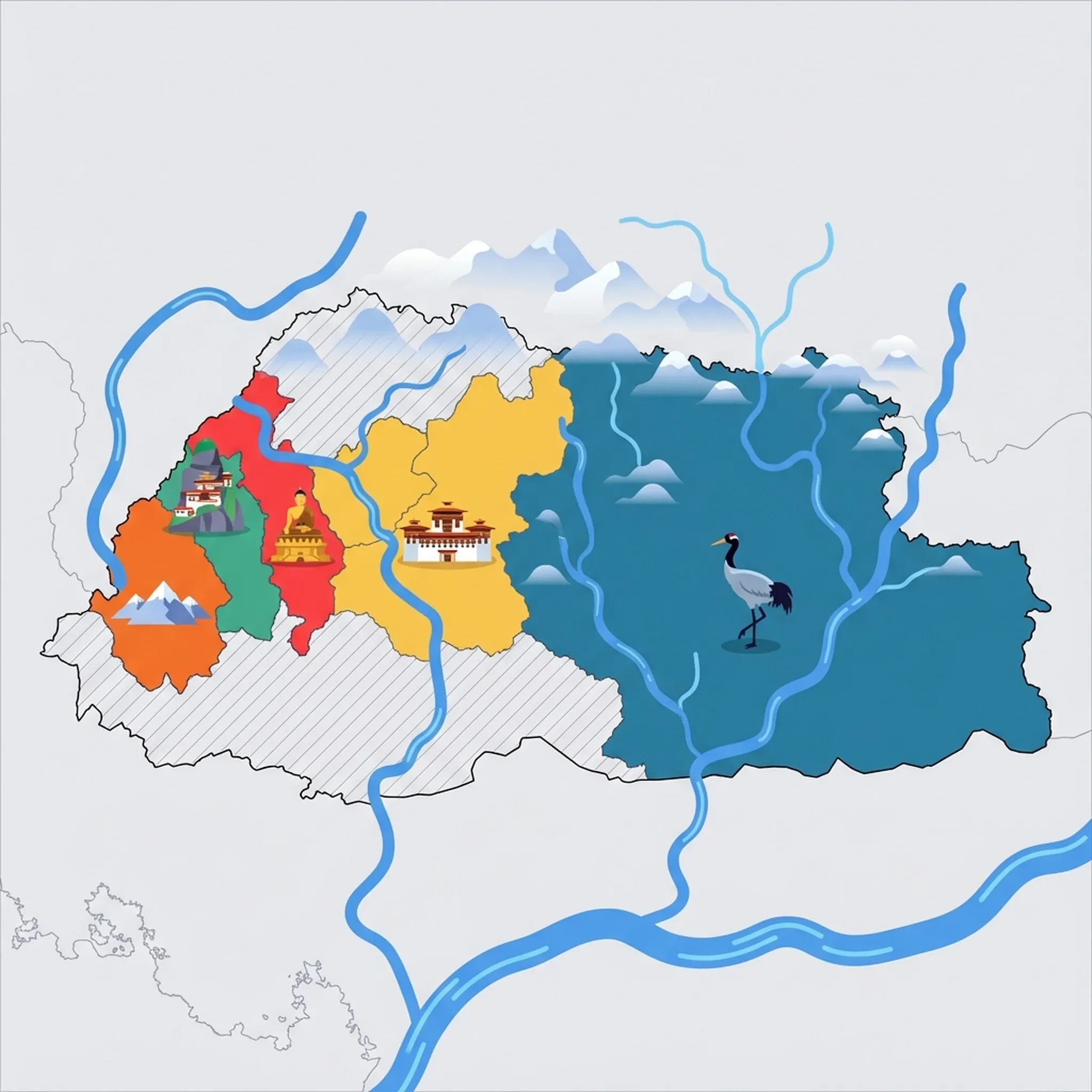
5 Regions
Central & Eastern Bhutan
The spiritual heartland where legends come alive 🏔️
Haa Valley
A hidden alpine gem of tradition and tranquility 🌲
Paro (Tiger's Nest)
Where your Himalayan adventure begins and history clings to the cliffs 🐅
Punakha
The golden valley of eternal spring 🌼
Thimphu
A capital city where tradition meets modernity 🇧🇹
Click on a region marker to explore details. Use the dropdown to color regions by activity suitability.

Getting There & Around
Getting There
- By Air – Paro International Airport (PBH) is the sole international gateway, located in Paro. Flights are operated exclusively by Drukair and Bhutan Airlines from Bangkok, Delhi, Kathmandu, Singapore, and Kolkata. The landing is spectacular, weaving through valley peaks.
- By Land – Entry is possible via the southern border towns of Phuentsholing, Gelephu, or Samdrup Jongkhar if arriving from India (West Bengal or Assam). This is a long journey and less common for international families than flying.
- Entry Requirements – Visas are required for all tourists (except Indian, Bangladeshi, and Maldivian nationals) and must be arranged before travel through a tour operator or the official online portal. The $40 visa fee is separate from the daily SDF. Check your government website for the latest visa requirements, or use the IATA Travel Centre entry-requirements checker.
Getting Around
- Private Vehicle – The standard and most practical way to explore. Tourists (except regional visitors) must book a package that includes a dedicated SUV or minivan with a driver and guide. This is ideal for families, allowing you to stop for photos or bathroom breaks whenever needed on the winding roads between Thimphu and Punakha.
- Domestic Flights – Limited services connect Paro to Bumthang in Central & Eastern Bhutan (Bathpalathang Airport). This 35-minute flight saves a grueling 10-hour drive, which is highly recommended for families with young children prone to car sickness.
- Walking – Towns like Paro and Thimphu are walkable, but sites are spread out. Walking is mostly for exploring specific attractions like Tashichho Dzong or hiking nature trails.

Packing List
Roads are famously winding with endless hairpin turns; essential for kids even if they don't usually get car sick.
You must remove shoes at every temple and dzong. Laces become frustrating after the fifth stop of the day.
Stray dogs in towns bark incessantly at night; they sleep all day and guard the streets loudly after dark.
Currency exchange is strict; notes with any tears, marks, or folds are often rejected by banks and shops.
Street lighting is minimal and power cuts can occur; useful for evening walks or navigating hotel grounds.
Helps naturally with both mild altitude symptoms and motion sickness on long drives.

Activities & Best Times

City & Cultural
ExcellentUrban tourism, museums, historical sites, architecture
Thimphu offers a world-class blend of living Buddhist heritage and striking traditional architecture, with iconic sites like the Buddha Dordenma. The dry, clear months of spring and autumn provide the best atmosphere for exploring the city's historic quarters and vibrant festivals.
Home to the ancestral seat of the monarchy at Trongsa Dzong and the spiritual heartland of Bumthang, offering authentic architectural and religious heritage. The experience is best during the clear seasons, though cultural sites remain open in the cold winter shoulder months.
Punakha Dzong is a world-class architectural masterpiece located at a scenic river confluence, providing an authentic glimpse into Bhutanese heritage. The lower valley elevation makes winter a pleasant shoulder season for exploration compared to the colder Thimphu or Paro.

Adventure & Nature
Very GoodHiking, wildlife, outdoor exploration, ecotourism
Features world-class trekking routes like the Trans Bhutan Trail and Merak Sakteng, offering immersive Himalayan wilderness and biodiversity. Peak months align with the dry, clear spring and autumn windows, while summer monsoons and winter snow create significant access barriers.
The region features the Trans Bhutan Trail and iconic valley hikes like Khamsum Yulley Namgyal Chorten, offering deep immersion in Himalayan landscapes. Peak months offer stable weather and clear mountain views, while the summer monsoon brings leeches and trail erosion.
Immersion in the high Himalayas is possible via major national parks and trekking routes like the Druk Path, home to unique species like the Takin. Peak conditions coincide with the dry seasons when trails are most accessible and mountain visibility is at its best.

Festivals & Seasonal
Very GoodEvents, celebrations, seasonal attractions
The Thimphu Tshechu is described as 'one of Asia's most authentic and visually stunning festivals'. This is Bhutan's largest tshechu and a globally recognized cultural event. 'Marginal' is a severe underrating.
The Paro Tshechu is one of Bhutan's flagship cultural events and a primary international draw. The notes describe it as 'globally significant' - this contradicts the 'marginal' rating. Bhutanese tshechus are internationally renowned and travelers specifically time visits around them.
The Punakha Tshechu is described as 'a significant international draw' - this is incompatible with 'marginal' rating. Should be at least 'good' to reflect its authentic cultural significance.

Relaxation & Wellness
GoodSpa retreats, wellness centers, peaceful getaways
Renowned for its 'Tshachus' (medicinal hot springs) like Dur and Duenmang, providing a rustic and authentic Himalayan restorative experience. These facilities are traditionally visited during the colder months when the therapeutic heat is most effective and accessible.
While rustic, Bhutan's hot springs are culturally significant wellness experiences embedded in traditional medicine practices. The rating should match Central & Eastern Bhutan's 'good' rating for similar tshachu facilities. 'Marginal' undervalues the authentic wellness tourism appeal.

Road Trips & Scenic
GoodScenic drives, countryside tours, route-based travel
The Phrumsengla Scenic Highway and Yutong La pass offer some of the most dramatic high-altitude driving in the world. Travel is peak during the clear months to ensure visibility and safety, as heavy monsoon rains frequently cause landslides and fog during the summer.
The drive from Thimphu over the Dochula Pass is one of the most celebrated scenic routes in the Himalayas. Clear skies in spring and autumn are essential for the 360-degree mountain views, which are frequently obscured by clouds during the monsoon.
Spectacular high-altitude drives like the highway via Dochula Pass offer world-class Himalayan panoramas and authentic rural transitions. Visibility is key, making the clear spring and autumn months ideal, while the summer monsoon brings significant travel disruption.

Sports & Active
GoodSport tourism, fitness activities, active recreation
Includes internationally recognized infrastructure for long-distance hiking and cycling via the Trans Bhutan Trail network. Active tourism is concentrated in the temperate, dry months to manage the physical demands of high-altitude terrain.
Offers high-quality active infrastructure including sections of the Trans Bhutan Trail and river-based activities at the confluence. Conditions are optimal when dry, as heavy summer rains can make trails slippery and river currents too volatile for standard tourist rafting.
The region features internationally recognized trekking routes and adventure parks that cater to active travelers seeking high-altitude challenges. Optimal conditions occur during the stable weather windows of spring and autumn, while winter ice and summer rains pose barriers.

Public Holidays & Calendar Next 12 months
Public holidays, festivals, cultural celebrations, and seasonal natural phenomena coming up in Bhutan over the next 12 months.
Loading holidays and events...
Climate & Weather
Central & Eastern Bhutan
Show Details
| Month | Temp °C | Rain | Humidity |
|---|
Haa Valley
Show Details
| Month | Temp °C | Rain | Humidity |
|---|
Paro (Tiger's Nest)
Show Details
| Month | Temp °C | Rain | Humidity |
|---|
Punakha
Show Details
| Month | Temp °C | Rain | Humidity |
|---|
Thimphu
Show Details
| Month | Temp °C | Rain | Humidity |
|---|

Travel Advisory
All major global agencies consistently rate Bhutan as a low-risk destination. Standard safety awareness is sufficient for travelers, though they must navigate a highly regulated tourism framework.
Safety Topics
Traveller Advice (5 groups)

Ensure all visas and Sustainable Development Fees (SDF) are paid in advance through licensed operators. Carry physical copies of your visa clearance and proof of insurance.

Accessibility is very limited throughout the country. Steep terrain and lack of specialized infrastructure make travel challenging for those with mobility impairments.

While same-sex activity was decriminalized in 2021, the society remains traditional. Public displays of affection may attract unwanted attention.

Be prepared for altitude sickness when traveling above 2,500 meters. Guides are mandatory for all treks, and emergency medical evacuation insurance is strongly recommended.

Bhutan is generally safe for women, but conservative dress (covering shoulders and knees) is required at all religious and official sites.
Agency Summaries
The security environment is comparable to New Zealand. Travelers should focus on health preparations, specifically for high altitudes, and ensure they have robust medical evacuation coverage.
The country is stable and safe for travelers. Standard security measures are sufficient. Visitors should be aware of the daily sustainable development fee and limited medical infrastructure in remote areas.
Bhutan maintains a low crime rate. Primary risks involve the physical environment, such as high altitude and seasonal monsoon weather. Visitors must comply with entry fee requirements and use licensed operators.
Travelers face no significant security threats but must adhere to strict entry rules, including pre-approved visas and environmental fees. Respect for local Buddhist customs and modest dress is expected.
Tourism is highly regulated. Irish citizens must secure a visa and a guide for travel beyond the main urban centers. Comprehensive medical insurance is essential due to limited local assistance.
Bhutan is considered a safe destination for visitors. All tourists must arrange their travel through approved agents and pay a daily sustainability fee. Travel outside major cities usually requires a government-authorized guide.
Information is provided for general guidance only and does not constitute travel, safety, medical, or legal advice. Conditions may change. Users are responsible for independently verifying information before travel.