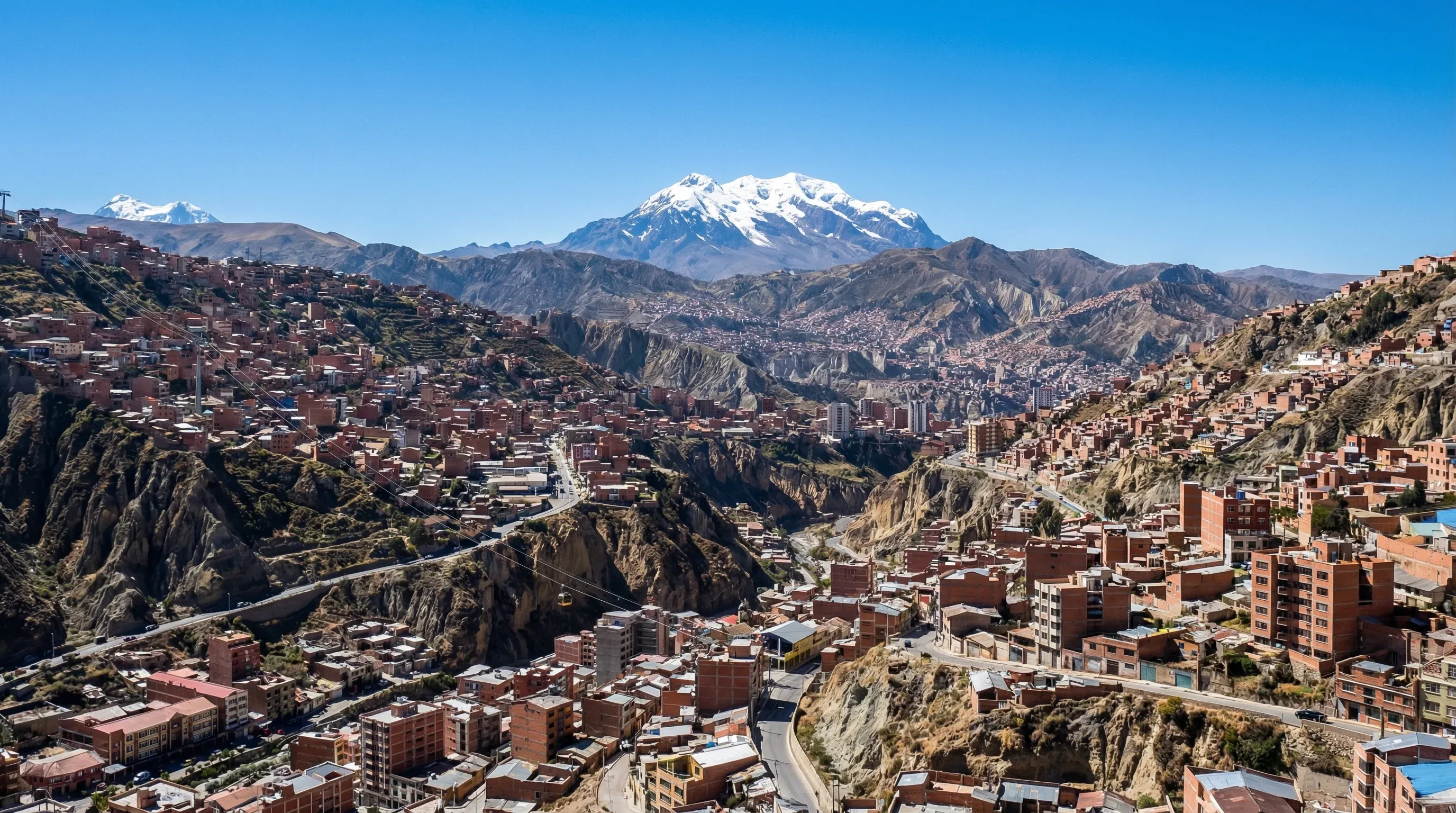

La Paz & Surroundings
A city in the clouds where cable cars replace buses 🚠🏙️
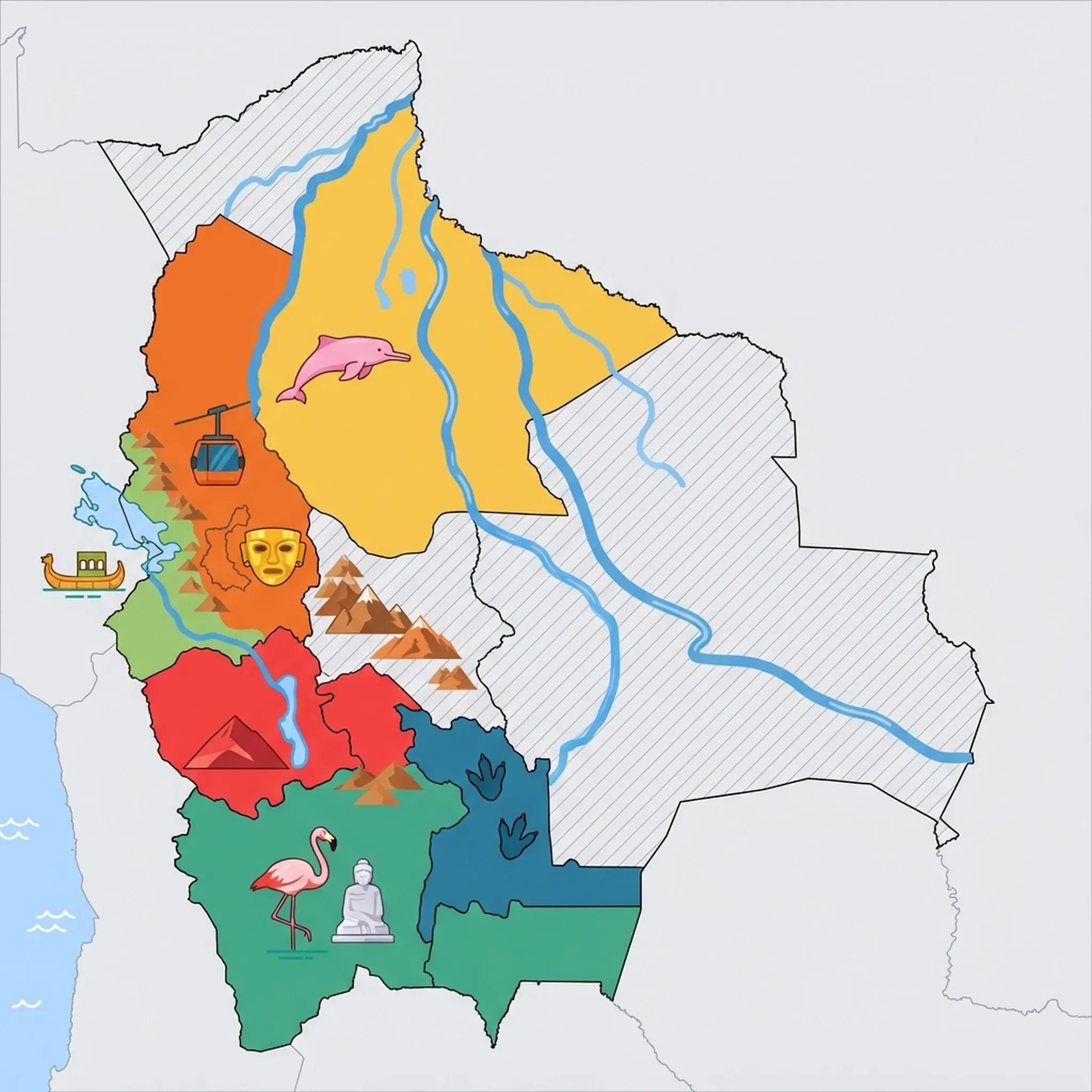
Click a region to explore
La Paz is an assault on the senses in the best possible way—a sprawling metropolis clinging to the sides of a canyon at 3,640 meters (11,942 feet). For families, it is a city of adventure and unparalleled views. The geography itself is the main attraction; the city spills down from the high rim of El Alto to the wealthy southern zone, all watched over by the majestic, snow-capped Mount Illimani. While the traffic and bustle on the ground can be overwhelming, the sky above offers a peaceful and thrilling way to travel via the extensive cable car network. It's a city that feels like science fiction, where gondolas glide silently over markets, skyscrapers, and rocky cliffs.
Beyond the urban spectacle, the surroundings of La Paz offer accessible nature and deep history. The landscape is dry and dramatic, characterized by reddish clay and strange geological formations. Culturally, the city is a blend of modern business and ancient Aymara tradition. You'll see women in traditional bowler hats and pollera skirts (cholitas) everywhere, giving children a vivid glimpse into a different way of life. While the altitude demands respect (take it easy for the first two days!), the unique experiences—from walking on the 'moon' to seeing zebras directing traffic (a local safety initiative)—make it a memorable family hub.
Key Attractions
The absolute highlight for any family is Mi Teleférico. It's not just transport; it's an attraction. The Red Line offers stunning views of the city descending from El Alto, while the Yellow and Green lines sweep over the southern cliffs. Kids love spotting soccer fields and gardens from the air. It's safe, clean, and stroller-friendly.
Just a short drive from the center is the Moon Valley (Valle de la Luna). It’s not a valley but a maze of eroded clay canyons and spires. A secure walking path winds through the strange formations, making it feel like exploring another planet. It's an easy walk for children and offers great photo opportunities without a strenuous hike.
For a history lesson, the Tiwanaku Archaeological Site is a must-do day trip. These pre-Inca ruins include massive stone monoliths and the famous Gate of the Sun. It’s a vast open space where kids can run around, though the history is best appreciated with a guide who can explain the mysteries of this ancient civilization.
Within the city, the Witches Market (Mercado de las Brujas) is a fascinating stop. Stalls sell medicinal plants, charms, and the famous dried llama fetuses used for building blessings. It can be a bit macabre for very sensitive children, but most find it essentially 'Harry Potter-esque' and intriguing.
Practical Advice
Best time to visit: May to October is the dry season with sunny, crisp days. Nights are cold. The wet season (November to March) can be foggy and rainy, obscuring the views.
Logistics: La Paz is hilly and high. Walking uphill is exhausting. Use the Teleférico and taxis to get around. Acclimatization is key; drink plenty of water and coca tea (mate de coca), which is safe and widely available. Ubers and radio taxis are safer than hailing street cabs.
Food & Drink
Typical meal times: Lunch (12:00 pm to 2:30 pm) is the main event. Dinner is often later, from 7:00 pm onwards. Many cafes are open all day.
Typical meal costs: Diverse options exist. A meal in a nice cafe costs 50–90 BOB (approx. $7–13 USD / €6.50–12 EUR). Fine dining (like Gustu) is pricier but good value globally. Street snacks like salteñas cost 6–10 BOB (approx. $0.85–1.45 USD / €0.80–1.30 EUR).
Dietary requirements: La Paz is very cosmopolitan. You will find excellent vegetarian, vegan, and gluten-free options in the Sopocachi and Zona Sur neighborhoods. Traditional Bolivian food is heavy on meat and potatoes.
Signature dishes:
- Salteña – A sweet and savory baked pastry filled with soupy meat stew, egg, and olives. The ultimate morning snack. Warning: they are messy to eat!
- Plato Paceño – A simple plate of corn, broad beans, fried cheese, and potatoes. Vegetarian-friendly and very traditional.
- Sandwich de Chola – A soft bun filled with roasted pork, crackling, and pickled vegetables/salsa, famous in La Paz.
Why this score?
The city itself is an urban adventure due to its extreme verticality and high altitude, while nearby attractions like the 'Death Road' and Mount Illimani offer high-adrenaline activities. Navigating the chaotic street markets and steep hills requires a level of physical stamina not found in most global capitals.
Why this score?
La Paz offers the highest standard of medical care in Bolivia, with several private clinics like Clínica Cemes that are accustomed to treating foreigners. However, while adequate for many needs, it lacks the world-class facilities and widespread English proficiency found in top-tier medical hubs.
Why this score?
As the country's primary international gateway and administrative hub, La Paz receives a consistent flow of global travelers. Its unique topography and the 'Mi Teleférico' system have made it a recognized urban destination, though it lacks the mass-tourism volumes of major regional capitals like Buenos Aires.

La Paz offers a huge range. You can eat for $2 or $50. Family hotels in safe districts like Sopocachi cost 350–700 BOB (approx. $50–100 USD / €45–90 EUR). Cable car tickets are cheap at 3 BOB (approx. $0.45 USD / €0.40 EUR) per ride.

Getting Here & Around
Getting Here
- Airports – El Alto International Airport (LPB) serves the city. It is one of the highest airports in the world. Taxis and shuttle vans connect to the city center (45–60 mins depending on traffic).
- Bus – The main bus terminal connects to all major Bolivian cities. It is chaotic; keep a close eye on children and luggage.
Getting Around
- Cable Car – Mi Teleférico is the best way to move between the center, the southern zone, and El Alto. It avoids traffic and offers sightseeing simultaneously.
- Taxi/Ride-share – Radio taxis and Uber are essential for areas not served by cable cars. Avoid unmarked white taxis.
- Walking – Good for exploring the historic center (Plaza Murillo), but the altitude makes uphill walking very difficult for little legs.
Nearby Airports (1 airport)
El Alto International
LPBLa Paz
View full flight map for Bolivia →
Official Links

Packing List
Useful for parents to monitor family oxygen levels at high altitude for peace of mind.
Dehydration happens faster at altitude and exacerbates altitude sickness symptoms.
The atmosphere is thinner here; sunburn can happen in 15 minutes even on cloudy days.
The air is incredibly dry and can cause nosebleeds in children; keeps passages moist.
The high-altitude air is extremely dry and often causes nosebleeds, especially in children.
Budget hotels and hostels rarely have plugs in the sinks, making it hard to wash hands or clothes.
Heating is rare in hotels, and nights on the Altiplano drop well below freezing.
Power cuts can occur in remote areas like the Salt Flats; useful for nighttime bathroom trips.
The dry, dusty air at altitude can be very irritating to eyes, particularly for contact lens wearers.

Activities & Best Times

Urban tourism, museums, historical sites, architecture
A truly unique high-altitude metropolis featuring the world's most extensive cable car system and the ancient Tiwanaku ruins. The dry season (May-Sep) is ideal for exploring the atmospheric streets and markets, while heavy rain in Jan-Mar can hinder outdoor sightseeing and site access.

Hiking, wildlife, outdoor exploration, ecotourism
High-altitude trekking and the world-famous 'Death Road' provide unique wilderness experiences and immersion in Andean ecosystems. Peak months align with the dry winter (May-Sep) when skies are clear; the wet summer (Nov-Mar) brings significant landslide risks and poor visibility.

Sport tourism, fitness activities, active recreation
A premier destination for high-altitude mountaineering on Huayna Potosi and world-class downhill mountain biking on recognized routes. The dry season (May-Sep) offers stable conditions for these technical activities, while the summer rains (Nov-Mar) make trails and peaks dangerous.

Learning experiences, scientific sites, historical education
Purpose-built science and natural history facilities, including the national planetarium and aquarium, offer valuable family learning opportunities. Access is best during the dry season (May-Sep) to avoid the transport disruptions and heavy rains common during the summer months.

Scenic drives, countryside tours, route-based travel
The dramatic descent to the Yungas and the circuit around Mount Illimani offer some of the world's most spectacular scenic driving routes. Peak conditions occur in the dry season (May-Sep) for safety and visibility, whereas the wet season poses significant landslide hazards on these mountain roads.

Events, celebrations, seasonal attractions
Hosts the world-renowned Fiesta del Gran Poder and the unique Alasitas miniature festival which attract international interest. Peak months align with these specific events in January and May/June; other months lack similar internationally significant cultural celebrations.

Amusement parks, family entertainment venues
Features regional family entertainment venues like Parque de las Culturas, though they lack the world-class scale of global tier-one destinations. Best visited during the dry winter months (Jun-Aug) for comfortable outdoor play, as summer rainfall frequently disrupts activities.

Attractions (19 total)



Public Holidays & Calendar Next 12 months
Public holidays, festivals, cultural celebrations, and seasonal natural phenomena coming up in La Paz & Surroundings over the next 12 months.
Loading holidays and events...

Travel Advisory
All six major agencies recommend a baseline level of elevated caution for Bolivia. While most of the country is open for travel, there is a strong consensus on the risks posed by frequent civil unrest and roadblocks, as well as high-risk pockets like the Chapare region where crime levels are critical.
Safety Topics
Traveller Advice (4 groups)

Stay informed via local media regarding roadblocks and strikes which can strand travellers for days. Always carry extra food, water, and warm clothing on long road trips. Avoid any large gatherings or protests, as they can turn violent unexpectedly.

Information on accessibility is limited; travellers with physical or sensory disabilities should prepare for infrastructure challenges and research medical facility locations in advance.

Be aware of local attitudes and social norms; travellers are encouraged to review specific advice regarding safety and legal considerations for the LGBTQ+ community in Bolivia.

Female travellers should consult gender-specific safety guides and take standard precautions, especially when travelling solo or at night in urban centres.
Agency Summaries
Heightened caution is necessary because of the potential for violent crime and sudden civil unrest. New Zealanders should avoid all protests and avoid the Chapare region for any non-essential purposes due to kidnapping and extortion risks.
Australians are encouraged to be particularly careful due to the dual threats of violent crime and civil instability. Demonstrations and roadblocks are common and unpredictable, potentially leading to significant travel delays or violence.
The UK government advises against any non-essential travel to the Chapare region in Cochabamba. Across the country, visitors should prepare for disruptions caused by political demonstrations and marches, which can emerge with very little notice and block major transport routes.
Irish citizens should be aware of a continuous risk of social unrest and strikes that can impact tourist infrastructure and domestic travel. Vigilance is required near large crowds, and travellers are warned not to attempt to bypass road blockades.
Increased caution is advised nationwide because of civil unrest, which often manifests as sudden strikes and demonstrations. Specifically, the Chapare region is designated as 'Do Not Travel' due to high levels of violent crime and limited emergency support for foreign nationals.
Travellers should remain highly vigilant due to persistent political and social tensions that frequently result in roadblocks throughout the country. While the general advice is to be cautious, there is a specific warning to avoid non-essential travel to the Chapare region because of risks related to drug trafficking and kidnapping.
Information is provided for general guidance only and does not constitute travel, safety, medical, or legal advice. Conditions may change. Users are responsible for independently verifying information before travel.