
Click a region to explore
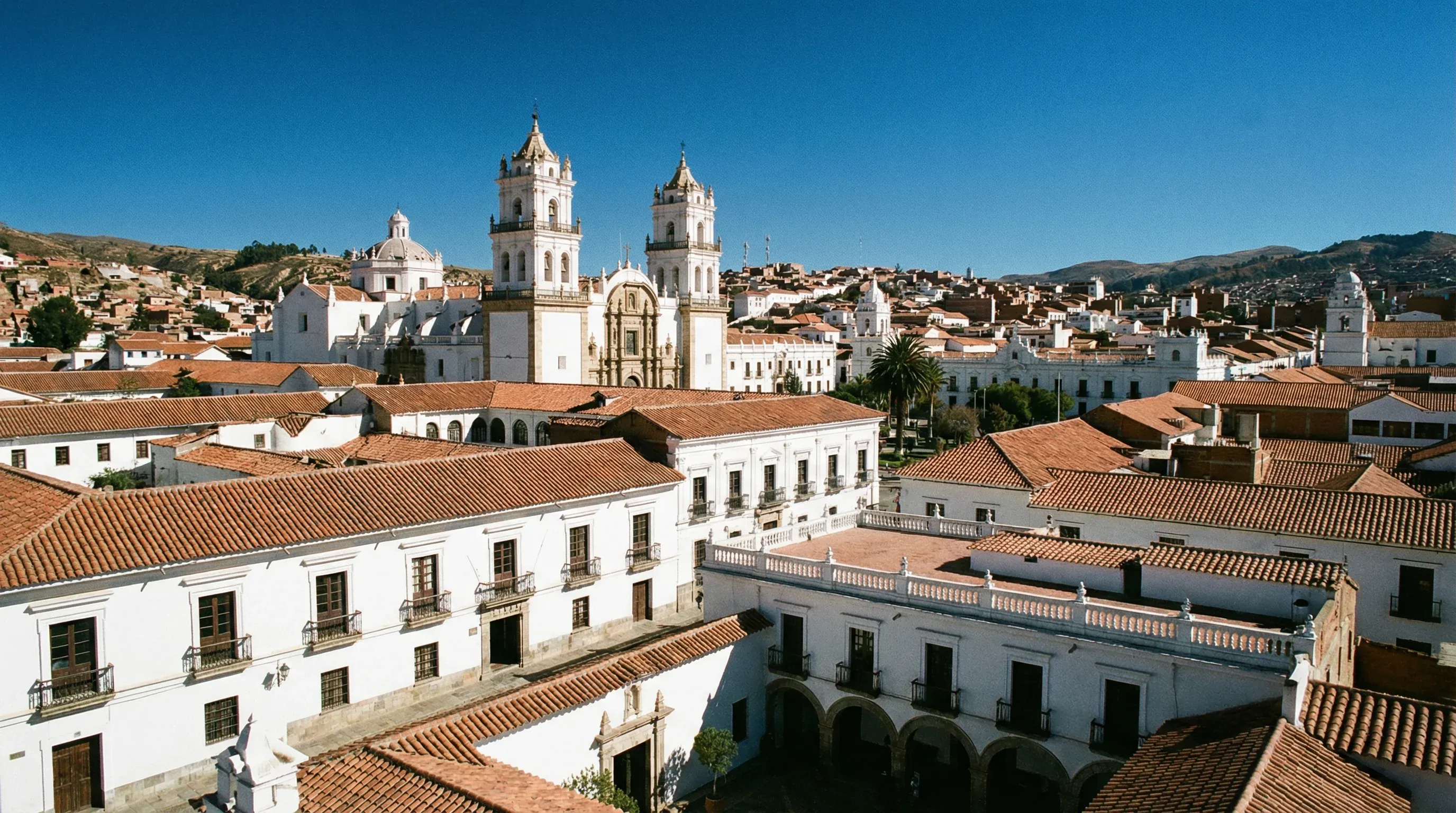
Sucre is widely considered the best city in Bolivia for families. Sitting at a lower altitude (2,810 meters / 9,200 feet) than La Paz or Potosí, the air is easier to breathe, and the climate is spring-like year-round. It is a city of blinding white colonial buildings, red tile roofs, and manicured parks. The vibe is relaxed, safe, and sophisticated, often inviting travelers to stay longer than planned. For children, Sucre offers two unbeatable drawcards: dinosaurs and chocolate.
The city feels manageable. The traffic is less chaotic than La Paz, and the historic center is highly walkable. Families can spend days just hanging out in the Plaza 25 de Mayo, feeding pigeons and eating ice cream. It is the constitutional capital of Bolivia, so it holds deep historical significance, but it wears its history lightly. The presence of a university gives it a youthful energy, meaning plenty of cafes and pizzerias that cater to fussy eaters. It is the perfect "decompression" stop in a Bolivian itinerary.
Key Attractions
The number one attraction for kids is the majestic Cal Orck'o (Cretaceous Park). Located just outside the city, it features a massive vertical limestone wall covered in over 5,000 real dinosaur footprints—the largest collection in the world. Viewing scopes allow kids to see the tracks up close, and the park has life-sized fiberglass dinosaur models that are perfect for photos. It’s an absolute must-visit.
In the city center, the Casa de la Libertad is where Bolivia's independence was signed. It’s a beautiful museum that offers a digestible history lesson. For a fairy-tale experience, visit the Castillo de la Glorieta on the outskirts. This pink, eccentric castle looks like a mix of Disney and history, built by a wealthy couple in the 19th century. Kids love exploring its towers and gardens.
Don't miss the local chocolate shops (Para Ti or Chocolates Taboada). Sucre is the chocolate capital of Bolivia, and many shops sell high-quality truffles and bars that make perfect souvenirs (or snacks).
Practical Advice
Best time to visit: Sucre is great year-round. The dry season (April to October) brings guaranteed blue skies. October and November are the warmest months.
Logistics: The altitude is moderate, so altitude sickness is rare, making this a great place to start a Bolivian trip before heading higher. The city is hilly, so wear comfortable shoes.
Food & Drink
Typical meal times: Lunch is strict: 12:00 pm to 2:00 pm. Many businesses close for siesta during these hours. Dinner starts around 7:00 pm.
Typical meal costs: Mid-range meals cost 40–80 BOB (approx. $6–11.50 USD / €5.50–10.50 EUR). Fine dining is very accessible, costing around 100–150 BOB (approx. $14.50–22 USD / €13–20 EUR).
Dietary requirements: Excellent. Sucre has many tourist-friendly cafes serving salads, wraps, vegetarian burgers, and international cuisine. Gluten-free options are available in specialized cafes.
Signature dishes:
- Mondongo – Not the tripe dish found elsewhere! In Sucre, this is a heavy, delicious stew of pork ribs, yellow chili, and corn (mote).
- Chorizo Chuquisaqueño – A flavorful, slightly spicy local sausage usually served with bread and salad as a sandwich or main meal.
- Chocolate – Sucre's chocolates often feature local ingredients like quinoa, salt, or chili.
Why this score?
Sucre is one of the more developed and accessible regions in Bolivia, offering a relaxed urban environment with well-paved streets and modern amenities. Adventure is limited to light hiking in the nearby Cordillera de los Frailes or visiting the paleontological sites.
Why this score?
As a major university city and the constitutional capital, Sucre has several hospitals and clinics that provide better care than rural Bolivia. While it is more reliable than Potosí or Uyuni, it still falls short of international standards for specialized emergency care.
Why this score?
Known as the 'White City,' Sucre is a popular cultural destination for those seeking colonial architecture and the unique dinosaur tracks at Cal Orck'o. It maintains a steady but moderate flow of international visitors, many of whom stay longer for Spanish language immersion.

Sucre is excellent value. You get high-quality accommodation and food for lower prices than La Paz. A boutique hotel family room costs 300–550 BOB (approx. $45–80 USD / €40–73 EUR). A 3-course lunch menu costs 25–40 BOB (approx. $3.50–6 USD / €3–5 EUR).

Getting Here & Around
Getting Here
- Airports – Alcantari International Airport (SRE) is about 30km (45 mins) from the city. Minibuses and taxis connect to the center. Flights from La Paz and Santa Cruz are frequent.
- Bus – The bus station is clean and well-organized. Overnight buses from La Paz take 12 hours (road is paved). Buses to Potosí take 3 hours on a good road.
Getting Around
- Walking – The best way to see the white city center. Sidewalks can be narrow, so single-file walking is often needed.
- Dino Truck – A double-decker tourist bus ("Dino Truck") runs from Plaza 25 de Mayo to the Cretaceous Park. Kids love riding on the open top.
- Taxi – Very cheap, usually 5 BOB (approx. $0.70 USD) per person for short trips.
Nearby Airports (1 airport)
Juana Azurduy De Padilla
SRESucre
View full flight map for Bolivia →

Packing List
The sidewalks are often polished stone or tiles which can be incredibly slippery.
Even on hot days, the shade is cool and evenings get chilly; layers are key.
The white buildings reflect the sun intensely; glare can be strong for children.
The high-altitude air is extremely dry and often causes nosebleeds, especially in children.
Budget hotels and hostels rarely have plugs in the sinks, making it hard to wash hands or clothes.
Heating is rare in hotels, and nights on the Altiplano drop well below freezing.
Power cuts can occur in remote areas like the Salt Flats; useful for nighttime bathroom trips.
The dry, dusty air at altitude can be very irritating to eyes, particularly for contact lens wearers.

Activities & Best Times

Hiking, wildlife, outdoor exploration, ecotourism
The Maragua Crater and unique paleontological sites like Cal Orck'o provide high-authenticity exploration for active families. Best visited in the dry season from May to September when mountain trails are safe and visibility of the massive footprint walls is optimal.

Urban tourism, museums, historical sites, architecture
A beautifully preserved UNESCO colonial center featuring significant historical sites like Casa de la Libertad and world-class indigenous art at the ASUR museum. The clear, sunny weather of the dry winter months is ideal for exploring the iconic white-washed architecture on foot.

Learning experiences, scientific sites, historical education
Parque Cretácico hosts the world's largest collection of dinosaur footprints, offering a unique scientific destination for families interested in paleontology. Heavy rainfall between December and March can degrade the outdoor viewing experience and access to the fossil tracks.

Scenic drives, countryside tours, route-based travel
Dramatic high-altitude routes connect Sucre to Potosí and Tarabuco, offering spectacular Andean landscapes and access to authentic rural markets. Driving is safest and most scenic during the dry months, as heavy summer rains increase the risk of landslides on mountain passes.

Sport tourism, fitness activities, active recreation
Authentic pre-Hispanic Inca trails provide challenging high-altitude trekking routes for active families seeking immersive physical experiences. The wet season from December to March makes these ancient stone paths extremely slippery and difficult to navigate safely.




Public Holidays & Calendar Next 12 months
Public holidays, festivals, cultural celebrations, and seasonal natural phenomena coming up in Sucre over the next 12 months.
Loading holidays and events...

Travel Advisory
All six major agencies recommend a baseline level of elevated caution for Bolivia. While most of the country is open for travel, there is a strong consensus on the risks posed by frequent civil unrest and roadblocks, as well as high-risk pockets like the Chapare region where crime levels are critical.
Safety Topics
Traveller Advice (4 groups)

Stay informed via local media regarding roadblocks and strikes which can strand travellers for days. Always carry extra food, water, and warm clothing on long road trips. Avoid any large gatherings or protests, as they can turn violent unexpectedly.

Information on accessibility is limited; travellers with physical or sensory disabilities should prepare for infrastructure challenges and research medical facility locations in advance.

Be aware of local attitudes and social norms; travellers are encouraged to review specific advice regarding safety and legal considerations for the LGBTQ+ community in Bolivia.

Female travellers should consult gender-specific safety guides and take standard precautions, especially when travelling solo or at night in urban centres.
Agency Summaries
Heightened caution is necessary because of the potential for violent crime and sudden civil unrest. New Zealanders should avoid all protests and avoid the Chapare region for any non-essential purposes due to kidnapping and extortion risks.
Australians are encouraged to be particularly careful due to the dual threats of violent crime and civil instability. Demonstrations and roadblocks are common and unpredictable, potentially leading to significant travel delays or violence.
The UK government advises against any non-essential travel to the Chapare region in Cochabamba. Across the country, visitors should prepare for disruptions caused by political demonstrations and marches, which can emerge with very little notice and block major transport routes.
Irish citizens should be aware of a continuous risk of social unrest and strikes that can impact tourist infrastructure and domestic travel. Vigilance is required near large crowds, and travellers are warned not to attempt to bypass road blockades.
Increased caution is advised nationwide because of civil unrest, which often manifests as sudden strikes and demonstrations. Specifically, the Chapare region is designated as 'Do Not Travel' due to high levels of violent crime and limited emergency support for foreign nationals.
Travellers should remain highly vigilant due to persistent political and social tensions that frequently result in roadblocks throughout the country. While the general advice is to be cautious, there is a specific warning to avoid non-essential travel to the Chapare region because of risks related to drug trafficking and kidnapping.
Information is provided for general guidance only and does not constitute travel, safety, medical, or legal advice. Conditions may change. Users are responsible for independently verifying information before travel.