
The Caribbean Netherlands-comprising the islands of Bonaire, Sint Eustatius (Statia), and Saba-are special municipalities of the Netherlands that function as distinct, sleepy outposts in the Caribbean Sea. For families, these islands offer a refreshing antidote to the mega-resorts of the region. There are no traffic lights, few chain hotels, and a profound focus on nature conservation. Bonaire is the most accessible and family-friendly, famous for its shore diving and easy snorkeling. Saba, known as the "Unspoiled Queen," rises steeply from the sea, offering hiking rather than beaches. Sint Eustatius is a quiet historical gem with a dormant volcano and rich colonial ruins.
Traveling here requires a love for the outdoors. The "vibe" is slow and safe; these are some of the safest islands in the Caribbean, making them excellent for families with young children who want to explore freely. The water tap on all three islands provides safe, high-quality desalinated water, and the currency is the US Dollar, simplifying logistics for many travelers. While costs can be higher due to the islands' reliance on imports, the pristine environment and lack of crowds are the reward.
Key Attractions
On Bonaire, the entire coastline is part of the Bonaire National Marine Park. For families, this means you can spot parrotfish and turtles just steps from the shore. The uninhabited islet of Klein Bonaire is a must-visit for a picnic and drift snorkel in shallow, crystal-clear water. On the windward side, Lac Bay offers knee-deep azure waters perfect for children learning to windsurf or swim safely. For a land-based adventure, drive through Washington Slagbaai National Park to see wild donkeys, iguanas, and pink flamingos in their natural habitat.
If you visit Saba, the primary activity is hiking. The Mount Scenery trail leads to the highest point in the entire Kingdom of the Netherlands, passing through a magical elfin cloud forest that captures the imagination of older children. On Sint Eustatius, active families can hike The Quill, a dormant volcano where you can actually walk down into the lush, forested crater. History buffs should explore Fort Oranje, a well-preserved 17th-century fortress with cannons that kids love to climb on, overlooking the bay where the "First Salute" to the American flag was fired.
Practical Advice
Best time to visit: December to April is peak season with pleasant trade winds. May to November is warmer but quieter. Bonaire is technically below the hurricane belt, making it a safer bet during storm season than many northern islands.
Entry Tax: Bonaire charges a Visitor Entry Tax ($75 USD for ages 13+, $10 USD for ages 0–12) payable online or on arrival. Saba and Statia also have nature fees for hikers and divers.
Sun Safety: The UV index is extreme. Reef-safe sunscreen (zinc/titanium based) is mandatory in the marine parks to protect the coral.
Food & Drink
Typical meal times: Lunch is typically 12:00 pm to 2:00 pm, and dinner from 6:00 pm to 9:00 pm. Restaurants on the smaller islands (Saba/Statia) may close early, so plan ahead.
Typical meal costs: $25–45 USD (approx. €23–42 EUR / £20–35 GBP) for a main course in a mid-range restaurant. Budget snacks like pastechi cost around $3–5 USD (approx. €2.80–4.60 EUR / £2.30–3.90 GBP). Groceries are expensive as almost everything is imported.
Dietary requirements: Vegetarian and gluten-free options are widely available on Bonaire due to Dutch influence. Saba and Statia have fewer options, but chefs are generally accommodating if asked in advance.
Family-friendly dining: Dining is casual and open-air. Most restaurants welcome children, though highchairs may be scarce on Saba and Statia. Food trucks (truki pan) are great for quick, kid-friendly meals like fries and grilled chicken.
Signature dishes:
- Kabritu Stobá – A rich, hearty goat stew served with rice or funchi (cornmeal polenta), a local comfort food staple.
- Pastechi – A fried crescent-shaped pastry filled with cheese, chicken, or ground meat, perfect for a quick breakfast or beach snack.
- Keshi Yena – A hollowed-out round of Edam cheese stuffed with spiced meat, raisins, and olives, baked until gooey-a historic dish kids often enjoy for the melted cheese.
- Lionfish – Often found on menus to encourage the removal of this invasive species; it has mild white meat similar to grouper and is very kid-friendly (and eco-friendly!).
- Saba Spice – A sweet, spiced rum liqueur made on Saba (for the parents), often used in desserts or sauces.
Safety
The BES islands are among the safest in the Caribbean. Violent crime is extremely rare. The biggest risks are environmental: strong sun, sharp coral, and cactus thorns. Always use "reef-safe" sunscreen to avoid fines and protect marine life. When driving on Bonaire, watch out for wild donkeys and goats on the road, especially at night. On Saba, the roads are steep and winding; use experienced taxi drivers if you are nervous about driving. Mosquito-borne viruses (like Dengue) can occur, so carry child-safe insect repellent.

Travel costs are high due to reliance on imports and the US Dollar economy. A family of four should budget $400–600 USD (approx. €370–555 EUR / £315–470 GBP) per day for accommodation, car rental, meals, and activities. Dining out is comparable to major US or European cities. To save money, shop at local supermarkets for breakfast and lunch supplies.
Age Suitability





Did you know? Bonaire, Sint Eustatius and Saba welcomes approximately 95,000 international visitors per year. Most visitors come from Americas.

Explore Regions
3 Regions
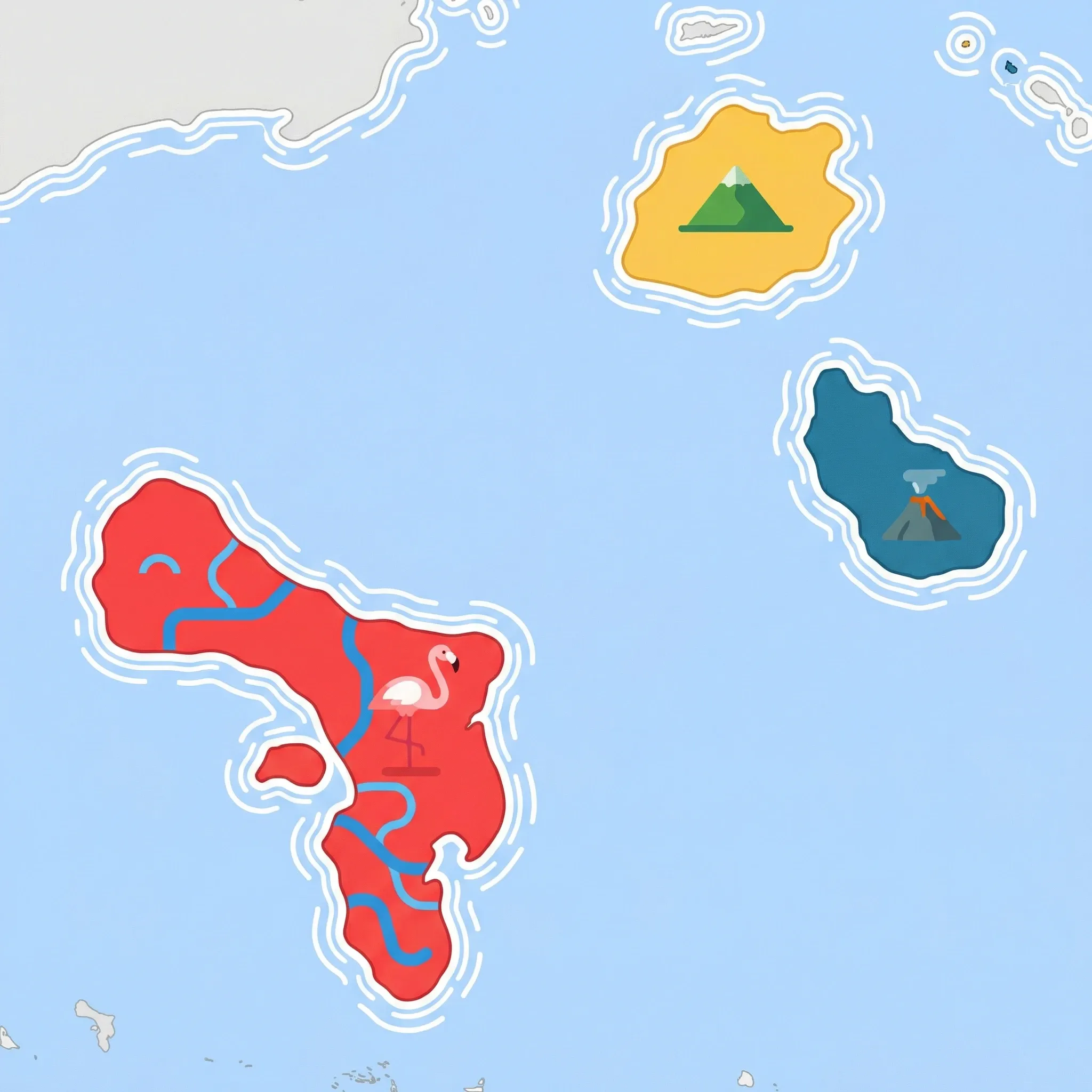
Bonaire (diving)
The diver's paradise that's perfect for snorkelers too 🤿🦩
Saba (hiking)
The Caribbean's highest peak and shortest runway ✈️⛰️
Sint Eustatius (Statia)
The historic Golden Rock where you can hike a volcano 🌋⚓
Click on a region marker to explore details. Use the dropdown to color regions by activity suitability.

Getting There & Around
Getting There
- By Air – Bonaire (BON) has direct flights from Amsterdam, the US (Miami, Houston, Newark, Atlanta), and neighboring islands. Saba and Sint Eustatius are reached via short 12–20 minute flights from St. Maarten (SXM) on Winair. The landing on Saba's world's shortest commercial runway is an experience in itself.
- By Sea – The Makana Ferry provides regular service connecting St. Maarten, Saba, Statia, and St. Kitts. It is a more affordable alternative to flying but can be rough; sea-sickness medication is recommended for children.
- Entry Requirements – Bonaire requires a digital Visitor Entry Tax ($75 USD/adult, $10 USD/child) paid online or upon arrival. Check your government website for the latest visa requirements, or use the IATA Travel Centre entry-requirements checker.
Getting Around
- Car Hire – Essential on Bonaire for reaching shore dive sites and the national park. Pickup trucks are the standard rental vehicle. Driving is on the right.
- Taxis – The primary way to get around Saba given the steep, narrow roads. Fares are fixed by destination.
- Walking – The villages on Saba (The Bottom, Windwardside) and Statia (Oranjestad) are walkable, but moving between villages requires transport due to elevation changes.
- Golf Carts – popular for short distances in Kralendijk (Bonaire), but a car is better for island exploration.

Packing List
Many beaches are made of coral rubble, not sand; essential for kids entering the water.
Strictly enforced by law in marine parks to protect coral; oxybenzone is banned.
Essential for keeping phones/clothes dry on small boat transfers and dinghy dives.
Single-use plastics are banned or discouraged; supermarkets rarely provide free bags.
Inter-island flights and the Makana ferry crossing can be turbulent.
Immigration officers on these islands frequently ask for physical proof of onward travel.

Activities & Best Times

Adventure & Nature
ExcellentHiking, wildlife, outdoor exploration, ecotourism
Boasts exceptional biodiversity across Washington Slagbaai National Park, the Marine Park, and the cloud forests of Saba. Peak season offers dry trails and cooler temperatures, while the late-year rainy season can impact accessibility in national parks.
A premier destination for nature immersion featuring The Quill volcano and diverse hiking trails. The presence of major sanctuaries and national parks provides a world-class experience for families seeking authentic wilderness exploration.
Home to the dramatic Mount Scenery cloud forest and volcanic craters, offering some of the Caribbean's most authentic and challenging vertical hiking. Drier months are essential for navigating steep, rainforest trails safely.

Sports & Active
Very GoodSport tourism, fitness activities, active recreation
A premier global destination for organized watersports, specifically diving and windsurfing, supported by high-quality infrastructure. Peak timing reflects the period of maximum trade wind strength and optimal marine conditions.
Boasts significant infrastructure for hiking and wind-sports, including the world-renowned Jibe City. Peak conditions align with the consistent trade winds and stable weather of the winter and spring seasons.
The region offers specialized infrastructure for landsailing and internationally recognized hiking routes that double as sport venues. Optimal wind and trail conditions are found during the dry, breezy months of the northern winter.

Beach & Sea
GoodBeach resorts, marine activities: diving, snorkelling, kite surfing, wind surfing, sailing
Bonaire and its surrounding islands offer internationally renowned shore diving and world-class windsurfing at Lac Bay. Conditions are best from February through August when trade winds are most consistent and sea visibility is at its peak.
Features notable diving and snorkeling spots like Oranje Bay and Zeelandia Beach with high marine biodiversity. Peak visitation occurs during the drier, calmer winter and spring months, while late summer is avoided due to hurricane risks.
The region features world-class windsurfing and unique shore-entry diving with exceptional marine biodiversity. Peak visitation occurs during the drier northern winter months when sea conditions are calmest.

City & Cultural
GoodUrban tourism, museums, historical sites, architecture
While Kralendijk has charming Dutch Caribbean architecture, very_good overstates its significance by international standards. Good is appropriate for a small historic town (pop ~12,000) with heritage buildings but limited museum infrastructure.
Oranjestad Historic District is significant for Caribbean colonial history, but with population ~3,200 and limited museum infrastructure, very_good overstates international significance. Good is appropriate.
Saba's four small villages (total pop ~2,000) are charming with white cottages and red roofs, but very_good overstates their cultural significance internationally. Good is more appropriate.

Educational & Exploratory
GoodLearning experiences, scientific sites, historical education
Bonaire is a global leader in marine conservation education with visitor centers, turtle conservation programs, and eco-tourism education. This deserves good rating, especially given the Bonaire Marine Park's educational mission.
The Quill's geological and ecological significance, combined with St. Eustatius Historical Foundation Museum and marine conservation education, warrants good rating rather than marginal.
Significant conservation centers provide high-quality scientific insights into volcanic geology and marine ecosystems. These facilities are most active and accessible during the primary international tourism window.

Road Trips & Scenic
GoodScenic drives, countryside tours, route-based travel
Distinctive scenic routes like the Northern and Southern loops offer dramatic desert landscapes and coastal vistas. Optimal driving conditions occur during the long dry season when visibility is highest and unpaved park roads are most reliable.
Named routes like The Road and Queen's Highway offer exceptional scenic driving through diverse volcanic landscapes. Best experienced when visibility is high and rainfall is low during the early months of the year.
Features 'The Road', an internationally celebrated engineering marvel, alongside dramatic scenic coastal routes. Clear visibility and dry conditions from December to April provide the safest and most spectacular driving experiences.

Public Holidays & Calendar Next 12 months
Public holidays, festivals, cultural celebrations, and seasonal natural phenomena coming up in Bonaire, Sint Eustatius and Saba over the next 12 months.
Loading holidays and events...
Climate & Weather
Bonaire (diving)
Show Details
| Month | Temp °C | Rain | Humidity |
|---|
Saba (hiking)
Show Details
| Month | Temp °C | Rain | Humidity |
|---|
Sint Eustatius (Statia)
Show Details
| Month | Temp °C | Rain | Humidity |
|---|

Travel Advisory
All major international agencies designate the Caribbean Netherlands (Bonaire, Sint Eustatius, and Saba) as a safe destination where standard travel safety awareness is sufficient for visitors.
Safety Topics
Traveller Advice (3 groups)

A mandatory $75 USD visitor entry tax applies to non-residents. Travelers should utilize official government channels to pay this fee and be wary of unofficial sites charging higher amounts. Strong coastal currents can make water activities hazardous; following local safety instructions is essential.

While generally safe, travelers should research local customs. The UK provides specific guidance for the islands to ensure a safe experience for the community.

Solo female travelers may encounter instances of verbal harassment or abuse. It is advisable to remain vigilant in less populated areas or on beaches after sunset.
Agency Summaries
No specific elevated travel warnings are in place. Focus remains on standard travel health, particularly regarding insect-borne diseases, and the necessity of medical evacuation insurance.
The risk profile is comparable to major Australian cities. Travelers should monitor local news and follow standard security practices.
Travelers are advised to maintain standard safety awareness. Guidance includes being cautious about personal belongings and monitoring weather conditions during the hurricane season.
Standard safety measures are recommended. The islands are considered low-crime environments, though opportunistic theft occurs. Travelers should be mindful of health risks such as mosquito-borne illnesses.
Ireland advises standard precautions for this destination. Visitors should ensure they have comprehensive travel insurance and valid entry documents.
The Caribbean Netherlands is generally safe, though visitors should stay alert for petty crime and exercise caution with water-based activities. There is no resident Canadian diplomatic mission on the islands.
Information is provided for general guidance only and does not constitute travel, safety, medical, or legal advice. Conditions may change. Users are responsible for independently verifying information before travel.