
Saba (hiking)
The Caribbean's highest peak and shortest runway ✈️⛰️
Click a region to explore
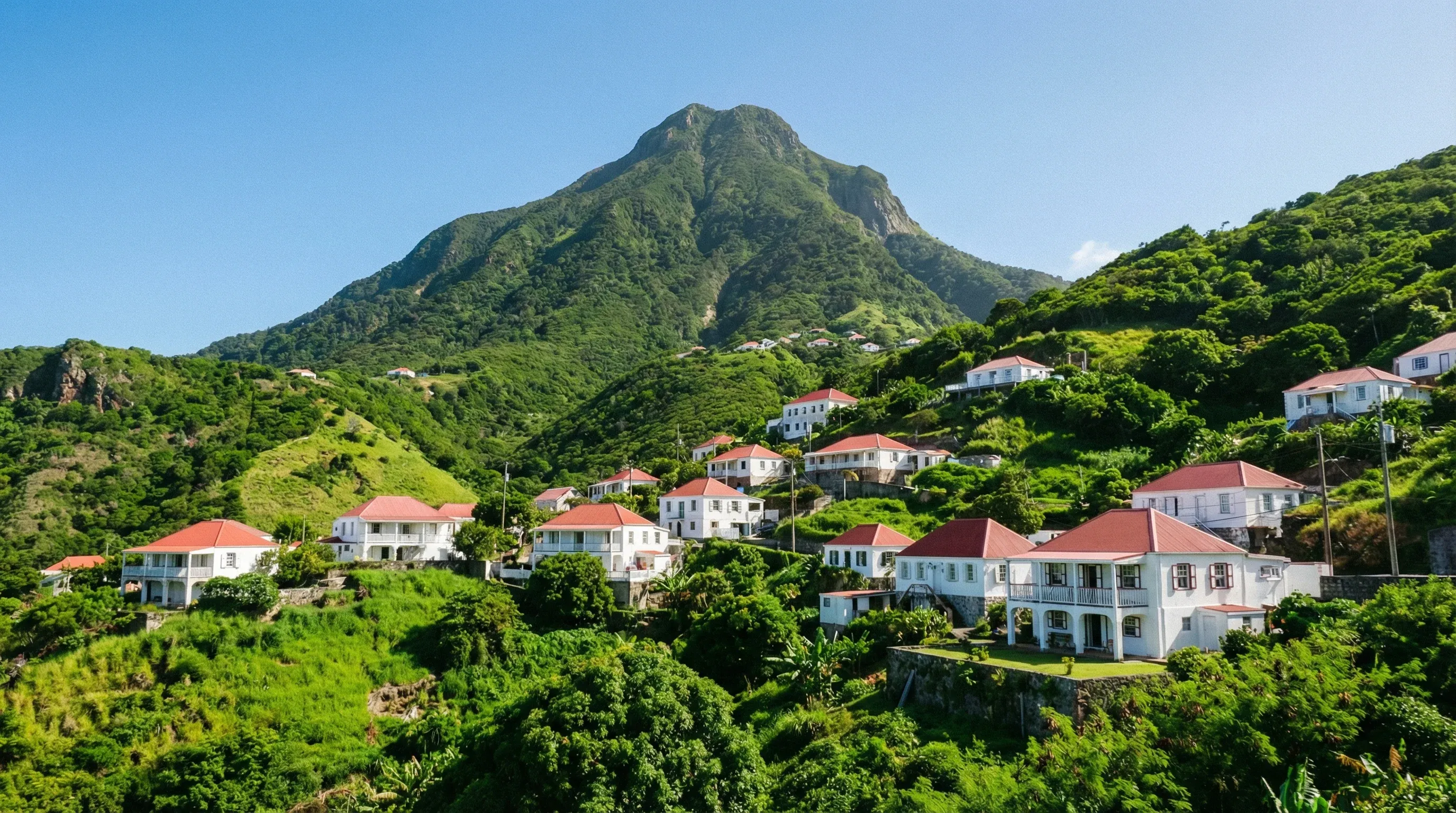
Saba is arguably the safest and most pristine island in the Caribbean. It looks like a fragment of Ireland dropped into the tropics, with misty green peaks, steep cliffs, and meticulously kept white cottages with gingerbread trim. For families, Saba offers a complete escape from mass tourism—there are no fast-food chains, no traffic lights, and no crowds. It is an island that sparks the imagination; children often feel like they've arrived in a secret kingdom atop a beanstalk. The local community is incredibly tight-knit and welcoming, making it a place where you can let teenagers wander safely.
Geographically, Saba is unique because it lacks sandy beaches. Instead, the coastline is dramatic and rocky, home to tide pools teeming with life. The interior is dominated by rainforests and ferns. The island is best suited for families with slightly older children who enjoy walking and nature, as the terrain is steep and strollers are impractical. The 'Road'—the only main road on the island—is an engineering marvel that snakes its way up and down the precipitous slopes, offering white-knuckle views that kids find thrilling.
Key Attractions
The primary activity here is hiking. The trek up Mount Scenery is the ultimate challenge; climbing the 1,064 steps takes you to the highest point in the entire Kingdom of the Netherlands. The summit is often shrouded in mist, creating a magical 'cloud forest' atmosphere that feels prehistoric. While the island lacks traditional beaches, curious families can look out from the cliffs to see neighboring islands, including the silhouette of The Quill in the distance. Exploring the village of Windwardside is also a delight, with its winding lanes and glass bead workshops.
Practical Advice
Saba is a day-trip or short-stay destination for most, often combined with St. Maarten. The best time to visit is December to May. Be prepared for the landing—Saba has the world's shortest commercial runway, which is an adrenaline-pumping experience in itself. If you are prone to motion sickness, take precautions for the ferry crossing or the twisty taxi rides.
Food & Drink
Typical meal times: Dining is early here. Lunch is 11:30 am to 2:00 pm, and dinner service often ends by 8:30 pm or 9:00 pm. Grocery stores also close early.
Typical meal costs: Due to the difficulty of importing goods, food is expensive. A main course costs $25–45 USD (approx. €23–41 EUR / £20–35 GBP). Sandwiches range from $10–15 USD.
Dietary requirements: Options are more limited than on larger islands. Vegetarians will find choices, but vegan or gluten-free specific items can be scarce in restaurants. It is wise to bring specific snacks.
Signature dishes:
- Saba Lobster – Spiny lobster caught in the deep surrounding waters, famous for its sweet meat and often grilled simply with butter.
- Curry Goat – A Caribbean staple found in local eateries, served spicy and bone-in.
- Saba Spice – A sweet, spiced rum liqueur brewed locally, often used in desserts or enjoyed by parents as an aperitif.
Why this score?
The island is essentially the peak of a dormant volcano rising steeply from the sea, offering a rugged vertical landscape that is physically demanding for visiting families. Hiking the 1,064 steps of Mount Scenery through a cloud forest and navigating the island's famous hand-built road provides a sense of genuine exploration. The lack of natural beaches and the dramatic cliffside terrain make it significantly more adventurous than its neighbor, Bonaire.
Why this score?
Medical facilities on Saba are limited to the A.M. Edwards Medical Center, which functions more as a community clinic and emergency stabilization point than a full-service hospital. While the staff is highly dedicated, the facility lacks specialized equipment and long-term care capacity for serious illnesses or injuries. Emergency medical evacuation by helicopter is the standard protocol for any significant health crisis, making it a higher-risk destination for those with chronic conditions.
Why this score?
Saba is one of the least-visited islands in the Caribbean, receiving only a few thousand stay-over tourists annually due to its lack of traditional sandy beaches and a tiny airport. It remains a destination for eco-tourists and serious hikers who are looking for the 'Unspoiled Queen' experience far from the cruise ship crowds. Its isolation and limited accommodation options ensure it remains a very niche travel choice.

Saba is a premium destination due to high import costs. Accommodation tends to be boutique cottages or villas, averaging $200–350 USD (approx. €185–320 EUR / £155–275 GBP) per night. There are very few budget options. Grocery prices are significantly higher than the US or Europe. However, nature trails and views are free.

Getting Here & Around
Getting Here
- Airports – Juancho E. Yrausquin Airport (SAB) is famous for the world's shortest commercial runway. Winair flies daily from St. Maarten (SXM), a spectacular 12-minute flight.
- Ferry – The 'Makana' and 'The Edge' ferries provide regular connections from St. Maarten (approx. 90 minutes) and St. Eustatius.
Getting Around
- Taxi – The primary way to get around. Taxis are standard vans and drivers act as excellent tour guides. Prices are fixed point-to-point.
- Walking – While hiking trails are excellent, walking between villages on 'The Road' is dangerous due to blind corners and steep gradients. Stick to trails or take a taxi.
Nearby Airports (1 airport)
J. Yrausquin Airport
SABSaba
View full flight map for Bonaire, Sint Eustatius and Saba →
Official Links

Packing List
The steps up Mount Scenery are steep and often slippery with moss; poles help stability.
The ferry crossing from St. Maarten can be notoriously rough.
The cloud forest at the summit is often cool, damp, and misty even when the coast is hot.
The main road is extremely winding and steep; essential for kids prone to car sickness.
Many beaches are made of coral rubble, not sand; essential for kids entering the water.
Strictly enforced by law in marine parks to protect coral; oxybenzone is banned.
Essential for keeping phones/clothes dry on small boat transfers and dinghy dives.
Single-use plastics are banned or discouraged; supermarkets rarely provide free bags.
Inter-island flights and the Makana ferry crossing can be turbulent.
Immigration officers on these islands frequently ask for physical proof of onward travel.

Activities & Best Times

Hiking, wildlife, outdoor exploration, ecotourism
Home to the dramatic Mount Scenery cloud forest and volcanic craters, offering some of the Caribbean's most authentic and challenging vertical hiking. Drier months are essential for navigating steep, rainforest trails safely.

Beach resorts, marine activities: diving, snorkelling, kite surfing, wind surfing, sailing
The region features world-class windsurfing and unique shore-entry diving with exceptional marine biodiversity. Peak visitation occurs during the drier northern winter months when sea conditions are calmest.

Urban tourism, museums, historical sites, architecture
Saba's four small villages (total pop ~2,000) are charming with white cottages and red roofs, but very_good overstates their cultural significance internationally. Good is more appropriate.

Learning experiences, scientific sites, historical education
Significant conservation centers provide high-quality scientific insights into volcanic geology and marine ecosystems. These facilities are most active and accessible during the primary international tourism window.

Scenic drives, countryside tours, route-based travel
Features 'The Road', an internationally celebrated engineering marvel, alongside dramatic scenic coastal routes. Clear visibility and dry conditions from December to April provide the safest and most spectacular driving experiences.

Sport tourism, fitness activities, active recreation
The region offers specialized infrastructure for landsailing and internationally recognized hiking routes that double as sport venues. Optimal wind and trail conditions are found during the dry, breezy months of the northern winter.




Public Holidays & Calendar Next 12 months
Public holidays, festivals, cultural celebrations, and seasonal natural phenomena coming up in Saba (hiking) over the next 12 months.
Loading holidays and events...

Travel Advisory
All major international agencies designate the Caribbean Netherlands (Bonaire, Sint Eustatius, and Saba) as a safe destination where standard travel safety awareness is sufficient for visitors.
Safety Topics
Traveller Advice (3 groups)

A mandatory $75 USD visitor entry tax applies to non-residents. Travelers should utilize official government channels to pay this fee and be wary of unofficial sites charging higher amounts. Strong coastal currents can make water activities hazardous; following local safety instructions is essential.

While generally safe, travelers should research local customs. The UK provides specific guidance for the islands to ensure a safe experience for the community.

Solo female travelers may encounter instances of verbal harassment or abuse. It is advisable to remain vigilant in less populated areas or on beaches after sunset.
Agency Summaries
No specific elevated travel warnings are in place. Focus remains on standard travel health, particularly regarding insect-borne diseases, and the necessity of medical evacuation insurance.
The risk profile is comparable to major Australian cities. Travelers should monitor local news and follow standard security practices.
Travelers are advised to maintain standard safety awareness. Guidance includes being cautious about personal belongings and monitoring weather conditions during the hurricane season.
Standard safety measures are recommended. The islands are considered low-crime environments, though opportunistic theft occurs. Travelers should be mindful of health risks such as mosquito-borne illnesses.
Ireland advises standard precautions for this destination. Visitors should ensure they have comprehensive travel insurance and valid entry documents.
The Caribbean Netherlands is generally safe, though visitors should stay alert for petty crime and exercise caution with water-based activities. There is no resident Canadian diplomatic mission on the islands.
Information is provided for general guidance only and does not constitute travel, safety, medical, or legal advice. Conditions may change. Users are responsible for independently verifying information before travel.