
Sint Eustatius (Statia)
The historic Golden Rock where you can hike a volcano 🌋⚓
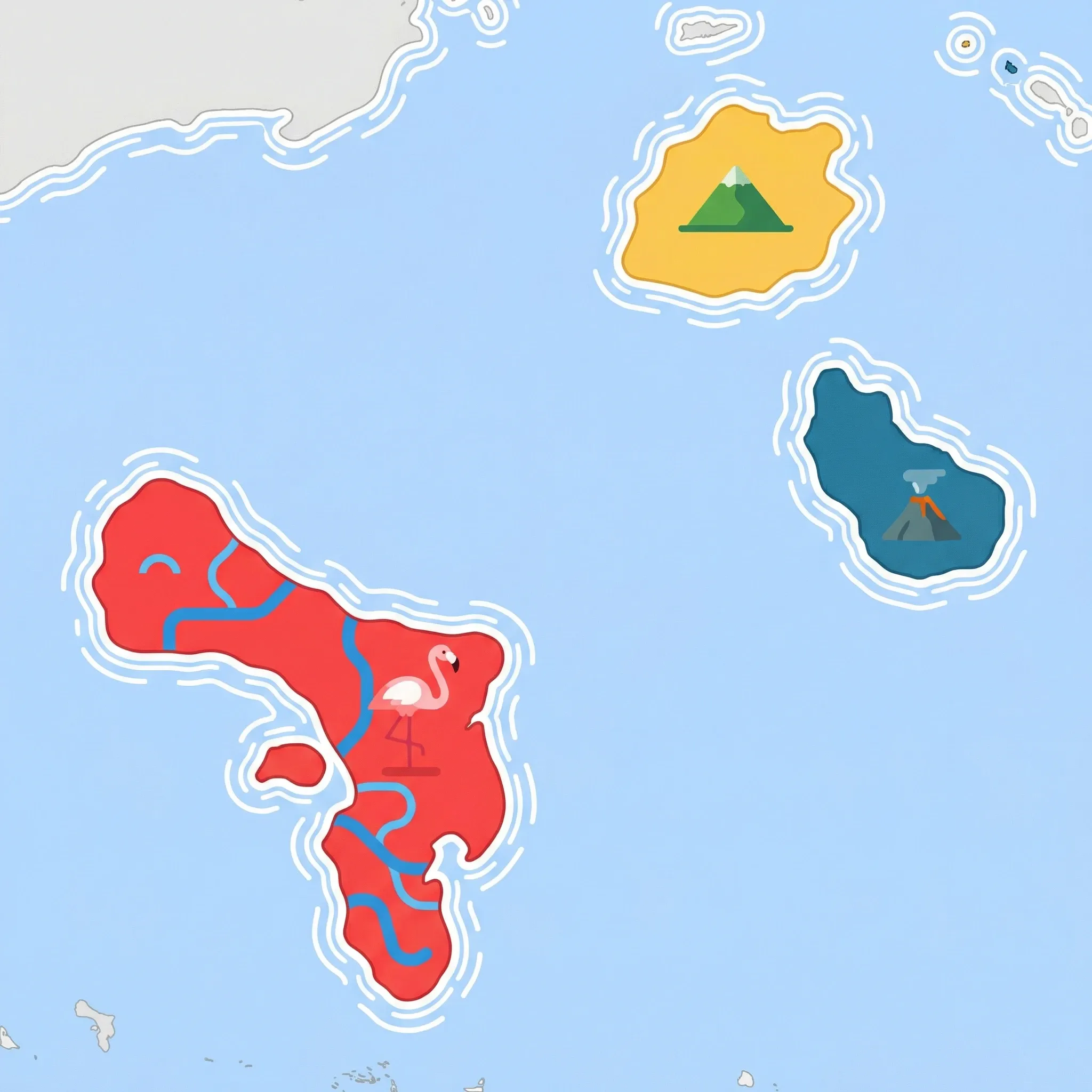
Click a region to explore
Sint Eustatius, affectionately known as Statia, is a destination for families who love history and raw nature. Once the busiest port in the Caribbean, known as the "Golden Rock," it is now a sleepy, peaceful island where goats wander the streets and everyone waves to one another. For children, Statia feels like a discovery; the beaches are volcanic gray and black, the cliffs hold ruins of 18th-century warehouses, and the jungle feels untouched. It is not a place for poolside entertainment, but rather for exploring ruins, hiking, and learning about the pirates and merchants who once ruled these waters.
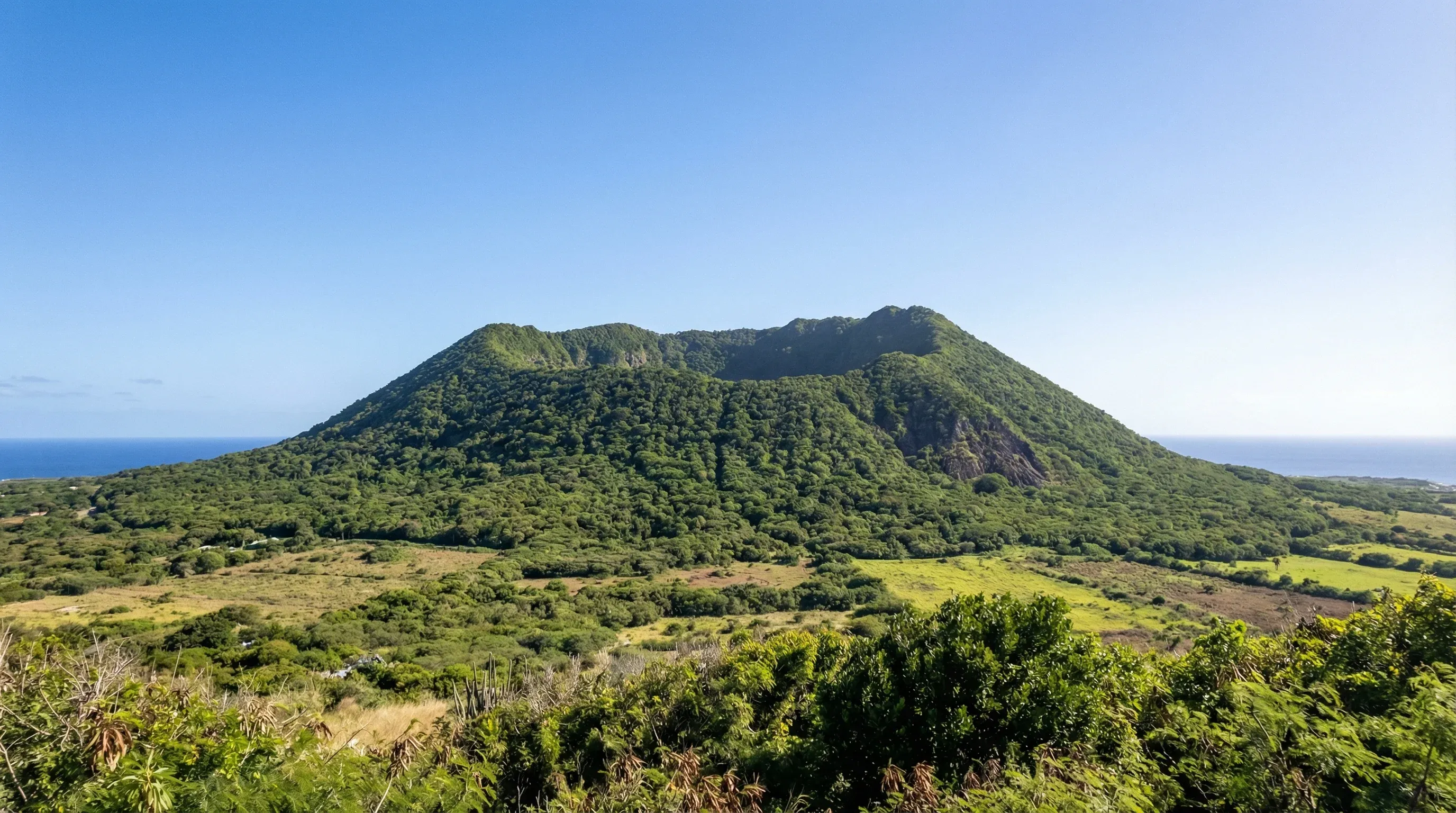
The island's small size makes it manageable for a family trip, though the pace is very slow ('Statia time'). The local community is deeply proud of their history—Statia was the first foreign nation to officially salute the American flag in 1776, a fact you will see celebrated across the island. The atmosphere is safe and community-focused. The geography is defined by the dormant volcano, The Quill, which looms over the southern end of the island. Unlike many Caribbean peaks, you can hike right into the crater, which shelters a lush rainforest hidden from the outside world—a 'Jurassic Park' experience that adventurous kids will never forget.
Key Attractions
The absolute highlight for active families is The Quill. The hike to the rim is challenging but doable for energetic children, and the trail down into the crater reveals giant silk cotton trees and hermit crabs. History comes alive at Fort Oranje, a beautifully preserved fortification with cannons pointing out to sea, offering panoramic views of the Lower Town. Nearby, The Quill National Park protects the island's biodiversity. While the beaches are dark sand and not typical for sunbathing, the snorkeling over the sunken ruins of the old port in Lower Town offers a unique underwater history lesson.
Practical Advice
Statia is best visited as part of an island-hopping itinerary with St. Maarten or Saba. The dry season (December to April) is most pleasant for hiking. Bring sturdy shoes; the terrain is rocky and the 'Lower Town' beach areas are rougher than the white sands of other islands. Renting a car is helpful to see the Northern Hills, but taxis are readily available.
Food & Drink
Typical meal times: Lunch is usually 12:00 pm to 2:00 pm. Dinner is served 6:30 pm to 9:00 pm. Options are limited, so checking opening times in advance is wise.
Typical meal costs: Meals are moderately priced. A main dish costs $20–35 USD (approx. €18–32 EUR / £15–27 GBP). Local BBQ spots are cheaper.
Dietary requirements: Vegetarian options are available but limited. Anyone with severe allergies should communicate clearly, as kitchens are small and cross-contamination is possible.
Signature dishes:
- Saltfish and Johnny Cakes – Flaked salted cod sautéed with peppers and onions, served with fried dough biscuits. A breakfast staple.
- Fungi – A cornmeal-based side dish similar to polenta, often served with fish stew.
- Statia Fruit Punch – A non-alcoholic, sweet blend of tropical fruit juices that kids will love.
Why this score?
Adventure on Statia is centered on the Quill, a perfectly formed dormant volcano where families can hike into a lush rainforest crater filled with unique flora and fauna. The island's shoreline offers rugged black sand beaches and historical snorkeling over sunken 18th-century ruins, which feels more adventurous than a standard resort stay. While less vertically extreme than Saba, the terrain still requires good physical fitness and an appetite for off-the-beaten-path exploration.
Why this score?
The Queen Beatrix Medical Center provides primary care and emergency services to the small local population and visitors but is not equipped for major medical interventions. Similar to Saba, the island relies heavily on a medical referral system that requires flights to Sint Maarten or Bonaire for specialized treatment. Families visiting must be aware that access to advanced pediatrics or emergency surgery is not available on the island itself.
Why this score?
Sint Eustatius sees very low international tourism volume, with most visitors arriving for historical research, niche diving, or business related to the oil terminal. The island lacks the large-scale resort infrastructure found elsewhere in the Caribbean, preserving a quiet, local atmosphere that most travelers never experience. It is largely unknown to the general public outside of the Dutch Caribbean and specific historical circles.

Statia is generally more affordable than Saba or Bonaire regarding accommodation, but still higher than mass-tourism destinations. A family guesthouse or hotel room costs $120–200 USD (approx. €110–185 EUR / £95–155 GBP) per night. Dining is mid-range. Transport costs are reasonable. The currency is the US Dollar.

Getting Here & Around
Getting Here
- Airports – F.D. Roosevelt Airport (EUX) welcomes several daily flights from St. Maarten (SXM) via Winair. The flight takes about 20 minutes.
- Ferry – The Makana Ferry connects Statia to St. Maarten and Saba. It is a reliable and scenic way to arrive, though the sea can be choppy.
Getting Around
- Car – Rental cars are available and recommended for families to explore the Northern Hills and secluded picnic spots. Driving is on the right.
- Walking – Oranjestad is walkable, but the trek between Lower Town (sea level) and Upper Town (clifftop) is very steep. The 'Slave Path' is a historic but grueling walk up.
Nearby Airports (1 airport)
F D Roosevelt
EUXSaint Eustatius
View full flight map for Bonaire, Sint Eustatius and Saba →
Official Links

Packing List
The hike into The Quill crater is slippery and rocky; flip-flops are dangerous here.
Rental shops are fewer than on other islands; bringing your own mask is best for impromptu swims.
Many smaller local snack spots and taxis do not accept credit cards.
Mosquitoes can be active in the rainforest crater of The Quill.
Many beaches are made of coral rubble, not sand; essential for kids entering the water.
Strictly enforced by law in marine parks to protect coral; oxybenzone is banned.
Essential for keeping phones/clothes dry on small boat transfers and dinghy dives.
Single-use plastics are banned or discouraged; supermarkets rarely provide free bags.
Inter-island flights and the Makana ferry crossing can be turbulent.
Immigration officers on these islands frequently ask for physical proof of onward travel.

Activities & Best Times

Hiking, wildlife, outdoor exploration, ecotourism
A premier destination for nature immersion featuring The Quill volcano and diverse hiking trails. The presence of major sanctuaries and national parks provides a world-class experience for families seeking authentic wilderness exploration.

Sport tourism, fitness activities, active recreation
Boasts significant infrastructure for hiking and wind-sports, including the world-renowned Jibe City. Peak conditions align with the consistent trade winds and stable weather of the winter and spring seasons.

Beach resorts, marine activities: diving, snorkelling, kite surfing, wind surfing, sailing
Features notable diving and snorkeling spots like Oranje Bay and Zeelandia Beach with high marine biodiversity. Peak visitation occurs during the drier, calmer winter and spring months, while late summer is avoided due to hurricane risks.

Urban tourism, museums, historical sites, architecture
Oranjestad Historic District is significant for Caribbean colonial history, but with population ~3,200 and limited museum infrastructure, very_good overstates international significance. Good is appropriate.

Learning experiences, scientific sites, historical education
The Quill's geological and ecological significance, combined with St. Eustatius Historical Foundation Museum and marine conservation education, warrants good rating rather than marginal.

Scenic drives, countryside tours, route-based travel
Named routes like The Road and Queen's Highway offer exceptional scenic driving through diverse volcanic landscapes. Best experienced when visibility is high and rainfall is low during the early months of the year.

Attractions (16 total)



Public Holidays & Calendar Next 12 months
Public holidays, festivals, cultural celebrations, and seasonal natural phenomena coming up in Sint Eustatius (Statia) over the next 12 months.
Loading holidays and events...

Travel Advisory
All major international agencies designate the Caribbean Netherlands (Bonaire, Sint Eustatius, and Saba) as a safe destination where standard travel safety awareness is sufficient for visitors.
Safety Topics
Traveller Advice (3 groups)

A mandatory $75 USD visitor entry tax applies to non-residents. Travelers should utilize official government channels to pay this fee and be wary of unofficial sites charging higher amounts. Strong coastal currents can make water activities hazardous; following local safety instructions is essential.

While generally safe, travelers should research local customs. The UK provides specific guidance for the islands to ensure a safe experience for the community.

Solo female travelers may encounter instances of verbal harassment or abuse. It is advisable to remain vigilant in less populated areas or on beaches after sunset.
Agency Summaries
No specific elevated travel warnings are in place. Focus remains on standard travel health, particularly regarding insect-borne diseases, and the necessity of medical evacuation insurance.
The risk profile is comparable to major Australian cities. Travelers should monitor local news and follow standard security practices.
Travelers are advised to maintain standard safety awareness. Guidance includes being cautious about personal belongings and monitoring weather conditions during the hurricane season.
Standard safety measures are recommended. The islands are considered low-crime environments, though opportunistic theft occurs. Travelers should be mindful of health risks such as mosquito-borne illnesses.
Ireland advises standard precautions for this destination. Visitors should ensure they have comprehensive travel insurance and valid entry documents.
The Caribbean Netherlands is generally safe, though visitors should stay alert for petty crime and exercise caution with water-based activities. There is no resident Canadian diplomatic mission on the islands.
Information is provided for general guidance only and does not constitute travel, safety, medical, or legal advice. Conditions may change. Users are responsible for independently verifying information before travel.