

⚠️ SAFETY WARNING: Exercise increased caution in Bosnia and Herzegovina due to the presence of landmines in isolated areas and unexploded ordnance from the 1990s conflict. While all major tourist areas, cities, and paved roads are safe, families must stick to clearly marked paths and paved surfaces when hiking or exploring rural regions. Never enter abandoned buildings or stray into overgrown fields in the countryside.
Overview
Bosnia and Herzegovina (often called BiH) is a stunningly beautiful country in the Balkans that offers families a rich tapestry of culture, nature, and history without the crowds of its neighbors. Geographically, it is shaped like a heart, featuring the mountainous, forested region of Bosnia in the north and the sun-drenched, rocky landscape of Herzegovina in the south. The climate varies from continental-with snowy winters perfect for skiing-to Mediterranean summers that invite swimming in crystal-clear rivers. For families, the country’s greatest asset is its people; locals are incredibly welcoming to children, often going out of their way to accommodate young travelers.
Culturally, the country is a fascinating meeting point of East and West, visible in its architecture where church spires and mosque minarets share the skyline. Families can enjoy a relaxed pace of life here, centered around the ritual of coffee and conversation. While the infrastructure is still developing in parts, this adds to the sense of adventure. Whether you are riding the modern cable car up Mount Trebević or rafting down the turquoise Una River, the experience feels authentic and undiscovered. It is a destination that rewards curiosity, offering lessons in history and resilience alongside pure outdoor fun.
Key Attractions
Start your journey in the capital, Sarajevo and Central Bosnia. The historic core, Baščaršija, feels like stepping back in time with its copper artisans and sweet shops. Just above the city, families can take the cable car to the 1984 Olympic bobsled track on Mount Trebević, or visit Sunnyland Sarajevo, an adventure park featuring an alpine coaster that kids absolutely love. For a relaxing afternoon, take a horse-drawn carriage ride through the tree-lined alley to Vrelo Bosne, a serene park at the source of the Bosna River full of swans and streams.
Heading south into Herzegovina, the landscape transforms. The crown jewel is Mostar Old Town and Stari Most, where children will be mesmerized by the professional divers leaping 24 metres into the chilly Neretva River. Nearby, the Blagaj Tekke (Dervish House) sits right at the source of the Buna river inside a cave-a magical spot for photos. To cool off, head to Kravice Waterfalls, a natural amphitheatre of water where families can swim in the refreshing lake at the base of the falls.
In Northwestern Bosnia (Bosanska Krajina), nature takes centre stage. Una National Park is a paradise for outdoor-loving families, offering gentle rafting suitable for children and the spectacular Štrbački Buk waterfall. The town of Jajce is also unmissable, famous for the Pliva Waterfall located right in the town centre, and the nearby Pliva Lakes with their charming medieval watermills.
Practical Advice
The best time to visit is May to September. July and August can be very hot, especially in Mostar, so bring hats and sunscreen. Families should be aware that smoking is still permitted inside many restaurants and cafes, which can be a surprise for visitors from smoke-free countries; look for places with outdoor seating (terraces are very popular in summer). Credit cards are accepted in supermarkets and hotels, but cash (Convertible Mark - BAM) is essential for small shops, bakeries, and rural attractions. Health care is adequate in cities, but carry basic supplies.
Food & Drink
Typical meal times: Lunch is the main meal, typically eaten between 1:00 pm and 3:00 pm. Dinner is usually lighter and served from 7:00 pm to 9:00 pm.
Typical meal costs: 15–25 BAM (approx. $8–14 USD / €7.50–12.50 EUR) for a generous main course in a mid-range restaurant. Street food like pita or ćevapi costs around 5–8 BAM (approx. $3–4.50 USD / €2.50–4 EUR).
Dietary requirements: Bosnian cuisine is heavily meat-oriented. Vegetarians can rely on grilled vegetables, salads (Šopska salata), and cheese-filled pastries (Sirnica), but vegan options are limited outside Sarajevo. Gluten-free awareness is low, so cross-contamination is a risk in bakeries.
Family-friendly dining: Children are welcome everywhere. Most restaurants are informal, and while specific kids' menus are rare, portions are huge and easy to share. Highchairs are becoming more common but aren't guaranteed in smaller venues.
Signature dishes:
- Ćevapi – Small grilled minced meat sausages served in somun (flatbread) with raw onions; the national dish and a hit with kids.
- Burek – A flaky phyllo pastry filled with meat (technically, only the meat version is called Burek; cheese, spinach, or potato versions are called pita).
- Klepe – Bosnian minced meat dumplings, similar to ravioli, served in a garlic and sour cream sauce.
- Begova Čorba – Bey's Soup, a creamy chicken and okra soup that is mild and comforting.
- Tufahija – A dessert made of walnut-stuffed apples poached in sugar water, topped with whipped cream.
Safety
Beyond the landmine warning mentioned above, Bosnia and Herzegovina is generally safe for travelers. Violent crime against tourists is rare. However, pickpocketing can occur in crowded areas like Baščaršija in Sarajevo or the Old Bridge in Mostar. Stray dogs are common in some areas; they are usually harmless but teach children not to approach them. Air pollution in Sarajevo can be high during winter months due to the valley geography and heating methods.
Age Suitability





Did you know? Bosnia and Herzegovina welcomes approximately 1.4 million international visitors per year. Most visitors come from Europe.

Explore Regions
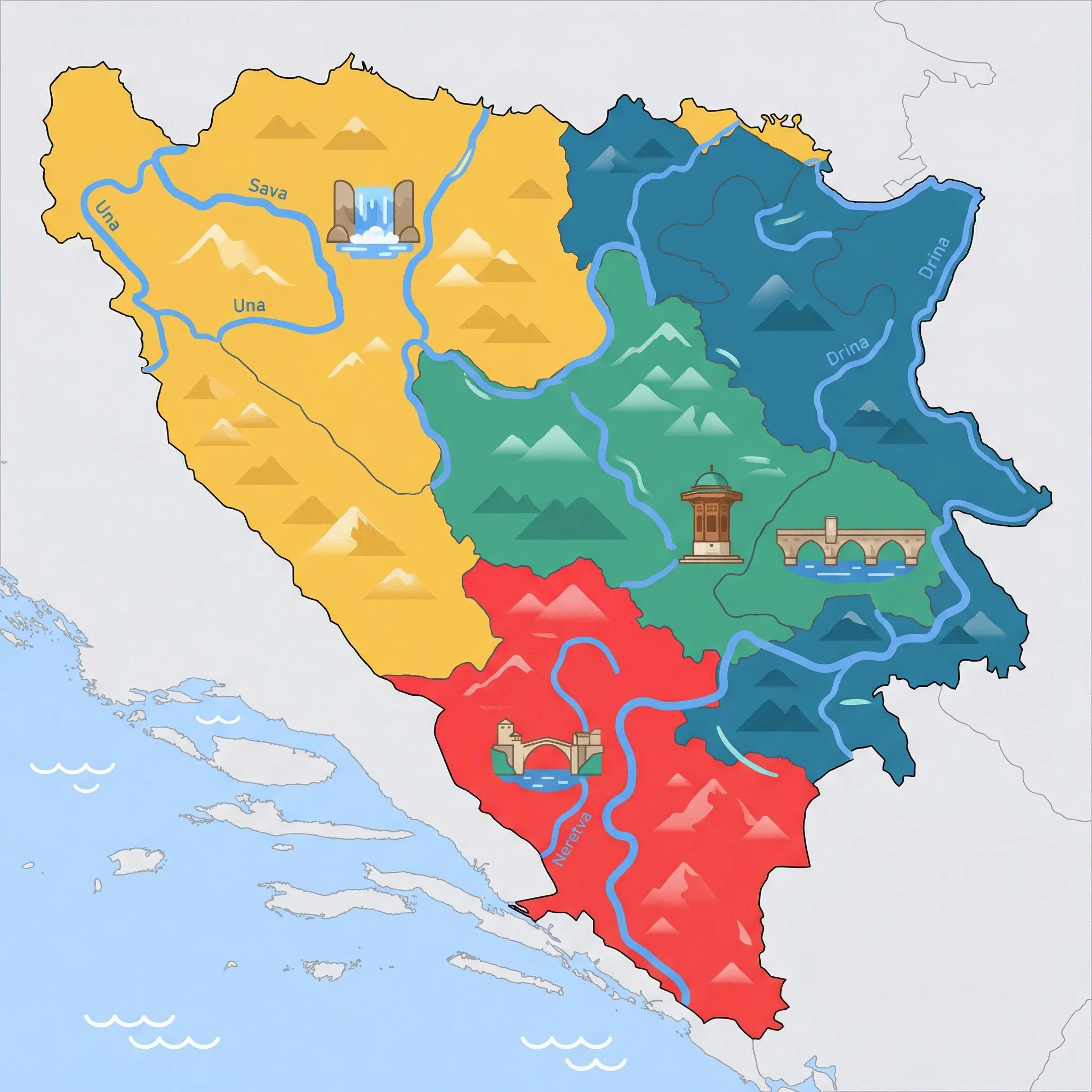
4 Regions
Eastern and Southeastern Bosnia
Wild canyons and Ottoman bridges for the adventurous spirit 🌲🌊
Herzegovina
Where Mediterranean sun meets emerald rivers and ancient stone ☀️🍇
Northwestern Bosnia (Bosanska Krajina)
Where emerald rivers flow through royal fortresses 🌿🏰
Sarajevo and Central Bosnia
Where Olympic mountains meet the Jerusalem of Europe 🚠🕌
Click on a region marker to explore details. Use the dropdown to color regions by activity suitability.

Getting There & Around
Getting There
- By Air – Sarajevo International Airport (SJJ) is the main hub, located just 20 minutes from the city centre. Other airports include Tuzla, Banja Luka, and Mostar, often served by low-cost carriers from Europe.
- By Bus – Frequent buses connect Sarajevo and Mostar with Dubrovnik and Split in Croatia. The journey from Dubrovnik to Mostar Old Town and Stari Most takes about 3–4 hours.
- By Train – There are currently no international passenger trains running into Bosnia and Herzegovina (the Zagreb-Sarajevo line is suspended).
- Entry Requirements – EU, US, and UK citizens generally do not need a visa for stays up to 90 days. Check your government website for the latest visa requirements, or use the IATA Travel Centre entry-requirements checker.
Getting Around
- Trains – The Talgo train connecting Sarajevo to Mostar (and on to Čapljina) is modern, air-conditioned, and offers spectacular scenery along the Neretva river canyon. It runs twice daily and is a comfortable option for families.
- Car Hire – Renting a car is the best way to explore regions like Herzegovina or Northwestern Bosnia at your own pace. Roads can be winding and narrow, so allow extra travel time. Stick strictly to paved surfaces.
- Buses – An extensive network connects almost every town, but buses can be cramped and sometimes lack air conditioning. They are less family-friendly than the train for long journeys.
- Taxis – In Sarajevo, taxis are affordable. Ensure the meter is running. Ride-hailing apps are not widely available, but taxi stands are frequent.

Packing List
Riverbeds at swimming spots like Kravice and Una are often rocky and slippery.
Roads through the mountains are extremely winding and can affect children.
Public restrooms at bus stations or remote sites often lack toilet paper.
Many smaller shops, bakeries, and rural attractions do not accept credit cards.
Useful for covering shoulders when visiting active mosques or orthodox churches.
Even in summer, mountain evenings (like on Jahorina) can get surprisingly cold.

Activities & Best Times

Adventure & Nature
Very GoodHiking, wildlife, outdoor exploration, ecotourism
A rugged karst landscape featuring authentic wilderness experiences like the Neretva River canyon and Hutovo Blato wetlands. Late spring and early autumn are peak for hiking and birdwatching, avoiding the extreme mid-summer heat that can exceed 40°C.
Home to Sutjeska National Park and the Tara River Canyon, this region offers authentic immersion in some of Europe's last primeval forests and deepest gorges. Summer and early autumn provide ideal conditions for trekking and wildlife observation, while high spring rainfall and winter snow limit access to the highlands.
Una National Park provides a pristine wilderness experience with its world-class travertine waterfalls and emerald rivers, perfect for families seeking authentic nature immersion.

City & Cultural
Very GoodUrban tourism, museums, historical sites, architecture
Home to the world-famous Stari Most in Mostar and the stunning Ottoman-era architecture of Blagaj and Poāitelj. While culturally rich year-round, the intense summer sun makes May, June, and September the most pleasant months for exploring historic quarters.
Features the UNESCO-listed Mehmed Paša Sokolović Bridge and the conceptually unique Andrićgrad, blending history with contemporary Balkan culture. May, June, and September offer the most comfortable temperatures for exploring historical sites, avoiding the peak summer heat and the harsh continental winters.
The blend of Ottoman heritage and Austro-Hungarian architecture in Banja Luka, paired with the medieval fortress and urban waterfall in Jajce, creates a distinctive cultural landscape.

Sports & Active
Very GoodSport tourism, fitness activities, active recreation
World-class white-water rafting on the Tara and Drina rivers and established hiking routes like the Via Dinarica cater to sophisticated active families. The rafting season is best in summer when water levels are safe but exciting, while winter and late autumn conditions are too severe for most organized outdoor sports.
Known for world-class white-water rafting on the Una and Vrbas rivers, the region also features significant sections of the Via Dinarica trail for high-quality active exploration.
Leveraging its Olympic legacy, the region offers world-class infrastructure for mountain activities and adventure parks like Trebević. Active tourism is best pursued from late spring to early autumn when the extensive mountain trails and outdoor centers are fully operational.

Beach & Sea
GoodBeach resorts, marine activities: diving, snorkelling, kite surfing, wind surfing, sailing
Offers a unique blend of Adriatic coastal access at Neum and world-class inland swimming at the iconic Kravice Waterfalls. The season is strictly summer-focused, as Mediterranean temperatures only support water recreation from June through September.
While lacking a coastline, river beaches like Jaz and the large outdoor pool at Tjentište provide refreshing summer recreation for locals and regional visitors. These spots lack the world-class amenities of international beach resorts and are only viable during the peak heat of mid-summer.

Road Trips & Scenic
GoodScenic drives, countryside tours, route-based travel
The Herzegovina Wine Route and the scenic drive through the Neretva valley provide spectacular vistas through limestone mountains. Driving is best in spring and autumn, with October offering unique visual interest as the vineyards and valley foliage change color.
The Drina Canyon scenic drive (M5) and mountain passes like Rogoj offer dramatic limestone vistas and engineering marvels for touring families. Late spring and early autumn provide the best visibility and safest road conditions, avoiding the summer tourist traffic and winter ice on high-altitude routes.
Dramatic canyon routes along the Vrbas and Una rivers offer some of the most scenic driving in the Balkans, connecting historic sites via rugged and beautiful landscapes.

Ski & Snow
GoodWinter sports, ski resorts, snow activities
Provides charming and high-value family skiing at Kupres and Blidinje with a focus on authentic mountain hospitality. The season is shorter than Alpine counterparts, with reliable snow depth and resort operations peaking in January and February.
Jahorina Olympic Center provides solid infrastructure and a variety of slopes suitable for families, though it lacks the scale of top-tier Alpine resorts. The peak season is concentrated in January and February for reliable snow cover, with December and March serving as transition months depending on the year's snowfall.
Home to the 1984 Olympic venues of Jahorina and Bjelašnica, offering solid infrastructure and genuine alpine charm. The season is relatively short, with reliable snow cover typically concentrated in January and February.

Educational & Exploratory
MarginalLearning experiences, scientific sites, historical education
Sites like the Eco Center Blagaj offer focused educational insights into local ecology and the conservation of endangered species like the Griffon Vulture. Access to guided programs and natural history exhibits is most consistent during the primary tourism season.
The National Museum and Ravne Tunnels provide significant historical and scientific interest for curious families. While culturally important, these facilities serve as enhancements to a trip rather than standalone global travel motivators.

Festivals & Seasonal
MarginalEvents, celebrations, seasonal attractions
Anchored by the world-renowned Stari Most bridge diving competition in July and the Mladifest in Medjugorje. These specific dates draw significant international crowds, though event offerings are sparse throughout the rest of the year.
The Sarajevo Film Festival in August is a major international cultural event that transforms the city into a global hub. Outside of this specific window, the region lacks other internationally-drawing festival events of similar scale.

Theme Park & Entertainment
MarginalAmusement parks, family entertainment venues
Already appropriately rated as marginal - no change needed, but noting that Grad Sunca should be catalogued as adventure-park-outdoor-activity-center rather than theme park.
Grad Sunca and Jahorina summer fun park are regional recreation facilities, not theme park destinations by international standards. Bosnia is not recognized for theme parks globally. Downgrade to marginal to reflect regional-level facilities.
Ilidža thermal water parks and Sunnyland alpine coaster are specialized facilities, not theme parks. This region's strengths lie in culture, adventure, and winter sports - not theme park tourism.

Relaxation & Wellness
MarginalSpa retreats, wellness centers, peaceful getaways
Traditional thermal facilities like Višegradska Banja offer authentic, historic spa experiences but are not currently positioned as luxury wellness destinations. Visitation is most pleasant when the surrounding natural landscapes are accessible in spring and autumn, rather than in the depths of winter.
Regional thermal spas like Banja Laktaši provide authentic mineral water experiences, though facilities generally lack the luxury standards of major international wellness retreats.
Historic thermal spa traditions exist in Ilidža and Fojnica, offering an authentic, if somewhat medically-focused, wellness experience. While facilities are reliable, they lack the luxury international resort standards found in top-tier global spa destinations.

Public Holidays & Calendar Next 12 months
Public holidays, festivals, cultural celebrations, and seasonal natural phenomena coming up in Bosnia and Herzegovina over the next 12 months.
Loading holidays and events...
Climate & Weather
Eastern and Southeastern Bosnia
Show Details
| Month | Temp °C | Rain | Humidity |
|---|
Herzegovina
Show Details
| Month | Temp °C | Rain | Humidity |
|---|
Northwestern Bosnia (Bosanska Krajina)
Show Details
| Month | Temp °C | Rain | Humidity |
|---|
Sarajevo and Central Bosnia
Show Details
| Month | Temp °C | Rain | Humidity |
|---|

Travel Advisory
While Bosnia and Herzegovina is generally safe for tourism, a rating of elevated caution is maintained due to the widespread presence of landmines in rural areas, petty crime in tourist centers, and potential for terrorist activity.
Safety Topics
Traveller Advice (4 groups)

Same-sex relationships are legal but not widely accepted in many areas. It is recommended to avoid public displays of affection to prevent unwanted attention or discrimination.

Accessibility infrastructure is often lacking outside of modern urban hotels and major city centers; travellers should plan their transport and accommodations carefully in advance.

Female travellers are advised to consider dressing conservatively and to avoid walking alone late at night in unfamiliar areas.

Ensure you carry identification at all times and stay on hard-surfaced roads to avoid landmine hazards. All foreign nationals must register their presence with the local police or the Department for Foreigners within 48 to 72 hours of arrival.
Agency Summaries
No specific advisory is in place, but visitors are encouraged to have comprehensive travel insurance and remain aware of local safety conditions.
Visitors should maintain a high level of vigilance due to prevalent petty crime and the severe safety risks posed by unmarked landmines and unexploded ordnance in rural and mountainous areas.
A high degree of caution is advised, primarily because of the danger from unexploded landmines. It is essential to stay on paved roads and avoid isolated regions.
Exercise increased caution due to the risk of terrorism, crime, and landmines. Terrorist groups continue to plot possible attacks, and landmines remain a threat throughout the country.
Travellers are advised to exercise standard security precautions, monitor local news, and follow the guidance of national authorities.
Most trips are safe, but travellers should be cautious of global terrorism threats and local hazards such as pickpocketing and leftover landmines in off-road areas.
Information is provided for general guidance only and does not constitute travel, safety, medical, or legal advice. Conditions may change. Users are responsible for independently verifying information before travel.