
Eastern and Southeastern Bosnia
Wild canyons and Ottoman bridges for the adventurous spirit 🌲🌊
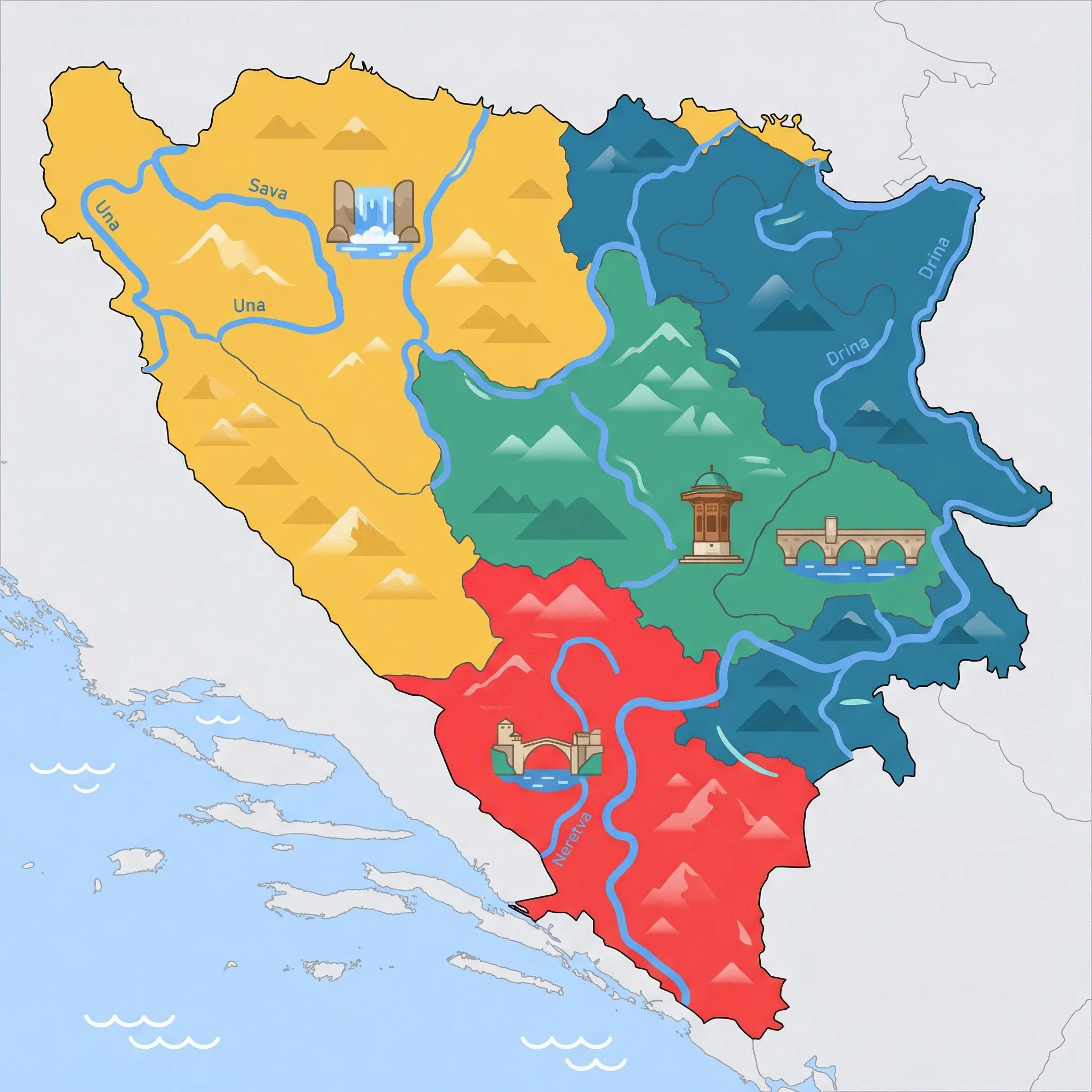
Click a region to explore
Important Safety Note: While major tourist areas and towns are perfectly safe, this region was heavily affected by the 1990s conflict. Families planning to hike in remote areas or off-trail within national parks must stick strictly to marked paths due to the potential presence of unexploded ordnance (landmines). Always hire a local guide for mountain trekking.
Eastern and Southeastern Bosnia is the country's untamed frontier, a landscape where emerald rivers slice through towering limestone massifs. For families who love the outdoors, this is a playground of epic proportions. The climate here is continental, with warm summers perfect for river sports and cold, snowy winters. Unlike the more polished tourist hubs, this region feels raw and authentic. The air is crisp, filled with the scent of pine forests and river mist. It is a place where geography dictates the pace of life; roads wind laboriously up mountains and plunge into valleys, offering spectacular views at every hairpin turn. Culturally, it is a crossroads, with heavy Ottoman influences visible in the architecture of Višegrad, contrasting with the brutalist monuments of the Yugoslav era hidden deep in the forests.
For children, the appeal lies in the sense of expedition. This isn't a place for theme parks; it is a place for real-world adventures—rafting on world-class rapids, spotting eagles soaring over canyon walls, and exploring forests that feel like something out of a fairytale. The pace is slower here, the crowds are fewer, and the hospitality is incredibly warm, often involving homemade juices and stories shared by locals who are proud of their dramatic landscape.
Key Attractions
The crown jewel of the region is undoubtedly Sutjeska National Park, the oldest in Bosnia and Herzegovina. It is home to the Perućica primeval forest, one of the last remaining rainforests in Europe. While the deep forest is strictly protected, families can visit the Valley of Heroes (Tjentište War Memorial). This abstract, futuristic concrete sculpture commemorates the Battle of Sutjeska and looks like a spaceship landed in the green valley—children are often fascinated by its strange geometry and immense size, which offers plenty of space to run around.
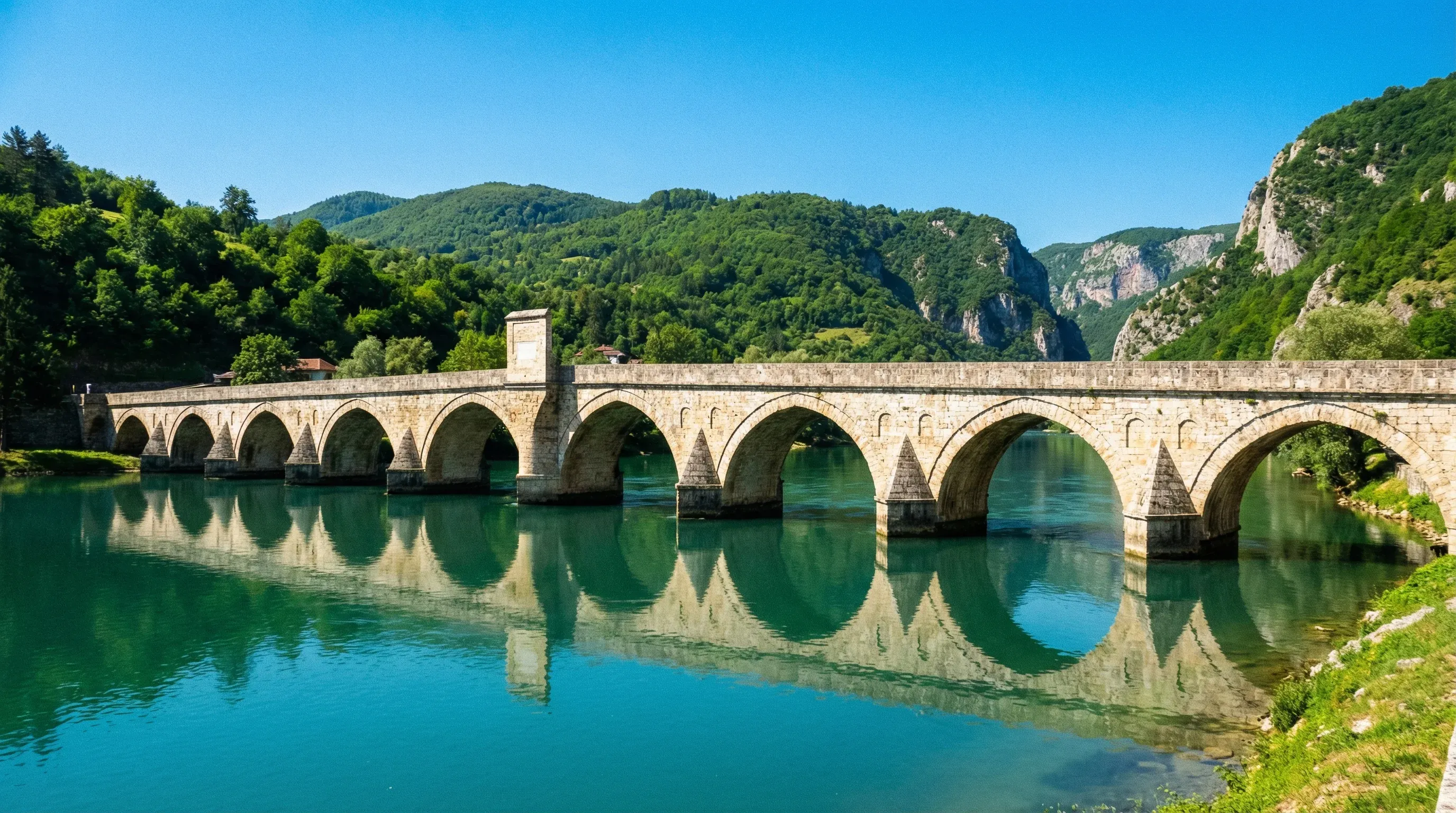
Further north lies the town of Višegrad, famous for the Mehmed Paša Sokolović Bridge. This UNESCO World Heritage site is a masterpiece of Ottoman architecture. You can take a small boat tour on the Drina River to see the bridge's eleven masonry arches from the water, which gives kids a pirate's-eye view of history. For active families, the Tara River Canyon offers some of the best white-water rafting in Europe. The lower sections of the river are gentle enough for families with older children (usually 8+), providing a thrilling but safe way to experience the canyon's vertical walls.
Practical Advice
The best time to visit is from late May to September. Summer offers the best weather for rafting and hiking, although evenings can still be cool in the mountains. If you are visiting Andrićgrad in Višegrad, be aware it is a modern construction built to look old, which can be confusing, but it offers pedestrianised areas good for strollers.
Food & Drink
Typical meal times: Lunch is the main meal, usually served between 1:00 pm and 4:00 pm. Dinner is eaten later, from 8:00 pm onwards.
Typical meal costs: A hearty meal is very affordable, costing around 15–30 BAM (approx. $8–16 USD / €7.50–15 EUR) per person.
Dietary requirements: This is meat-heavy territory. Vegetarians can rely on grilled vegetables, salads, and cheese, but vegan options are virtually non-existent in rural restaurants. Nut allergies are generally understood, but cross-contamination with walnuts (used in desserts) is a risk.
Signature dishes:
- Drina Trout – Freshly caught river trout, usually grilled whole or pan-fried with garlic and parsley.
- Teletina ispod sača – Veal slow-cooked under a metal bell covered in hot coals until the meat is meltingly tender.
- Cicvara – A rich, polenta-like dish made with cornflour, milk, and cheese, often served for breakfast.
Why this score?
Home to the country’s highest peak, Mount Maglić, and the Perućica primeval forest, this region offers genuine wilderness experiences. The terrain is challenging and remote, featuring deep canyons and untamed ridges that require significant physical effort and often professional guiding.
Why this score?
This region is characterized by mountainous terrain and small towns with limited medical infrastructure beyond basic health centers in Foča or Višegrad. Serious emergencies often necessitate a long and difficult transport to Sarajevo, posing challenges for travelers with complex medical needs.
Why this score?
This region is the least visited by international travelers, primarily attracting niche hikers and history enthusiasts interested in the Drina bridge. While Sutjeska National Park is a national treasure, its remote location and limited accommodation keep annual visitor numbers low compared to the central corridor.

This is one of the most affordable regions in Europe. Accommodation in guesthouses often costs just 40–80 BAM (approx. $22–44 USD / €20–40 EUR) per night for a family room. Dining out is incredibly cheap; a full dinner for a family of four might cost 60–90 BAM (approx. $33–50 USD / €30–45 EUR). Rafting packages are the main expense, typically 80–120 BAM (approx. $44–66 USD / €40–60 EUR) per person including meals.

Getting Here & Around
Getting Here
- Driving – The primary way to reach the region. Višegrad is approx. 2 hours from Sarajevo. The roads are scenic but winding; allow extra time.
- Bus – Regular buses run from Sarajevo East Bus Station (Lukavica) to Foča and Višegrad.
- Airports – Sarajevo International Airport (SJJ) is the closest major hub, roughly 2-3 hours drive away depending on the destination within the region.
Getting Around
- Car – Essential for families. Public transport between attractions like Sutjeska National Park and Višegrad is infrequent and difficult to navigate.
- Taxi – Available in towns like Foča and Višegrad, but they will not generally take you deep into the national parks without a pre-negotiated high fare.
Nearby Airports (1 airport)
Tuzla International Airport
TZLTuzla
View full flight map for Bosnia and Herzegovina →
Official Links

Packing List
Roads in Eastern Bosnia are notoriously winding and serpentine.
Essential if camping or rafting to protect the pristine Drina and Tara rivers.
Hiking in tall grass and forests carries a risk of ticks in spring and summer.
ATMs are scarce outside main towns like Višegrad and Foča; remote restaurants won't take cards.
Riverbeds at swimming spots like Kravice and Una are often rocky and slippery.
Roads through the mountains are extremely winding and can affect children.
Public restrooms at bus stations or remote sites often lack toilet paper.
Many smaller shops, bakeries, and rural attractions do not accept credit cards.
Useful for covering shoulders when visiting active mosques or orthodox churches.
Even in summer, mountain evenings (like on Jahorina) can get surprisingly cold.

Activities & Best Times

Hiking, wildlife, outdoor exploration, ecotourism
Home to Sutjeska National Park and the Tara River Canyon, this region offers authentic immersion in some of Europe's last primeval forests and deepest gorges. Summer and early autumn provide ideal conditions for trekking and wildlife observation, while high spring rainfall and winter snow limit access to the highlands.

Urban tourism, museums, historical sites, architecture
Features the UNESCO-listed Mehmed Paša Sokolović Bridge and the conceptually unique Andrićgrad, blending history with contemporary Balkan culture. May, June, and September offer the most comfortable temperatures for exploring historical sites, avoiding the peak summer heat and the harsh continental winters.

Sport tourism, fitness activities, active recreation
World-class white-water rafting on the Tara and Drina rivers and established hiking routes like the Via Dinarica cater to sophisticated active families. The rafting season is best in summer when water levels are safe but exciting, while winter and late autumn conditions are too severe for most organized outdoor sports.

Scenic drives, countryside tours, route-based travel
The Drina Canyon scenic drive (M5) and mountain passes like Rogoj offer dramatic limestone vistas and engineering marvels for touring families. Late spring and early autumn provide the best visibility and safest road conditions, avoiding the summer tourist traffic and winter ice on high-altitude routes.

Winter sports, ski resorts, snow activities
Jahorina Olympic Center provides solid infrastructure and a variety of slopes suitable for families, though it lacks the scale of top-tier Alpine resorts. The peak season is concentrated in January and February for reliable snow cover, with December and March serving as transition months depending on the year's snowfall.

Beach resorts, marine activities: diving, snorkelling, kite surfing, wind surfing, sailing
While lacking a coastline, river beaches like Jaz and the large outdoor pool at Tjentište provide refreshing summer recreation for locals and regional visitors. These spots lack the world-class amenities of international beach resorts and are only viable during the peak heat of mid-summer.

Spa retreats, wellness centers, peaceful getaways
Traditional thermal facilities like Višegradska Banja offer authentic, historic spa experiences but are not currently positioned as luxury wellness destinations. Visitation is most pleasant when the surrounding natural landscapes are accessible in spring and autumn, rather than in the depths of winter.

Amusement parks, family entertainment venues
Grad Sunca and Jahorina summer fun park are regional recreation facilities, not theme park destinations by international standards. Bosnia is not recognized for theme parks globally. Downgrade to marginal to reflect regional-level facilities.

Attractions (14 total)



Public Holidays & Calendar Next 12 months
Public holidays, festivals, cultural celebrations, and seasonal natural phenomena coming up in Eastern and Southeastern Bosnia over the next 12 months.
Loading holidays and events...

Travel Advisory
While Bosnia and Herzegovina is generally safe for tourism, a rating of elevated caution is maintained due to the widespread presence of landmines in rural areas, petty crime in tourist centers, and potential for terrorist activity.
Safety Topics
Traveller Advice (4 groups)

Same-sex relationships are legal but not widely accepted in many areas. It is recommended to avoid public displays of affection to prevent unwanted attention or discrimination.

Accessibility infrastructure is often lacking outside of modern urban hotels and major city centers; travellers should plan their transport and accommodations carefully in advance.

Female travellers are advised to consider dressing conservatively and to avoid walking alone late at night in unfamiliar areas.

Ensure you carry identification at all times and stay on hard-surfaced roads to avoid landmine hazards. All foreign nationals must register their presence with the local police or the Department for Foreigners within 48 to 72 hours of arrival.
Agency Summaries
No specific advisory is in place, but visitors are encouraged to have comprehensive travel insurance and remain aware of local safety conditions.
Visitors should maintain a high level of vigilance due to prevalent petty crime and the severe safety risks posed by unmarked landmines and unexploded ordnance in rural and mountainous areas.
A high degree of caution is advised, primarily because of the danger from unexploded landmines. It is essential to stay on paved roads and avoid isolated regions.
Exercise increased caution due to the risk of terrorism, crime, and landmines. Terrorist groups continue to plot possible attacks, and landmines remain a threat throughout the country.
Travellers are advised to exercise standard security precautions, monitor local news, and follow the guidance of national authorities.
Most trips are safe, but travellers should be cautious of global terrorism threats and local hazards such as pickpocketing and leftover landmines in off-road areas.
Information is provided for general guidance only and does not constitute travel, safety, medical, or legal advice. Conditions may change. Users are responsible for independently verifying information before travel.