
Herzegovina
Where Mediterranean sun meets emerald rivers and ancient stone ☀️🍇
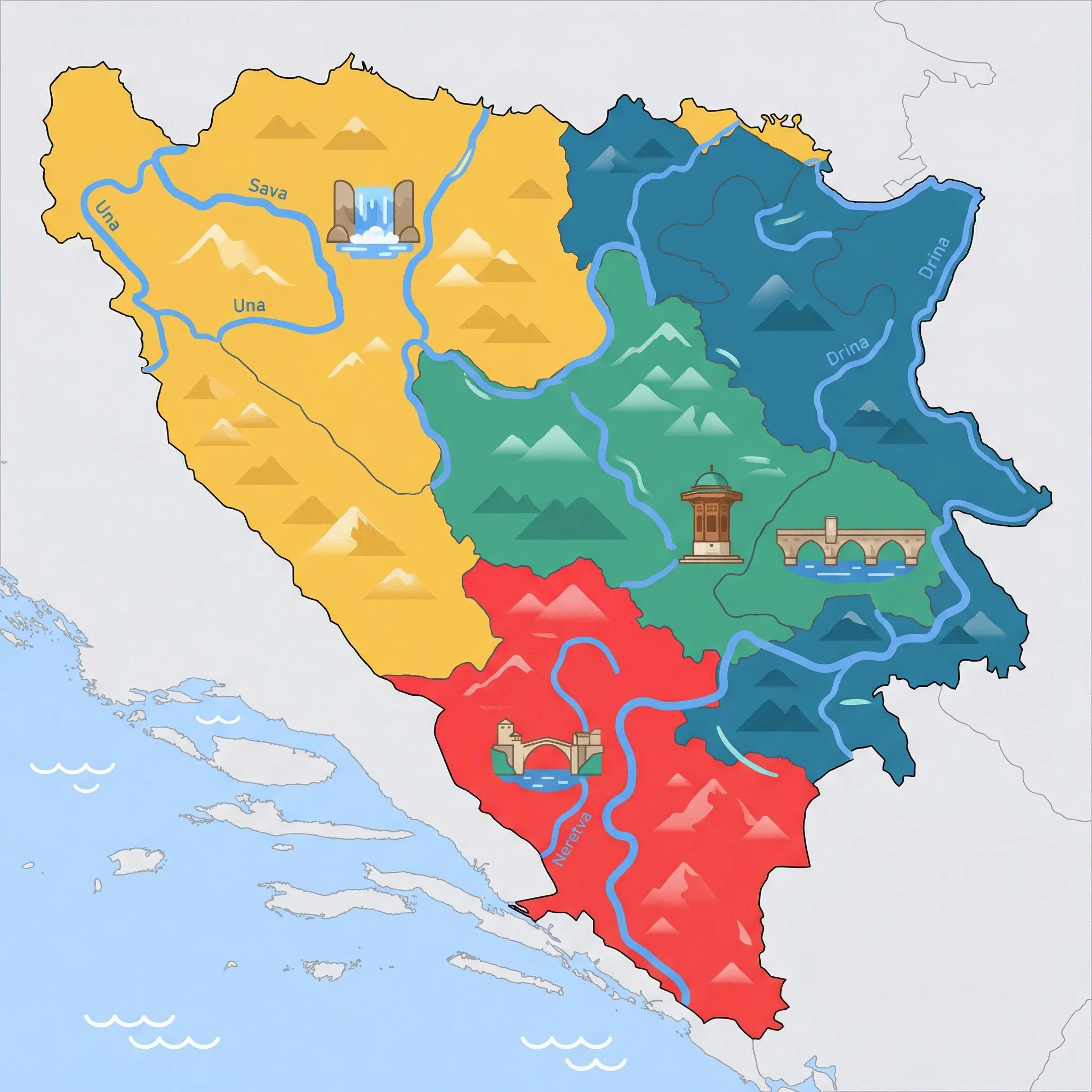
Click a region to explore
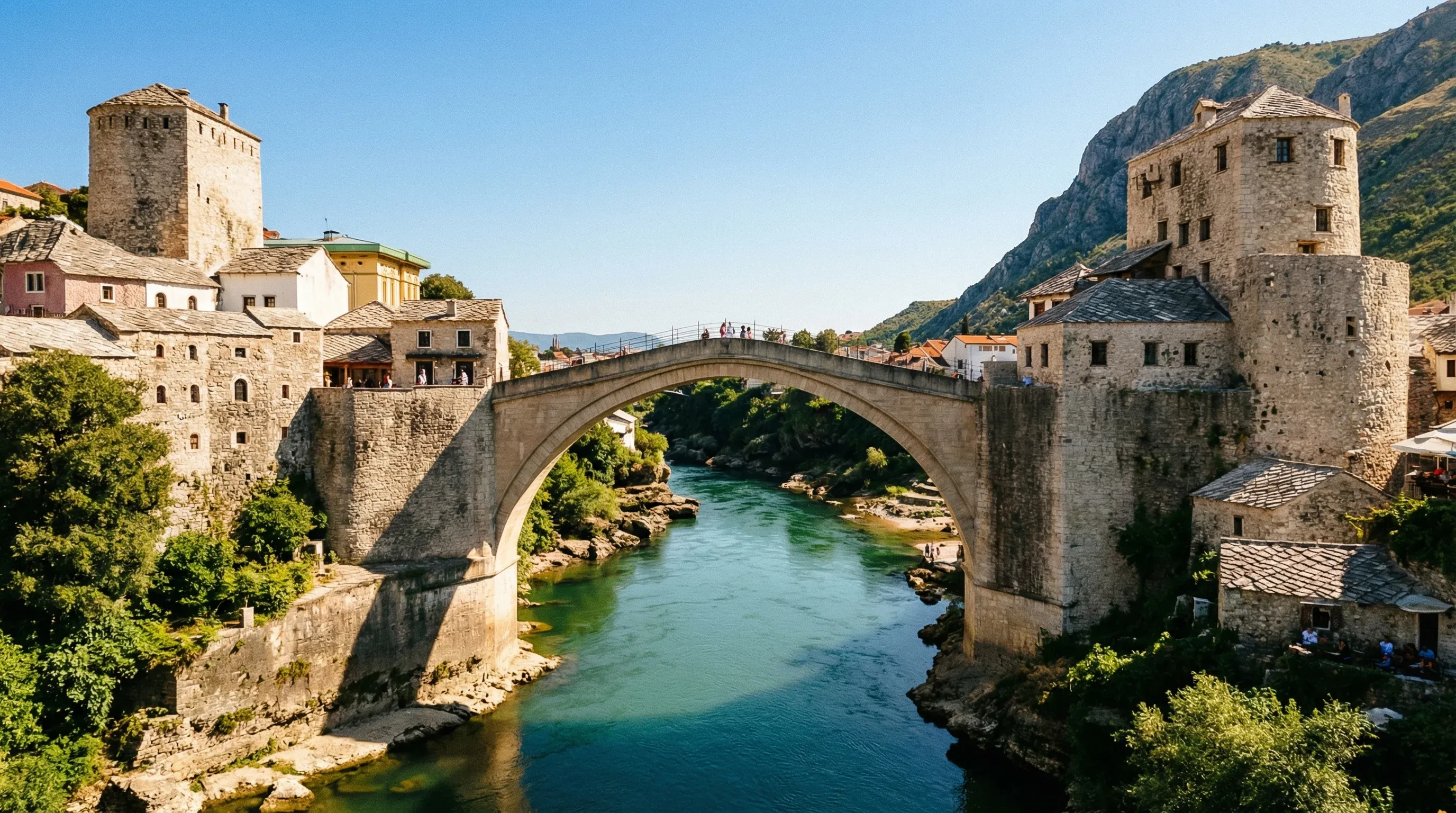
Herzegovina feels completely distinct from the rest of the country. As you drive south from the mountains, the vegetation changes to pomegranate trees, figs, and cypress, and the air turns warm and scented with wild sage. This is a region of stone and water—barren, rocky hills cut through by the freezing, emerald-green waters of the Neretva, Buna, and Trebižat rivers. For families, Herzegovina is arguably the most accessible and instantly rewarding region. The infrastructure is good, the sights are close together, and the atmosphere is relaxed and welcoming.
The heat here in summer is legendary, often topping 40°C (104°F), which shapes the local lifestyle: mornings are for exploring, afternoons are for swimming or siestas, and evenings are for long, lively dinners in walled gardens. The architecture is a stunning blend of Ottoman orientalism and Mediterranean stone masonry. Children will love the sense of discovery here—climbing medieval towers, exploring caves, and swimming in natural waterfall pools. It’s a sensory overload of chirping cicadas, bright sunlight, and the taste of fresh fruit sold at roadside stalls.
Key Attractions
No visit is complete without seeing the Mostar Old Town and Stari Most. The cobbled streets are slippery and steep (bring grip-soled shoes!), but the sight of the divers leaping 24 metres into the Neretva River is unforgettable for kids. Just a short drive away lies Blagaj Tekke, a 600-year-old Dervish monastery built into a cliff face right next to the source of the Buna River. The water here is so clean you can drink it, and families can take a small dinghy into the cave mouth to see the water sourcing from the darkness.
For a full day of fun, Kravice Waterfalls is a natural amphitheatre of water cascading into a large swimming lake. Unlike many national parks, swimming is encouraged here, and there are rope swings and shallow areas suitable for children. Further south, the Historic Village of Počitelj is an open-air museum; kids love scrambling up the stone steps to the fortress tower for panoramic views. Finally, for a break from the heat, venture underground into Vjetrenica Cave, famous for its cold wind and the "human fish" (olm)—a blind salamander that lives in the cave pools.
Practical Advice
July and August are intensely hot. Plan sightseeing for before 10:00 am or after 6:00 pm. Always carry water. The stones in Mostar's Old Town are notoriously slippery, even when dry—strollers are very difficult to use there; a baby carrier is much better.
Food & Drink
Typical meal times: Lunch is 1:00 pm to 3:00 pm. Dinner is a late, lingering affair, often starting at 8:30 pm or 9:00 pm to avoid the heat.
Typical meal costs: Prices are slightly higher than the north but still good value. A meal costs 20–40 BAM (approx. $11–22 USD / €10–20 EUR) per person.
Dietary requirements: Vegetarianism is easier here due to the Mediterranean influence—grilled vegetables, cheeses, and salads are excellent. Gluten-free options are rare in traditional places.
Signature dishes:
- Japrak – Minced meat and rice wrapped in local Raštika (collard greens) or vine leaves, smaller and more delicate than cabbage rolls.
- Herzegovinian Prosciutto (Pršut) – Dry-cured ham smoked over local wood, often served with hard cheese and figs.
- Smokvara – A dense, sweet dessert cake made with fig pekmez (jam/molasses), unique to this region.
Why this score?
The karst landscape offers activities like rafting on the Neretva and exploring Vjetrenica Cave, yet the region's Mediterranean climate and developed wineries cater to a more relaxed pace. Most adventure spots are well-connected by road and are popular for light family excursions.
Why this score?
Mostar serves as a regional medical hub with competent hospital facilities and several private polyclinics familiar with treating international tourists. While smaller towns like Trebinje have basic services, the overall quality for visitors is decent but below capital standards.
Why this score?
Driven by the iconic Stari Most in Mostar and the massive religious pilgrimage site of Medjugorje, this region sees heavy international footfall. Its proximity to the Croatian coast facilitates significant daily tour traffic and established international visitor flows.

Mostar is the most expensive tourist hub in the country, but still cheap by Western standards. Accommodation near the Old Bridge peaks in summer at 120–200 BAM (approx. $66–110 USD / €60–100 EUR). Entrance fees add up: <a data-attraction-id="36372">Kravice Waterfalls</a> costs 20 BAM (approx. $11 USD / €10 EUR) per adult in high season. Coffee is cheap, usually 2–3 BAM (approx. $1–1.50 USD / €1–1.50 EUR).

Getting Here & Around
Getting Here
- Train – The train journey from Sarajevo to Mostar is rated as one of the most scenic in Europe. Modern, air-conditioned Talgo trains make the trip in 2 hours.
- Airports – Mostar International Airport (OMO) has seasonal flights. Alternatively, Dubrovnik Airport (DBV) in Croatia is approx. 2.5 hours drive away (border crossing required).
- Driving – The main M-17 road connects the region. It is scenic but can be busy during summer months.
Getting Around
- Car – The best way to hop between scattered attractions like Kravice Waterfalls and Počitelj. Parking in Mostar can be tight; look for designated lots outside the pedestrian zone.
- Bus – Local buses connect Mostar to Blagaj (Bus #10 or #11) regularly, making Blagaj Tekke accessible without a car.
Nearby Airports (1 airport)
Mostar
OMOMostar
View full flight map for Bosnia and Herzegovina →
Official Links

Packing List
Riverbeds at Kravice and Buna are rocky and slippery; essential for swimming.
Mostar's cobbles and Počitelj's stairs are impossible for strollers.
The Herzegovinian sun is intense and reflective off the white stone; caps aren't enough.
River areas like Buna and Neretva have mosquitoes in the evenings.
Riverbeds at swimming spots like Kravice and Una are often rocky and slippery.
Roads through the mountains are extremely winding and can affect children.
Public restrooms at bus stations or remote sites often lack toilet paper.
Many smaller shops, bakeries, and rural attractions do not accept credit cards.
Useful for covering shoulders when visiting active mosques or orthodox churches.
Even in summer, mountain evenings (like on Jahorina) can get surprisingly cold.

Activities & Best Times

Hiking, wildlife, outdoor exploration, ecotourism
A rugged karst landscape featuring authentic wilderness experiences like the Neretva River canyon and Hutovo Blato wetlands. Late spring and early autumn are peak for hiking and birdwatching, avoiding the extreme mid-summer heat that can exceed 40°C.

Urban tourism, museums, historical sites, architecture
Home to the world-famous Stari Most in Mostar and the stunning Ottoman-era architecture of Blagaj and Poāitelj. While culturally rich year-round, the intense summer sun makes May, June, and September the most pleasant months for exploring historic quarters.

Beach resorts, marine activities: diving, snorkelling, kite surfing, wind surfing, sailing
Offers a unique blend of Adriatic coastal access at Neum and world-class inland swimming at the iconic Kravice Waterfalls. The season is strictly summer-focused, as Mediterranean temperatures only support water recreation from June through September.

Scenic drives, countryside tours, route-based travel
The Herzegovina Wine Route and the scenic drive through the Neretva valley provide spectacular vistas through limestone mountains. Driving is best in spring and autumn, with October offering unique visual interest as the vineyards and valley foliage change color.

Winter sports, ski resorts, snow activities
Provides charming and high-value family skiing at Kupres and Blidinje with a focus on authentic mountain hospitality. The season is shorter than Alpine counterparts, with reliable snow depth and resort operations peaking in January and February.

Sport tourism, fitness activities, active recreation
The Ćiro Trail offers a high-quality cycling experience on a repurposed historical rail line, while Fortica Park provides adventure infrastructure. Peak activity occurs in the milder months to avoid the physical strain of Herzegovina's high-summer temperatures.

Learning experiences, scientific sites, historical education
Sites like the Eco Center Blagaj offer focused educational insights into local ecology and the conservation of endangered species like the Griffon Vulture. Access to guided programs and natural history exhibits is most consistent during the primary tourism season.

Events, celebrations, seasonal attractions
Anchored by the world-renowned Stari Most bridge diving competition in July and the Mladifest in Medjugorje. These specific dates draw significant international crowds, though event offerings are sparse throughout the rest of the year.

Amusement parks, family entertainment venues
Already appropriately rated as marginal - no change needed, but noting that Grad Sunca should be catalogued as adventure-park-outdoor-activity-center rather than theme park.

Attractions (21 total)



Public Holidays & Calendar Next 12 months
Public holidays, festivals, cultural celebrations, and seasonal natural phenomena coming up in Herzegovina over the next 12 months.
Loading holidays and events...

Travel Advisory
While Bosnia and Herzegovina is generally safe for tourism, a rating of elevated caution is maintained due to the widespread presence of landmines in rural areas, petty crime in tourist centers, and potential for terrorist activity.
Safety Topics
Traveller Advice (4 groups)

Same-sex relationships are legal but not widely accepted in many areas. It is recommended to avoid public displays of affection to prevent unwanted attention or discrimination.

Accessibility infrastructure is often lacking outside of modern urban hotels and major city centers; travellers should plan their transport and accommodations carefully in advance.

Female travellers are advised to consider dressing conservatively and to avoid walking alone late at night in unfamiliar areas.

Ensure you carry identification at all times and stay on hard-surfaced roads to avoid landmine hazards. All foreign nationals must register their presence with the local police or the Department for Foreigners within 48 to 72 hours of arrival.
Agency Summaries
No specific advisory is in place, but visitors are encouraged to have comprehensive travel insurance and remain aware of local safety conditions.
Visitors should maintain a high level of vigilance due to prevalent petty crime and the severe safety risks posed by unmarked landmines and unexploded ordnance in rural and mountainous areas.
A high degree of caution is advised, primarily because of the danger from unexploded landmines. It is essential to stay on paved roads and avoid isolated regions.
Exercise increased caution due to the risk of terrorism, crime, and landmines. Terrorist groups continue to plot possible attacks, and landmines remain a threat throughout the country.
Travellers are advised to exercise standard security precautions, monitor local news, and follow the guidance of national authorities.
Most trips are safe, but travellers should be cautious of global terrorism threats and local hazards such as pickpocketing and leftover landmines in off-road areas.
Information is provided for general guidance only and does not constitute travel, safety, medical, or legal advice. Conditions may change. Users are responsible for independently verifying information before travel.