
Northwestern Bosnia (Bosanska Krajina)
Where emerald rivers flow through royal fortresses 🌿🏰
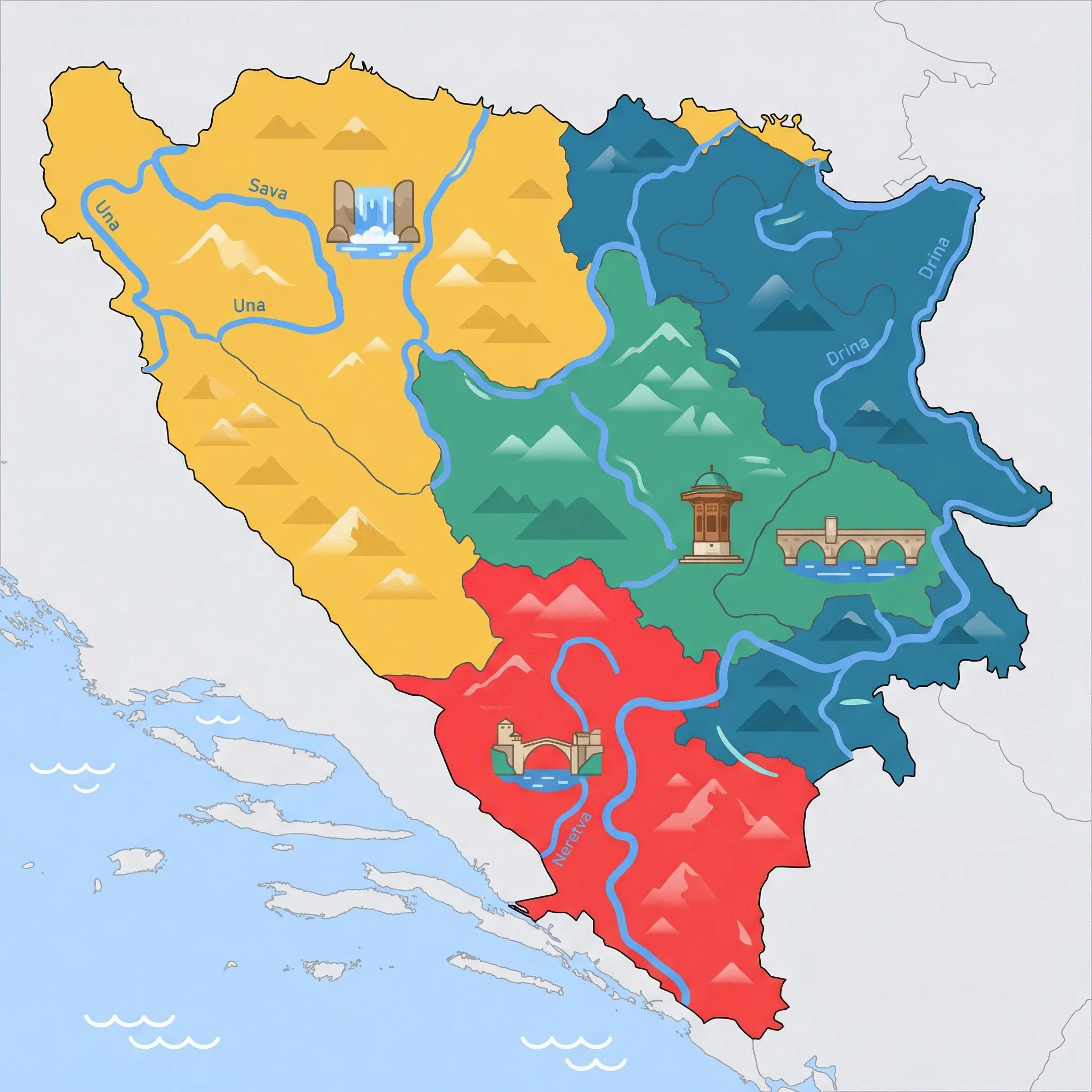
Click a region to explore
Important Safety Note: When hiking in rural areas or visiting former frontlines near national parks, always stay on marked trails and paved surfaces due to the risk of unexploded mines from the 1990s. Popular tourist sites like Una National Park and Jajce are cleared and safe.
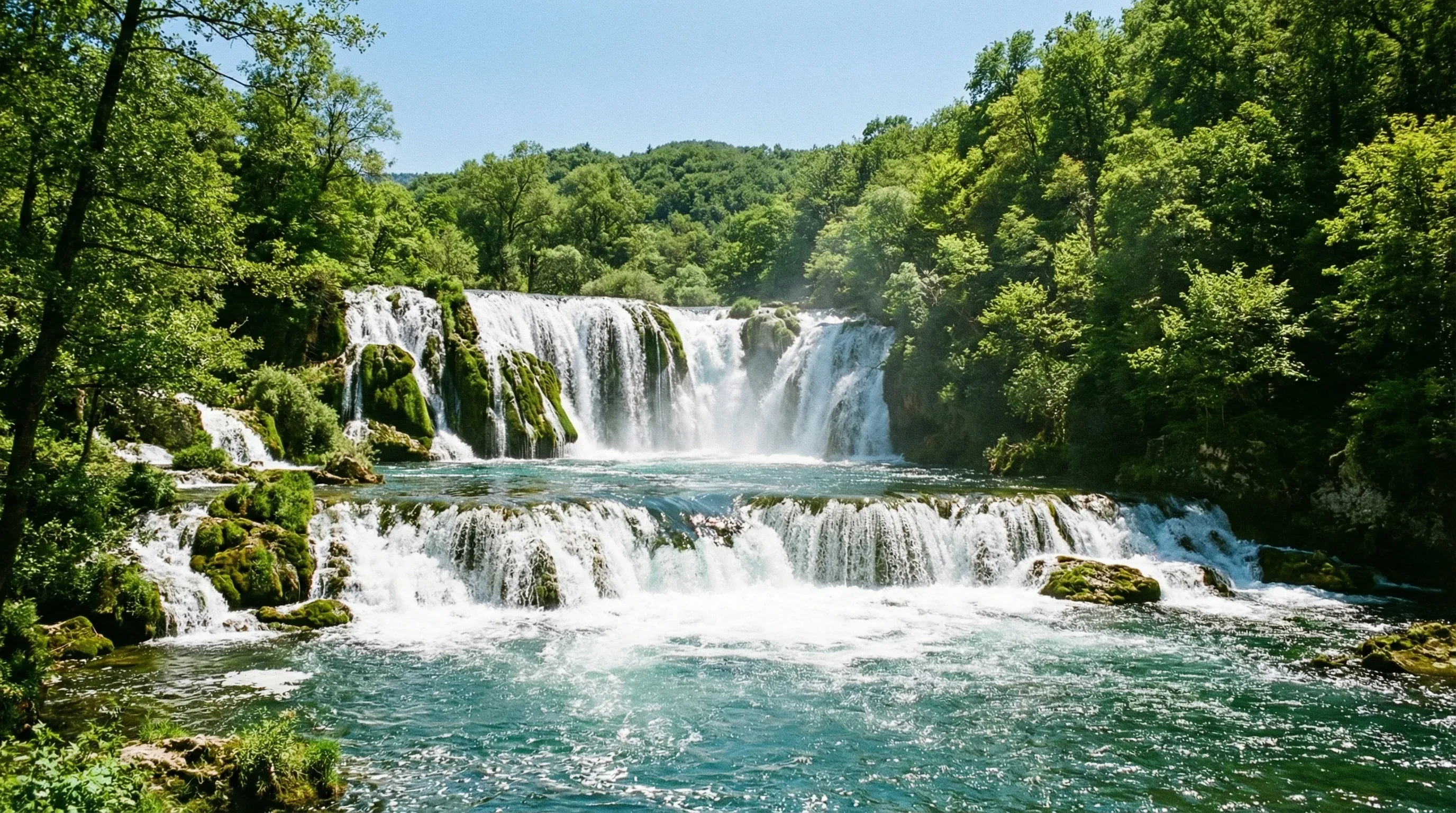
Northwestern Bosnia, or Bosanska Krajina, is the green heart of the country. It is a land of rushing water, dense beech forests, and historic fortresses watching over river valleys. For families who find the rocky heat of the south too intense, this region offers a lush, cooler alternative. The star of the show is the Una River—its waters are such a startling shade of emerald/turquoise that the Romans allegedly named it "Una" (The One/The Only). The vibe here is active and outdoorsy. You will see families kayaking, cycling along riverbanks, and picnicking in the shade of ancient watermills.
Culturally, this is a frontier land, dotted with castles from the Bosnian Kingdom and fortifications from the Ottoman and Austro-Hungarian empires. It feels slightly more Central European than the rest of the country, especially in the architecture of Banja Luka. For children, the water is the main attraction. Whether it's the spray of a massive waterfall or the calm shallows of a lake, you are never far from a place to cool off. The tourism here is less developed than in Mostar or Sarajevo, which means fewer crowds and a more genuine connection with locals, who are famously hospitable.
Key Attractions
Jajce is a fairytale town for kids, unique for having a massive 22-metre waterfall, the Pliva Waterfall, crashing right in the town centre. Above the falls sits the Jajce Fortress, where you can walk the walls. Just a few kilometres away are the Pliva Lakes and the famous "Mlinčići"—a cluster of tiny wooden watermills on stilts that look like houses for gnomes or fairies; children absolutely love hopping between them on the wooden walkways.
Further west, Una National Park is unmissable. Its main attraction, Štrbački buk, is a spectacular series of waterfalls. Viewing platforms allow you to get right over the rushing water safely. For a history fix, the Kozara National Park offers not just hiking trails but a massive, iconic concrete monument to the WWII resistance that allows visitors to walk inside its vertical segments—a strange and memorable experience for kids.
Practical Advice
The Una River is very cold, even in summer (around 10-15°C). While refreshing, it can be a shock for young children. Rafting seasons runs from April to October; ask for "family routes" which skip the dangerous drops.
Food & Drink
Typical meal times: 12:00 pm to 3:00 pm for lunch. Dinner is usually 7:00 pm to 9:00 pm.
Typical meal costs: Very affordable. A family meal often costs 50–80 BAM (approx. $28–44 USD / €25–40 EUR).
Dietary requirements: Standard Bosnian fare (meat-heavy). However, freshwater fish is excellent here.
Signature dishes:
- Banjalučki Ćevapi – Distinct from the Sarajevo version, these meat tiles are grilled in square blocks of four joined sausages rather than individual links.
- Trappist Cheese – A semi-hard cow's milk cheese produced by monks at the Mariastern Abbey in Banja Luka for over 100 years.
- Potočarka Salad – Fresh watercress salad, often served with river fish.
Why this score?
The Una River and its waterfalls provide a rugged outdoor experience with less commercial development than central European parks. Navigating the dense forests of Kozara and the river rapids of the Vrbas requires a higher degree of self-reliance and physical activity.
Why this score?
Banja Luka provides reliable healthcare through its university clinical center, which is the primary facility for the northern region. However, in more remote areas near the Una River, medical response times can be slow and rural facilities are significantly more basic.
Why this score?
While Bihać and Jajce are scenic gems, they remain largely emerging destinations for international travelers outside of regional visitors from Croatia and Slovenia. The tourism infrastructure is developing rapidly around Una National Park but lacks the high-volume appeal of Mostar.

This region offers excellent value. A riverside bungalow in <a data-attraction-id="21427">Una National Park</a> can cost 80–120 BAM (approx. $44–66 USD / €40–60 EUR) per night. Entry to the waterfall area is around 7 BAM (approx. $4 USD / €3.50 EUR). Restaurant prices in Banja Luka and Bihać are roughly 20% lower than in Sarajevo.

Getting Here & Around
Getting Here
- Airports – Banja Luka International Airport (BNX) is the region's hub, served by low-cost carriers. Zagreb Airport (ZAG) in Croatia is about 2.5 hours drive away.
- Driving – Exploring this region requires a car. The drive from Sarajevo to Jajce takes approx. 3 hours.
- Bus – Reliable bus lines connect Banja Luka and Bihać with Sarajevo and Zagreb.
Getting Around
- Car – Highly recommended. Reaching Štrbački buk in Una National Park involves driving on gravel roads where public transport does not go.
- Cycling – The terrain around Jajce and the Pliva Lakes is excellent for family cycling trips.
Nearby Airports (1 airport)
Banja Luka International Airport
BNXBanja Luka
View full flight map for Bosnia and Herzegovina →
Official Links

Packing List
Essential for capturing photos near the intense spray of Štrbački buk or while rafting.
The Una river is very cold (max 15°C) even in summer; extends swimming time.
Paths around the waterfalls and mills are often unpaved and uneven.
Evenings near the river and in the dense forests can get surprisingly chilly.
Riverbeds at swimming spots like Kravice and Una are often rocky and slippery.
Roads through the mountains are extremely winding and can affect children.
Public restrooms at bus stations or remote sites often lack toilet paper.
Many smaller shops, bakeries, and rural attractions do not accept credit cards.
Useful for covering shoulders when visiting active mosques or orthodox churches.
Even in summer, mountain evenings (like on Jahorina) can get surprisingly cold.

Activities & Best Times

Hiking, wildlife, outdoor exploration, ecotourism
Una National Park provides a pristine wilderness experience with its world-class travertine waterfalls and emerald rivers, perfect for families seeking authentic nature immersion.

Urban tourism, museums, historical sites, architecture
The blend of Ottoman heritage and Austro-Hungarian architecture in Banja Luka, paired with the medieval fortress and urban waterfall in Jajce, creates a distinctive cultural landscape.

Sport tourism, fitness activities, active recreation
Known for world-class white-water rafting on the Una and Vrbas rivers, the region also features significant sections of the Via Dinarica trail for high-quality active exploration.

Scenic drives, countryside tours, route-based travel
Dramatic canyon routes along the Vrbas and Una rivers offer some of the most scenic driving in the Balkans, connecting historic sites via rugged and beautiful landscapes.

Spa retreats, wellness centers, peaceful getaways
Regional thermal spas like Banja Laktaši provide authentic mineral water experiences, though facilities generally lack the luxury standards of major international wellness retreats.

Winter sports, ski resorts, snow activities
Accessible ski centers such as Kozara cater well to families and beginners during the winter months, though terrain scale is modest compared to the high-altitude Alps.

Attractions (16 total)



Public Holidays & Calendar Next 12 months
Public holidays, festivals, cultural celebrations, and seasonal natural phenomena coming up in Northwestern Bosnia (Bosanska Krajina) over the next 12 months.
Loading holidays and events...

Travel Advisory
While Bosnia and Herzegovina is generally safe for tourism, a rating of elevated caution is maintained due to the widespread presence of landmines in rural areas, petty crime in tourist centers, and potential for terrorist activity.
Safety Topics
Traveller Advice (4 groups)

Same-sex relationships are legal but not widely accepted in many areas. It is recommended to avoid public displays of affection to prevent unwanted attention or discrimination.

Accessibility infrastructure is often lacking outside of modern urban hotels and major city centers; travellers should plan their transport and accommodations carefully in advance.

Female travellers are advised to consider dressing conservatively and to avoid walking alone late at night in unfamiliar areas.

Ensure you carry identification at all times and stay on hard-surfaced roads to avoid landmine hazards. All foreign nationals must register their presence with the local police or the Department for Foreigners within 48 to 72 hours of arrival.
Agency Summaries
No specific advisory is in place, but visitors are encouraged to have comprehensive travel insurance and remain aware of local safety conditions.
Visitors should maintain a high level of vigilance due to prevalent petty crime and the severe safety risks posed by unmarked landmines and unexploded ordnance in rural and mountainous areas.
A high degree of caution is advised, primarily because of the danger from unexploded landmines. It is essential to stay on paved roads and avoid isolated regions.
Exercise increased caution due to the risk of terrorism, crime, and landmines. Terrorist groups continue to plot possible attacks, and landmines remain a threat throughout the country.
Travellers are advised to exercise standard security precautions, monitor local news, and follow the guidance of national authorities.
Most trips are safe, but travellers should be cautious of global terrorism threats and local hazards such as pickpocketing and leftover landmines in off-road areas.
Information is provided for general guidance only and does not constitute travel, safety, medical, or legal advice. Conditions may change. Users are responsible for independently verifying information before travel.