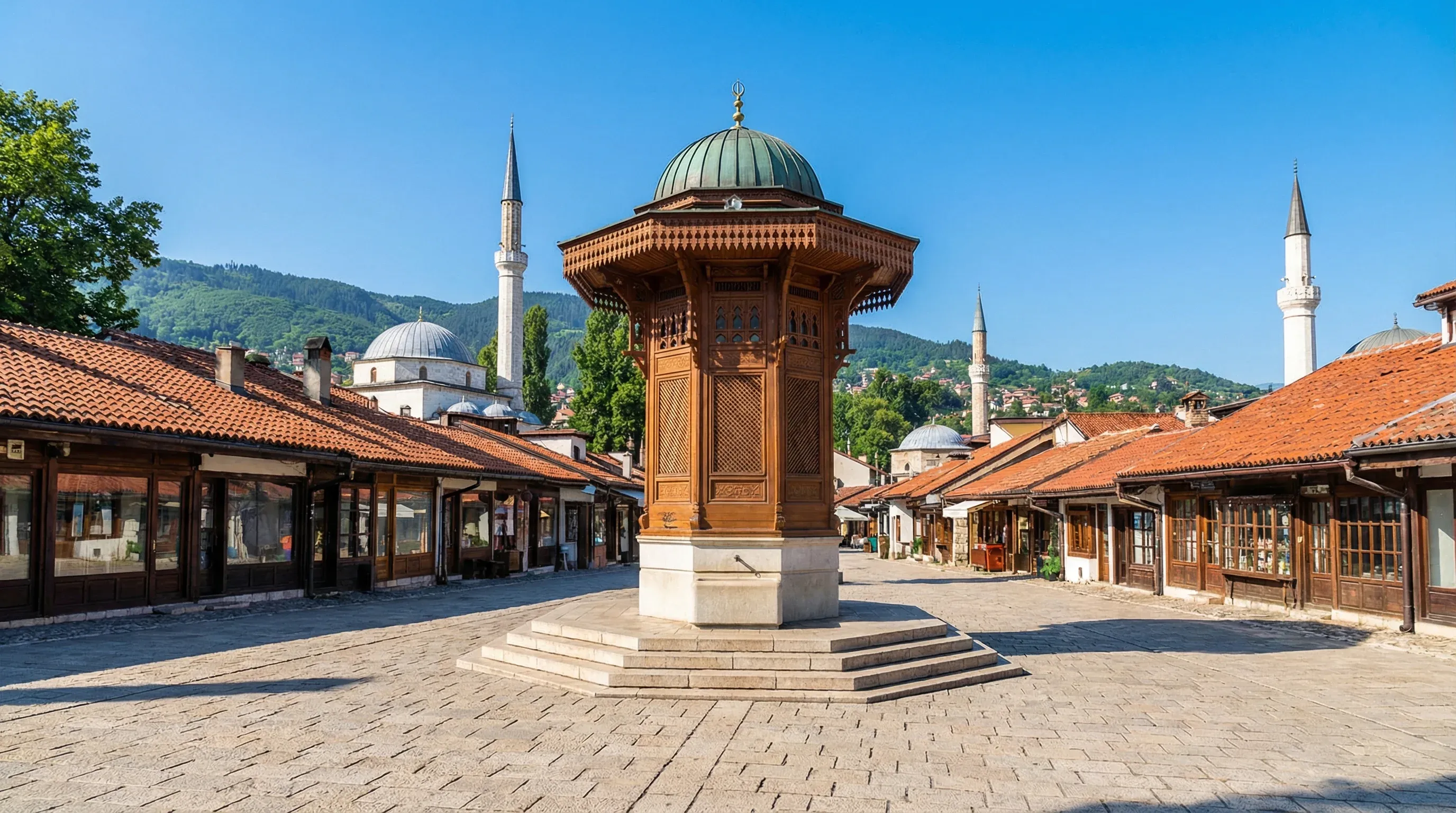

Sarajevo and Central Bosnia
Where Olympic mountains meet the Jerusalem of Europe 🚠🕌
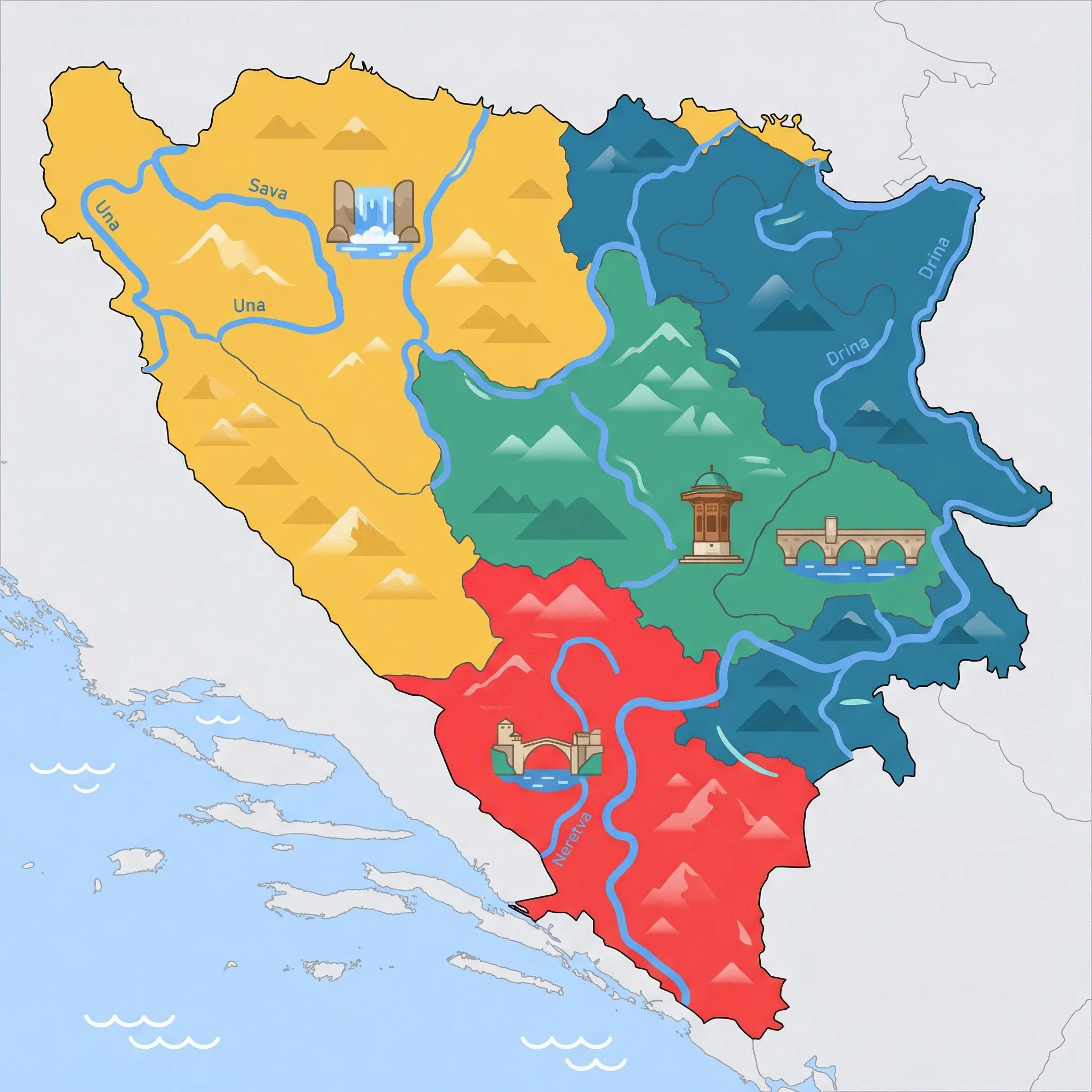
Click a region to explore
Sarajevo and Central Bosnia is where the country's soul resides. It is a region of dramatic contrasts: the cosmopolitan buzz of the capital city sits nestled in a valley surrounded by towering Olympic mountains that are accessible in minutes. For families, this is the most convenient region to visit. You have the comfort of modern malls and hotels combined with the exotic allure of the Ottoman old town and the fresh air of the highlands. The history here is palpable—this is where WWI began and where the 1984 Winter Olympics were held.
The atmosphere in Sarajevo is warm and relaxed. Locals drink coffee for hours, and children are welcomed everywhere. You can walk from a Vienna-style coffee house to a Turkish-style tea garden in five minutes. Beyond the city, the landscape rises sharply into ski resorts that turn into hiking havens in summer. The region is compact; you can explore the Vizier city of Travnik or the pyramids of Visoko and be back in Sarajevo for dinner. It is an educational goldmine for older kids, teaching lessons about tolerance, war, and resilience, while younger kids will simply love the trams, the cable cars, and the endless sweets.
Key Attractions
Start in Baščaršija, the old bazaar. Kids love the "Pigeon Square" around the Sebilj fountain and the "Coppersmith Street" where they can hear the tapping of hammers making souvenirs. Just a short walk away is the Sarajevo City Hall (Vijećnica), a colourful, candy-like building that looks like it's from a storybook.
For adventure, take the cable car from the city centre up to Mount Trebević. At the top, you'll find fresh air and the abandoned 1984 bobsled track, which is now a graffiti-covered walking path that teenagers adore. Nearby is Sunnyland Sarajevo, featuring an alpine coaster that offers safe thrills with a view of the city. To understand the city's resilience, a visit to the Sarajevo Tunnel of Hope is moving and essential; walking through the low, narrow tunnel that saved the city gives a tangible sense of history that textbooks cannot match.
Practical Advice
In winter (December–February), air pollution in the Sarajevo valley can be an issue—head to the mountains (Trebević, Jahorina) to escape the smog. The old town has cobblestones; lightweight strollers struggle, so use a sturdy one or a carrier.
Food & Drink
Typical meal times: Lunch 12:00 pm to 4:00 pm. Dinner 7:00 pm to 10:00 pm.
Typical meal costs: Mid-range. A family meal in the Old Town costs 40–70 BAM (approx. $22–38 USD / €20–35 EUR).
Dietary requirements: Vegetarian options are growing (falafel, grilled veg, bean soups). Gluten-free is harder to find in traditional burek shops.
Signature dishes:
- Sarajevski Ćevapi – Small grilled minced meat rolls served in warm flatbread (somun) with chopped onions. The city's most famous dish.
- Burek – Flaky phyllo pastry filled with meat. Note: In Bosnia, if it's filled with cheese, it's called Sirnica, not Burek!
- Klepe – Bosnian ravioli, stuffed with meat and served in a warm garlic and sour cream sauce. A comfort food masterpiece.
Why this score?
The proximity of the Olympic mountains allows for easy access to hiking and skiing without leaving urban comfort. While rugged peaks like Bjelašnica are nearby, the tourism experience remains largely supported by developed resort infrastructure and accessible trails.
Why this score?
As the national capital, it hosts the Clinical Center of the University of Sarajevo, the country's most advanced medical facility. Foreigners have access to several private clinics with English-speaking staff, providing a level of care comparable to other Balkan capitals.
Why this score?
As the capital and historical heart, Sarajevo receives the bulk of international arrivals via its airport and bus networks. The combination of Ottoman heritage in Baščaršija and its poignant 20th-century history makes it a globally recognized cultural destination.

Sarajevo fits all budgets. You can eat a world-class street food meal (Ćevapi) for 8 BAM (approx. $4.50 USD / €4 EUR) or dine in a luxury restaurant for 50 BAM (approx. $28 USD / €25 EUR). Hotels range from 80 BAM to 300 BAM (approx. $44–165 USD / €40–150 EUR). The <a data-attraction-id="21358">Mount Trebević</a> cable car is 20 BAM (approx. $11 USD / €10 EUR) return for adults.

Getting Here & Around
Getting Here
- Airports – Sarajevo International Airport (SJJ) is located just 20 minutes from the city centre.
- Train – The modern train connects Sarajevo with Mostar (South) and Maglaj (North). The station is centrally located.
- Bus – Two main stations serve the city: the Main Station (near the US embassy) for western/northern routes, and Lukavica (East Sarajevo) for eastern routes.
Getting Around
- Public Transport – Sarajevo has an iconic tram network. Kids enjoy the old rattling trams. Tickets must be bought at kiosks or the driver and punched immediately.
- Walking – The city centre is very walkable. You can walk from Baščaršija to modern malls in 20 minutes.
- Taxi – Taxis are cheap and reliable. Use metre-taxis like Crveni (Red) or Žuti (Yellow) Taxi.
Nearby Airports (1 airport)
Sarajevo
SJJSarajevo
View full flight map for Bosnia and Herzegovina →
Official Links

Packing List
Required for entering the beautiful historic mosques like Gazi Husrev-beg.
The old town cobblestones become incredibly slippery when polished by centuries of walking.
If you take the cable car up the mountain, the temperature can drop 10°C in 10 minutes.
Essential for public toilets, tram tickets, and tips; many places don't break large notes.
Riverbeds at swimming spots like Kravice and Una are often rocky and slippery.
Roads through the mountains are extremely winding and can affect children.
Public restrooms at bus stations or remote sites often lack toilet paper.
Many smaller shops, bakeries, and rural attractions do not accept credit cards.
Useful for covering shoulders when visiting active mosques or orthodox churches.
Even in summer, mountain evenings (like on Jahorina) can get surprisingly cold.

Activities & Best Times

Hiking, wildlife, outdoor exploration, ecotourism
Authentic highland experiences like Lukomir village and the Via Dinarica offer unique immersion into traditional Balkan mountain life. Peak season aligns with the drying of high-altitude trails and accessible mountain roads from late spring through early autumn.

Urban tourism, museums, historical sites, architecture
Sarajevo is a globally unique cultural crossroads where Ottoman and Austro-Hungarian heritages meet in a walkable, historic center. Summer months provide the best atmosphere for outdoor cafe culture and exploring historic fortresses like Travnik, while winters can suffer from valley fog and air quality issues.

Sport tourism, fitness activities, active recreation
Leveraging its Olympic legacy, the region offers world-class infrastructure for mountain activities and adventure parks like Trebević. Active tourism is best pursued from late spring to early autumn when the extensive mountain trails and outdoor centers are fully operational.

Scenic drives, countryside tours, route-based travel
Dramatic mountain passes and named scenic routes like the Olympic Mountains Loop offer spectacular driving for adventurous families. Winter travel is restricted by heavy snow and hazardous conditions on high-altitude interior roads.

Winter sports, ski resorts, snow activities
Home to the 1984 Olympic venues of Jahorina and Bjelašnica, offering solid infrastructure and genuine alpine charm. The season is relatively short, with reliable snow cover typically concentrated in January and February.

Learning experiences, scientific sites, historical education
The National Museum and Ravne Tunnels provide significant historical and scientific interest for curious families. While culturally important, these facilities serve as enhancements to a trip rather than standalone global travel motivators.

Events, celebrations, seasonal attractions
The Sarajevo Film Festival in August is a major international cultural event that transforms the city into a global hub. Outside of this specific window, the region lacks other internationally-drawing festival events of similar scale.

Spa retreats, wellness centers, peaceful getaways
Historic thermal spa traditions exist in Ilidža and Fojnica, offering an authentic, if somewhat medically-focused, wellness experience. While facilities are reliable, they lack the luxury international resort standards found in top-tier global spa destinations.

Amusement parks, family entertainment venues
Ilidža thermal water parks and Sunnyland alpine coaster are specialized facilities, not theme parks. This region's strengths lie in culture, adventure, and winter sports - not theme park tourism.

Attractions (26 total)



Public Holidays & Calendar Next 12 months
Public holidays, festivals, cultural celebrations, and seasonal natural phenomena coming up in Sarajevo and Central Bosnia over the next 12 months.
Loading holidays and events...

Travel Advisory
While Bosnia and Herzegovina is generally safe for tourism, a rating of elevated caution is maintained due to the widespread presence of landmines in rural areas, petty crime in tourist centers, and potential for terrorist activity.
Safety Topics
Traveller Advice (4 groups)

Same-sex relationships are legal but not widely accepted in many areas. It is recommended to avoid public displays of affection to prevent unwanted attention or discrimination.

Accessibility infrastructure is often lacking outside of modern urban hotels and major city centers; travellers should plan their transport and accommodations carefully in advance.

Female travellers are advised to consider dressing conservatively and to avoid walking alone late at night in unfamiliar areas.

Ensure you carry identification at all times and stay on hard-surfaced roads to avoid landmine hazards. All foreign nationals must register their presence with the local police or the Department for Foreigners within 48 to 72 hours of arrival.
Agency Summaries
No specific advisory is in place, but visitors are encouraged to have comprehensive travel insurance and remain aware of local safety conditions.
Visitors should maintain a high level of vigilance due to prevalent petty crime and the severe safety risks posed by unmarked landmines and unexploded ordnance in rural and mountainous areas.
A high degree of caution is advised, primarily because of the danger from unexploded landmines. It is essential to stay on paved roads and avoid isolated regions.
Exercise increased caution due to the risk of terrorism, crime, and landmines. Terrorist groups continue to plot possible attacks, and landmines remain a threat throughout the country.
Travellers are advised to exercise standard security precautions, monitor local news, and follow the guidance of national authorities.
Most trips are safe, but travellers should be cautious of global terrorism threats and local hazards such as pickpocketing and leftover landmines in off-road areas.
Information is provided for general guidance only and does not constitute travel, safety, medical, or legal advice. Conditions may change. Users are responsible for independently verifying information before travel.